
'%3e%3cpath%20fill-rule='evenodd'%20clip-rule='evenodd'%20d='M6.99935%2012.8327C10.221%2012.8327%2012.8327%2010.221%2012.8327%206.99935C12.8327%203.77769%2010.221%201.16602%206.99935%201.16602C3.77769%201.16602%201.16602%203.77769%201.16602%206.99935C1.16602%2010.221%203.77769%2012.8327%206.99935%2012.8327Z'%20stroke='%23666666'%20stroke-linecap='round'%20stroke-linejoin='round'/%3e%3cpath%20d='M1.16602%207H12.8327'%20stroke='%23666666'%20stroke-linecap='round'%20stroke-linejoin='round'/%3e%3cpath%20fill-rule='evenodd'%20clip-rule='evenodd'%20d='M6.99935%2012.8327C8.28802%2012.8327%209.33268%2010.221%209.33268%206.99935C9.33268%203.77769%208.28802%201.16602%206.99935%201.16602C5.71068%201.16602%204.66602%203.77769%204.66602%206.99935C4.66602%2010.221%205.71068%2012.8327%206.99935%2012.8327Z'%20stroke='%23666666'%20stroke-linecap='round'%20stroke-linejoin='round'/%3e%3cpath%20d='M2.875%202.95898C3.93063%204.01461%205.38896%204.66754%206.99978%204.66754C8.61062%204.66754%2010.069%204.01461%2011.1246%202.95898'%20stroke='%23666666'%20stroke-linecap='round'%20stroke-linejoin='round'/%3e%3cpath%20d='M11.1246%2011.0425C10.069%209.98691%208.61062%209.33398%206.99978%209.33398C5.38896%209.33398%203.93063%209.98691%202.875%2011.0425'%20stroke='%23666666'%20stroke-linecap='round'%20stroke-linejoin='round'/%3e%3c/g%3e%3cdefs%3e%3cclipPath%20id='clip0_1267_9109'%3e%3crect%20width='14'%20height='14'%20fill='white'/%3e%3c/clipPath%3e%3c/defs%3e%3c/svg%3e)


is pandadoc free plan good


Is PandaDoc's Free Plan Worth It for Businesses?
In the competitive landscape of electronic signature platforms, PandaDoc's free plan often catches the eye of small businesses and startups looking to streamline document workflows without upfront costs. From a business observation standpoint, evaluating whether this plan is "good" depends on your operational scale, document volume, and need for advanced features. While it's an accessible entry point, its limitations can quickly become apparent for growing teams. Let's break it down objectively.
PandaDoc's free plan, known as the "Essentials" tier in its no-cost version, allows users to send up to five documents per month for e-signatures. This includes basic template creation, drag-and-drop editing, and integration with tools like Google Workspace or Microsoft Office. It's designed for solopreneurs or very small operations handling occasional contracts, proposals, or NDAs. The platform's user-friendly interface shines here, enabling quick document assembly without a steep learning curve—ideal for non-technical users in sales or consulting roles.
However, the free plan's restrictions raise questions about its long-term viability. You can't access unlimited sending, advanced analytics, custom branding, or API integrations, which are crucial for scaling businesses. For instance, once you hit the five-document limit, you're locked out until the next month, potentially disrupting workflows during busy periods like quarter-end closes. Storage is capped at 100MB, and there's no priority support—responses come via community forums, which can delay resolutions for time-sensitive deals. From a commercial perspective, this plan excels as a trial for testing PandaDoc's core e-signature flow but falls short for teams exceeding low-volume needs, often leading to upgrades within months.
Business observers note that while the free plan saves initial costs (zero dollars versus $19/month for paid tiers), it indirectly increases expenses through manual workarounds or lost productivity. A 2024 survey by G2 highlighted that 62% of free-tier users on similar platforms upgraded due to volume limits, suggesting PandaDoc's offering is "good" only for ultra-light use cases. If your business sends fewer than five documents monthly and prioritizes simplicity over customization, it's a solid, no-risk starting point. Otherwise, it might feel more like a teaser than a sustainable solution, prompting a shift to paid alternatives sooner.

For enterprises eyeing growth, PandaDoc's free plan's goodness is contextual: excellent for bootstrapped validation but inadequate for collaborative or high-volume environments. This evaluation sets the stage for comparing it against established competitors like DocuSign, Adobe Sign, and regional players such as eSignGlobal, where paid plans often deliver more robust value from day one.
Exploring Key Competitors to PandaDoc
To provide a balanced view, let's examine prominent e-signature alternatives. These platforms cater to diverse business needs, from global compliance to API-driven automation, helping users decide if sticking with PandaDoc's free limitations makes sense or if investing in a competitor yields better ROI.
DocuSign: The Industry Standard for Enterprise eSignatures
DocuSign remains a go-to for large organizations due to its comprehensive feature set and global reach. Pricing starts at $10/month for the Personal plan (annual billing), scaling to $40/month per user for Business Pro, with envelope limits around 100 per year per user on higher tiers. It offers strong security, including audit trails and integrations with CRM systems like Salesforce. However, add-ons like SMS delivery or identity verification incur extra metered fees, and API plans begin at $600/year for basic access. Businesses appreciate its reliability for high-stakes contracts, but the seat-based model can inflate costs for small teams.

Adobe Sign: Seamless Integration for Creative and Enterprise Workflows
Adobe Sign, part of the Adobe ecosystem, appeals to businesses already using Acrobat or Creative Cloud. It provides unlimited signatures on most plans, starting at around $10/month for individuals and up to $40/month for teams, with strong emphasis on PDF handling and mobile signing. Features like conditional fields and payment collection are standard in pro tiers, and it integrates natively with Microsoft 365. Drawbacks include higher costs for advanced compliance tools and occasional latency in non-US regions. It's particularly "good" for document-heavy industries like legal or marketing, where PDF fidelity is paramount.

eSignGlobal: A Compliant Choice for APAC and Global Operations
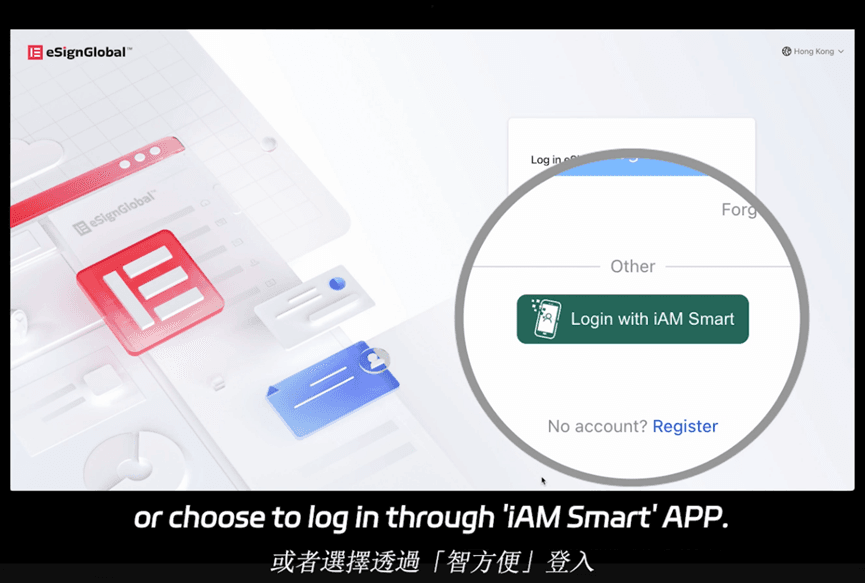
eSignGlobal stands out for its focus on regulatory compliance across 100 mainstream countries and regions, making it a practical option for international businesses. In the APAC region, it offers advantages like optimized speed and local integrations, addressing pain points in cross-border deals. The Essential plan is priced at just $16.6/month, allowing up to 100 documents for electronic signatures, unlimited user seats, and verification via access codes—all on a compliant foundation that delivers high cost-effectiveness. It seamlessly integrates with Hong Kong's iAM Smart and Singapore's Singpass for enhanced identity verification, reducing friction in regional workflows. For pricing details, check eSignGlobal's official page.
Other Notable Competitors
Beyond these, platforms like HelloSign (now Dropbox Sign) offer a free tier with three sends per month, similar to PandaDoc but with better free storage. SignNow provides affordable plans from $8/month with unlimited stamps, suiting SMBs. Each varies in focus—HelloSign for simplicity, SignNow for affordability—but none match the enterprise depth of DocuSign or Adobe Sign without scaling up.
Side-by-Side Comparison of eSignature Platforms
To aid decision-making, here's a neutral comparison table highlighting key aspects. This draws from 2025 pricing overviews, focusing on free/basic plans, features, and suitability. While all platforms have strengths, eSignGlobal edges out in APAC compliance and value for regional users, though choices depend on specific business needs.
| Feature/Platform | PandaDoc (Free Plan) | DocuSign (Personal) | Adobe Sign (Individual) | eSignGlobal (Essential) | HelloSign (Free) |
|---|---|---|---|---|---|
| Monthly Price | $0 | $10 (annual) | $10 | $16.6 | $0 |
| Document Limit | 5/month | 5/month | Unlimited (basic) | 100/month | 3/month |
| User Seats | 1 (limited collab) | 1 | 1 (team upgrades) | Unlimited | 1 |
| Key Features | Basic templates, e-sign | Templates, reminders | PDF integration, mobile | Access code verification, APAC integrations | Basic e-sign, storage |
| Compliance | Standard (US-focused) | Global, audit trails | Strong PDF security | 100+ countries, regional (e.g., iAM Smart) | Basic global |
| Integrations | Google/MS Office | CRM/API add-ons | Adobe/MS ecosystem | Singpass, local APAC | Dropbox |
| Best For | Solopreneurs testing | Small teams scaling | PDF-heavy workflows | APAC/global compliance | Light personal use |
| Limitations | No analytics/branding | Envelope caps, add-on fees | Regional latency | Custom enterprise needs | Very low volume |
| Overall Value | Good for trials | Reliable for pros | Seamless for Adobe users | High ROI in regions | Entry-level free |
This table underscores that while PandaDoc's free plan is accessible, competitors like eSignGlobal provide more generous limits and compliance at a modest cost, particularly for international operations.
Final Thoughts on Choosing an eSignature Solution
From a business observation lens, PandaDoc's free plan is "good" for minimal, exploratory use but often insufficient for sustained growth due to its tight constraints. For those outgrowing it, DocuSign offers a robust alternative with enterprise-grade tools. As a neutral recommendation for regional compliance needs, consider eSignGlobal as a Docusign substitute, especially in APAC where it balances affordability and local optimization. Ultimately, assess your document volume and integrations to pick the best fit.
FAQs
