
'%3e%3cpath%20fill-rule='evenodd'%20clip-rule='evenodd'%20d='M6.99935%2012.8327C10.221%2012.8327%2012.8327%2010.221%2012.8327%206.99935C12.8327%203.77769%2010.221%201.16602%206.99935%201.16602C3.77769%201.16602%201.16602%203.77769%201.16602%206.99935C1.16602%2010.221%203.77769%2012.8327%206.99935%2012.8327Z'%20stroke='%23666666'%20stroke-linecap='round'%20stroke-linejoin='round'/%3e%3cpath%20d='M1.16602%207H12.8327'%20stroke='%23666666'%20stroke-linecap='round'%20stroke-linejoin='round'/%3e%3cpath%20fill-rule='evenodd'%20clip-rule='evenodd'%20d='M6.99935%2012.8327C8.28802%2012.8327%209.33268%2010.221%209.33268%206.99935C9.33268%203.77769%208.28802%201.16602%206.99935%201.16602C5.71068%201.16602%204.66602%203.77769%204.66602%206.99935C4.66602%2010.221%205.71068%2012.8327%206.99935%2012.8327Z'%20stroke='%23666666'%20stroke-linecap='round'%20stroke-linejoin='round'/%3e%3cpath%20d='M2.875%202.95898C3.93063%204.01461%205.38896%204.66754%206.99978%204.66754C8.61062%204.66754%2010.069%204.01461%2011.1246%202.95898'%20stroke='%23666666'%20stroke-linecap='round'%20stroke-linejoin='round'/%3e%3cpath%20d='M11.1246%2011.0425C10.069%209.98691%208.61062%209.33398%206.99978%209.33398C5.38896%209.33398%203.93063%209.98691%202.875%2011.0425'%20stroke='%23666666'%20stroke-linecap='round'%20stroke-linejoin='round'/%3e%3c/g%3e%3cdefs%3e%3cclipPath%20id='clip0_1267_9109'%3e%3crect%20width='14'%20height='14'%20fill='white'/%3e%3c/clipPath%3e%3c/defs%3e%3c/svg%3e)


How are the overage fees calculated for DocuSign and Adobe Sign?


Navigating Overage Fees in Electronic Signature Platforms
In the competitive landscape of electronic signature solutions, businesses often rely on platforms like DocuSign and Adobe Sign to streamline document workflows. However, exceeding predefined usage limits can lead to unexpected costs through overage fees. These fees are a critical consideration for cost management, especially for growing teams or those with variable signing volumes. This article explores how overage fees are calculated for DocuSign and Adobe Sign from a business perspective, highlighting transparency issues and regional challenges, while comparing them to alternatives like eSignGlobal.

Understanding Overage Fees: A Core Component of Pricing Models
Overage fees in e-signature services typically arise when users surpass the envelope quotas (the number of documents or "envelopes" that can be sent for signing) included in their subscription plan. Envelopes represent the basic unit of usage, encompassing the sending, signing, and storage of documents. Both DocuSign and Adobe Sign employ a tiered subscription model where base plans include a set number of envelopes, and excess usage triggers additional charges. This structure encourages upgrades to higher plans but can complicate budgeting for businesses with fluctuating needs.
From a commercial standpoint, overage fees serve as a revenue safeguard for providers, ensuring scalability while penalizing underestimation of volume. However, the lack of upfront clarity can erode trust, particularly in global operations where usage patterns vary by region. Let's break down the calculations for each platform.
How DocuSign Calculates Overage Fees
DocuSign's pricing is envelope-centric, with plans like Personal, Standard, Business Pro, and Advanced Solutions defining monthly or annual quotas. For instance, the Personal plan allows 5 envelopes per month at $10/month (billed annually as $120/year). Standard and Business Pro plans offer around 100 envelopes per user per year (or roughly 10 per month) for $25–$40 per user per month.
Overage fees kick in when these limits are exceeded. DocuSign charges on a pay-as-you-go basis for additional envelopes, typically at $0.10 to $0.50 per envelope, depending on the plan tier and billing cycle. The exact rate isn't always publicly listed and often requires contacting sales for a customized quote, especially for API-integrated usage. For automation features like Bulk Send or Web Forms, which count toward the envelope quota, overages are calculated similarly but may incur higher rates—up to $1 per envelope in high-volume scenarios.
Key factors influencing the calculation include:
- Usage Type: Standard envelopes (manual sends) are cheaper than automated ones (e.g., API or PowerForms), which can double the fee due to added processing.
- Billing Period: Annual plans have lower overage rates than monthly ones, incentivizing long-term commitments. Exceeding mid-cycle might prorate fees, but this varies by contract.
- Add-Ons: Features like Identity Verification (IDV) or SMS delivery add metered costs—e.g., $0.50–$2 per SMS message—compounding overages if tied to excess envelopes.
- Enterprise Customizations: For Advanced Solutions, overages are negotiated but often scale with volume; a business sending 150 envelopes monthly on a 100-envelope plan might pay 50 x $0.20 = $10 extra, plus any API quotas breached.
In practice, DocuSign's Developer API plans (Starter at $600/year for ~40 envelopes/month) mirror this: overages are $0.05–$0.25 per API call beyond quotas, monitored via their usage dashboard. Businesses must track consumption closely, as retroactive billing can surprise teams. This model works for predictable low-volume users but burdens those in dynamic sectors like sales or HR.
How Adobe Sign Calculates Overage Fees
Adobe Sign, integrated within Adobe's ecosystem (often bundled with Acrobat or Experience Cloud), follows a similar envelope-based approach but with less granular public disclosure. Plans range from Individual ($10/month for 10 envelopes) to Business ($25–$55/user/month for 50–500 envelopes, depending on the tier). Enterprise plans are custom, with unlimited envelopes possible at premium rates.
Overage fees are assessed per excess envelope, generally at $0.25–$1.00 each, though Adobe emphasizes "flexible" pricing that adjusts based on contract terms. Unlike DocuSign's tiered visibility, Adobe's rates are often opaque, revealed only post-signup or via sales demos. For example, exceeding a 100-envelope monthly limit on a Team plan might cost $0.50 per additional envelope, but this escalates for features like workflow automation or e-sign with payments.
Calculation nuances include:
- Envelope Definition: Broader than DocuSign's, including tracking, reminders, and attachments as partial envelope units, potentially inflating overages.
- Integration Impact: When used via APIs or Adobe integrations (e.g., with Salesforce), overages factor in API calls—around $0.10 per transaction beyond limits—leading to compounded fees.
- Volume Discounts: High overages might trigger automatic upgrades, but without clear thresholds, businesses risk 20–50% cost hikes unexpectedly.
- Regional Variations: In supported markets, fees align with USD but exclude add-ons like SMS ($0.10–$0.50/message), which aren't always itemized upfront.
Adobe's model suits creative or document-heavy workflows but frustrates users with its variability. Overages are billed monthly, prorated to the day, but the lack of a self-service calculator means reliance on account managers, complicating forecasting.
This detailed look at overage mechanics underscores why at least half of e-signature disputes stem from misunderstood quotas, per industry reports. For businesses, proactive monitoring tools are essential to avoid these pitfalls.
Challenges in Pricing Transparency and Regional Service
While both platforms dominate the market, their pricing strategies reveal user-unfriendly aspects, particularly in transparency and global reach. These issues can amplify overage impacts, turning minor exceedances into major expenses.
Adobe Sign's Pricing Opacity and Withdrawal from Key Markets
Adobe Sign's fees, including overages, suffer from notable opacity. Public documentation lists base plans but buries overage details in fine print or behind sales gates, making it hard for SMBs to budget accurately. This lack of transparency often leads to "sticker shock" when bills arrive, as overages aren't simulated in free trials.
Compounding this, Adobe Sign announced its exit from the Chinese mainland market in 2023, citing regulatory complexities and data localization challenges. Businesses in APAC now face service disruptions, forced migrations, or reliance on legacy access, which hikes costs through workarounds like VPNs or third-party bridges. This withdrawal highlights a broader issue: global providers prioritizing core markets (e.g., US/EU) over emerging ones, leaving regional users with inflated effective costs and compliance risks.

DocuSign's High Costs, Opacity, and APAC Service Gaps
DocuSign's overage structure, while more structured, remains pricey and opaque for non-enterprise users. Base rates start low, but add-ons (e.g., Bulk Send at extra per-envelope fees) and unlisted overage escalations—especially for API or IDV usage—can balloon totals by 30–50%. Annual commitments lock in savings, yet monthly flexibility comes at a premium, deterring agile businesses.
In long-tail regions like APAC, DocuSign faces criticism for slow service delivery due to cross-border latency, limited local compliance (e.g., incomplete data residency), and higher support costs. Pricing doesn't adjust for regional telecom variances, making SMS overages disproportionately expensive. For China/HK/SEA operations, these gaps mean longer document loading times and reliance on global servers, eroding efficiency and trust.

Comparing DocuSign, Adobe Sign, and eSignGlobal
To provide a balanced view, here's a comparison of key aspects, focusing on pricing transparency, regional suitability, and overage handling. While DocuSign and Adobe Sign lead in global scale, eSignGlobal emerges as a cost-effective, APAC-optimized contender.
| Aspect | DocuSign | Adobe Sign | eSignGlobal |
|---|---|---|---|
| Base Pricing (Entry Plan, Monthly USD) | $10 (Personal, 5 envelopes) | $10 (Individual, 10 envelopes) | $16.6 (Essential, 100 envelopes) |
| Overage Fee Structure | $0.10–$0.50/envelope; opaque for add-ons | $0.25–$1.00/envelope; highly variable | Transparent, volume-based; no hidden escalations |
| Transparency | Moderate; sales-dependent for details | Low; buried in contracts | High; public calculators and regional breakdowns |
| APAC/China Compliance | Limited; latency issues, extra governance costs | Withdrawn from mainland China | Native; full data residency, Singpass/IAm Smart integration |
| User Seats | Per-user licensing ($25+/user) | Per-user ($25+/user) | Unlimited seats in base plans |
| API/automation Costs | High ($600+/year starter) | Bundled but opaque | Flexible, lower entry ($200+/year equivalents) |
| Regional Speed/Reliability | Inconsistent in APAC | N/A post-withdrawal | Optimized for CN/SEA/HK |
This table illustrates eSignGlobal's edge in affordability and localization without sacrificing core features, though global incumbents offer broader integrations.
eSignGlobal: A Regional Alternative with Strong Value
eSignGlobal positions itself as a compliant, efficient choice for APAC businesses, addressing many pain points of DocuSign and Adobe Sign. Its Essential plan at $16.6/month allows up to 100 documents for electronic signature, unlimited user seats, and verification via access codes—delivering high compliance at a fraction of the cost. This setup provides exceptional value, especially for teams needing scalability without per-user fees.
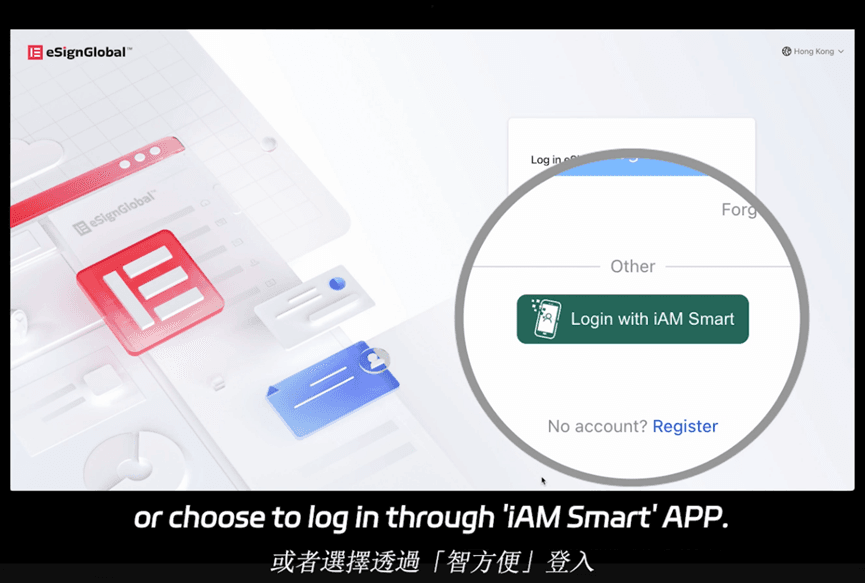
In the APAC context, eSignGlobal shines with seamless integrations like Hong Kong's IAm Smart and Singapore's Singpass, ensuring regulatory alignment and faster processing. Pricing is more transparent than competitors, with overages clearly tiered and no surprise add-ons for regional features, making it ideal for cross-border operations.
For businesses seeking a DocuSign alternative with robust regional compliance, eSignGlobal offers a practical, cost-optimized path forward, blending global standards with local efficiency.
FAQs
