
'%3e%3cpath%20fill-rule='evenodd'%20clip-rule='evenodd'%20d='M6.99935%2012.8327C10.221%2012.8327%2012.8327%2010.221%2012.8327%206.99935C12.8327%203.77769%2010.221%201.16602%206.99935%201.16602C3.77769%201.16602%201.16602%203.77769%201.16602%206.99935C1.16602%2010.221%203.77769%2012.8327%206.99935%2012.8327Z'%20stroke='%23666666'%20stroke-linecap='round'%20stroke-linejoin='round'/%3e%3cpath%20d='M1.16602%207H12.8327'%20stroke='%23666666'%20stroke-linecap='round'%20stroke-linejoin='round'/%3e%3cpath%20fill-rule='evenodd'%20clip-rule='evenodd'%20d='M6.99935%2012.8327C8.28802%2012.8327%209.33268%2010.221%209.33268%206.99935C9.33268%203.77769%208.28802%201.16602%206.99935%201.16602C5.71068%201.16602%204.66602%203.77769%204.66602%206.99935C4.66602%2010.221%205.71068%2012.8327%206.99935%2012.8327Z'%20stroke='%23666666'%20stroke-linecap='round'%20stroke-linejoin='round'/%3e%3cpath%20d='M2.875%202.95898C3.93063%204.01461%205.38896%204.66754%206.99978%204.66754C8.61062%204.66754%2010.069%204.01461%2011.1246%202.95898'%20stroke='%23666666'%20stroke-linecap='round'%20stroke-linejoin='round'/%3e%3cpath%20d='M11.1246%2011.0425C10.069%209.98691%208.61062%209.33398%206.99978%209.33398C5.38896%209.33398%203.93063%209.98691%202.875%2011.0425'%20stroke='%23666666'%20stroke-linecap='round'%20stroke-linejoin='round'/%3e%3c/g%3e%3cdefs%3e%3cclipPath%20id='clip0_1267_9109'%3e%3crect%20width='14'%20height='14'%20fill='white'/%3e%3c/clipPath%3e%3c/defs%3e%3c/svg%3e)


How to optimize e-signature costs for organizations with multiple departments and budget centers?


In today's fast-paced business environment, organizations across industries are increasingly relying on electronic signature (e-signature) solutions to streamline workflows, ensure compliance, and reduce paper-based processes. For companies with multiple departments and distinct budget centers—such as sales, HR, legal, and finance—managing e-signature costs can become a complex challenge. These entities often face fragmented usage, leading to overprovisioning, redundant subscriptions, and unexpected add-on fees. Optimizing these costs requires a strategic approach that balances efficiency, scalability, and value, ultimately supporting bottom-line goals without compromising security or usability.

Optimizing E-Signature Costs for Multi-Department Organizations
Assessing Current Usage and Needs Across Departments
The foundation of cost optimization begins with a thorough audit of e-signature usage patterns within your organization. Multi-department setups often result in siloed accounts, where sales teams might send high-volume contracts, HR handles occasional onboarding documents, and legal requires advanced compliance features. Start by mapping out envelope volumes (the number of documents sent for signing), user seats, and feature dependencies. Tools like usage analytics dashboards from e-signature providers can help quantify this— for instance, tracking how many envelopes are consumed monthly per department.
Identify low-hanging fruit: Departments with sporadic needs, such as marketing for event waivers, may not require premium plans. Consolidate these into shared pools to avoid per-user licensing fees. According to industry benchmarks, organizations can reduce costs by 20-30% simply by eliminating duplicate subscriptions. Involve budget center leads early to align on priorities, ensuring that high-volume users like sales get bulk send capabilities while others stick to basic templates and reminders.
Selecting Tiered Plans and Flexible Pricing Models
E-signature providers typically offer tiered plans—personal, standard, business pro, and enterprise—each with varying envelope quotas and features. For multi-department organizations, opt for seat-based or envelope-based models over rigid per-user pricing. Annual billing often yields discounts of 15-20% compared to monthly, making it ideal for predictable departmental needs. Evaluate quotas carefully: Standard plans might cap at 100 envelopes per user annually, but automation tools like web forms or bulk sends can quickly exhaust these, incurring overage fees.
Consider hybrid approaches: Allocate shared enterprise licenses for core teams (e.g., legal and finance) while providing lighter personal plans for peripheral users. This prevents budget overruns in decentralized centers. Additionally, negotiate volume discounts or custom add-ons for identity verification and SMS delivery, which are often metered. Providers like those in the market allow API integrations to automate sends, potentially shifting from manual to programmatic usage and unlocking developer plans with higher quotas at a fixed annual rate, such as $600 for starters covering 40 envelopes monthly.
Implementing Centralized Governance and Automation
Fragmentation across budget centers amplifies costs through inefficient workflows. Centralize e-signature management via a single admin console to monitor usage, enforce policies, and allocate costs transparently. This could involve SSO integration for seamless access across departments, reducing the need for multiple logins and associated support tickets.
Leverage automation to stretch quotas: Features like templates, conditional logic, and scheduled sending minimize envelope consumption by reusing documents and routing them efficiently. For organizations with global teams, factor in regional compliance—APAC operations might need localized ID verification, adding surcharges. Train users on best practices, such as combining multiple signatures into one envelope, to optimize per-send efficiency. Finally, conduct quarterly reviews to reallocate licenses based on evolving needs, potentially saving 10-15% annually by downgrading unused seats.
Monitoring Add-Ons and Long-Term Contracts
Add-ons like SMS/WhatsApp delivery or advanced analytics can inflate bills if not monitored. Track metered usage via provider dashboards and set departmental alerts for thresholds. For long-term optimization, review contracts annually—many providers offer loyalty discounts or migration credits. In multi-budget scenarios, use internal chargeback models to attribute costs accurately, encouraging departments to adopt cost-conscious behaviors.
By focusing on these strategies, organizations can achieve up to 40% savings on e-signature expenses, transforming a fragmented tool into a unified asset that supports cross-departmental collaboration.
Challenges with Major E-Signature Providers
While e-signature solutions promise efficiency, major players often introduce hurdles that complicate cost management, especially for organizations with diverse departmental needs.
Adobe Sign's Pricing Opacity and Market Shifts
Adobe Sign has long been a staple for enterprises integrated with Adobe's ecosystem, offering robust features like conditional fields and payment collection. However, its pricing remains notoriously opaque, with custom quotes that vary widely based on seat count, envelope volume, and add-ons. Organizations frequently report surprise fees for identity verification or API access, making budgeting across multiple centers unpredictable. More critically, Adobe Sign's withdrawal from the China mainland market in recent years has left APAC-focused businesses scrambling for compliant alternatives, disrupting workflows and forcing costly migrations. This exit highlights vulnerabilities in global reliance on U.S.-centric providers, particularly for regions demanding data residency.

DocuSign's Elevated Costs and Regional Limitations
DocuSign dominates the e-signature space with comprehensive plans, from Personal at $120/year for basic needs to Business Pro at $480/user/year, including bulk sends and web forms. Yet, its pricing structure—seat-based with envelope caps around 100 per user annually—can escalate quickly for multi-department use. Add-ons like identity verification and SMS delivery are metered, leading to unpredictable bills, while API plans start at $600/year but limit automation sends, frustrating high-volume integrations. Transparency issues persist, as enterprise pricing is quote-only, often resulting in higher-than-expected totals.
In long-tail regions like APAC, DocuSign faces criticism for inconsistent performance: Cross-border latency slows document loading, limited local ID methods increase compliance costs, and data residency surcharges add layers of expense. Support in these areas is premium-priced, and automation quotas remain capped regardless of plan, making it less agile for diverse budget centers.

Comparing E-Signature Solutions: DocuSign, Adobe Sign, and eSignGlobal
To aid decision-making, here's a neutral comparison of key providers based on pricing, features, and regional suitability. While each has strengths, choices depend on organizational scale and geography.
| Aspect | DocuSign | Adobe Sign | eSignGlobal |
|---|---|---|---|
| Base Pricing (Annual, per User) | $300–$480 (Standard to Pro) | Custom (often $20–$50/month) | $200 (Essential, unlimited seats) |
| Envelope Quota | ~100/user/year (capped automation) | Variable, quote-based | Up to 100/month (scalable) |
| Transparency | Moderate; add-ons metered | Low; highly customized | High; fixed tiers with clear fees |
| APAC/Regional Compliance | Limited; latency and surcharges | Withdrawn from China; inconsistent | Optimized; native integrations |
| API & Automation | Robust but quota-limited ($600+ starter) | Strong ecosystem integration | Flexible; cost-effective for mid-size |
| Cost for Multi-Department | High due to seats/envelopes | Unpredictable for globals | Budget-friendly with unlimited users |
| Overall Suitability | Enterprise globals | Adobe-integrated teams | APAC-focused, value-driven orgs |
This table underscores how eSignGlobal edges out in affordability and regional fit, though DocuSign and Adobe Sign excel in mature markets.
Spotlight on eSignGlobal for APAC and Regional Optimization
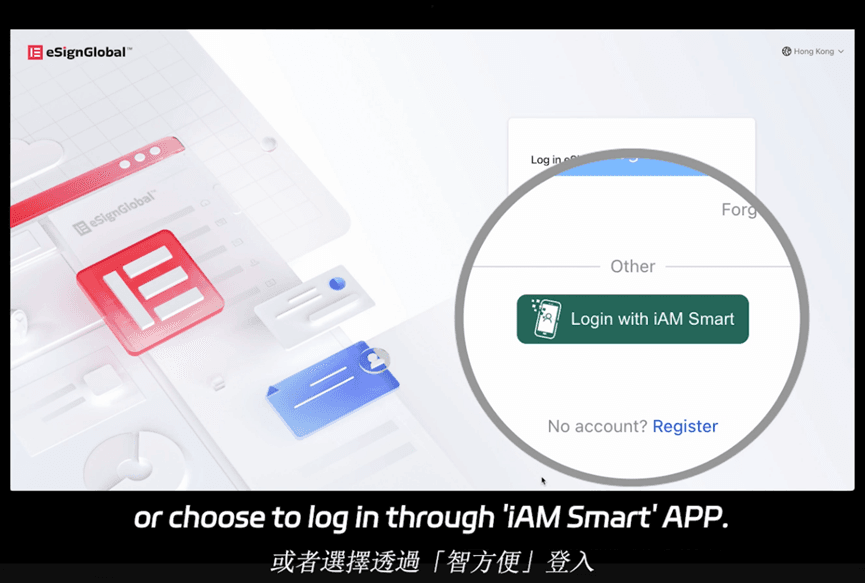
For organizations eyeing APAC expansion or regional compliance, eSignGlobal emerges as a compelling option. Its pricing is more accessible, with the Essential plan at just $16.6/month (annual equivalent), allowing up to 100 documents for signature, unlimited user seats, and access code verification—all on a compliant foundation. This structure is particularly cost-effective for multi-department setups, avoiding per-seat fees that plague competitors. eSignGlobal's APAC advantages shine through optimized speeds in China, Hong Kong, and SEA, seamless integrations with Hong Kong's iAM Smart and Singapore's Singpass for native identity verification, and flexible data residency options that reduce latency and surcharges. These features enable efficient cross-budget workflows without the opacity or regional gaps seen elsewhere, offering strong value for compliance-heavy industries like finance and real estate.
In conclusion, while DocuSign remains a benchmark, organizations with multi-department and APAC needs may find eSignGlobal a reliable, regionally compliant alternative that aligns costs with practical demands. Exploring such options can unlock sustainable savings and smoother operations.
FAQs
