
'%3e%3cpath%20fill-rule='evenodd'%20clip-rule='evenodd'%20d='M6.99935%2012.8327C10.221%2012.8327%2012.8327%2010.221%2012.8327%206.99935C12.8327%203.77769%2010.221%201.16602%206.99935%201.16602C3.77769%201.16602%201.16602%203.77769%201.16602%206.99935C1.16602%2010.221%203.77769%2012.8327%206.99935%2012.8327Z'%20stroke='%23666666'%20stroke-linecap='round'%20stroke-linejoin='round'/%3e%3cpath%20d='M1.16602%207H12.8327'%20stroke='%23666666'%20stroke-linecap='round'%20stroke-linejoin='round'/%3e%3cpath%20fill-rule='evenodd'%20clip-rule='evenodd'%20d='M6.99935%2012.8327C8.28802%2012.8327%209.33268%2010.221%209.33268%206.99935C9.33268%203.77769%208.28802%201.16602%206.99935%201.16602C5.71068%201.16602%204.66602%203.77769%204.66602%206.99935C4.66602%2010.221%205.71068%2012.8327%206.99935%2012.8327Z'%20stroke='%23666666'%20stroke-linecap='round'%20stroke-linejoin='round'/%3e%3cpath%20d='M2.875%202.95898C3.93063%204.01461%205.38896%204.66754%206.99978%204.66754C8.61062%204.66754%2010.069%204.01461%2011.1246%202.95898'%20stroke='%23666666'%20stroke-linecap='round'%20stroke-linejoin='round'/%3e%3cpath%20d='M11.1246%2011.0425C10.069%209.98691%208.61062%209.33398%206.99978%209.33398C5.38896%209.33398%203.93063%209.98691%202.875%2011.0425'%20stroke='%23666666'%20stroke-linecap='round'%20stroke-linejoin='round'/%3e%3c/g%3e%3cdefs%3e%3cclipPath%20id='clip0_1267_9109'%3e%3crect%20width='14'%20height='14'%20fill='white'/%3e%3c/clipPath%3e%3c/defs%3e%3c/svg%3e)


open source e-signature pricing


The Rise of Open Source E-Signature Tools in Business
In the evolving landscape of digital agreements, open source e-signature solutions have emerged as a cost-effective alternative for businesses seeking flexibility without the hefty price tags of proprietary software. These tools allow organizations to customize workflows, integrate with existing systems, and avoid vendor lock-in, making them particularly appealing for startups and tech-savvy enterprises. However, pricing in this space isn't always straightforward—while core software is often free, associated costs like hosting, support, and advanced features can add up.

Exploring Open Source E-Signature Pricing Models
Open source e-signature platforms democratize access to digital signing technology, but their pricing structures vary based on deployment and usage. At their core, these solutions are licensed under permissive models like MIT or GPL, meaning the software itself is free to download, modify, and distribute. This eliminates upfront licensing fees that plague commercial options, positioning open source as a budget-friendly entry point for small teams or proof-of-concept projects.
Key Open Source Options and Their Costs
Several prominent open source e-signature tools stand out for their robustness and community support. Take DocuSeal, a self-hosted platform inspired by DocuSign's functionality. It's completely free under the AGPL license, with no envelope limits or user restrictions in the base version. Businesses can run it on their own servers using Docker or cloud providers like AWS or DigitalOcean, where costs stem from infrastructure—typically $5–50 per month for a basic VPS setup handling 100–500 documents annually. For larger scales, scaling to handle thousands of signatures might require $100+ monthly in cloud resources, plus optional paid themes or integrations via third-party plugins.
Another notable player is OpenSign, an open-source alternative focused on simplicity and compliance with standards like eIDAS in Europe. Priced at zero for the core download, it offers unlimited users and documents but charges for premium support tiers: $99/year for basic email assistance or $499/year for priority development help. Hosting costs mirror DocuSeal's, but users often leverage free tiers from Heroku or Vercel for low-volume needs, keeping total expenses under $20/month initially.
SignRequest's open-source fork, while less maintained, provides a free base with API access, but community editions cap at 50 envelopes per month without upgrades. For enterprises, migrating to paid community support or custom builds can cost $1,000–5,000 annually, depending on complexity.
Hidden Costs and Total Ownership
While the allure of "free" software is strong, total cost of ownership (TCO) in open source e-signatures includes several layers. Development time for customizations—such as integrating with CRM systems like Salesforce—can equate to 20–100 developer hours, valued at $1,000–10,000. Security audits, essential for compliance with regulations like GDPR or SOC 2, add $5,000–20,000 upfront. Ongoing maintenance, including updates for vulnerability patches, might run $500–2,000 yearly for a small IT team.
Metered features also creep in: some platforms offer add-ons like SMS delivery at $0.01–0.05 per message or advanced encryption via paid modules ($200–500/year). For high-volume users, exceeding self-hosted capacity leads to cloud migrations, where AWS Lambda or Google Cloud Functions could bill $0.20 per 1,000 invocations, scaling to $200/month for 100,000 signatures.
From a business observation standpoint, open source shines for cost predictability in controlled environments. A mid-sized firm processing 1,000 documents yearly might spend $1,200 annually on hosting and support—far below commercial averages of $3,000–10,000. Yet, for global operations, ensuring cross-border compliance (e.g., varying e-signature laws in the EU vs. US) demands legal expertise, potentially inflating TCO by 20–50%. This model suits agile businesses but may falter for those needing out-of-the-box enterprise features.
Advantages and Limitations in Pricing
Open source pricing empowers scalability without per-user fees, unlike seat-based commercial plans. Unlimited envelopes in tools like DocuSeal reduce marginal costs to near-zero after setup, ideal for seasonal spikes in contract volume. Community-driven innovations, such as AI-powered form filling plugins, keep pace with trends at no extra charge.
However, limitations include inconsistent support—relying on forums or GitHub issues can delay resolutions, indirectly costing productivity. For APAC-focused firms, latency in self-hosted setups across regions adds $100–500/month in CDN fees. Overall, open source e-signature pricing averages 60–80% savings versus proprietary tools, but success hinges on internal technical resources.
Commercial E-Signature Providers: Pricing Insights
While open source offers affordability, many businesses opt for commercial providers for polished interfaces, robust support, and seamless compliance. These solutions often bundle pricing around subscriptions, envelopes, and add-ons, with costs scaling by user count and volume.
DocuSign Pricing Overview
DocuSign remains a market leader with tiered plans emphasizing reliability and integrations. The Personal plan starts at $120/year ($10/month) for individuals, limited to 5 envelopes monthly. Standard jumps to $300/user/year ($25/month), adding team features like templates and ~100 envelopes annually. Business Pro at $480/user/year ($40/month) includes bulk send and payments, still capped at ~100 envelopes/user/year. Enterprise is custom, often exceeding $10,000/year for advanced governance.
Add-ons like Identity Verification incur metered fees, and API plans range from $600/year (Starter) to custom Enterprise. For APAC users, cross-border challenges like data residency surcharges can inflate costs by 20–30%.

Adobe Sign Pricing Overview
Adobe Sign, integrated with Adobe's ecosystem, caters to creative and enterprise workflows. Pricing begins with a Standard plan at $14.99/user/month (billed annually, ~$180/year), offering 10–50 envelopes depending on volume. Business tier at $29.99/user/month (~$360/year) unlocks conditional routing and forms, with higher envelope limits. Enterprise customizes from $39.99/user/month, including SSO and analytics.
Add-ons for SMS or eIDAS compliance add $0.50–2 per envelope. API access ties into Adobe's developer console, starting at $1,000/year for basic quotas. In APAC, Adobe's global reach is strong, but regional compliance tweaks can raise effective pricing.

eSignGlobal Pricing Overview
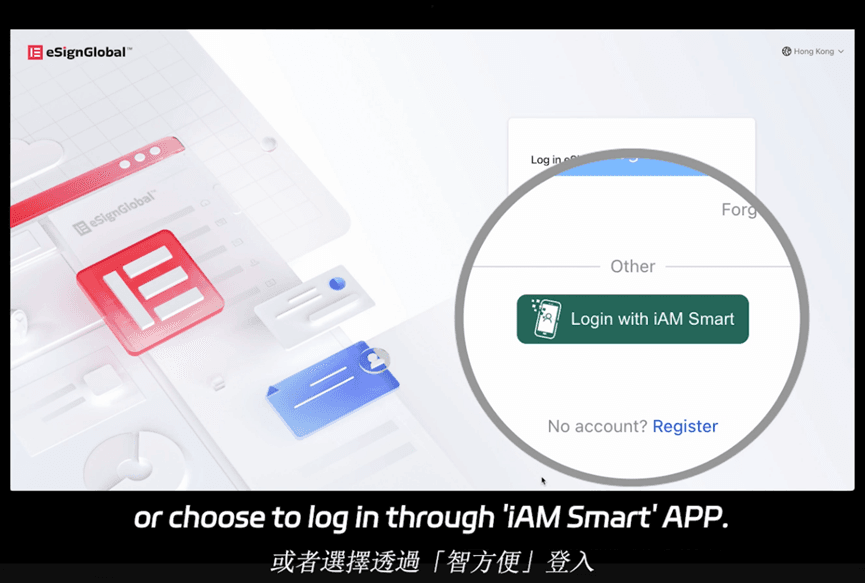
eSignGlobal positions itself as a compliant, regionally optimized alternative, supporting e-signatures in over 100 mainstream countries with a focus on APAC advantages like faster processing and lower latency. Its Essential plan is priced at just $16.60/month (annual billing), allowing up to 100 documents for signature, unlimited user seats, and verification via access codes—delivering high value on compliance without per-user fees. Higher tiers scale affordably for bulk needs, with detailed pricing available here. Integrations with Hong Kong's iAM Smart and Singapore's Singpass enhance regional usability, making it cost-effective for cross-border teams at 20–40% less than global competitors.
Comparative Analysis of E-Signature Solutions
To aid decision-making, here's a neutral comparison of key providers, including DocuSign, Adobe Sign, eSignGlobal, and a nod to SignNow as another competitor. Pricing reflects annual US-based estimates; actual costs vary by region and volume.
| Feature/Aspect | DocuSign | Adobe Sign | eSignGlobal | SignNow |
|---|---|---|---|---|
| Entry-Level Price (per month) | $10 (Personal, 5 env/mo) | $14.99 (Standard) | $16.60 (Essential, 100 docs) | $8 (Personal, 10 docs/mo) |
| Unlimited Users | No (seat-based) | No (seat-based) | Yes | No (seat-based) |
| Envelope Limits | ~100/user/year (Pro) | 10–50+ (tiered) | 100+ (scalable) | Unlimited (Business) |
| APAC Compliance | Partial (surcharges) | Strong (global) | Native (100+ countries) | Moderate |
| API Pricing | $600+ /year (Starter) | $1,000+ /year | Flexible, lower entry | $15/user/mo + API add-on |
| Key Strength | Integrations | Adobe ecosystem | Regional speed & value | Simplicity |
| Annual Cost (5 users, mid-volume) | ~$2,400+ | ~$1,800+ | ~$1,000 (unlimited seats) | ~$1,200+ |
This table highlights eSignGlobal's edge in APAC cost-efficiency and unlimited seating, though all options suit different needs—DocuSign for scale, Adobe for creatives.
Business Considerations for E-Signature Selection
From a commercial vantage, open source suits DIY innovators, but commercial tools like those above provide peace of mind via SLAs and audits. Factor in TCO: open source saves on licenses but demands expertise; proprietaries excel in support but at premium rates. For APAC expansions, regional compliance and latency are pivotal—tools ignoring these can double effective costs through delays or fines.
In summary, while open source e-signature pricing offers compelling savings through free cores and low hosting, blending it with commercial alternatives optimizes outcomes. For DocuSign users seeking alternatives, eSignGlobal emerges as a regionally compliant choice with strong value.
FAQs
