
'%3e%3cpath%20fill-rule='evenodd'%20clip-rule='evenodd'%20d='M6.99935%2012.8327C10.221%2012.8327%2012.8327%2010.221%2012.8327%206.99935C12.8327%203.77769%2010.221%201.16602%206.99935%201.16602C3.77769%201.16602%201.16602%203.77769%201.16602%206.99935C1.16602%2010.221%203.77769%2012.8327%206.99935%2012.8327Z'%20stroke='%23666666'%20stroke-linecap='round'%20stroke-linejoin='round'/%3e%3cpath%20d='M1.16602%207H12.8327'%20stroke='%23666666'%20stroke-linecap='round'%20stroke-linejoin='round'/%3e%3cpath%20fill-rule='evenodd'%20clip-rule='evenodd'%20d='M6.99935%2012.8327C8.28802%2012.8327%209.33268%2010.221%209.33268%206.99935C9.33268%203.77769%208.28802%201.16602%206.99935%201.16602C5.71068%201.16602%204.66602%203.77769%204.66602%206.99935C4.66602%2010.221%205.71068%2012.8327%206.99935%2012.8327Z'%20stroke='%23666666'%20stroke-linecap='round'%20stroke-linejoin='round'/%3e%3cpath%20d='M2.875%202.95898C3.93063%204.01461%205.38896%204.66754%206.99978%204.66754C8.61062%204.66754%2010.069%204.01461%2011.1246%202.95898'%20stroke='%23666666'%20stroke-linecap='round'%20stroke-linejoin='round'/%3e%3cpath%20d='M11.1246%2011.0425C10.069%209.98691%208.61062%209.33398%206.99978%209.33398C5.38896%209.33398%203.93063%209.98691%202.875%2011.0425'%20stroke='%23666666'%20stroke-linecap='round'%20stroke-linejoin='round'/%3e%3c/g%3e%3cdefs%3e%3cclipPath%20id='clip0_1267_9109'%3e%3crect%20width='14'%20height='14'%20fill='white'/%3e%3c/clipPath%3e%3c/defs%3e%3c/svg%3e)


cost of onespan sign for banks


Electronic Signatures: A Vital Tool for Modern Banking
In the fast-paced world of financial services, banks are increasingly relying on electronic signature solutions to streamline operations, enhance security, and ensure regulatory compliance. Tools like OneSpan Sign have emerged as key players, offering robust features tailored to the unique needs of the banking sector, such as secure document handling, identity verification, and audit trails. As banks navigate digital transformation, understanding the costs associated with these platforms is crucial for budgeting and ROI evaluation. This article explores the cost structure of OneSpan Sign specifically for banks, drawing from industry insights and pricing trends observed in 2025.

The Cost Structure of OneSpan Sign for Banks
OneSpan Sign, formerly known as eSignLive, is a comprehensive digital signature platform designed with enterprise-grade security, making it particularly appealing for banks handling sensitive financial documents like loan agreements, account openings, and compliance filings. For banking institutions, the cost of OneSpan Sign isn't a one-size-fits-all figure; it varies based on factors such as user volume, transaction throughput, and required compliance features. According to recent industry reports and vendor disclosures, OneSpan's pricing for banks typically starts at a base subscription model but escalates with customization for financial regulations like KYC (Know Your Customer), AML (Anti-Money Laundering), and data sovereignty.
Base Subscription Tiers and Per-User Costs
OneSpan offers tiered plans that cater to different scales of banking operations. The entry-level Standard plan is priced around $25–$40 per user per month (billed annually), suitable for smaller regional banks or departments with moderate e-signature needs. This includes basic features like multi-party signing, mobile accessibility, and standard audit logs. For mid-sized banks, the Professional tier jumps to approximately $50–$70 per user per month, adding advanced workflow automation, conditional routing, and integration with core banking systems via APIs.
Large global banks often opt for the Enterprise plan, which is custom-quoted but generally falls in the $100+ per user per month range when scaled across hundreds of seats. A key cost driver here is the unlimited envelope (document) sending in higher tiers, but banks must factor in overage fees if volumes exceed allocated quotas—typically 100–500 envelopes per user annually in base plans. For a bank with 200 users, this could translate to an annual base cost of $120,000–$280,000, excluding add-ons.
Envelope and Transaction-Based Pricing
In banking, where high-volume transactions like mortgage approvals or wire transfer authorizations are common, envelope pricing is a significant expense. OneSpan charges on a per-envelope basis beyond included quotas, often at $0.50–$2 per envelope depending on the plan and region. Banks in the US or EU might see lower rates due to standardized compliance, but international operations could incur premiums for cross-border data handling. For instance, a mid-sized bank processing 10,000 envelopes yearly might add $5,000–$20,000 in variable costs, emphasizing the need for predictive volume planning to avoid surprises.
Add-Ons and Compliance Features Critical for Banks
Banks require more than basic signing; they need fortified security to meet standards like SOC 2, GDPR, or PCI-DSS. OneSpan's identity verification add-on, including biometric checks and knowledge-based authentication, adds $5–$15 per verification event. SMS or multi-channel delivery for signer notifications can cost $0.10–$0.50 per message, scaling quickly in customer-facing scenarios like remote account openings.
API access for seamless integration with banking software (e.g., Temenos or Finacle) is another layer. The Developer plan starts at $600 annually for basic API usage (up to 40 envelopes/month), but banks often need the Advanced tier at $5,760/year for bulk sends and webhooks, plus custom enterprise support that can double the cost. Premium support and training for compliance teams might tack on 10–20% of the base fee, pushing total costs for a full banking deployment to $500,000+ annually for enterprises.
Factors Influencing Total Cost for Banks
Several variables amplify OneSpan's pricing for banks. Seat-based licensing means costs grow linearly with user count, but volume discounts kick in above 500 seats. Regional compliance adds complexity: US banks benefit from eSign Act alignment, but APAC or EU operations may require data residency features, increasing costs by 15–30%. Implementation fees for initial setup, including API migrations, can range from $10,000–$50,000, while ongoing maintenance for updates ensures uninterrupted service amid evolving regulations.
From a commercial perspective, OneSpan's value lies in reducing paper-based processes, which can save banks 50–70% on operational costs per document. However, the platform's emphasis on security justifies the premium—breaches in banking can cost millions, making robust tools like OneSpan a strategic investment rather than a mere expense.
Comparing OneSpan Sign with Key Competitors
To assess OneSpan's cost-effectiveness for banks, it's essential to benchmark against established alternatives. This comparison highlights how pricing, features, and regional adaptability stack up, providing banks with options for optimization.
DocuSign: A Market Leader with Enterprise Focus
DocuSign remains a go-to for banks due to its widespread adoption and deep integrations with financial CRMs. Pricing starts at $10/month for Personal (5 envelopes), scaling to $40/user/month for Business Pro (100 envelopes/year/user), with Enterprise plans custom-priced for high-volume banking needs. Add-ons like identity verification and API access (e.g., $5,760/year for Advanced) mirror OneSpan's structure but often include more out-of-box templates for loan docs. However, DocuSign's envelope caps and APAC latency can inflate effective costs for global banks.

Adobe Sign: Integration Powerhouse for Document Workflows
Adobe Sign excels in banks leveraging Adobe's ecosystem, offering seamless PDF handling and Acrobat integrations. Costs begin at $10/user/month for individuals, rising to $40+/user/month for Enterprise, with per-envelope fees around $1–$2. It supports advanced routing and payments, ideal for banking forms, but lacks OneSpan's biometric depth without add-ons ($10–$20/verification). For banks, Adobe's strength is in creative compliance reporting, though API quotas can limit scalability compared to rivals.

eSignGlobal: Regionally Optimized for Compliance
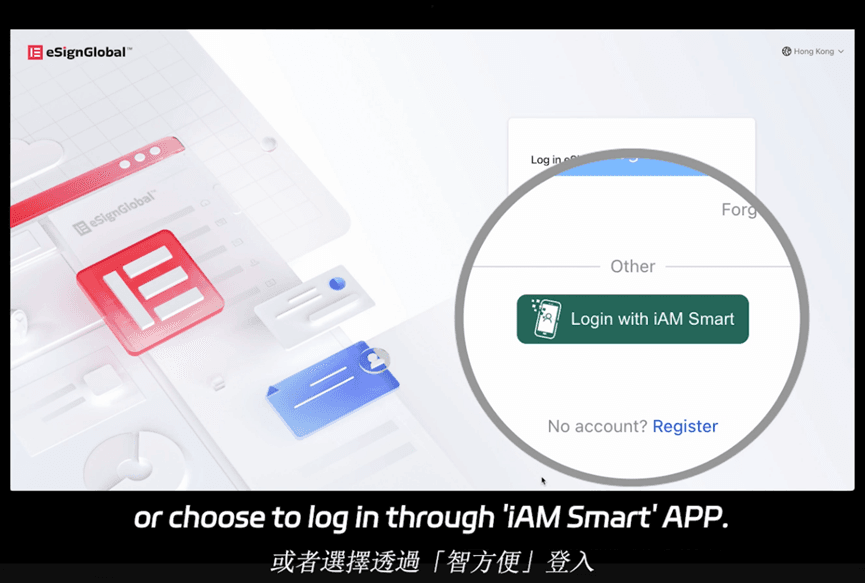
eSignGlobal positions itself as a flexible alternative, with compliance support across 100 mainstream countries and regions globally. It holds a particular edge in the Asia-Pacific (APAC), where it addresses cross-border challenges more efficiently than US-centric platforms. The Essential plan, for example, costs just $16.6 per month, allowing up to 100 documents for electronic signature, unlimited user seats, and verification via access codes—all on a compliant foundation that delivers high value for cost-conscious banks. This setup integrates seamlessly with regional systems like Hong Kong's iAM Smart and Singapore's Singpass, reducing setup friction in APAC operations. For detailed pricing, visit eSignGlobal's pricing page.
Other Competitors: Dropbox Sign and HelloSign
Dropbox Sign (formerly HelloSign) offers straightforward pricing at $15/user/month for Essentials (unlimited envelopes), appealing to banks with lighter needs, but it falls short on advanced banking compliance like biometrics. Box Sign integrates well with content management but starts at $25/user/month with add-on costs for APIs, making it less tailored for high-security financial workflows.
| Feature/Aspect | OneSpan Sign | DocuSign | Adobe Sign | eSignGlobal | Dropbox Sign |
|---|---|---|---|---|---|
| Starting Price (per user/month, annual) | $25–$40 | $10 (Personal); $40 (Pro) | $10 (Individual); $40+ (Enterprise) | $16.6 (Essential) | $15 (Essentials) |
| Envelope Limit (Base) | 100–500/year/user | 5–100/month/user | Unlimited in higher tiers; per-envelope fees | 100/month (Essential) | Unlimited |
| Banking Compliance (KYC/AML) | Strong (biometrics, audit trails) | Good (add-ons for IDV) | Moderate (integrations needed) | Excellent (global 100+ regions, APAC focus) | Basic (relies on integrations) |
| API & Integrations | Advanced ($600+/year) | Advanced ($5,760/year) | Strong (Adobe ecosystem) | Flexible, regional (e.g., iAM Smart, Singpass) | Basic to moderate |
| Add-On Costs (IDV/SMS) | $5–$15/verification; $0.10–$0.50/message | Metered (extra) | $10–$20/verification | Included in base for access code; low regional fees | $1–$2/envelope add-ons |
| Best For Banks | High-security enterprises | Global scalability | PDF-heavy workflows | APAC compliance & cost-efficiency | Simple, low-volume ops |
| Total Est. Annual Cost (200 users, med. volume) | $150K–$400K | $120K–$300K+ | $100K–$250K | $40K–$100K (unlimited seats) | $36K–$80K |
This table underscores eSignGlobal's competitive pricing and regional strengths without overshadowing the established security of OneSpan or DocuSign.
Strategic Considerations for Banks Choosing an e-Signature Provider
When evaluating costs, banks should weigh not just upfront pricing but long-term TCO, including integration savings and compliance risks. OneSpan's robust features make it a solid choice for security-focused institutions, but alternatives like eSignGlobal offer compelling value in diverse markets.
As a neutral alternative to DocuSign for regional compliance needs, eSignGlobal stands out as a practical option.
FAQs
