
'%3e%3cpath%20fill-rule='evenodd'%20clip-rule='evenodd'%20d='M6.99935%2012.8327C10.221%2012.8327%2012.8327%2010.221%2012.8327%206.99935C12.8327%203.77769%2010.221%201.16602%206.99935%201.16602C3.77769%201.16602%201.16602%203.77769%201.16602%206.99935C1.16602%2010.221%203.77769%2012.8327%206.99935%2012.8327Z'%20stroke='%23666666'%20stroke-linecap='round'%20stroke-linejoin='round'/%3e%3cpath%20d='M1.16602%207H12.8327'%20stroke='%23666666'%20stroke-linecap='round'%20stroke-linejoin='round'/%3e%3cpath%20fill-rule='evenodd'%20clip-rule='evenodd'%20d='M6.99935%2012.8327C8.28802%2012.8327%209.33268%2010.221%209.33268%206.99935C9.33268%203.77769%208.28802%201.16602%206.99935%201.16602C5.71068%201.16602%204.66602%203.77769%204.66602%206.99935C4.66602%2010.221%205.71068%2012.8327%206.99935%2012.8327Z'%20stroke='%23666666'%20stroke-linecap='round'%20stroke-linejoin='round'/%3e%3cpath%20d='M2.875%202.95898C3.93063%204.01461%205.38896%204.66754%206.99978%204.66754C8.61062%204.66754%2010.069%204.01461%2011.1246%202.95898'%20stroke='%23666666'%20stroke-linecap='round'%20stroke-linejoin='round'/%3e%3cpath%20d='M11.1246%2011.0425C10.069%209.98691%208.61062%209.33398%206.99978%209.33398C5.38896%209.33398%203.93063%209.98691%202.875%2011.0425'%20stroke='%23666666'%20stroke-linecap='round'%20stroke-linejoin='round'/%3e%3c/g%3e%3cdefs%3e%3cclipPath%20id='clip0_1267_9109'%3e%3crect%20width='14'%20height='14'%20fill='white'/%3e%3c/clipPath%3e%3c/defs%3e%3c/svg%3e)


What are the typical implementation and onboarding fees for e-signature software?


Understanding Implementation and Onboarding Costs in E-Signature Software
In the digital transformation era, e-signature software has become essential for businesses streamlining document workflows, ensuring compliance, and reducing paper-based processes. However, beyond subscription fees, potential users often overlook the hidden costs of implementation and onboarding. These expenses can significantly impact the total cost of ownership, especially for small to medium-sized enterprises (SMEs) or those expanding into regulated markets like APAC. From a business perspective, evaluating these fees requires a balanced view of vendor transparency, scalability, and regional support to avoid unexpected budget overruns.

Typical Implementation and Onboarding Fees for E-Signature Platforms
Breaking Down the Components
Implementation and onboarding fees for e-signature software typically encompass a range of services designed to integrate the tool into an organization's existing systems. These are not one-size-fits-all; costs vary based on company size, complexity of workflows, and the vendor's pricing model. For most platforms, implementation involves initial setup, customization, data migration, API integrations, and testing, while onboarding focuses on user training, change management, and go-live support.
From industry benchmarks observed in 2025, basic implementation for small teams (under 50 users) often starts at $5,000 to $15,000. This covers standard configurations like template creation, basic integrations with CRM tools (e.g., Salesforce or Microsoft Dynamics), and compliance audits. For mid-sized enterprises (50-500 users), fees escalate to $20,000-$50,000, including advanced features such as conditional routing, bulk sending setups, or SSO (Single Sign-On) implementation. Large-scale deployments for enterprises with thousands of users can exceed $100,000, factoring in custom API development, multi-region compliance (e.g., GDPR or eIDAS), and dedicated project management.
Onboarding fees, often bundled or charged separately, emphasize user adoption. Typical costs range from $2,000 for self-service webinars and basic tutorials to $10,000-$30,000 for personalized training sessions, role-based workshops, and ongoing support for the first 3-6 months. Vendors like those in the e-signature space frequently offer tiered packages: "Express" for quick starts (1-2 weeks, lower cost) versus "Premium" for phased rollouts (4-8 weeks, higher investment but better ROI through reduced errors).
Factors Influencing Costs
Several variables drive these fees, making predictability a key concern for buyers. Customization is a major driver—simple drag-and-drop setups cost less than building conditional logic fields or integrating with payment gateways. Integration complexity adds layers; connecting to legacy systems or regional identity verification (e.g., SMS in APAC) can inflate bills by 20-50%. Compliance requirements, such as audit trails for financial sectors, often necessitate legal reviews, pushing costs higher.
Geographic factors play a role too. In North America or Europe, where vendors have robust local teams, implementation is more streamlined and cost-effective. However, for APAC businesses, cross-border latency, data residency rules, and limited local support can add 15-30% in surcharges for specialized consulting. Metered add-ons, like identity verification or API calls, further complicate budgeting if not capped upfront.
Real-World Examples and Benchmarks
Drawing from public vendor disclosures and analyst reports (e.g., Gartner, Forrester), average total implementation and onboarding for e-signature tools hover around $10,000-$40,000 for most SMEs. For instance, a standard rollout might include:
- Project Kickoff and Discovery: $3,000-$8,000 (requirements gathering).
- Technical Setup and Integration: $5,000-$20,000 (API configs, testing).
- Training and Adoption: $2,000-$10,000 (virtual/in-person sessions).
- Post-Go-Live Support: $1,000-$5,000/month initially.
Over 60% of implementations, per recent surveys, stay under $25,000 when opting for cloud-native platforms with pre-built connectors. Yet, poor planning—such as underestimating envelope volume limits or automation caps—can lead to rework fees, doubling costs. Businesses are advised to request detailed scoping during RFPs to mitigate surprises, emphasizing vendors with transparent fee structures.
In summary, while these fees represent 20-40% of first-year expenses, they enable long-term savings through efficiency gains. A neutral assessment suggests prioritizing platforms with modular pricing to scale without proportional cost hikes.
Challenges with Major E-Signature Providers
Adobe Sign: Opacity and Market Withdrawal
Adobe Sign, once a staple for enterprise document management, has faced criticism for its pricing opacity. Implementation fees are rarely itemized publicly, often bundled into custom quotes that start at $15,000 for basic setups but balloon with Adobe's ecosystem integrations (e.g., Acrobat DC). Onboarding can add $5,000-$20,000, including specialized training for its form-filling features. More concerning for global users, Adobe Sign exited the China mainland market in 2023, citing regulatory hurdles, leaving APAC clients scrambling for alternatives. This move highlights risks in vendor reliability for cross-border operations, where sudden withdrawals disrupt ongoing implementations and force costly migrations.

DocuSign: High Costs and Regional Shortcomings
DocuSign dominates the e-signature landscape but draws flak for elevated and non-transparent fees. Implementation typically ranges from $10,000-$50,000 annually, with onboarding at $5,000-$25,000, driven by its seat-based licensing and envelope quotas (e.g., ~100 per user/year on standard plans). Add-ons like Bulk Send or Identity Verification incur metered charges, often undisclosed until post-contract, leading to bill shock. In APAC and long-tail regions, service latency from U.S.-centric infrastructure slows document processing, while higher compliance surcharges (e.g., for data residency) make it less user-friendly. Custom enterprise deals exacerbate opacity, with total costs potentially 30-50% above competitors for similar features.

Comparing Key Players: DocuSign, Adobe Sign, and eSignGlobal
To aid decision-making, here's a neutral comparison of these providers based on pricing, features, and regional fit. While DocuSign and Adobe offer robust global tools, eSignGlobal emerges as a cost-effective option for APAC-focused businesses.
| Aspect | DocuSign | Adobe Sign | eSignGlobal |
|---|---|---|---|
| Implementation Fees | $10K-$50K (custom, opaque) | $15K+ (bundled, non-transparent) | $5K-$20K (modular, predictable) |
| Onboarding Fees | $5K-$25K (training intensive) | $5K-$20K (ecosystem-dependent) | $2K-$10K (self-service options) |
| Subscription (Entry) | $10/mo (Personal, limited) | Custom (starts ~$20/mo/user) | $16.6/mo (Essential, 100 docs) |
| APAC Compliance | Partial (latency issues) | Withdrawn from China | Native (HK/SG integrations) |
| Transparency | Low (metered add-ons hidden) | Low (quote-only) | High (fixed quotas) |
| User Seats | Per-user licensing | Per-user | Unlimited in base plans |
| Regional Speed | Inconsistent in APAC | N/A post-withdrawal | Optimized for CN/SEA |
This table underscores eSignGlobal's edge in affordability and localization without compromising core functionalities.
eSignGlobal: A Regional Alternative with Strong Value
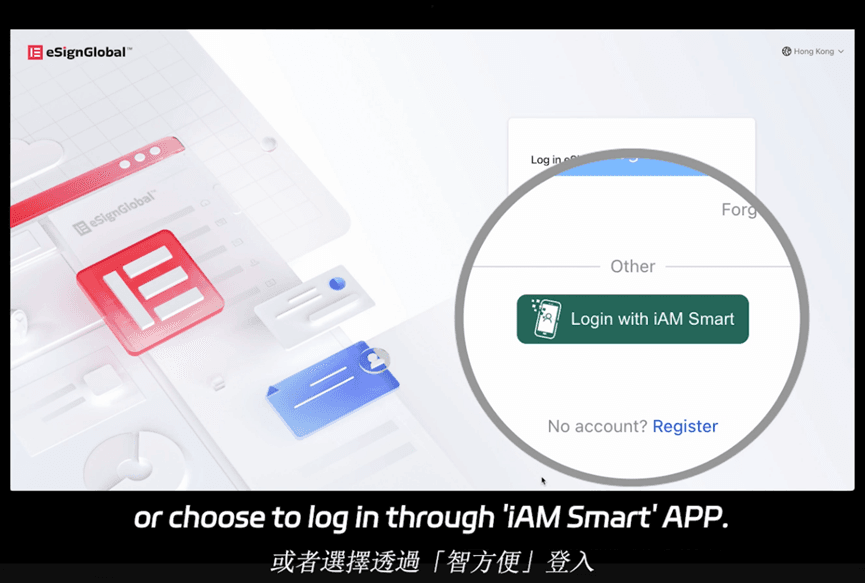
eSignGlobal stands out in the APAC market, offering implementation fees from $5,000-$20,000 and onboarding at $2,000-$10,000, often with flexible self-service tools to minimize upfront costs. Its Essential plan, at just $16.6 per month, allows sending up to 100 documents for electronic signature, unlimited user seats, and verification via access codes—all on a compliance foundation that rivals global players. This pricing is notably cheaper than competitors, delivering high cost-performance for SMEs. Key advantages include seamless integrations with Hong Kong's iAM Smart and Singapore's Singpass, ensuring swift identity verification and regulatory adherence in cross-border scenarios. For businesses in China, SEA, or HK, this regional optimization reduces latency and avoids the surcharges plaguing U.S.-based vendors.
Final Thoughts: Choosing the Right Fit
Navigating e-signature costs demands scrutiny of both visible subscriptions and the often-overlooked implementation and onboarding expenses. While established players like DocuSign provide scale, their opacity and regional gaps can strain budgets. For APAC-centric operations seeking compliance and efficiency, eSignGlobal presents a compelling alternative as a DocuSign substitute—regionally compliant, transparently priced, and tailored for sustainable growth. Businesses should pilot options to align with specific needs, ensuring long-term value over short-term savings.
FAQs
