
'%3e%3cpath%20fill-rule='evenodd'%20clip-rule='evenodd'%20d='M6.99935%2012.8327C10.221%2012.8327%2012.8327%2010.221%2012.8327%206.99935C12.8327%203.77769%2010.221%201.16602%206.99935%201.16602C3.77769%201.16602%201.16602%203.77769%201.16602%206.99935C1.16602%2010.221%203.77769%2012.8327%206.99935%2012.8327Z'%20stroke='%23666666'%20stroke-linecap='round'%20stroke-linejoin='round'/%3e%3cpath%20d='M1.16602%207H12.8327'%20stroke='%23666666'%20stroke-linecap='round'%20stroke-linejoin='round'/%3e%3cpath%20fill-rule='evenodd'%20clip-rule='evenodd'%20d='M6.99935%2012.8327C8.28802%2012.8327%209.33268%2010.221%209.33268%206.99935C9.33268%203.77769%208.28802%201.16602%206.99935%201.16602C5.71068%201.16602%204.66602%203.77769%204.66602%206.99935C4.66602%2010.221%205.71068%2012.8327%206.99935%2012.8327Z'%20stroke='%23666666'%20stroke-linecap='round'%20stroke-linejoin='round'/%3e%3cpath%20d='M2.875%202.95898C3.93063%204.01461%205.38896%204.66754%206.99978%204.66754C8.61062%204.66754%2010.069%204.01461%2011.1246%202.95898'%20stroke='%23666666'%20stroke-linecap='round'%20stroke-linejoin='round'/%3e%3cpath%20d='M11.1246%2011.0425C10.069%209.98691%208.61062%209.33398%206.99978%209.33398C5.38896%209.33398%203.93063%209.98691%202.875%2011.0425'%20stroke='%23666666'%20stroke-linecap='round'%20stroke-linejoin='round'/%3e%3c/g%3e%3cdefs%3e%3cclipPath%20id='clip0_1267_9109'%3e%3crect%20width='14'%20height='14'%20fill='white'/%3e%3c/clipPath%3e%3c/defs%3e%3c/svg%3e)


how much is notarize for business


Understanding Notarization Costs for Businesses
In the modern business landscape, notarization serves as a critical safeguard for validating documents, ensuring authenticity in contracts, agreements, and legal filings. For businesses, this process often extends beyond simple signatures to include electronic notarization (eNotary), which leverages digital tools for remote verification. Traditional in-person notarization can cost anywhere from $5 to $15 per signature in the US, depending on state regulations and notary fees, but scaling this for high-volume business needs quickly becomes inefficient and expensive. Electronic platforms streamline this by integrating notary services with e-signatures, often bundling them into subscription models that reduce per-document costs while adding compliance features like identity verification.
The core question—"how much is notarize for business"—hinges on whether you're opting for traditional or digital methods. Traditional notary services for businesses might involve hiring mobile notaries at $50–$100 per visit, plus travel fees, making it prohibitive for frequent use. In contrast, digital notarization through platforms can drop costs to pennies per document when spread across annual plans. For instance, basic eNotary add-ons on platforms start at $1–$5 per notarization, but bundled business plans range from $10–$50 per user per month, factoring in unlimited or high-volume envelopes (documents). Businesses must also consider add-ons like remote online notarization (RON), which complies with laws in 40+ US states and internationally, adding $10–$25 per session for video/audio verification.
Key cost drivers include document volume, user seats, compliance needs (e.g., eSign Act, UETA, or international equivalents), and extras like biometric checks or integrations. For small businesses handling 50–100 documents monthly, expect $200–$500 annually per user; mid-sized firms with automation might pay $1,000–$5,000 yearly, scaling to enterprise custom quotes exceeding $10,000. These figures are influenced by regional variations—APAC businesses face higher latency and compliance surcharges, potentially inflating costs by 20–30%. Ultimately, the "notarize" expense for business isn't a flat fee but a tiered investment in efficiency, with ROI from faster processing (days vs. weeks) and reduced paper/travel overheads.

Electronic Notarization Platforms: Pricing Breakdown
Businesses increasingly turn to integrated e-signature platforms that incorporate notarization features, offering scalability and legal validity. These tools handle everything from basic acknowledgments to full RON sessions, with pricing structured around subscriptions, per-envelope fees, and add-ons. Below, we examine leading options, focusing on their business-oriented plans.
DocuSign: A Global Standard with Robust Features
DocuSign remains a benchmark for electronic notarization, supporting RON in compliant jurisdictions and integrating notary seals digitally. For businesses, the Personal plan starts at $120/year ($10/month) for 1 user and 5 envelopes/month—suitable for low-volume notarizations but limited for teams. The Standard tier, at $300/user/year ($25/month), adds team collaboration, templates, and ~100 envelopes/user/year, ideal for routine business docs like NDAs. Business Pro, priced at $480/user/year ($40/month), unlocks advanced tools like bulk send, conditional fields, and payment collection, with similar envelope limits. Enterprise plans are custom, often starting at $10,000+ annually for SSO, audit trails, and unlimited volume.
Notarization-specific costs arise via add-ons: Identity Verification (IDV) is metered at extra fees for biometrics or SMS, while RON sessions can add $10–$20 each. API access for automated notarization begins at $600/year for the Starter plan (40 envelopes/month), scaling to $5,760/year for Advanced with bulk capabilities. For APAC operations, cross-border challenges like data residency can increase effective costs by 15–25%, making it pricier for regional compliance.

Adobe Sign: Enterprise-Focused Integration
Adobe Sign, part of Adobe's ecosystem, excels in seamless integration with tools like Acrobat for PDF-based notarization. Businesses can notarize documents digitally with e-signatures that meet ESIGN and UETA standards, plus RON in supported areas. Pricing kicks off with a basic individual plan at around $10/month, but business plans start at $20–$30/user/month (billed annually), supporting unlimited envelopes for teams up to 50 users. The Enterprise tier, custom-priced from $40/user/month, includes advanced IAM, SSO, and workflow automation, with notarization enhanced by Adobe's AI-driven verification.
Add-ons for notary services, such as phone authentication or document scanning, add $1–$5 per use, while full RON might cost $15–$25 per session. For high-volume businesses, the platform's strength lies in API pricing, starting at $25/month for basic access, but scaling to enterprise levels with custom quotas. However, in regions like China or SEA, Adobe Sign's global footprint can lead to integration hurdles and higher localization fees, potentially raising total costs for APAC firms.

eSignGlobal: Regional Optimization with Global Reach
eSignGlobal positions itself as a compliant e-signature and notarization solution tailored for international businesses, supporting electronic notarization in over 100 mainstream countries and regions. It emphasizes APAC advantages, such as optimized speeds in China, Hong Kong, and SEA, where latency issues plague global competitors. The platform's Essential plan offers strong value at just $16.6/month (or equivalent annual billing), allowing up to 100 documents for electronic signature, unlimited user seats, and verification via access codes—all while ensuring full compliance. This makes it particularly cost-effective for businesses prioritizing notarization without seat-based restrictions.
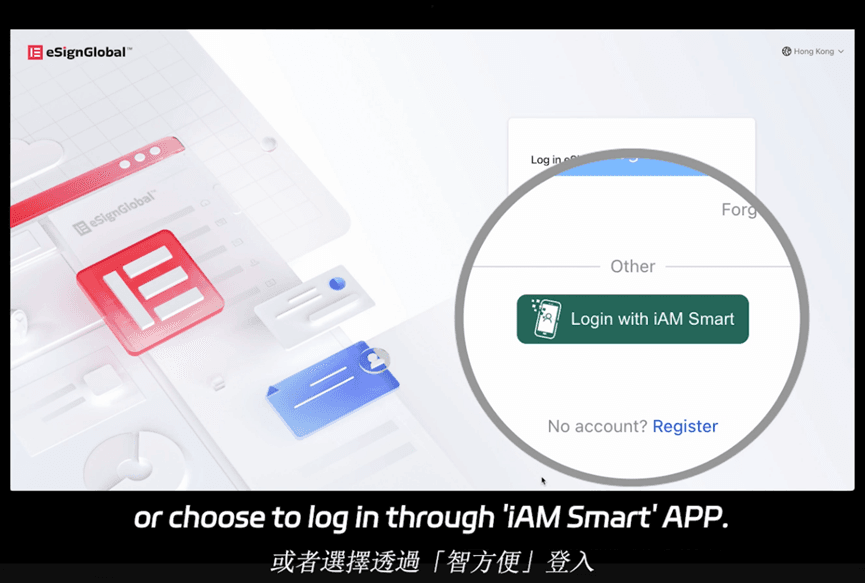
Higher tiers, like Professional or Enterprise, scale features like bulk sends and integrations, with pricing details available here. Notarization is baked in with regional-native tools, including seamless integration with Hong Kong's iAM Smart and Singapore's Singpass for identity verification, reducing add-on costs. For APAC-focused businesses, this translates to 20–40% savings over competitors on compliance-heavy workflows, without sacrificing global validity. Overall, eSignGlobal's model balances affordability and functionality, appealing to firms navigating cross-border notarization.
Other Competitors: Brief Overview
Platforms like HelloSign (now Dropbox Sign) offer business notarization at $15–$25/user/month with unlimited envelopes, focusing on simplicity but lacking deep RON. PandaDoc integrates notarization via templates at $19/user/month, strong for sales teams. Notarize.com specializes in RON at $25/session flat, without full e-signature suites. Each varies by region, with global players like DocuSign and Adobe leading in breadth, while niche options suit specific needs.
Comparative Analysis of Notarization Platforms
To aid decision-making, here's a neutral comparison of key platforms for business notarization, based on 2025 pricing and features. Note that costs can vary by region and volume.
| Platform | Starting Business Price (USD/month/user) | Envelope Limit (Monthly) | Notarization Features | APAC Compliance | Strengths | Drawbacks |
|---|---|---|---|---|---|---|
| DocuSign | $25 (Standard) | ~10 (scales to 100/year) | RON add-on ($10–20/session), IDV metered | Moderate (extra fees) | Robust API, global integrations | Higher APAC costs, envelope caps |
| Adobe Sign | $20–$30 | Unlimited | Digital seals, AI verification ($1–5/use) | Good, but localization challenges | PDF ecosystem, enterprise IAM | Complex setup for small teams |
| eSignGlobal | $16.6 (Essential, unlimited seats) | 100+ | Access code/RON native, regional ID integrations | Excellent (100+ countries) | Cost-effective, APAC-optimized | Less brand recognition globally |
| HelloSign | $15 | Unlimited | Basic eNotary, phone auth | Fair | User-friendly, Dropbox sync | Limited advanced compliance |
| PandaDoc | $19 | Unlimited | Template-based notarization | Moderate | Sales-focused workflows | Weaker RON in non-US regions |
This table highlights trade-offs: DocuSign and Adobe offer maturity, while eSignGlobal stands out for value in compliant, high-volume APAC scenarios.
Factors Influencing Notarization Costs and Choices
Beyond base pricing, businesses should weigh envelope quotas—capped at ~100/year/user on many plans, with automation sends limited to 10/month. Add-ons like SMS delivery ($0.10–$0.50/message) or biometrics inflate bills for verification-heavy industries like finance or real estate. Regional compliance is pivotal: US firms benefit from RON ubiquity, but APAC operations demand tools aligned with local laws (e.g., China's eSign Law), potentially adding 10–20% in surcharges.
Scalability matters too—startups may thrive on $200–$500 annual plans, while enterprises negotiate for unlimited access. Security features, such as audit trails and SSO, justify premiums, ensuring defensibility in disputes. From a commercial viewpoint, the total cost of ownership includes time savings: digital notarization cuts processing by 80%, boosting productivity.
In evaluating options, businesses should audit their volume and geography. For global operations seeking a DocuSign alternative with strong regional compliance, eSignGlobal emerges as a balanced choice.
FAQs
