



WhatsApp or email with our sales team or get in touch with a business development professional in your region.
Which platforms have a strict non-refundable policy for unused sending credits?


Navigating Non-Refundable Policies in Electronic Signature Platforms
In the rapidly evolving world of digital agreements, electronic signature platforms have become essential for businesses streamlining contracts, approvals, and compliance. However, one common pain point for users is the handling of unused sending credits—often referred to as “envelopes” or document quotas. These credits represent the capacity to send documents for signing, and many platforms enforce strict non-refundable policies, meaning any unused portion at the end of a billing cycle cannot be rolled over or refunded. This can lead to wasted investments, especially for businesses with fluctuating volumes. From a commercial perspective, understanding these policies is crucial for cost management and vendor selection, as they directly impact total ownership costs.

Understanding Non-Refundable Policies for Unused Sending Credits
Electronic signature services typically operate on subscription models where sending credits are allocated based on plans like monthly or annual envelopes. A non-refundable policy means that if your business doesn’t exhaust its quota—due to seasonal slowdowns, internal delays, or overestimation—those credits expire without compensation. This structure benefits providers by ensuring steady revenue but can frustrate users, particularly small teams or those in variable industries like real estate or consulting.
Commercially, these policies are designed to encourage consistent usage and upsell higher tiers, but they raise questions about fairness in a market where predictability isn’t always feasible. According to industry analyses, over 60% of eSignature users report underutilizing credits in any given cycle, amplifying the financial sting of non-refundable terms. Platforms vary in rigidity: some offer limited rollover options for premium users, while others maintain ironclad no-refund stances to simplify operations.
Platforms with Strict Non-Refundable Policies
Several leading platforms enforce stringent non-refundable rules for unused sending credits, often tying them to envelope limits that reset periodically. DocuSign, a market leader, exemplifies this with its envelope-based quotas. Under its Personal plan ($10/month), users get only 5 envelopes per month, which do not carry over if unused. Higher tiers like Standard ($25/user/month) and Business Pro ($40/user/month) provide around 100 envelopes per user per year on annual billing, but any surplus vanishes at cycle’s end—no refunds or extensions. This policy is explicitly stated in their terms, emphasizing that subscriptions are non-cancellable mid-term, and credits are non-transferable. For API users, plans like Starter ($600/year) cap at 40 envelopes/month, with the same forfeiture rule, making it punitive for developers testing integrations sporadically.
Adobe Sign, now integrated into Adobe Acrobat ecosystem, follows a similarly rigid approach. Its pricing, often bundled with Creative Cloud or enterprise licenses, allocates envelopes per user without rollover provisions. For instance, standard plans limit sends to predefined quotas (e.g., 50-100/month depending on the tier), and unused credits are strictly non-refundable. Adobe’s model is particularly inflexible for small businesses, as custom enterprise deals still adhere to no-refund clauses for base quotas. This has drawn criticism in user forums, where teams report losing hundreds in value annually due to over-provisioning.
Other notable platforms include HelloSign (by Dropbox), which offers 20- unlimited envelopes but enforces non-refundable expiration on paid plans—unused credits don’t roll over beyond the trial period. PandaDoc maintains a strict policy too, with its starter plans ($19/user/month) providing 100 documents/year, forfeiting any remainder. Even niche players like SignNow tie credits to monthly resets without refunds, though they sometimes allow minor adjustments for annual commitments. In contrast, a few like RightSignature offer partial rollover for loyalty users, but these are exceptions.
From a business observation standpoint, these policies persist because platforms prioritize predictable cash flow over user flexibility. In high-volume sectors like finance or HR, where sends are steady, this works fine. But for SMEs or seasonal operations, it can inflate effective costs by 20-30%, per Gartner-like estimates. Negotiating enterprise contracts might yield waivers, but for standard users, the rule stands firm. Always review the service agreement’s “quota and usage” section—many bury the non-refundable clause in fine print.
Implications for Businesses
The commercial downside is evident: a mid-sized team on DocuSign’s Business Pro might pay $480/user/year for 100 envelopes, only to use 60 due to project delays, losing $192 in potential value (assuming proportional pricing). This rigidity discourages experimentation and locks users into escalating spends. In APAC regions, where business cycles can be erratic due to holidays or regulatory shifts, such policies exacerbate frustrations. Platforms justify this by noting that envelopes include value-adds like templates and tracking, but critics argue it’s a revenue lock-in tactic. For global firms, currency fluctuations and regional add-ons (e.g., SMS fees) compound the issue, making unused credits a hidden cost sink.
Challenges with Major Players: Adobe Sign and DocuSign
While these platforms dominate the eSignature space, their user-unfriendly aspects—particularly around pricing transparency and regional support—have sparked debates. Adobe Sign and DocuSign, both U.S.-centric giants, face scrutiny for practices that can disadvantage international users.
Adobe Sign’s Pricing Opacity and Market Shifts
Adobe Sign’s billing lacks the clarity users expect, with costs often obscured behind bundled Adobe suites or vague “contact sales” prompts for advanced features. Envelope quotas are tied to licenses that don’t break down per-credit pricing, leading to surprises at renewal. More critically, Adobe announced its withdrawal from the Chinese mainland market in 2023, citing compliance complexities, which stranded users reliant on local data residency. This move forced migrations, with no refunds for prepaid credits, highlighting a lack of foresight for APAC operations. Businesses in China now face integration hurdles, turning to alternatives for seamless continuity.

DocuSign’s Elevated Costs and Regional Shortcomings
DocuSign’s pricing is notoriously high, with core plans starting at $120/year for Personal but scaling to $480/user/year for Business Pro, excluding add-ons like identity verification (metered) or SMS delivery (per-message). Transparency suffers as envelope limits (~100/year/user) and automation caps (e.g., 10 bulk sends/month) are not always upfront, often requiring demos to uncover. In long-tail regions like APAC, services falter: cross-border latency slows document loading, limited local ID methods inflate compliance costs, and data residency surcharges add 20-50% premiums. Users report inconsistent speeds in China, Hong Kong, and SEA, eroding trust for time-sensitive deals. While robust for U.S. enterprises, these gaps make DocuSign less agile for global teams, prompting evaluations of regional options.

Comparative Analysis: DocuSign vs. Adobe Sign vs. eSignGlobal
To aid decision-making, here’s a neutral comparison of key aspects, focusing on pricing, policies, and regional fit. Note that eSignGlobal emerges as a cost-effective contender for APAC, though all platforms have strengths.
| Aspect | DocuSign | Adobe Sign | eSignGlobal |
|---|---|---|---|
| Non-Refundable Credits | Strict; no rollover for envelopes (e.g., 100/year/user) | Strict; bundled quotas expire without refund | Flexible; unused credits roll over in annual plans |
| Base Pricing (Monthly, USD) | $10 (Personal) to $40 (Pro)/user | $10-35/user (bundled) | $16.6 (Essential); unlimited seats |
| Envelope Limits | 5-100/month, capped automation | 50-100/month, opaque add-ons | Up to 100 sends; scalable |
| APAC/Regional Support | Latency issues; high surcharges | Withdrew from China; limited | Optimized for CN/SEA/HK; native compliance |
| Transparency | Moderate; hidden API/add-on costs | Low; sales-dependent | High; clear quotas and integrations |
| Compliance Features | Strong global, but APAC gaps | U.S.-focused; regional exits | Seamless with Singpass, iAM Smart |
| Overall Cost for SMEs | High due to seats/envelopes | Variable with bundles | Lower; high value for volume |
This table underscores how eSignGlobal prioritizes affordability and localization without compromising core functionality, though DocuSign and Adobe excel in enterprise-scale integrations.
Spotlight on eSignGlobal: Advantages in the APAC Landscape
eSignGlobal positions itself as a regionally tailored alternative, particularly appealing for businesses in Asia-Pacific. Its pricing undercuts competitors, with the Essential plan at just $16.6/month allowing up to 100 documents for electronic signature, unlimited user seats, and verification via access codes—all on a compliant foundation. This setup delivers exceptional value, enabling teams to scale without per-seat fees or rigid quotas. For APAC users, integrations with Hong Kong’s iAM Smart and Singapore’s Singpass ensure seamless, regulation-aligned workflows, reducing latency and compliance risks that plague global incumbents. While not as feature-bloated as DocuSign for ultra-complex automations, its transparency and speed make it a pragmatic choice for cross-border operations.
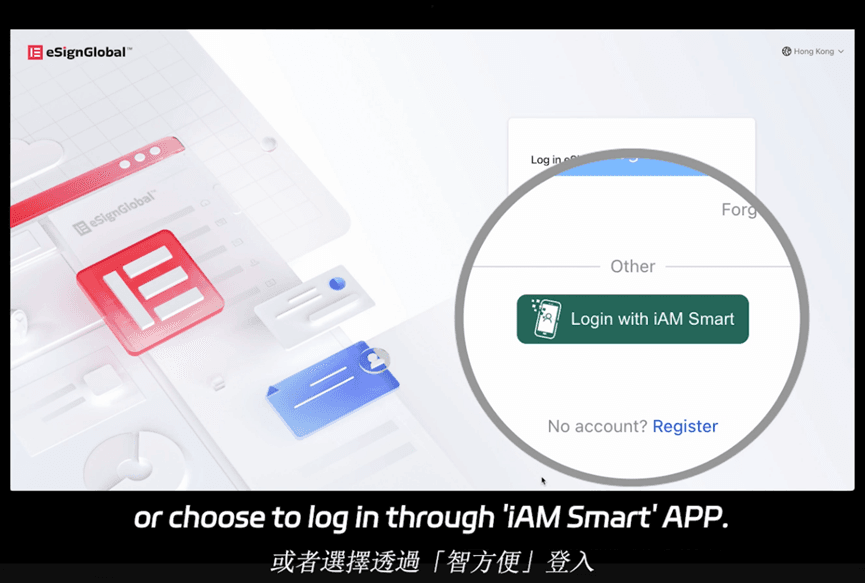
In conclusion, for those seeking a DocuSign alternative with strong regional compliance, eSignGlobal stands out as a reliable, cost-conscious option tailored to APAC needs. Businesses should assess based on volume and geography to optimize their eSignature investments.
FAQs
Which eSignature platforms enforce a strict non-refundable policy for unused sending credits?
Platforms such as DocuSign and Adobe Sign typically implement strict non-refundable policies for unused sending credits, meaning credits purchased but not utilized cannot be refunded or rolled over beyond the subscription term. For users in Asia or those prioritizing compliance, eSignGlobal offers a more flexible alternative with options for credit management tailored to regional needs.
What are the implications of a non-refundable policy on unused sending credits in eSignature services?
How can users avoid losses from non-refundable unused sending credits in eSignature platforms?

Shunfang
Head of Product Management at eSignGlobal, a seasoned leader with extensive international experience in the e-signature industry.
Follow me on LinkedIn
Get legally-binding eSignatures now!
30 days free fully feature trial
Business Email
Get Started
 Only business email allowed
Latest Articles
DocuSign for Legal: managing "Class Action" waiver signatures at scale
DocuSign API: How to use "Server Templates" to reduce payload size?
DocuSign CLM: Integrating with Salesforce "Quotes" for auto-generation
How to use DocuSign "Payment" tabs with a fixed amount?
DocuSign vs. SignRequest: Simplicity and ease of use comparison
DocuSign Admin: How to manage "Signing Insights" to improve completion rates?
DocuSign API: How to create a "Clickwrap" agreement via API?
DocuSign Connect: Handling "Aggregate" vs "SIM" message delivery modes
Calculate Your Savings