
'%3e%3cpath%20fill-rule='evenodd'%20clip-rule='evenodd'%20d='M6.99935%2012.8327C10.221%2012.8327%2012.8327%2010.221%2012.8327%206.99935C12.8327%203.77769%2010.221%201.16602%206.99935%201.16602C3.77769%201.16602%201.16602%203.77769%201.16602%206.99935C1.16602%2010.221%203.77769%2012.8327%206.99935%2012.8327Z'%20stroke='%23666666'%20stroke-linecap='round'%20stroke-linejoin='round'/%3e%3cpath%20d='M1.16602%207H12.8327'%20stroke='%23666666'%20stroke-linecap='round'%20stroke-linejoin='round'/%3e%3cpath%20fill-rule='evenodd'%20clip-rule='evenodd'%20d='M6.99935%2012.8327C8.28802%2012.8327%209.33268%2010.221%209.33268%206.99935C9.33268%203.77769%208.28802%201.16602%206.99935%201.16602C5.71068%201.16602%204.66602%203.77769%204.66602%206.99935C4.66602%2010.221%205.71068%2012.8327%206.99935%2012.8327Z'%20stroke='%23666666'%20stroke-linecap='round'%20stroke-linejoin='round'/%3e%3cpath%20d='M2.875%202.95898C3.93063%204.01461%205.38896%204.66754%206.99978%204.66754C8.61062%204.66754%2010.069%204.01461%2011.1246%202.95898'%20stroke='%23666666'%20stroke-linecap='round'%20stroke-linejoin='round'/%3e%3cpath%20d='M11.1246%2011.0425C10.069%209.98691%208.61062%209.33398%206.99978%209.33398C5.38896%209.33398%203.93063%209.98691%202.875%2011.0425'%20stroke='%23666666'%20stroke-linecap='round'%20stroke-linejoin='round'/%3e%3c/g%3e%3cdefs%3e%3cclipPath%20id='clip0_1267_9109'%3e%3crect%20width='14'%20height='14'%20fill='white'/%3e%3c/clipPath%3e%3c/defs%3e%3c/svg%3e)


nintex sign pricing


Understanding Nintex Sign Pricing in 2025
In the evolving landscape of digital signature solutions, businesses are increasingly seeking cost-effective tools that streamline workflows without compromising on compliance or functionality. Nintex Sign, formerly known as DocuSign Express and now integrated into the broader Nintex platform, offers a robust e-signature service tailored for automation-heavy environments. This article delves into Nintex Sign's pricing structure from a business perspective, highlighting how it aligns with operational needs in 2025. We'll explore its tiers, add-ons, and value propositions, while maintaining a neutral lens on its market positioning.
Core Pricing Tiers for Nintex Sign
Nintex Sign's pricing is designed for scalability, catering to small teams up to enterprise-level deployments. All plans are billed annually, with monthly options available at a premium. The entry-level Personal Plan starts at $120 per year ($10 per month), supporting one user and up to 5 envelopes (documents for signing) per month. This is ideal for freelancers or solo professionals handling basic agreements, but it lacks advanced collaboration features.
Moving up, the Standard Plan is priced at $300 per user per year ($25 per month per user). It includes team collaboration tools, comments, reminders, and templates, with an approximate quota of 100 envelopes per user annually. From a business observation standpoint, this tier strikes a balance for mid-sized teams needing reliable e-signing without excessive costs. However, envelope limits can add up for high-volume users, potentially requiring upgrades.
For more sophisticated needs, the Business Pro Plan costs $480 per user per year ($40 per month per user). Building on Standard, it adds web forms, conditional logic, signer attachments, payment collection, and bulk send capabilities—still capped at around 100 envelopes per user per year. Businesses in sales or HR often find this tier valuable for automating repetitive tasks like contract batches, though the automation send limits (about 10 per month per user) warrant careful volume planning.
Enterprise solutions under Nintex Sign fall into customized pricing, typically starting above $5,000 annually based on seats, envelope volume, and integrations. These include SSO, advanced governance, audit trails, and premium support. In commercial terms, this flexibility suits large organizations but demands negotiation to avoid overpaying for unused features.

Add-Ons and Usage-Based Costs
Nintex Sign's base plans don't cover everything, so add-ons play a crucial role in total cost. Identity Verification (IDV) is metered, adding fees for document checks, biometrics, or SMS authentication—often $1–$5 per verification depending on complexity. SMS or WhatsApp delivery incurs per-message charges, varying by region due to telecom rates.
API access for developers is another layer: The Starter API plan is $600/year for ~40 envelopes monthly, Intermediate at $3,600/year for ~100 envelopes, and Advanced at $5,760/year with bulk send and webhooks. Enterprise API is custom. Businesses integrating Nintex Sign into CRM or workflow tools should factor in these quotas, as exceeding them triggers overage fees.
From an observational viewpoint, these structures encourage efficient usage but can surprise growing companies. For instance, APAC operations face higher costs from latency, compliance add-ons, and data residency surcharges, potentially inflating budgets by 20–30% compared to US-based setups.
Limitations and Factors Influencing Costs
Even "unlimited" plans cap automation sends—bulk, webforms, PowerForms, and API calls are limited to ~100 per user annually (~10 monthly). Seat-based licensing means costs scale with team size, while envelope overages add $0.50–$2 each. Regional factors like APAC/China compliance (e.g., local ID methods) further elevate expenses.
In summary, Nintex Sign's pricing emphasizes predictability for standard use but rewards volume planning. Small businesses might thrive on Personal/Standard, while enterprises negotiate for value. Total costs hinge on seats, envelopes, APIs, and add-ons, making ROI assessments essential.
Comparing Nintex Sign with Key Competitors
To contextualize Nintex Sign's value, it's useful to benchmark against established players like DocuSign, Adobe Sign, and regional alternatives such as eSignGlobal. Other competitors like HelloSign (Dropbox Sign) or PandaDoc also vie for market share, but we'll focus on the primaries. The table below provides a neutral comparison based on 2025 public data, emphasizing pricing, features, and regional suitability.
| Aspect | Nintex Sign | DocuSign | Adobe Sign | eSignGlobal |
|---|---|---|---|---|
| Entry-Level Price (Annual/User) | $120 (Personal) | $120 (Personal) | $144 (Individual) | $200 (Essential, unlimited seats) |
| Mid-Tier Price (Annual/User) | $300 (Standard) | $300 (Standard) | $360 (Standard) | $360 (Professional) |
| Envelope Limits | 5–100/month (tiered) | 5–100/month (tiered) | Unlimited (with fair use) | 100/month (Essential) |
| Automation Features | Bulk send, webforms (capped) | Bulk send, PowerForms (capped) | Logic fields, integrations | Bulk, templates (scalable) |
| API Pricing | $600+ (Starter) | $600+ (Starter) | Included in plans | Flexible, lower entry |
| Regional Compliance (APAC) | Moderate (add-ons needed) | Limited (higher costs) | Strong but US-centric | Native (100+ countries) |
| Add-Ons (IDV/SMS) | Metered ($1–$5/verif.) | Metered (similar) | Integrated (extra fees) | Cost-effective, local integrations |
| Best For | Workflow automation | Global enterprises | Adobe ecosystem users | APAC/cross-border efficiency |
This comparison reveals Nintex Sign's strengths in automation integration, though it mirrors DocuSign closely due to historical ties. Adobe Sign excels in unlimited envelopes for creative workflows, while eSignGlobal stands out for APAC optimization without premium pricing hikes.
DocuSign: A Global Standard with Scalable Costs
DocuSign remains a benchmark for e-signature reliability, offering plans from $120/year (Personal) to $480/user/year (Business Pro), with enterprise customizations. It shines in templates, bulk sends, and payments, but automation caps (~100/year) and APAC challenges like latency persist. Businesses value its ecosystem, yet costs can escalate with add-ons.

Adobe Sign: Seamless for Enterprise Suites
Adobe Sign integrates deeply with Acrobat and Creative Cloud, starting at $144/year for individuals and scaling to $360/user/year for teams. Unlimited envelopes appeal to high-volume users, with strong conditional logic and compliance. However, it's pricier for non-Adobe users, and APAC support requires extras for local regs.

eSignGlobal: Regional Focus with Global Reach
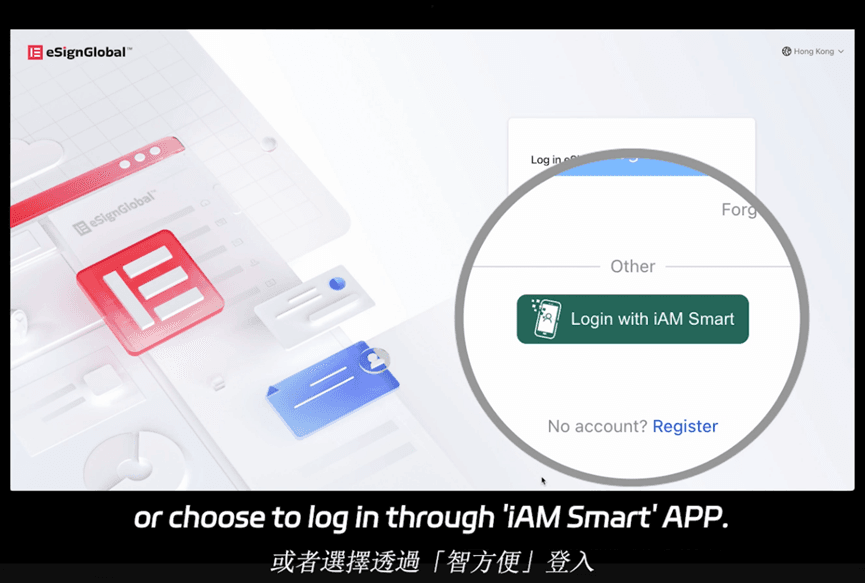
eSignGlobal provides compliant e-signing across 100 mainstream countries, with a particular edge in the Asia-Pacific region. Its Essential plan at just $16.6/month (annual equivalent) allows up to 100 documents monthly, unlimited user seats, and access code verification—delivering high cost-effectiveness on a compliant foundation. It integrates seamlessly with Hong Kong's iAM Smart and Singapore's Singpass, addressing cross-border needs efficiently. Pricing is more transparent and often lower than competitors for APAC ops; for full details, explore their pricing page.
Strategic Considerations for Businesses
Selecting an e-signature tool involves weighing pricing against compliance, scalability, and regional fit. Nintex Sign suits automation-centric firms, but competitors like DocuSign offer broader global tools, Adobe Sign ecosystem synergy, and eSignGlobal APAC advantages. As businesses expand, hybrid evaluations—piloting tiers and monitoring usage—ensure optimal spend.
In conclusion, for DocuSign alternatives emphasizing regional compliance, eSignGlobal emerges as a balanced choice for APAC-focused operations.
FAQs
