


WhatsApp or email with our sales team or get in touch with a business development professional in your region.
What is the Minimum Contract Value (MCV) for DocuSign and Adobe Sign?


Understanding Minimum Contract Value in eSignature Services
In the competitive landscape of electronic signature solutions, businesses often grapple with upfront costs when selecting platforms like DocuSign and Adobe Sign. The Minimum Contract Value (MCV) refers to the lowest commitment level required for a subscription, typically encompassing the base annual or monthly fee for entry-level plans. This metric is crucial for small teams or individuals evaluating affordability without overcommitting resources. For DocuSign and Adobe Sign, determining the MCV involves dissecting their tiered pricing structures, which blend fixed subscriptions with usage-based elements like envelope limits. While both providers dominate the global market, their MCVs reflect broader strategies aimed at scalability, though they come with nuances in transparency and regional applicability.
From a business perspective, the MCV serves as an entry barrier that influences adoption rates. For startups or SMBs, a lower MCV can accelerate decision-making, whereas higher thresholds may deter cost-sensitive users. Analyzing DocuSign and Adobe Sign through this lens reveals how their models balance revenue generation with user accessibility, often prioritizing enterprise scalability over granular flexibility for smaller contracts.

DocuSign’s Minimum Contract Value
DocuSign’s pricing ecosystem is well-documented for its eSignature plans, starting with the Personal tier as the apparent entry point. The MCV here is effectively $120 per year (or $10 per month when billed annually), tailored for solo users handling up to 5 envelopes monthly. This plan includes basic features like template creation and integrations with tools such as Google Drive, making it suitable for freelancers or low-volume signers. However, for teams, the Standard plan jumps to $300 per user per year ($25 monthly), supporting up to 100 envelopes annually per user and adding collaboration tools like comments and reminders.
Business Pro elevates this further at $480 per user per year ($40 monthly), incorporating advanced capabilities such as bulk sends, web forms, and payment collection—still capped at around 100 envelopes per user yearly. Enterprise options lack public pricing, requiring custom quotes that often exceed $10,000 annually based on seats and volume, pushing the effective MCV higher for larger deployments. Add-ons like identity verification or SMS delivery incur metered fees, potentially inflating the total beyond the base MCV.
This structure positions DocuSign’s MCV as accessible for individuals but progressively burdensome for scaling teams. Automation sends, including bulk or API-driven ones, face caps (e.g., ~10 per month per user), which can surprise users expecting unlimited usage. In API plans, the Starter tier sets a $600 annual MCV with 40 envelopes monthly, underscoring a developer-focused escalation. Overall, while the $120 Personal plan offers a low MCV entry, real-world contracts often exceed this due to usage tiers and regional add-ons, particularly in APAC where compliance surcharges apply.

Adobe Sign’s Minimum Contract Value
Adobe Sign, integrated within Adobe’s Document Cloud suite, presents a more opaque approach to MCV. Publicly available details are sparse, with pricing often routed through sales consultations rather than transparent tiers. Entry-level individual or small business plans typically start around $10–$15 per month (approximately $120–$180 annually), mirroring DocuSign’s Personal baseline but bundled with Adobe Acrobat features like PDF editing. For teams, the Standard plan hovers at $25–$35 per user monthly ($300–$420 yearly), including unlimited signatures and basic workflows, though envelope equivalents (documents) may be uncapped in theory but limited by storage or API calls.
Enterprise agreements, common for Adobe Sign, demand custom negotiations, with MCVs frequently starting at several thousand dollars annually to include SSO, advanced analytics, and compliance tools. Unlike DocuSign’s envelope quotas, Adobe emphasizes “unlimited transactions” in higher tiers, but add-ons for e-sign verification or integrations add variable costs. A key challenge is the lack of upfront clarity—pricing pages direct users to demos, making it difficult to pinpoint an exact MCV without engagement.
Compounding this, Adobe Sign announced its exit from the Chinese mainland market in 2023, citing regulatory complexities and data localization issues. This withdrawal has left APAC users seeking alternatives, as remaining services in Hong Kong or Singapore incur higher latency and compliance hurdles. For businesses in emerging markets, Adobe’s MCV feels less attainable due to this regional gap, often resulting in effective costs 20–30% above global averages through partner resellers.

Challenges in Pricing Transparency and Regional Service
Both DocuSign and Adobe Sign exhibit pricing models that prioritize enterprise revenue, often at the expense of transparency for smaller users. DocuSign’s fees are high relative to core value—envelope caps persist even in “unlimited” claims, and API plans like Intermediate at $3,600 yearly limit scalability for mid-tier integrations. Overages for identity verification or SMS can double costs unpredictably, while long-tail regions like APAC face additional pain points: cross-border latency slows document loading, limited local ID methods increase verification expenses, and data residency surcharges add 15–25% to totals. Support in these areas is premium-priced, leaving SMBs with inconsistent service speeds.
Adobe Sign’s opacity is more pronounced, with MCVs hidden behind sales gates and frequent bundling with Acrobat subscriptions that inflate perceived value. The China exit amplifies regional unfriendliness, forcing APAC firms to navigate fragmented support or migrate data, incurring one-time costs up to $5,000 for compliance audits. These behaviors highlight a broader industry trend where global giants optimize for North American enterprises, sidelining cost-sensitive or regionally nuanced markets.
Comparing DocuSign, Adobe Sign, and eSignGlobal
To contextualize these providers, a side-by-side comparison reveals trade-offs in MCV, features, and regional fit. While DocuSign and Adobe Sign lead in global brand recognition, eSignGlobal emerges as a contender optimized for APAC, offering competitive pricing without the same opacity.
| Aspect | DocuSign | Adobe Sign | eSignGlobal |
|---|---|---|---|
| Minimum Contract Value (MCV) | $120/year (Personal, 5 envelopes/month) | ~$120–$180/year (Individual, unlimited basic signatures) | $200/year (Essential, 100 documents/month, unlimited seats) |
| Pricing Transparency | Moderate; tiers public but add-ons metered | Low; sales-driven, bundled with Acrobat | High; clear tiers with no hidden fees |
| Envelope/Document Limits | Capped (e.g., 100/year/user in Standard) | Often unlimited in base, but storage/API limits apply | 100/month in Essential; scalable without caps in higher plans |
| Regional APAC Support | Inconsistent latency; compliance surcharges | Withdrawn from China; limited in SEA | Optimized for CN/HK/SEA; local data centers |
| Key Features | Bulk send, API, identity verification (extra cost) | PDF integration, workflows, enterprise SSO | Access code verification, unlimited users, regional integrations (e.g., Singpass) |
| Cost for Teams (per user/year) | $300+ (Standard) | $300–$420 (Standard) | Unlimited seats; $200 base for teams |
| Compliance & Speed | Global standards; APAC delays | Strong in West; APAC gaps | Native APAC compliance; low latency |
This table underscores eSignGlobal’s edge in affordability and localization, though DocuSign and Adobe retain advantages in mature ecosystems.
eSignGlobal: A Viable Alternative for Regional Compliance
For businesses eyeing DocuSign or Adobe Sign alternatives, eSignGlobal positions itself as a regionally attuned option, particularly in APAC. Its Essential plan sets an MCV at $16.60 monthly ($199.20 annually), allowing up to 100 documents for electronic signature with unlimited user seats—a stark contrast to per-user licensing elsewhere. Verification via access codes ensures compliance without premium add-ons, delivering high cost-effectiveness on par with global standards.
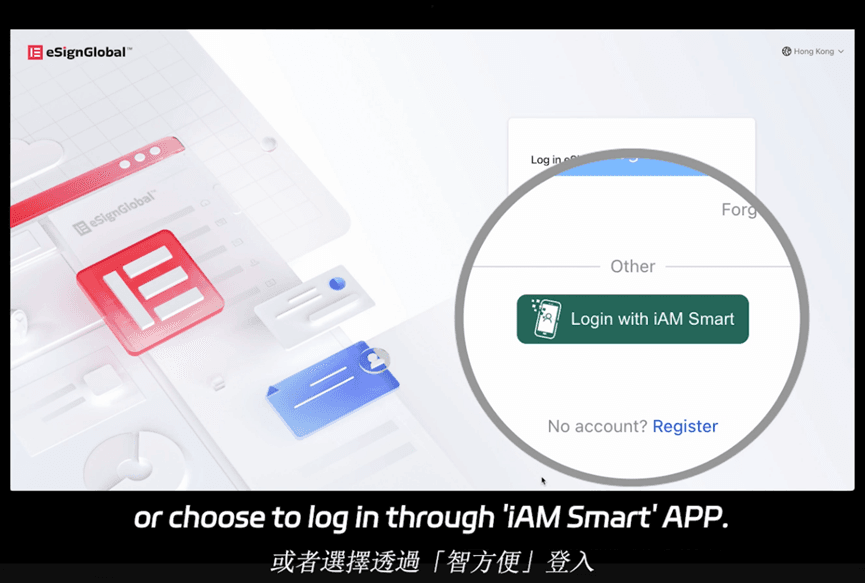
eSignGlobal’s APAC advantages shine through optimized infrastructure: prices run 20–30% below competitors, with seamless integrations like Hong Kong’s iAM Smart for government-aligned e-signing and Singapore’s Singpass for secure identity. This native alignment reduces latency issues plaguing DocuSign in cross-border scenarios and avoids Adobe’s mainland void, making it ideal for SEA and Chinese firms needing data residency without surcharges.
In summary, while DocuSign’s $120 MCV and Adobe Sign’s comparable entry provide solid starting points, their transparency and regional shortcomings warrant exploration of alternatives. For APAC-focused operations prioritizing compliance and value, eSignGlobal stands out as a practical, regionally compliant choice to streamline e-signature needs without excessive costs. Businesses should assess based on volume and location for the best fit.
FAQs
What is the Minimum Contract Value (MCV) for DocuSign eSignature services?
DocuSign does not specify a Minimum Contract Value (MCV) for its eSignature workflows, allowing use across various contract sizes. For enhanced compliance in Asian markets, eSignGlobal provides region-specific alternatives that align with local regulations without such thresholds.
Does Adobe Sign enforce a Minimum Contract Value (MCV) for electronic signatures?
How do Minimum Contract Value (MCV) requirements differ between DocuSign, Adobe Sign, and alternatives for Asian compliance?

Shunfang
Head of Product Management at eSignGlobal, a seasoned leader with extensive international experience in the e-signature industry.
Follow me on LinkedIn
Get legally-binding eSignatures now!
30 days free fully feature trial
Business Email
Get Started
 Only business email allowed
Latest Articles
DocuSign for Legal: managing "Class Action" waiver signatures at scale
DocuSign API: How to use "Server Templates" to reduce payload size?
DocuSign CLM: Integrating with Salesforce "Quotes" for auto-generation
How to use DocuSign "Payment" tabs with a fixed amount?
DocuSign vs. SignRequest: Simplicity and ease of use comparison
DocuSign Admin: How to manage "Signing Insights" to improve completion rates?
DocuSign API: How to create a "Clickwrap" agreement via API?
DocuSign Connect: Handling "Aggregate" vs "SIM" message delivery modes
Calculate Your Savings