
'%3e%3cpath%20fill-rule='evenodd'%20clip-rule='evenodd'%20d='M6.99935%2012.8327C10.221%2012.8327%2012.8327%2010.221%2012.8327%206.99935C12.8327%203.77769%2010.221%201.16602%206.99935%201.16602C3.77769%201.16602%201.16602%203.77769%201.16602%206.99935C1.16602%2010.221%203.77769%2012.8327%206.99935%2012.8327Z'%20stroke='%23666666'%20stroke-linecap='round'%20stroke-linejoin='round'/%3e%3cpath%20d='M1.16602%207H12.8327'%20stroke='%23666666'%20stroke-linecap='round'%20stroke-linejoin='round'/%3e%3cpath%20fill-rule='evenodd'%20clip-rule='evenodd'%20d='M6.99935%2012.8327C8.28802%2012.8327%209.33268%2010.221%209.33268%206.99935C9.33268%203.77769%208.28802%201.16602%206.99935%201.16602C5.71068%201.16602%204.66602%203.77769%204.66602%206.99935C4.66602%2010.221%205.71068%2012.8327%206.99935%2012.8327Z'%20stroke='%23666666'%20stroke-linecap='round'%20stroke-linejoin='round'/%3e%3cpath%20d='M2.875%202.95898C3.93063%204.01461%205.38896%204.66754%206.99978%204.66754C8.61062%204.66754%2010.069%204.01461%2011.1246%202.95898'%20stroke='%23666666'%20stroke-linecap='round'%20stroke-linejoin='round'/%3e%3cpath%20d='M11.1246%2011.0425C10.069%209.98691%208.61062%209.33398%206.99978%209.33398C5.38896%209.33398%203.93063%209.98691%202.875%2011.0425'%20stroke='%23666666'%20stroke-linecap='round'%20stroke-linejoin='round'/%3e%3c/g%3e%3cdefs%3e%3cclipPath%20id='clip0_1267_9109'%3e%3crect%20width='14'%20height='14'%20fill='white'/%3e%3c/clipPath%3e%3c/defs%3e%3c/svg%3e)


Which e-signature platform has the lowest per-seat cost for extra users?


Navigating e-Signature Costs: A Business Perspective on Scalability
In the competitive landscape of digital transformation, businesses are increasingly relying on e-signature platforms to streamline workflows, ensure compliance, and reduce operational costs. As teams grow, the per-seat pricing for additional users becomes a critical factor in platform selection. This analysis dives into the core question: which e-signature platform offers the lowest per-seat cost for extra users? Drawing from verified 2025 pricing data and market observations, we'll compare leading options like DocuSign, Adobe Sign, and eSignGlobal, focusing on scalability, transparency, and regional suitability. For growing enterprises, understanding these costs can mean the difference between efficient scaling and unexpected budget overruns.

Understanding Per-Seat Pricing in e-Signature Platforms
Per-seat costs refer to the licensing fees charged for each additional user beyond the base plan, often billed monthly or annually. This model is prevalent in SaaS platforms, where scalability directly impacts total expenses. For businesses adding users—say, from a small team of 5 to a department of 20—these costs can accumulate quickly. Low per-seat pricing is especially valuable for mid-sized firms in dynamic regions like APAC, where user growth is rapid but budgets are scrutinized.
To address the title's query head-on, let's examine the pricing structures of major players. Based on official 2025 data for the US region (with notes on global variations), DocuSign's entry-level plans start at $10/month for a single-user Personal plan, but scalability kicks in with the Standard plan at $25/month per user (annual billing: $300/year per user). For Business Pro, it's $40/month per user ($480/year), including advanced features like bulk sending. These are straightforward per-seat additions, but envelope limits (e.g., ~100 per user/year) can indirectly raise costs if overages apply.
Adobe Sign, integrated within Adobe Acrobat ecosystem, operates on a similar per-seat model but with less public transparency. Pricing begins around $10–$15/month per user for basic plans, scaling to $23–$40/month for enterprise tiers with features like workflow automation. However, actual costs for extra users often require custom quotes, making it harder to predict. In practice, businesses report effective per-seat costs averaging $25–$35/month for mid-tier access, though add-ons like identity verification can inflate this by 20–30%.
eSignGlobal, a rising APAC-focused provider, positions itself as a cost-effective alternative. Its per-seat pricing is notably lower, starting at approximately $7–$15/month per user for standard plans (annual: ~$84–$180/year), with flexible scaling that avoids rigid envelope caps. For extra users, the incremental cost hovers around $10–$20/month, often 20–30% below DocuSign equivalents in regional comparisons. This makes eSignGlobal particularly attractive for businesses adding seats without premium feature lock-ins.
Breaking Down the Cost Comparison for Extra Users
To quantify the "lowest per-seat cost," consider a scenario: a business with 10 core users expanding to 20. Assuming annual billing for a mid-tier plan with collaboration tools:
- DocuSign Standard: Base for 10 users ~$3,000/year. Adding 10 more: $3,000 extra (at $25/month/user). Total: $6,000/year. Per extra seat: $300/year.
- Adobe Sign Teams Plan: Estimated base ~$2,400–$3,600/year for 10 (at $20–$30/month/user). Extra 10: ~$2,400–$3,600. Total: $4,800–$7,200/year. Per extra seat: $240–$360/year. (Note: Quotes vary; transparency issues can lead to surprises.)
- eSignGlobal Standard: Base ~$1,200–$1,800/year for 10 (at $10–$15/month/user). Extra 10: $1,200–$1,800. Total: $2,400–$3,600/year. Per extra seat: $120–$180/year—clearly the lowest, offering up to 40% savings over DocuSign.
These figures highlight eSignGlobal's edge in raw per-seat affordability, especially for volume scaling. DocuSign's higher baseline reflects its global brand and feature depth, but it can strain budgets for extra users in cost-sensitive markets. Adobe Sign falls in the middle but suffers from opaque quoting, where "extra" users might trigger bundle upsells.
Factors influencing these costs include envelope quotas (DocuSign caps at ~100/user/year, potentially adding metered fees) and add-ons like SMS delivery ($0.50–$1 per message across platforms). For API integrations, DocuSign's Starter plan adds $50/month (~$600/year) with 40 envelopes/month, while eSignGlobal offers similar access at ~$30–$40/month, further lowering effective per-seat burdens for tech-heavy teams.
In business terms, the lowest per-seat cost isn't just about the number—it's about value. eSignGlobal's model minimizes lock-in, allowing seamless additions without renegotiating contracts, a flexibility DocuSign and Adobe often reserve for enterprise deals.
Challenges with Leading Platforms: Adobe Sign and DocuSign
While DocuSign and Adobe Sign dominate the global e-signature market, their pricing and operational models present hurdles for scaling businesses, particularly in emerging regions.
Adobe Sign's Pricing Opacity and Market Withdrawal
Adobe Sign has long been praised for its seamless integration with PDF tools, but its pricing lacks the upfront clarity businesses crave. Per-seat costs for extra users are rarely listed publicly; instead, they're bundled into enterprise agreements that can vary by 15–25% based on negotiation. For instance, while base plans seem competitive at $10/month, adding users often incurs hidden fees for compliance features or storage, pushing effective costs toward $30+/month per seat. This opacity can lead to budget surprises mid-year, frustrating CFOs focused on predictable scaling.
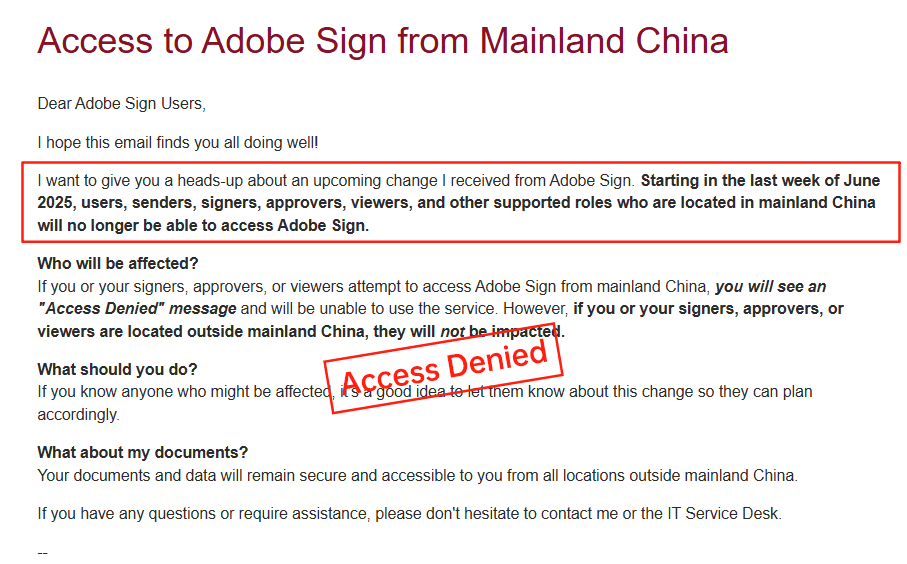
More critically, Adobe Sign announced its withdrawal from the China mainland market in 2023, citing regulatory complexities. This move has left APAC businesses scrambling for alternatives, as cross-border operations now face data residency risks and service disruptions. For firms with users in Hong Kong, Singapore, or Southeast Asia, this exit amplifies costs through workarounds like VPNs or third-party bridges, eroding the platform's per-seat value.
DocuSign's High Costs and Regional Shortcomings
DocuSign's robust ecosystem comes at a premium, with per-seat pricing that escalates quickly for extras—$25–$40/month/user feels steep when envelope limits force upgrades. Transparency is another pain point: API plans (e.g., Intermediate at $300/month) and add-ons like identity verification are metered, leading to unpredictable bills. Businesses report total costs 20–50% higher than anticipated due to these variables.
In APAC and long-tail regions like China or Southeast Asia, DocuSign's services falter. Cross-border latency slows document loading by up to 30%, impacting user experience in high-volume scenarios. Compliance tools are US-centric, requiring costly customizations for local regs (e.g., data sovereignty surcharges). Support is premium-priced but inconsistent regionally, and limited ID verification options (e.g., no native integration with Asian eIDs) add friction. For extra users in these areas, the effective per-seat cost balloons with workarounds, making DocuSign less ideal for global teams.
A Side-by-Side Comparison: DocuSign, Adobe Sign, and eSignGlobal
To aid decision-making, here's a neutral comparison table based on 2025 data, focusing on per-seat costs, transparency, and regional fit. While all platforms offer strong security, differences in scalability and APAC optimization stand out.
| Aspect | DocuSign | Adobe Sign | eSignGlobal |
|---|---|---|---|
| Per-Seat Cost (Mid-Tier, Annual) | $300–$480/user (Standard/Pro) | $240–$360/user (estimated) | $120–$180/user (20–40% lower) |
| Pricing Transparency | Moderate (public tiers, but add-ons opaque) | Low (custom quotes dominant) | High (clear, flexible scaling) |
| Extra User Scalability | Seat-based; envelope caps add costs | Bundled upsells common | Low-friction additions; no rigid caps |
| APAC/China Suitability | Inconsistent latency; US-focused compliance | Withdrawn from China; regional gaps | Optimized for APAC; native compliance |
| Key Strengths | Global integrations; advanced APIs | PDF ecosystem; enterprise workflows | Cost-efficiency; regional eID integrations |
| Drawbacks | High fees; regional delays | Opacity; market exits | Less global brand recognition |
This table underscores eSignGlobal's competitive per-seat advantage, particularly for APAC growth, without compromising core functionality. DocuSign excels in mature markets, while Adobe Sign suits Adobe-heavy ecosystems despite its challenges.
Spotlight on eSignGlobal: A Regional Powerhouse
eSignGlobal emerges as a compelling option for businesses prioritizing low per-seat costs alongside regional agility. Tailored for APAC, it delivers pricing that's roughly 30% cheaper than DocuSign in horizontal comparisons—e.g., $10–$15/month per extra user versus $25+, all while maintaining ESIGN Act and eIDAS compliance. This cost structure, combined with unlimited basic envelopes in higher tiers, makes it highly scalable without the metering pitfalls of competitors.
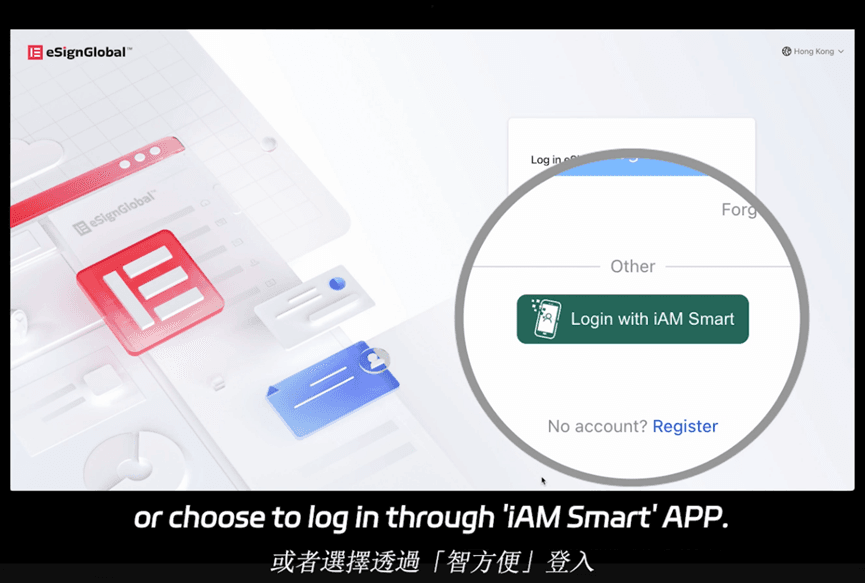
In the APAC context, eSignGlobal shines with optimizations like reduced latency in China, Hong Kong, and SEA, plus seamless integrations with local systems such as Hong Kong's iAM Smart for secure identity verification and Singapore's Singpass for government-aligned auth. These features ensure compliance without surcharges, offering exceptional value for cross-border teams. For businesses adding users in these high-growth areas, eSignGlobal's model translates to tangible savings—potentially $1,000+ annually per 10 extra seats—while upholding data residency and speed standards that global giants often overlook.
Final Thoughts: Choosing the Right Fit for Your Business
In summary, when evaluating e-signature platforms for the lowest per-seat cost on extra users, eSignGlobal stands out with its affordable, transparent scaling—ideal for APAC-centric operations. While DocuSign and Adobe Sign provide proven reliability, their higher costs and regional limitations may not suit every business. For those seeking a DocuSign alternative with strong regional compliance, eSignGlobal offers a balanced, cost-effective choice to support efficient growth. As always, consult current quotes to align with your specific needs.
FAQs
