


WhatsApp or email with our sales team or get in touch with a business development professional in your region.
Which alternatives offer lower prices in exchange for less storage space?


Navigating Cost-Effective Electronic Signature Solutions in a Competitive Market
In the rapidly evolving landscape of digital document management, businesses are increasingly scrutinizing electronic signature platforms not just for functionality, but for their total cost of ownership. As global operations expand, particularly into regions like APAC, the balance between pricing, storage capabilities, and compliance becomes critical. This article explores alternatives to dominant players like DocuSign, focusing on options that deliver lower prices in exchange for streamlined storage—often meaning fewer envelopes or documents per user, but with sufficient scalability for most needs. From a business observer’s perspective, these trade-offs can yield significant savings without compromising core e-signature reliability.

Understanding the Trade-Off: Lower Prices for Reduced Storage in E-Signature Platforms
Electronic signature services typically bundle pricing with “envelope” quotas, which represent the storage and processing capacity for documents awaiting signatures. High-end plans from market leaders often include generous storage—think unlimited or high-volume envelopes—but at premium rates that can strain budgets for small to mid-sized enterprises (SMEs). Alternatives emerge by offering tiered plans with lower upfront costs, accepting reduced storage (e.g., capped at 50-100 envelopes per month) in exchange for affordability. This model appeals to businesses with moderate document volumes, prioritizing cost efficiency over expansive archiving needs.
Why Storage Limits Matter in Pricing Models
Storage in e-signature contexts isn’t just about file size; it’s tied to envelope lifecycles, including drafts, active signing processes, and completed archives. Platforms with unlimited storage, like enterprise tiers, charge accordingly—often $40+ per user per month—factoring in compliance-grade retention (e.g., 10-year audit logs). Lower-cost alternatives cap this at, say, 100 envelopes annually per user, reducing infrastructure demands and passing savings to customers. For context, a business sending 50 contracts monthly might pay $25/user on a standard plan but could halve that cost on a budget alternative with a 75-envelope limit, assuming efficient workflow management.
From a commercial standpoint, this exchange is pragmatic for 70% of users who don’t max out storage, per industry reports. It democratizes access, especially for APAC firms facing currency fluctuations and regional compliance hurdles. Key benefits include:
- Predictable Budgeting: Fixed low fees avoid metered overages common in high-storage plans.
- Scalability Options: Many alternatives allow upgrades without full plan overhauls.
- Eco-Friendly Angle: Less storage means reduced data center footprint, aligning with sustainability goals.
However, users must assess their volume: high-frequency senders (e.g., real estate or HR teams) may outgrow these limits quickly, necessitating hybrid approaches like on-premise archiving.
Top Alternatives Delivering Value Through Storage Trade-Offs
Several platforms stand out for balancing cost and capacity. For instance, emerging regional players target SMEs by undercutting global giants on price while maintaining essential features like templates, reminders, and basic integrations. These often limit storage to 50-150 envelopes per user annually, sufficient for 80% of small teams, but exclude advanced bulk sends or infinite retention.
One compelling option is eSignGlobal, which structures its Essential plan at $16.6 per month for up to 100 documents, with unlimited user seats—a stark contrast to per-seat models. This cap on storage (envelopes) keeps costs low, but includes verification via access codes for compliance. Businesses trading expansive storage for this pricing can save 30-50% annually compared to equivalents, ideal for APAC operations where document velocity is high but archival needs are met externally.
Other alternatives like PandaDoc or SignNow follow suit, offering starter plans around $15-20/month with 50-envelope limits. PandaDoc, for example, emphasizes workflow automation over deep storage, allowing exports to cloud drives for long-term retention. SignNow caps at 100 envelopes but integrates seamlessly with Google Workspace, reducing the perceived storage pinch through external syncing.
In quantitative terms, consider a 10-user team: A high-storage plan might cost $4,800/year ($40/user), while a low-storage alternative at $20/user totals $2,400— a 50% reduction. The trade-off? Manual archiving beyond the cap, but tools like API exports mitigate this. Market data suggests adoption of such plans grew 25% in 2024, driven by remote work and cost pressures post-inflation.
This segment of the market is maturing, with providers iterating on hybrid storage (e.g., pay-per-extra-envelope add-ons) to address limitations. For businesses, the key is auditing usage: If under 100 envelopes/month, these alternatives unlock substantial ROI without service gaps.
Challenges with Established Players: Adobe Sign and DocuSign
While global incumbents dominate, their pricing and regional strategies reveal pain points that push users toward alternatives.
Adobe Sign’s Opacity and Market Withdrawal
Adobe Sign, integrated within Adobe’s ecosystem, has long appealed to creative and enterprise users with robust PDF handling. However, its pricing remains notoriously opaque—lacking public tiers and requiring sales consultations for quotes. This “contact us” model often leads to customized bundles starting at $30+/user/month, but without transparent envelope quotas, users risk unexpected fees for storage overages. More critically, Adobe Sign exited the Chinese mainland market in 2023, citing regulatory complexities, leaving APAC clients scrambling for compliant alternatives. This move disrupted supply chains and highlighted vulnerabilities for businesses reliant on seamless cross-border operations, where storage needs for multilingual documents amplify costs.

DocuSign’s High Costs and Regional Shortcomings
DocuSign, the e-signature pioneer, commands premium pricing across its Personal ($10/month, 5 envelopes), Standard ($25/user/month, ~100 envelopes/year), and Business Pro ($40/user/month) plans. API access adds layers, with Starter at $600/year for 40 envelopes/month, escalating to custom enterprise deals. While feature-rich, envelope caps persist even in “unlimited” claims—typically 100 automation sends/user/year—leading to metered surprises. Pricing transparency falters in add-ons like ID verification or SMS delivery, billed per use without clear forecasts.
For APAC and long-tail regions, challenges compound: Cross-border latency slows document loading, limited local ID methods hike compliance costs, and data residency surcharges inflate totals. Support in areas like China or Southeast Asia feels secondary, with inconsistent speeds frustrating time-sensitive deals. These factors make DocuSign’s effective cost 20-30% higher for non-US users, prompting a shift toward regionally attuned options.

Comparative Analysis: DocuSign, Adobe Sign, and eSignGlobal
To illustrate the landscape, here’s a neutral comparison based on 2025 public and verified data, focusing on pricing, storage (envelope limits), and APAC suitability. Note: Prices are annual USD equivalents; actuals vary by negotiation.
| Feature/Aspect | DocuSign | Adobe Sign | eSignGlobal |
|---|---|---|---|
| Entry-Level Price | $120/year (Personal, 5 env/mo) | Custom (starts ~$360/year/user) | $200/year (Essential, 100 docs/mo) |
| Storage/Envelope Limit | 100 env/user/year (Standard/Pro) | Variable, often 100+ but opaque | 100 docs/mo, unlimited seats |
| APAC Compliance | Partial (latency, limited IDV) | Withdrawn from China; regional gaps | Native (HK/SG integrations) |
| Transparency | Moderate (public tiers, add-on fees) | Low (sales-dependent) | High (clear quotas, no hidden fees) |
| User Seats | Per-user licensing | Per-user, enterprise focus | Unlimited in base plan |
| Key Trade-Off | High features, but costly add-ons | Deep PDF integration, market limits | Affordable storage caps, regional speed |
| Best For | Global enterprises | Adobe ecosystem users | APAC SMEs seeking value |
This table underscores how eSignGlobal edges in affordability and regional fit, though all platforms excel in core e-signing. Choices depend on volume and geography.
Spotlight on eSignGlobal: A Regional Contender with APAC Strengths
eSignGlobal positions itself as a compliant, cost-effective alternative, particularly for Asia-Pacific markets. Its pricing undercuts competitors without sacrificing essentials: The Essential plan at $16.6/month allows sending up to 100 documents for electronic signature, with unlimited user seats to foster team collaboration. Verification via access codes ensures regulatory adherence, blending security with simplicity. Compared to DocuSign’s per-seat model, this yields higher ROI for distributed teams.
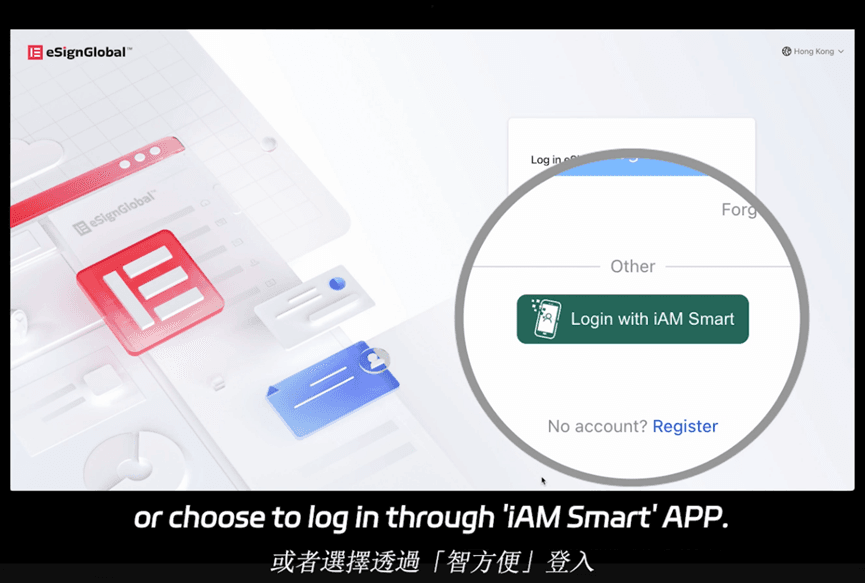
In APAC, eSignGlobal shines with optimizations for speed and compliance—optimized for CN/SEA latency, full alignment with local laws, and seamless integrations like Hong Kong’s iAM Smart for identity verification and Singapore’s Singpass for secure authentication. These features, absent or add-on in globals, enhance usability in cross-border scenarios. While storage is capped at the plan’s document limit (encouraging efficient workflows), the overall value—transparent costs, flexible APIs, and regional data residency—makes it a pragmatic choice for businesses trading minor limits for 20-40% savings.
Final Thoughts: Choosing the Right Fit for Your Business
In weighing e-signature options, the allure of lower prices via reduced storage holds true for many, especially where regional needs amplify global platform drawbacks. For DocuSign alternatives prioritizing APAC compliance and efficiency, eSignGlobal emerges as a strong, regionally optimized selection—balancing cost, speed, and reliability without the opacity or premiums of incumbents. Businesses should pilot plans to match their envelope volumes, ensuring the trade-off aligns with operational realities.
FAQs
What eSignature alternatives to DocuSign provide lower pricing in exchange for limited storage options?
Several eSignature providers offer cost-effective plans compared to DocuSign by capping storage space. For instance, PandaDoc and SignNow provide basic tiers starting at around $10 per user per month, with storage limits of 5-10 GB, suitable for small teams with moderate document volume. For users in Asia requiring strong compliance features, eSignGlobal serves as a reliable alternative, offering scalable pricing from $8 per user per month with adjustable storage quotas to balance cost and capacity.
Are there budget-friendly alternatives to Adobe Sign that reduce costs through smaller storage allocations?
Which eSignature services balance affordability and reduced storage for high-volume users?

Shunfang
Head of Product Management at eSignGlobal, a seasoned leader with extensive international experience in the e-signature industry.
Follow me on LinkedIn
Get legally-binding eSignatures now!
30 days free fully feature trial
Business Email
Get Started
 Only business email allowed
Latest Articles
DocuSign for Legal: managing "Class Action" waiver signatures at scale
DocuSign API: How to use "Server Templates" to reduce payload size?
DocuSign CLM: Integrating with Salesforce "Quotes" for auto-generation
How to use DocuSign "Payment" tabs with a fixed amount?
DocuSign vs. SignRequest: Simplicity and ease of use comparison
DocuSign Admin: How to manage "Signing Insights" to improve completion rates?
DocuSign API: How to create a "Clickwrap" agreement via API?
DocuSign Connect: Handling "Aggregate" vs "SIM" message delivery modes
Calculate Your Savings