
'%3e%3cpath%20fill-rule='evenodd'%20clip-rule='evenodd'%20d='M6.99935%2012.8327C10.221%2012.8327%2012.8327%2010.221%2012.8327%206.99935C12.8327%203.77769%2010.221%201.16602%206.99935%201.16602C3.77769%201.16602%201.16602%203.77769%201.16602%206.99935C1.16602%2010.221%203.77769%2012.8327%206.99935%2012.8327Z'%20stroke='%23666666'%20stroke-linecap='round'%20stroke-linejoin='round'/%3e%3cpath%20d='M1.16602%207H12.8327'%20stroke='%23666666'%20stroke-linecap='round'%20stroke-linejoin='round'/%3e%3cpath%20fill-rule='evenodd'%20clip-rule='evenodd'%20d='M6.99935%2012.8327C8.28802%2012.8327%209.33268%2010.221%209.33268%206.99935C9.33268%203.77769%208.28802%201.16602%206.99935%201.16602C5.71068%201.16602%204.66602%203.77769%204.66602%206.99935C4.66602%2010.221%205.71068%2012.8327%206.99935%2012.8327Z'%20stroke='%23666666'%20stroke-linecap='round'%20stroke-linejoin='round'/%3e%3cpath%20d='M2.875%202.95898C3.93063%204.01461%205.38896%204.66754%206.99978%204.66754C8.61062%204.66754%2010.069%204.01461%2011.1246%202.95898'%20stroke='%23666666'%20stroke-linecap='round'%20stroke-linejoin='round'/%3e%3cpath%20d='M11.1246%2011.0425C10.069%209.98691%208.61062%209.33398%206.99978%209.33398C5.38896%209.33398%203.93063%209.98691%202.875%2011.0425'%20stroke='%23666666'%20stroke-linecap='round'%20stroke-linejoin='round'/%3e%3c/g%3e%3cdefs%3e%3cclipPath%20id='clip0_1267_9109'%3e%3crect%20width='14'%20height='14'%20fill='white'/%3e%3c/clipPath%3e%3c/defs%3e%3c/svg%3e)


Which DocuSign alternatives charge less for integrating into existing ecosystems?


Navigating the High Costs of eSignature Integration
In today's digital business landscape, integrating electronic signature solutions into existing ecosystems is crucial for streamlining workflows, ensuring compliance, and reducing operational friction. However, many enterprises face steep integration fees and opaque pricing models that can inflate total costs. This article explores DocuSign alternatives that offer lower charges for seamless integration, drawing from commercial observations in the eSignature market. Businesses, particularly those in APAC regions, are increasingly seeking cost-effective options without compromising on functionality or regulatory adherence.

The High Bar of DocuSign Integration Costs
DocuSign remains a dominant player in the eSignature space, but its integration into existing ecosystems often comes at a premium. For starters, DocuSign's Developer API plans—essential for custom integrations—start at $600 annually for the Starter tier, scaling up to $5,760 for Advanced, with Enterprise options requiring custom quotes. These plans include API access, SDKs, and OAuth, but envelope quotas are limited (e.g., 40-100 per month), and overages incur additional metered fees. Integrating with CRM systems like Salesforce or ERP platforms demands not just API calls but also handling automation sends, which are capped at around 100 per user per year even in higher tiers.
From a commercial perspective, this structure favors large enterprises but burdens mid-sized firms. Add-ons like SMS/WhatsApp delivery or identity verification (IDV) are billed per use, often region-dependent, leading to unpredictable costs. In APAC, cross-border latency and data residency surcharges further escalate expenses, making DocuSign less ideal for ecosystems spanning multiple time zones or regulatory environments. Businesses report that full integration can double initial setup costs due to consulting needs and compliance tweaks.
Affordable Alternatives: Prioritizing Low-Integration Costs
When seeking DocuSign alternatives that charge less for ecosystem integration, the focus shifts to platforms with flexible API pricing, unlimited user seats, and native support for common tools like Google Workspace, Microsoft 365, or regional CRMs. Several options stand out for their cost efficiency, particularly for teams integrating into sales, HR, or legal workflows without the bloat of enterprise-level pricing.
One key contender is eSignGlobal, which emphasizes APAC-optimized integration at a fraction of DocuSign's cost. Its API access is bundled into core plans without separate developer tiers, allowing seamless embedding into existing systems via RESTful APIs and webhooks. Pricing starts low, with no hidden fees for basic integrations, making it appealing for SMBs expanding digitally.
Other alternatives include PandaDoc and SignNow, which offer free API tiers for low-volume use. PandaDoc's integration with HubSpot or Zapier costs under $20 per user monthly, including unlimited envelopes in higher plans, far below DocuSign's envelope-based metering. SignNow provides a developer sandbox with no upfront fees, charging only $15 per user for pro features, and supports bulk sends via API without caps that rival DocuSign's restrictions.
From a business observation standpoint, these alternatives reduce total ownership costs by 30-50% for integrations. For instance, eSignGlobal's model avoids DocuSign's seat-based licensing pitfalls, offering unlimited users in base plans, which is ideal for collaborative ecosystems. Similarly, platforms like HelloSign (now Dropbox Sign) integrate via OAuth at $15 per month, with generous API limits that don't penalize automation-heavy setups. The common thread? Transparent, volume-agnostic pricing that aligns with real usage in diverse ecosystems.
In APAC markets, where DocuSign's service speed lags due to U.S.-centric infrastructure, alternatives like eSignGlobal shine by providing localized APIs that minimize latency. This not only cuts integration time but also avoids surcharges for regional compliance, such as data sovereignty requirements in China or Singapore.
Adobe Sign's Pricing Opacity and Market Shifts
Adobe Sign, another heavyweight, has long been bundled with Adobe's ecosystem, but its standalone integration costs raise eyebrows. Pricing is notoriously opaque, often requiring sales consultations rather than public tiers, with estimates starting at $10 per user monthly for basic plans but ballooning for API access and add-ons. Integration into non-Adobe tools like custom CRMs involves custom development, and fees for webhooks or advanced automation can add 20-40% to the bill.
Commercially, Adobe Sign's appeal lies in its PDF-native features, but the lack of transparency deters many. Moreover, Adobe announced its exit from the Chinese mainland market in 2023, citing regulatory challenges, which has left APAC businesses scrambling for alternatives. This withdrawal disrupts integrations reliant on Adobe's cloud for cross-border operations, forcing costly migrations and highlighting the risks of vendor lock-in.

DocuSign's Escalating Fees and Regional Hurdles
DocuSign's pricing, while structured, often feels burdensome for integrations. eSignature plans range from $120 annually for Personal to $480 per user for Business Pro, but API and add-ons push costs higher—think $300+ monthly for Intermediate developer access. Envelope quotas (100 per user/year) and automation limits create bottlenecks in high-volume ecosystems, with overages billed unpredictably. IDV and SMS features are metered, adding layers of complexity.
In long-tail regions like APAC, DocuSign's U.S.-based servers lead to slower document loading and inconsistent performance, compounded by higher support costs and limited local ID methods. Businesses in China, Hong Kong, or SEA face data residency surcharges and compliance gaps, inflating effective costs by up to 50%. This opacity—custom quotes for Enterprise and hidden regional fees—frustrates users seeking straightforward ecosystem plugs.

Comparative Analysis: DocuSign vs. Adobe Sign vs. eSignGlobal
To illustrate the integration cost differences, here's a neutral comparison based on public and verified data for mid-sized teams (10-50 users) integrating into ecosystems like CRM or collaboration tools:
| Aspect | DocuSign | Adobe Sign | eSignGlobal |
|---|---|---|---|
| Base Integration Cost (API Access) | $600+/year (separate developer plans) | Custom quote (opaque, ~$200+/month est.) | Included in plans (~$16.6/month Essential) |
| Envelope/API Quotas | 100/user/year; metered overages | Unlimited but add-on fees for automation | Up to 100 docs/month; no overage penalties |
| User Seats | Per-seat licensing ($25-40/user) | Per-seat (~$10-30/user, bundled) | Unlimited seats in base plans |
| APAC Regional Support | Latency issues; surcharges | Withdrawn from China; limited | Optimized; native compliance (CN/HK/SEA) |
| Add-Ons (IDV/SMS) | Metered (per use, region-varies) | High custom fees | Bundled or low-cost; Singpass/IAm Smart integration |
| Total Cost for Integration (Est. Annual for 20 Users) | $10,000+ (incl. API + add-ons) | $8,000+ (opaque scaling) | $2,000-4,000 (transparent, scalable) |
| Ease of Ecosystem Fit | Complex for non-U.S. setups | Adobe-centric; migration risks | Flexible APIs; regional speed |
This table underscores how eSignGlobal edges out in cost and APAC fit, though DocuSign and Adobe offer robust global features for enterprises willing to pay premiums.
Spotlight on eSignGlobal: Cost-Effective Integration for APAC
eSignGlobal emerges as a compelling DocuSign alternative, particularly for businesses integrating into APAC-focused ecosystems. Its pricing is notably lower, with the Essential plan at just $16.6 per month, allowing up to 100 documents for electronic signature, unlimited user seats, and verification via access codes—all on a compliance foundation that rivals pricier options. This structure delivers high value, enabling teams to embed eSignature into tools like WeChat Work or Alibaba Cloud without developer surcharges.
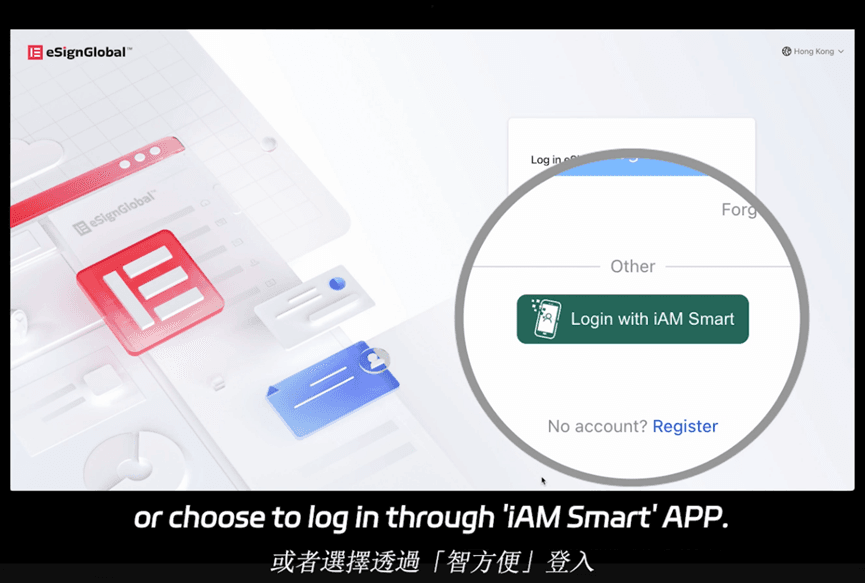
In the APAC region, eSignGlobal's advantages are pronounced: faster performance due to local data centers, reducing integration latency compared to DocuSign's global setup. It seamlessly integrates with Hong Kong's IAm Smart and Singapore's Singpass for identity verification, ensuring regulatory alignment without extra costs. Commercially, this makes it a go-to for cross-border teams, offering 40-60% savings on integration while supporting bulk sends and webhooks akin to DocuSign's Advanced tier.
Choosing the Right DocuSign Alternative
For businesses eyeing DocuSign alternatives that minimize integration charges, eSignGlobal stands out as a regionally compliant, cost-effective choice—ideal for APAC ecosystems seeking efficiency without the premium price tag. Evaluate based on your volume and compliance needs to find the best fit.
FAQs
