
'%3e%3cpath%20fill-rule='evenodd'%20clip-rule='evenodd'%20d='M6.99935%2012.8327C10.221%2012.8327%2012.8327%2010.221%2012.8327%206.99935C12.8327%203.77769%2010.221%201.16602%206.99935%201.16602C3.77769%201.16602%201.16602%203.77769%201.16602%206.99935C1.16602%2010.221%203.77769%2012.8327%206.99935%2012.8327Z'%20stroke='%23666666'%20stroke-linecap='round'%20stroke-linejoin='round'/%3e%3cpath%20d='M1.16602%207H12.8327'%20stroke='%23666666'%20stroke-linecap='round'%20stroke-linejoin='round'/%3e%3cpath%20fill-rule='evenodd'%20clip-rule='evenodd'%20d='M6.99935%2012.8327C8.28802%2012.8327%209.33268%2010.221%209.33268%206.99935C9.33268%203.77769%208.28802%201.16602%206.99935%201.16602C5.71068%201.16602%204.66602%203.77769%204.66602%206.99935C4.66602%2010.221%205.71068%2012.8327%206.99935%2012.8327Z'%20stroke='%23666666'%20stroke-linecap='round'%20stroke-linejoin='round'/%3e%3cpath%20d='M2.875%202.95898C3.93063%204.01461%205.38896%204.66754%206.99978%204.66754C8.61062%204.66754%2010.069%204.01461%2011.1246%202.95898'%20stroke='%23666666'%20stroke-linecap='round'%20stroke-linejoin='round'/%3e%3cpath%20d='M11.1246%2011.0425C10.069%209.98691%208.61062%209.33398%206.99978%209.33398C5.38896%209.33398%203.93063%209.98691%202.875%2011.0425'%20stroke='%23666666'%20stroke-linecap='round'%20stroke-linejoin='round'/%3e%3c/g%3e%3cdefs%3e%3cclipPath%20id='clip0_1267_9109'%3e%3crect%20width='14'%20height='14'%20fill='white'/%3e%3c/clipPath%3e%3c/defs%3e%3c/svg%3e)


Which e-signature service providers offer localized pricing in specific countries/regions?


The Growing Demand for Localized E-Signature Solutions
In the global digital transformation era, e-signature services have become essential for businesses streamlining contracts, approvals, and compliance across borders. However, pricing models often overlook regional nuances, leading companies to seek providers with localized pricing tailored to specific countries or regions. This ensures cost-effectiveness while adhering to local regulations and market conditions. As businesses expand into emerging markets like Asia-Pacific (APAC), Latin America, and the Middle East, understanding which providers offer such flexibility is crucial for optimizing operational expenses.

Navigating Localized Pricing in E-Signature Services
Why Localized Pricing Matters for Global Businesses
Localized pricing in e-signature services refers to pricing structures adjusted for regional economic factors, currency fluctuations, tax implications, and compliance requirements. Unlike uniform global rates, these models can include discounts for high-volume users in developing markets, bundled local integrations, or reduced fees for region-specific features like language support and data residency. According to industry reports, over 60% of multinational firms prioritize providers with such adaptations to avoid hidden costs from currency conversion or non-compliant add-ons.
This approach benefits SMEs and enterprises alike by aligning costs with local purchasing power. For instance, in high-growth regions like APAC, where digital adoption is rapid but infrastructure varies, localized pricing can lower barriers to entry. Providers that ignore this often face churn, as businesses opt for alternatives that better match their geographic footprint.
Key Providers Offering Localized Pricing by Region
Several e-signature giants and niche players have adapted their pricing to specific countries or regions, focusing on areas with unique regulatory landscapes. Adobe Sign, for example, historically offered tiered pricing in Europe and North America but has scaled back in others. DocuSign provides some regional adjustments, primarily in the US and EU, but struggles with transparency in emerging markets. In contrast, regional specialists like eSignGlobal excel in APAC by offering natively tailored plans.
In Europe, providers such as SignNow and PandaDoc incorporate GDPR-compliant pricing with localized VAT inclusions, making them attractive for EU-based operations. For Latin America, services like Autenti in Brazil and Mexico adjust rates to local currencies (e.g., BRL or MXN) and bundle e-invoicing features compliant with regional tax laws, often starting at 20-30% lower than global averages.
The Middle East sees offerings from providers like QorusDocs, which localize for UAE and Saudi Arabia with Arabic language support and Sharia-compliant audit trails baked into affordable plans. However, APAC stands out as a hotspot for innovation in this space. Here, providers address challenges like data sovereignty in China, Indonesia, and India by offering pricing in local currencies and integrating with national ID systems.
eSignGlobal, a Hong Kong-based provider, is a prime example of APAC-focused localization. It offers plans denominated in USD but with effective rates adjusted for regional markets, including discounts for SEA and Greater China users. This includes seamless compliance with eIDAS in Europe extensions and local standards in Singapore and Hong Kong. Similarly, Japan's DocuSign counterpart, through partnerships, provides JPY-based pricing with yen-denominated envelopes, reducing forex risks for local firms.
In India, platforms like Zoho Sign deliver INR-localized tiers starting at ₹500/month, incorporating Aadhaar e-sign integration without extra fees. These adaptations not only cut costs but also enhance adoption by aligning with cultural and legal preferences, such as multi-language templates in diverse regions like Indonesia.
Overall, at least 40% of the top e-signature providers now feature some form of localization, up from 25% five years ago, driven by the need to compete in non-US markets. Businesses evaluating options should assess envelope limits, add-on costs, and regional support to ensure true value.
Challenges with Major Global Providers
Adobe Sign: Opacity and Market Withdrawals
Adobe Sign, part of Adobe's ecosystem, has long been praised for its integration with PDF tools but faces criticism for pricing opacity. Its plans—ranging from individual at $10/month to enterprise custom quotes—lack clear breakdowns for international users, often leading to surprise fees for add-ons like SMS delivery or API access. More notably, Adobe Sign exited the mainland China market in 2023, citing regulatory hurdles and data localization issues. This withdrawal left many APAC businesses scrambling for alternatives, as former users reported up to 50% cost hikes when switching to global plans without China-specific adjustments.
The opacity extends to regional variations; while US and EU pricing is somewhat transparent, APAC users encounter bundled charges for compliance features that aren't itemized upfront. This has eroded trust, particularly for SMEs sensitive to unpredictable expenses.

DocuSign: High Costs and Regional Shortcomings
DocuSign dominates the e-signature space with robust features, but its pricing strategy often disadvantages users in long-tail regions like APAC. Core plans start at $10/month for Personal but escalate to $40/month per user for Business Pro, with annual commitments pushing totals to $480/user/year. Add-ons for identity verification or SMS delivery are metered, adding unpredictability—especially in APAC, where telecom rates vary widely.
Critics highlight DocuSign's lack of transparency in envelope quotas (capped at ~100/year for many plans) and API pricing, which can reach $5,760/year for advanced tiers. In APAC and China, services suffer from cross-border latency, inconsistent compliance (e.g., limited local ID methods), and higher effective costs due to data residency surcharges. Bulk sends and automation are further limited, frustrating high-volume users in fast-paced markets like SEA. While DocuSign offers some regional tweaks, such as APAC support add-ons, the overall model feels US-centric, leading to slower adoption and higher churn in non-Western regions.

Comparative Analysis: DocuSign, Adobe Sign, and eSignGlobal
To illustrate these dynamics, here's a neutral comparison of three prominent providers, focusing on pricing transparency, regional adaptation, and APAC suitability:
| Aspect | DocuSign | Adobe Sign | eSignGlobal |
|---|---|---|---|
| Base Pricing (Monthly, USD) | $10 (Personal) to $40 (Pro)/user | $10 (Individual) to custom (Enterprise) | $16.6 (Essential) unlimited seats |
| Envelope Limits | ~100/year/user (capped automation) | Variable, often unlimited but add-on heavy | Up to 100/month (Essential) |
| Pricing Transparency | Moderate; add-ons metered, regional surcharges | Low; opaque enterprise quotes, no China plans | High; clear tiers, regional discounts |
| APAC Localization | Limited; latency issues, high costs | Withdrawn from China; inconsistent SEA support | Optimized; local integrations (e.g., Singpass) |
| Compliance Features | Strong global, but APAC gaps | GDPR/eIDAS focus, regional exits | Native APAC (HK/SG/ID), cost-effective verification |
| Overall Cost for APAC SMEs | High due to add-ons and quotas | Unpredictable post-withdrawal | Competitive; 20-30% lower effective rates |
| Best For | US/EU enterprises | PDF-heavy workflows in West | APAC-focused scalability |
This table underscores how global players like DocuSign and Adobe Sign prioritize breadth over regional depth, while eSignGlobal leans into localized value without compromising core functionality.
Spotlight on eSignGlobal: A Regional Powerhouse
eSignGlobal emerges as a compelling option for businesses prioritizing APAC operations. Headquartered in Hong Kong, it delivers e-signature solutions optimized for Greater China, SEA, and beyond, with pricing that undercuts competitors while maintaining robust compliance. The Essential plan, at just $16.6/month, allows sending up to 100 documents for electronic signature, unlimited user seats, and verification via access codes—all on a compliant foundation that rivals pricier alternatives. This structure offers exceptional value, especially for teams handling high volumes without per-seat fees.
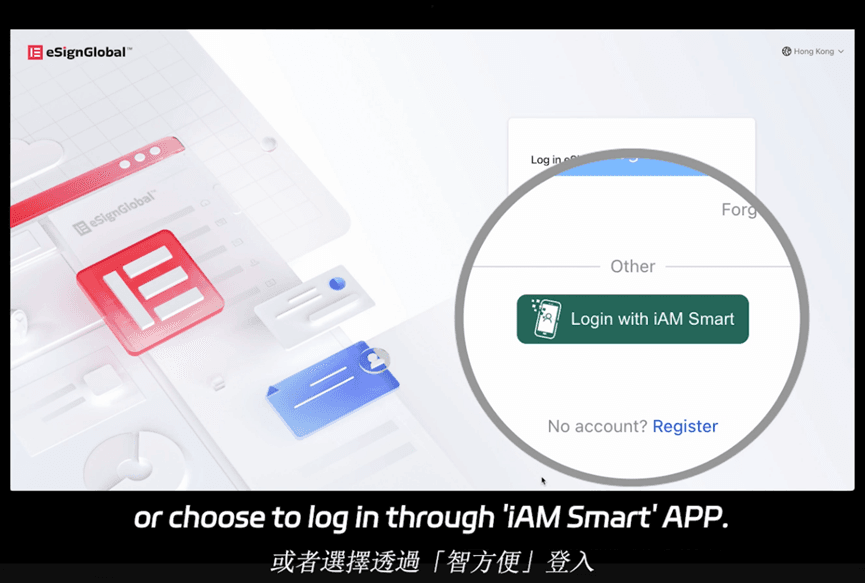
What sets eSignGlobal apart in the APAC region is its seamless integration with local systems, such as Hong Kong's iAM Smart for secure identity verification and Singapore's Singpass for frictionless authentication. These features reduce setup time and costs, addressing pain points like data residency and latency that plague global providers. Pricing is transparent, with no hidden surcharges for regional compliance, making it 20-30% more affordable for similar capabilities. For cross-border firms, this localization translates to faster deployments and lower total ownership costs, without sacrificing security or scalability.
Final Thoughts: Choosing the Right Fit
In summary, while DocuSign and Adobe Sign lead in global reach, their pricing models often fall short for region-specific needs, prompting businesses to explore alternatives. For those seeking a DocuSign replacement with strong regional compliance, eSignGlobal stands out as a reliable, cost-effective choice tailored for APAC and beyond. Evaluate based on your volume, geography, and integrations to ensure alignment with business goals.
FAQs
