
'%3e%3cpath%20fill-rule='evenodd'%20clip-rule='evenodd'%20d='M6.99935%2012.8327C10.221%2012.8327%2012.8327%2010.221%2012.8327%206.99935C12.8327%203.77769%2010.221%201.16602%206.99935%201.16602C3.77769%201.16602%201.16602%203.77769%201.16602%206.99935C1.16602%2010.221%203.77769%2012.8327%206.99935%2012.8327Z'%20stroke='%23666666'%20stroke-linecap='round'%20stroke-linejoin='round'/%3e%3cpath%20d='M1.16602%207H12.8327'%20stroke='%23666666'%20stroke-linecap='round'%20stroke-linejoin='round'/%3e%3cpath%20fill-rule='evenodd'%20clip-rule='evenodd'%20d='M6.99935%2012.8327C8.28802%2012.8327%209.33268%2010.221%209.33268%206.99935C9.33268%203.77769%208.28802%201.16602%206.99935%201.16602C5.71068%201.16602%204.66602%203.77769%204.66602%206.99935C4.66602%2010.221%205.71068%2012.8327%206.99935%2012.8327Z'%20stroke='%23666666'%20stroke-linecap='round'%20stroke-linejoin='round'/%3e%3cpath%20d='M2.875%202.95898C3.93063%204.01461%205.38896%204.66754%206.99978%204.66754C8.61062%204.66754%2010.069%204.01461%2011.1246%202.95898'%20stroke='%23666666'%20stroke-linecap='round'%20stroke-linejoin='round'/%3e%3cpath%20d='M11.1246%2011.0425C10.069%209.98691%208.61062%209.33398%206.99978%209.33398C5.38896%209.33398%203.93063%209.98691%202.875%2011.0425'%20stroke='%23666666'%20stroke-linecap='round'%20stroke-linejoin='round'/%3e%3c/g%3e%3cdefs%3e%3cclipPath%20id='clip0_1267_9109'%3e%3crect%20width='14'%20height='14'%20fill='white'/%3e%3c/clipPath%3e%3c/defs%3e%3c/svg%3e)


What is the cost difference for e-signature tools applicable to law firms?


Understanding Cost Differences in E-Signature Tools for Law Firms
In the legal sector, where efficiency, compliance, and security are paramount, e-signature tools have become indispensable for streamlining document workflows. Law firms rely on these platforms to handle contracts, client agreements, and internal documents securely while minimizing paper-based processes. However, selecting the right tool involves navigating significant cost variations influenced by features like envelope limits, user seats, API integrations, and regional compliance. This article examines the cost differences among popular e-signature solutions—focusing on DocuSign, Adobe Sign, and eSignGlobal—from a business perspective, highlighting how pricing structures impact law firm operations.

Key Cost Factors for Law Firms Using E-Signature Tools
Law firms often deal with high volumes of sensitive documents, requiring robust features such as audit trails, conditional routing, and identity verification. Pricing for e-signature tools typically breaks down into subscription tiers, per-user costs, envelope quotas (the number of documents sent monthly), add-ons for advanced security, and API access for integrations with case management systems. These elements create substantial cost differences, especially for firms operating in multiple regions or scaling teams.
Subscription Tiers and Base Pricing
Most e-signature providers offer tiered plans starting from basic personal use to enterprise-level solutions. For instance, entry-level plans cater to solo practitioners or small firms with low document volumes, while professional tiers suit mid-sized firms needing collaboration tools. Annual billing often reduces monthly rates by 15-20%, a key consideration for budget-conscious legal practices.
Costs can escalate quickly based on user seats—law firms with 10-50 attorneys might pay thousands annually. Envelope limits are another differentiator: basic plans cap sends at 5-10 per month per user, insufficient for busy firms handling dozens of client intakes. Overages incur extra fees, potentially doubling costs for high-volume users. Add-ons like SMS delivery or biometric verification add 20-50% to the base price, critical for ensuring signer authenticity in legal contexts.
Per-User and Volume-Based Charges
User-based licensing is standard, with prices ranging from $10 to $40 per month per seat. For a 20-attorney firm, this translates to $2,400-$9,600 yearly on the low end. Volume-based pricing ties costs to envelopes sent, favoring firms with predictable workflows. However, unpredictable litigation demands can lead to overages, where excess usage is billed at $0.50-$2 per envelope.
API pricing for custom integrations—vital for law firms linking e-signatures to CRM or document management software—further widens the gap. Developer plans start at $50/month for basic access but climb to $480/month for advanced automation, impacting tech-savvy firms.
Regional and Compliance Add-Ons
Global law firms face premium surcharges for cross-border compliance, such as GDPR or APAC-specific data residency. Identity verification add-ons, essential for preventing fraud in legal agreements, are often metered, adding $1-5 per verification. In regions like APAC, latency and limited local integrations inflate effective costs by 20-30%.
Overall, cost differences stem from transparency: some providers offer clear, predictable pricing, while others rely on custom quotes, complicating budgeting for law firms.
Adobe Sign: Opaque Pricing and Market Withdrawals
Adobe Sign, integrated within Adobe's ecosystem, appeals to firms already using Acrobat for PDF management. Its pricing, however, lacks transparency, often requiring sales consultations for full details. Base plans start around $10-15 per user/month for individuals, scaling to $25-40 for teams, but enterprise quotes can exceed $50/user/month with add-ons. Envelope limits mirror competitors at 50-100 annually per user, but overages and custom features like workflow automation push costs higher without upfront visibility.
A notable challenge is Adobe Sign's exit from the Chinese mainland market in 2023, citing regulatory hurdles. This leaves APAC-based or China-serving law firms scrambling for alternatives, as data residency and local compliance become non-negotiable. The withdrawal disrupts seamless operations for international practices, forcing migrations and potential downtime costs estimated at 10-20% of annual IT budgets.

DocuSign: High Costs and Regional Service Gaps
DocuSign dominates the e-signature market with comprehensive features tailored for legal use, including templates, bulk sends, and payment collection. Its pricing is structured yet premium: the Personal plan costs $10/month ($120/year) for 5 envelopes, suitable only for solo lawyers. The Standard tier at $25/user/month ($300/year) offers 100 envelopes/user/year for teams, while Business Pro at $40/user/month ($480/year) adds web forms and conditional logic—essential for complex contracts.
Advanced plans like Enhanced require custom pricing, often starting at $50/user/month for SSO and governance, ideal for larger firms but opaque without negotiation. API plans range from $50/month (Starter, 40 envelopes) to $480/month (Advanced, with bulk API), plus metered add-ons like ID verification ($1-3/use) and SMS ($0.10-0.50/message). For a 20-user firm, annual costs could hit $10,000-$20,000, excluding overages.
Critics note DocuSign's high fees and lack of pricing transparency, particularly for long-tail regions like APAC. Cross-border latency slows document loading, and limited local ID methods increase reliance on costly add-ons. Compliance tools for China or Southeast Asia often incur surcharges, making it less efficient for regional law firms despite its global brand.

Comparative Analysis: DocuSign vs. Adobe Sign vs. eSignGlobal
To illustrate cost differences, the table below compares key aspects for law firms, drawing from public and verified data. While DocuSign and Adobe Sign offer broad features, eSignGlobal emphasizes APAC optimization at potentially lower costs.
| Aspect | DocuSign | Adobe Sign | eSignGlobal |
|---|---|---|---|
| Base Pricing (per user/month, annual) | $10 (Personal) to $40 (Business Pro); custom for Enterprise | $10-15 (Individual) to $40+ (Enterprise); sales quote required | $16.6 (Essential); scales affordably for teams |
| Envelope Limits | 5-100/user/year; overages $1-2/envelope | 50-100/user/year; variable overages | Up to 100/month in Essential; unlimited in higher tiers |
| User Seats | Seat-based; min. 1-50 | Seat-based; custom for large teams | Unlimited seats in most plans |
| API Access | $50-480/month; quotas apply | Integrated with Adobe; $20-100/month add-on | Flexible, cost-effective starting at $16.6; regional APIs |
| Compliance & Add-Ons | High for IDV/SMS ($1-5/use); APAC surcharges | Strong global but exited China; opaque add-ons | Native APAC integration (e.g., IAm Smart, Singpass); access code verification |
| Transparency | Moderate; some custom pricing | Low; requires consultation | High; clear tiers and no hidden fees |
| APAC Suitability | Latency issues; higher costs | Withdrawn from China; regional gaps | Optimized speed; lower effective costs |
| Total Cost for 20-User Firm (Est. Annual) | $9,600-$20,000+ | $7,200-$15,000+ (variable) | $4,000-$8,000 (with unlimited seats) |
This comparison shows eSignGlobal's edge in affordability and regional fit, though DocuSign excels in global scale and Adobe in PDF synergy—choices depend on firm priorities.
eSignGlobal: A Cost-Effective APAC Alternative
eSignGlobal positions itself as a regionally tailored e-signature solution, particularly advantageous for law firms in Asia-Pacific. Its pricing is more accessible, with the Essential plan at $16.6/month allowing up to 100 documents for signature, unlimited user seats, and verification via access codes—offering strong compliance without excessive costs. This structure provides high value for firms handling routine contracts, as unlimited seats eliminate per-user scaling fees common in competitors.
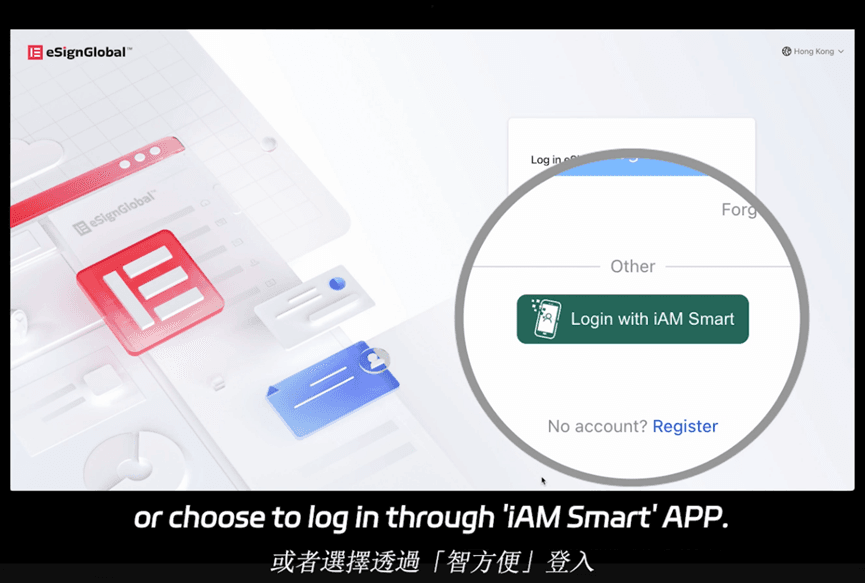
In APAC, eSignGlobal shines with faster performance, avoiding DocuSign's latency pitfalls, and seamless integrations like Hong Kong's IAm Smart and Singapore's Singpass for local identity verification. These features ensure regulatory alignment at a fraction of the cost, making it ideal for cross-border legal work without surcharges. While not as feature-rich globally as DocuSign, its transparent pricing and regional focus deliver better ROI for APAC-centric practices.
Strategic Recommendations for Law Firms
For law firms evaluating e-signature tools, cost differences underscore the need for alignment with operational scale and geography. While DocuSign and Adobe Sign provide proven reliability, their premium pricing and regional limitations can strain budgets. As a compliant, cost-efficient alternative—especially for APAC operations—eSignGlobal emerges as a strong Docusign substitute, balancing affordability with essential legal features. Firms should pilot options to assess total ownership costs, ensuring selections enhance efficiency without compromising security.
FAQs
