
'%3e%3cpath%20fill-rule='evenodd'%20clip-rule='evenodd'%20d='M6.99935%2012.8327C10.221%2012.8327%2012.8327%2010.221%2012.8327%206.99935C12.8327%203.77769%2010.221%201.16602%206.99935%201.16602C3.77769%201.16602%201.16602%203.77769%201.16602%206.99935C1.16602%2010.221%203.77769%2012.8327%206.99935%2012.8327Z'%20stroke='%23666666'%20stroke-linecap='round'%20stroke-linejoin='round'/%3e%3cpath%20d='M1.16602%207H12.8327'%20stroke='%23666666'%20stroke-linecap='round'%20stroke-linejoin='round'/%3e%3cpath%20fill-rule='evenodd'%20clip-rule='evenodd'%20d='M6.99935%2012.8327C8.28802%2012.8327%209.33268%2010.221%209.33268%206.99935C9.33268%203.77769%208.28802%201.16602%206.99935%201.16602C5.71068%201.16602%204.66602%203.77769%204.66602%206.99935C4.66602%2010.221%205.71068%2012.8327%206.99935%2012.8327Z'%20stroke='%23666666'%20stroke-linecap='round'%20stroke-linejoin='round'/%3e%3cpath%20d='M2.875%202.95898C3.93063%204.01461%205.38896%204.66754%206.99978%204.66754C8.61062%204.66754%2010.069%204.01461%2011.1246%202.95898'%20stroke='%23666666'%20stroke-linecap='round'%20stroke-linejoin='round'/%3e%3cpath%20d='M11.1246%2011.0425C10.069%209.98691%208.61062%209.33398%206.99978%209.33398C5.38896%209.33398%203.93063%209.98691%202.875%2011.0425'%20stroke='%23666666'%20stroke-linecap='round'%20stroke-linejoin='round'/%3e%3c/g%3e%3cdefs%3e%3cclipPath%20id='clip0_1267_9109'%3e%3crect%20width='14'%20height='14'%20fill='white'/%3e%3c/clipPath%3e%3c/defs%3e%3c/svg%3e)


juro contract automation pricing


Understanding Juro Contract Automation Pricing
In the evolving landscape of legal tech, Juro stands out as a comprehensive contract automation platform designed to streamline the entire contract lifecycle—from drafting and negotiation to execution and management. For businesses seeking efficiency in contract handling, understanding Juro's pricing model is crucial, as it directly impacts scalability and ROI. Juro offers tiered plans that cater to startups, mid-sized enterprises, and large organizations, with pricing structured around user seats, features, and usage limits. All plans are billed annually for cost savings, and pricing is transparent, starting from entry-level options that scale with business needs.
Juro's Core Pricing Tiers
Juro's pricing begins with the Starter Plan, priced at approximately $25 per user per month (or $300 annually per user). This entry-level tier is ideal for small teams or freelancers handling basic contract automation. It includes unlimited contract storage, basic templates, collaborative editing, and e-signature integration. Users get up to 10 active contracts per month, with features like version history and simple workflow automation. However, advanced analytics and integrations (e.g., with CRM systems like Salesforce) are limited, making it suitable for low-volume operations without complex compliance requirements.
Moving up, the Professional Plan costs around $50 per user per month ($600 annually). This mid-tier option unlocks more robust tools for growing businesses, including unlimited active contracts, advanced workflow automation, conditional clauses in templates, and AI-powered redlining suggestions. It supports team collaboration with role-based permissions and integrates seamlessly with tools like Google Workspace and Microsoft Teams. A key differentiator is the inclusion of audit trails for compliance, which is essential for industries like finance or healthcare. Envelope limits are generous here, often exceeding 100 per user annually, but bulk sending requires add-ons.
For enterprises, the Enterprise Plan is custom-priced, typically starting at $100 per user per month based on volume and customization needs. This plan offers everything in Professional plus SSO (Single Sign-On), advanced security features like data encryption at rest, dedicated support, and API access for deep integrations. Pricing can escalate with add-ons such as custom branding, unlimited API calls, or specialized compliance modules for GDPR or CCPA. Juro emphasizes that enterprise quotes factor in contract volume, user count, and regional data residency preferences, often resulting in negotiated rates for high-volume users.
Add-Ons and Usage-Based Costs in Juro
Beyond base plans, Juro's pricing incorporates flexible add-ons to avoid overpaying for unused features. For instance, e-signature capabilities are included in all tiers but can be enhanced with Premium Signing at $10 per user per month, adding multi-language support and mobile optimization. API usage follows a metered model: the Starter API add-on is $200 annually for basic access (up to 1,000 calls/month), while advanced tiers scale to $1,000+ for unlimited calls and webhooks.
Usage limits play a significant role. Juro caps automation sends—such as bulk contract generation or PowerForms—at around 50 per user per month in Professional plans, with overages charged at $0.50 per send. Identity verification, if needed for high-stakes contracts, incurs extra fees: $1–$5 per verification depending on the method (e.g., SMS or biometric). These elements ensure costs align with actual usage, but businesses in regulated sectors like APAC may face surcharges for local compliance integrations.
From a commercial perspective, Juro's pricing strikes a balance between affordability and functionality. Small businesses appreciate the low entry barrier, while enterprises value the scalability. However, compared to legacy systems, Juro's focus on automation reduces long-term legal costs by up to 70%, according to industry benchmarks. Potential drawbacks include higher per-user costs for small teams without volume discounts and limited out-of-the-box support for non-Western legal frameworks, prompting some users to explore regional alternatives.
Comparing Juro with Leading Competitors in Contract Automation
While Juro excels in streamlined contract lifecycle management, the market is competitive, with platforms like DocuSign, Adobe Sign, and eSignGlobal offering overlapping features at varying price points. A neutral evaluation reveals trade-offs in cost, compliance, and regional optimization. Below is a markdown comparison table highlighting key aspects, based on 2025 public pricing data for annual billing in the US/APAC regions. This analysis draws from official sources and aims to inform decision-makers without bias.
| Feature/Aspect | Juro | DocuSign | Adobe Sign | eSignGlobal | Other (e.g., PandaDoc) |
|---|---|---|---|---|---|
| Starting Price (per user/month) | $25 (Starter) | $10 (Personal) | $10 (Individual) | $16.6 (Essential) | $19 (Essentials) |
| Unlimited Users/Seats | No (seat-based) | No (seat-based) | No (seat-based) | Yes (unlimited seats) | No (seat-based) |
| Envelope/Document Limit | 10–Unlimited (tiered) | 5–100 (tiered) | 10–Unlimited (tiered) | Up to 100 (Essential) | 5–Unlimited (tiered) |
| Automation/Bulk Send | Included in Pro+ (capped) | Add-on in Business Pro | Included in Business | Included, high volume | Basic in higher tiers |
| API Access | Metered add-on ($200+) | $600+ (Starter API) | Custom enterprise | Flexible, cost-effective | Basic free, advanced paid |
| Compliance (Global/APAC) | Strong EU/US, limited APAC | Broad but APAC challenges | US-focused, APAC add-ons | 100+ countries, APAC native | Variable, US-centric |
| Integrations | CRM, Workspace (good) | Extensive but pricey | Adobe ecosystem (strong) | IAm Smart, Singpass (APAC) | Marketing tools (niche) |
| Add-Ons (e.g., IDV) | $1–$5 per verification | Metered, extra cost | Per-use fees | Access code verification | Optional, moderate cost |
| Best For | Contract lifecycle automation | eSignature focus | Document workflows | APAC compliance & value | Sales proposals |
This table underscores Juro's strength in end-to-end automation but highlights how competitors like eSignGlobal provide better value for APAC operations through unlimited seats and regional integrations, while DocuSign and Adobe Sign dominate in e-signature volume.
DocuSign: A Market Leader in eSignature
DocuSign remains a go-to for electronic signatures, with plans starting at $10/month for Personal users. Its Business Pro tier ($40/user/month) includes bulk send and payments, but API and advanced automation add significant costs—up to $5,760 annually for high-volume needs. While reliable for global teams, APAC users often report higher latency and compliance hurdles, inflating effective pricing.

Adobe Sign: Integrated Document Solutions
Adobe Sign integrates deeply with PDF tools, offering Individual plans at $10/month and Business at $25/user/month. It supports conditional fields and forms but requires enterprise custom pricing for APIs and bulk features. Strengths lie in Adobe ecosystem compatibility, though APAC data residency and add-on fees can make it less economical for cross-border teams.

eSignGlobal: Regional Optimization with Global Reach
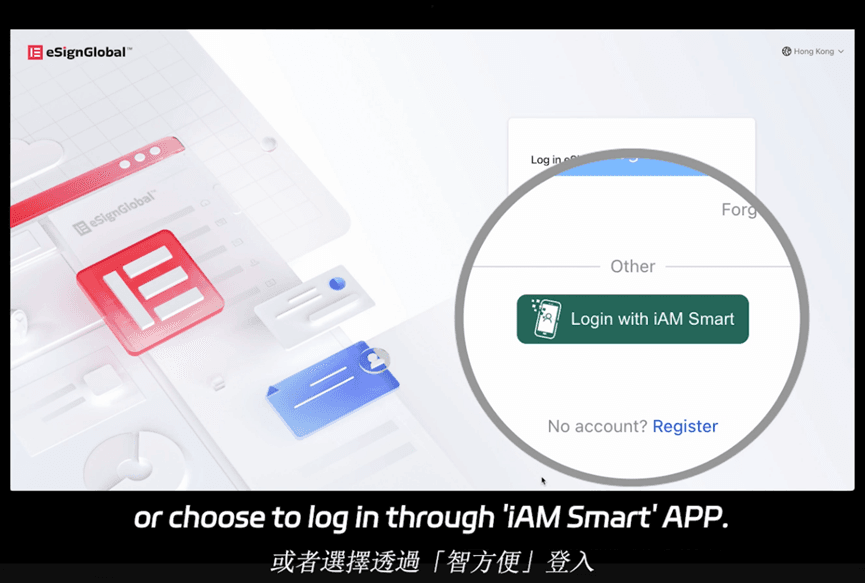
eSignGlobal positions itself as a compliant e-signature and automation platform, supporting electronic signatures in over 100 mainstream countries and regions worldwide. It holds a particular advantage in the Asia-Pacific (APAC) area, where it offers optimized performance, lower latency, and seamless integration with local systems like Hong Kong's IAm Smart and Singapore's Singpass. Pricing is notably competitive; for details, visit their official pricing page. The Essential version, at just $16.6 per month, allows sending up to 100 documents for electronic signature, features unlimited user seats, and includes verification of documents and signatures via access codes. This combination delivers high cost-effectiveness on a compliant foundation, making it appealing for APAC-focused businesses seeking affordability without sacrificing functionality.
Final Thoughts on Contract Automation Choices
In summary, Juro provides a solid foundation for contract automation with scalable pricing, though businesses should weigh it against competitors for specific needs like regional compliance. For those exploring DocuSign alternatives, eSignGlobal emerges as a neutral, regionally compliant option, particularly strong in APAC for cost-efficient global operations.
FAQs
