
'%3e%3cpath%20fill-rule='evenodd'%20clip-rule='evenodd'%20d='M6.99935%2012.8327C10.221%2012.8327%2012.8327%2010.221%2012.8327%206.99935C12.8327%203.77769%2010.221%201.16602%206.99935%201.16602C3.77769%201.16602%201.16602%203.77769%201.16602%206.99935C1.16602%2010.221%203.77769%2012.8327%206.99935%2012.8327Z'%20stroke='%23666666'%20stroke-linecap='round'%20stroke-linejoin='round'/%3e%3cpath%20d='M1.16602%207H12.8327'%20stroke='%23666666'%20stroke-linecap='round'%20stroke-linejoin='round'/%3e%3cpath%20fill-rule='evenodd'%20clip-rule='evenodd'%20d='M6.99935%2012.8327C8.28802%2012.8327%209.33268%2010.221%209.33268%206.99935C9.33268%203.77769%208.28802%201.16602%206.99935%201.16602C5.71068%201.16602%204.66602%203.77769%204.66602%206.99935C4.66602%2010.221%205.71068%2012.8327%206.99935%2012.8327Z'%20stroke='%23666666'%20stroke-linecap='round'%20stroke-linejoin='round'/%3e%3cpath%20d='M2.875%202.95898C3.93063%204.01461%205.38896%204.66754%206.99978%204.66754C8.61062%204.66754%2010.069%204.01461%2011.1246%202.95898'%20stroke='%23666666'%20stroke-linecap='round'%20stroke-linejoin='round'/%3e%3cpath%20d='M11.1246%2011.0425C10.069%209.98691%208.61062%209.33398%206.99978%209.33398C5.38896%209.33398%203.93063%209.98691%202.875%2011.0425'%20stroke='%23666666'%20stroke-linecap='round'%20stroke-linejoin='round'/%3e%3c/g%3e%3cdefs%3e%3cclipPath%20id='clip0_1267_9109'%3e%3crect%20width='14'%20height='14'%20fill='white'/%3e%3c/clipPath%3e%3c/defs%3e%3c/svg%3e)


ironclad clm pricing


Understanding Ironclad CLM Pricing in 2025
Ironclad, a leading contract lifecycle management (CLM) platform, has positioned itself as a robust solution for businesses seeking to streamline contract creation, negotiation, execution, and analysis. From a business observer's perspective, its pricing model reflects the complexities of enterprise software, emphasizing customization over one-size-fits-all plans. Unlike simpler eSignature tools, Ironclad's CLM focuses on end-to-end contract automation, AI-driven insights, and compliance features, which inherently drive up costs. In 2025, Ironclad does not publicly disclose fixed pricing tiers, opting instead for a quote-based approach tailored to organizational needs. This opacity can frustrate SMBs but appeals to enterprises valuing bespoke integrations.
At its core, Ironclad's pricing is seat-based and usage-driven, similar to many SaaS CLM providers. Entry-level implementations often start around $10,000–$20,000 annually for small teams (under 50 users), covering basic contract templating, redlining, and eSignature capabilities. As scale increases, costs escalate based on factors like contract volume, user seats, and advanced modules. For mid-sized firms handling 500–1,000 contracts yearly, expect $50,000–$100,000 per year, including AI clause analysis and workflow automation. Enterprise deployments, with thousands of contracts and integrations (e.g., with Salesforce or Microsoft Dynamics), can exceed $250,000 annually, often bundled with premium support and data migration services.
Key pricing components include:
- User Licensing: Per-seat fees range from $50–$150/month per user, depending on roles (e.g., approvers vs. viewers). Unlimited viewers are sometimes available in higher tiers to encourage broad adoption.
- Contract Volume: Metered pricing kicks in for high-volume users, with overage fees at $5–$10 per additional contract beyond base quotas (typically 100–500/month).
- Add-Ons: AI-powered contract review (e.g., risk scoring) adds 20–30% to the base, while compliance tools for GDPR or HIPAA compliance can double costs in regulated industries.
- Implementation and Onboarding: One-time fees of $5,000–$50,000 cover setup, training, and custom workflows, making total first-year costs 1.5–2x the ongoing subscription.
From a neutral standpoint, this model suits large organizations with dedicated legal teams but may deter startups due to the high entry barrier and lack of transparency. Recent industry reports highlight Ironclad's 2024 funding round, which underscores investor confidence in its scalability, yet critics note that without transparent benchmarks, procurement teams face negotiation challenges. For APAC businesses, additional surcharges for data residency and regional compliance (e.g., aligning with PDPA in Singapore) can inflate costs by 15–25%, prompting evaluations of more localized alternatives.
Businesses must also consider indirect costs: Ironclad's ROI stems from time savings—up to 70% faster contract cycles, per user testimonials—but integration delays or steep learning curves can offset these. In a competitive CLM market valued at $1.5 billion in 2025, Ironclad's pricing aligns with peers like Icertis or Conga, prioritizing depth over affordability.

Comparing Ironclad CLM with eSignature Competitors
While Ironclad excels in full CLM, many businesses pair it with or pivot to dedicated eSignature tools for simpler needs. These alternatives often offer lower costs and faster deployment, especially for document execution. Below, we examine key players—DocuSign, Adobe Sign, eSignGlobal, and others—from a balanced commercial lens, focusing on pricing, features, and regional fit.
DocuSign: The Enterprise Standard
DocuSign remains a benchmark for eSignature, powering over 1 billion transactions annually. Its 2025 pricing emphasizes flexibility for teams needing secure signing without full CLM overhead. Public plans start at $120/year for Personal (5 envelopes/month), scaling to Business Pro at $480/user/year (~100 envelopes). API access adds $600–$5,760/year, with enterprise customizations for SSO and bulk sends. Add-ons like ID verification incur metered fees, and APAC users face latency and compliance hurdles, potentially raising effective costs.
DocuSign's strength lies in global templates and integrations, but envelope caps (e.g., ~10 automation sends/month) limit high-volume use. For CLM hybrids, it integrates well with Ironclad but lacks native contract analytics.

Adobe Sign: Integrated Ecosystem Play
Adobe Sign, part of Adobe Document Cloud, appeals to enterprises already in the Adobe suite (e.g., Acrobat users). Pricing follows a tiered model: Individual at $12.99/user/month (billed annually), Teams at $27.99/user/month with collaboration, and Business at $39.99/user/month for advanced routing and forms. Enterprise plans are custom, often $50+/user/month, including API access and payment collection. Unlike Ironclad's CLM focus, Adobe emphasizes seamless PDF workflows and mobile signing, with unlimited envelopes in higher tiers but metered APIs.
It's reliable for compliance (e.g., ESIGN Act), yet APAC expansions have drawn scrutiny for data sovereignty issues. Costs can balloon with add-ons like SMS delivery, making it less ideal for budget-conscious teams outside North America.

eSignGlobal: Regional Compliance Focus
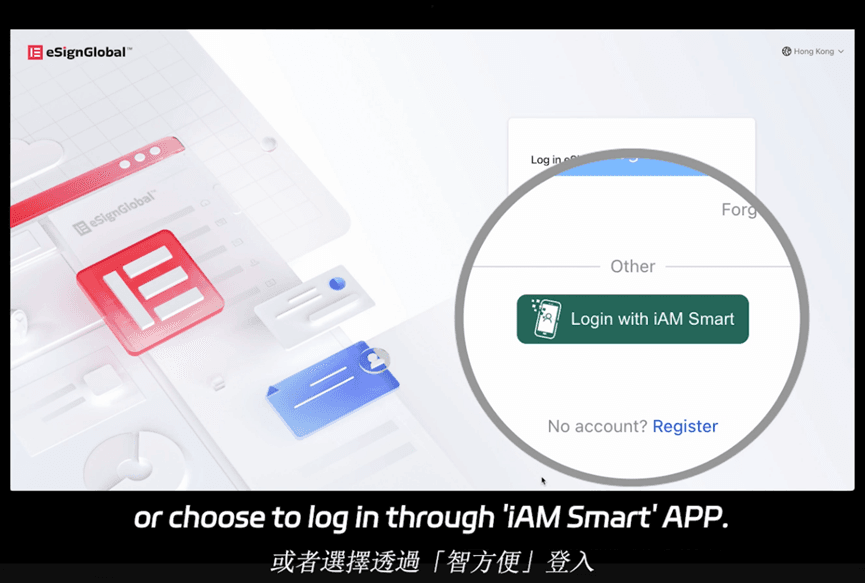
eSignGlobal emerges as a nimble player optimized for global operations, supporting compliance in 100 mainstream countries and regions. It holds advantages in the Asia-Pacific (APAC), where it offers native alignments for markets like China, Hong Kong, and Singapore. Pricing is notably transparent and affordable; for details, explore their official pricing page. The Essential plan starts at just $16.60/month (annual billing), allowing up to 100 documents for electronic signature, unlimited user seats, and verification via access codes. This delivers strong value on compliance foundations, with seamless integrations to Hong Kong's iAM Smart and Singapore's Singpass for enhanced identity assurance.
Higher tiers scale affordably for bulk sends and APIs, without the steep enterprise premiums of Ironclad or DocuSign. From a business view, eSignGlobal's APAC speed and lower costs (often 30–50% below competitors) make it appealing for cross-border firms, though it may lack the depth of full CLM analytics.
Other Competitors: PandaDoc and HelloSign
PandaDoc blends proposals with eSignatures, pricing from $19/user/month (Essentials) to $49/user/month (Business), with unlimited docs but add-ons for payments. It's user-friendly for sales teams but trails Ironclad in legal workflows. HelloSign (by Dropbox) offers free tiers up to 3 docs/month, then $15/user/month, focusing on simplicity—ideal for SMBs but limited in enterprise scale.
| Aspect | Ironclad (CLM) | DocuSign | Adobe Sign | eSignGlobal | PandaDoc | HelloSign |
|---|---|---|---|---|---|---|
| Starting Price (Annual, per User) | Custom (~$10K+ total) | $120 (Personal) | $156 (Individual) | $199 (Essential, unlimited seats) | $228 (Essentials) | $180 (Premium) |
| Envelope/Doc Limit | Usage-based (500+/year base) | ~100/user/year (Pro) | Unlimited (higher tiers) | 100+/month (Essential) | Unlimited | Unlimited (paid) |
| APAC Compliance | Add-on surcharges | Limited, latency issues | Data sovereignty concerns | Native (100 regions, iAM Smart/Singpass) | Basic | US-focused |
| API/Bulk Send | Advanced, custom | $600+ (Starter) | Metered | Flexible, affordable | Included | Basic |
| Best For | Full contract lifecycle | Global enterprises | Adobe ecosystem | APAC/cross-border value | Sales proposals | SMB simplicity |
| Cost Transparency | Low (quote-only) | Medium | Medium | High | High | High |
This table highlights trade-offs: Ironclad leads in CLM depth but at premium costs, while eSignature tools like eSignGlobal offer balanced pricing for execution-focused needs, particularly in APAC where regional compliance reduces risks and expenses.
Navigating CLM Choices for Your Business
In evaluating Ironclad against these alternatives, businesses should weigh total ownership costs against specific pain points—CLM for complex contracts or eSignature for speed. For DocuSign users seeking substitutes with stronger regional compliance, eSignGlobal stands out as a practical, cost-effective option in APAC and beyond. Ultimately, piloting tools and consulting procurement experts ensures alignment with operational goals.
FAQs
