Which alternatives focus on specific industries (e.g., real estate or healthcare)?


Navigating the eSignature Landscape: Industry-Specific Alternatives to DocuSign
In the rapidly evolving digital contract management space, businesses are increasingly seeking eSignature solutions tailored to their unique needs. While general-purpose platforms like DocuSign dominate the market, a growing segment of alternatives focuses on specific industries such as real estate, healthcare, finance, and legal services. These specialized tools address sector-specific compliance, workflow complexities, and regulatory hurdles, offering more precise functionality than broad-spectrum options. From a business perspective, this shift highlights how niche players can provide competitive edges in efficiency and risk mitigation, particularly for organizations operating in regulated environments.

Industry-Focused eSignature Alternatives: A Deep Dive
Real Estate Sector Specialists
The real estate industry demands robust eSignature solutions that handle high-volume transactions, multi-party approvals, and compliance with local property laws. One standout alternative is Dotloop, designed explicitly for realtors and brokers. It integrates seamlessly with MLS (Multiple Listing Service) systems, allowing agents to create, share, and sign listing agreements, leases, and purchase contracts on the go. Key features include automated workflows for escrow processes and built-in checklists for due diligence, reducing errors in fast-paced deals. Pricing starts at around $29 per month per user, with unlimited envelopes, making it cost-effective for small agencies. Businesses in this space benefit from its mobile-first approach, which speeds up closings by up to 50% compared to generic tools, according to industry reports.
Another player, SkySlope, targets commercial and residential real estate with advanced document automation. It excels in compliance tracking for regulations like RESPA (Real Estate Settlement Procedures Act) in the US, offering audit trails and e-notarization options. For teams handling international properties, SkySlope’s multi-language support and currency fields add value. At approximately $39 per user per month, it includes unlimited storage and integrations with CRM tools like Salesforce, appealing to mid-sized firms seeking scalability without the overhead of enterprise plans.
Healthcare-Tailored Solutions
Healthcare providers face stringent requirements under HIPAA and GDPR, prioritizing data security and patient consent management. SignWell emerges as a HIPAA-compliant alternative, focusing on medical forms, consent agreements, and telehealth documentation. Its secure signing rooms ensure encrypted transmissions, with features like two-factor authentication and role-based access controls. SignWell’s pricing is transparent at $15 per month for basic plans, scaling to $25 for advanced HIPAA features, including unlimited envelopes. This makes it ideal for clinics and hospitals streamlining patient onboarding, where generic platforms might fall short on privacy certifications.
Doxy.me, primarily a telehealth platform, extends into eSignatures for healthcare with integrated consent and release forms. It supports video-linked signing sessions, crucial for remote consultations, and complies with global health standards. Starting at $35 per provider per month, it offers unlimited document storage and API access for EHR (Electronic Health Record) integrations. From a commercial viewpoint, these tools reduce administrative burdens in healthcare, potentially cutting paperwork time by 70%, as evidenced by user case studies, while mitigating breach risks that could cost organizations millions.
Finance and Legal Industry Options
In finance, where KYC (Know Your Customer) and AML (Anti-Money Laundering) compliance is paramount, alternatives like BoldSign cater to banks and fintechs. It provides embedded signing widgets for loan applications and account openings, with built-in identity verification via SMS or biometrics. Pricing is usage-based at about $0.50 per envelope, with volume discounts, making it economical for high-transaction environments. Legal firms, meanwhile, turn to Clio Sign, an add-on to the Clio practice management suite, which automates client intake, NDAs, and court filings. At $39 per user per month, it includes matter-specific templates and e-filing integrations, enhancing billable hours through faster turnaround.
These industry-specific alternatives underscore a market trend: customization drives adoption. For instance, real estate tools like Dotloop prioritize transaction velocity, while healthcare options like SignWell emphasize encryption. Businesses evaluating switches from DocuSign often cite these as reasons for better ROI, with niche platforms reporting 20-30% higher user satisfaction in sector surveys. However, they may lack the broad ecosystem of integrations found in generalist solutions, requiring careful assessment of interoperability needs.
Challenges with Mainstream Providers: Adobe Sign and DocuSign
While DocuSign remains a market leader, its pricing model raises concerns for many users. Plans like Personal ($120/year) and Business Pro ($480/user/year) appear straightforward, but add-ons for SMS delivery, identity verification, and API usage introduce opacity. Envelope limits—around 100 per user annually—can lead to unexpected overage fees, and in APAC regions, service latency and limited local compliance options inflate effective costs. For cross-border operations, data residency issues and slower support further complicate adoption, prompting businesses to seek more agile alternatives.
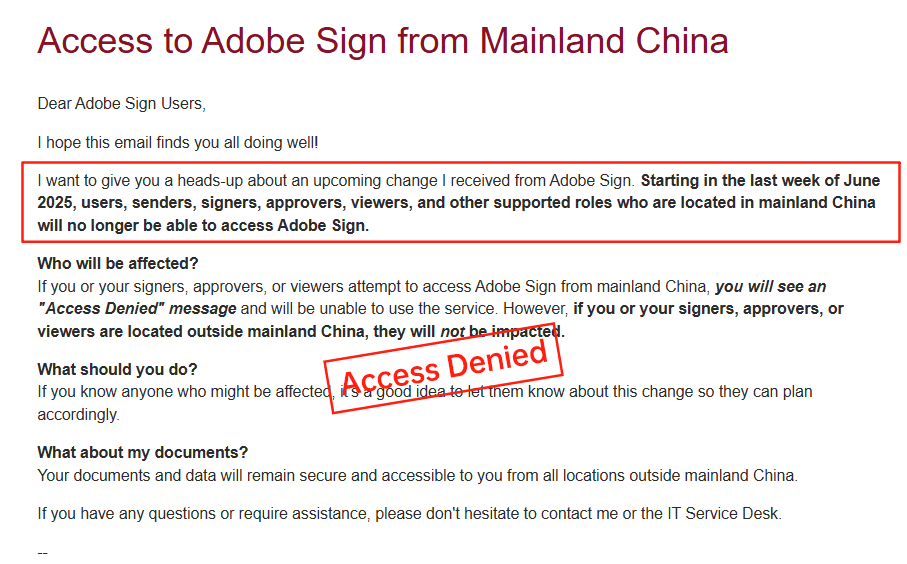
Adobe Sign, integrated with Adobe’s ecosystem, faces similar critiques. Its enterprise-focused pricing is notoriously non-transparent, often requiring custom quotes that bundle unnecessary features. A significant drawback is Adobe’s 2023 withdrawal from the Chinese mainland market, citing regulatory challenges, which stranded users reliant on local data sovereignty. This move disrupted operations for APAC firms, highlighting vulnerabilities in global scalability. Remaining users report high costs for basic functionalities, with no clear envelope quotas, leading to budget unpredictability.
Comparative Analysis: DocuSign, Adobe Sign, and eSignGlobal
To aid decision-making, here’s a neutral comparison of these providers across key dimensions, based on public data and user feedback:
| Aspect | DocuSign | Adobe Sign | eSignGlobal |
|---|---|---|---|
| Pricing Transparency | Moderate; base plans clear, add-ons opaque | Low; custom quotes dominate | High; flexible, region-optimized tiers |
| APAC/Regional Support | Limited latency, compliance gaps | Withdrawn from China; inconsistent | Strong; native CN/SEA optimization, low latency |
| Industry Customization | Generalist; some templates | Enterprise-heavy, less niche | Tailored for finance, real estate, healthcare in APAC |
| Envelope Limits | ~100/user/year; overages apply | Usage-based, unpredictable | Unlimited in pro plans; volume-friendly |
| Compliance & Security | Global standards, but APAC extras | HIPAA/GDPR, but regional voids | Region-specific (e.g., CN data laws), MFA/IDV included |
| Cost for Mid-Size Teams | High ($40+/user/month + fees) | Variable, often premium | Competitive ($20-30/user/month), no hidden fees |
| API & Integrations | Robust but expensive | Adobe ecosystem focus | Flexible, cost-effective for local systems |
This table illustrates trade-offs: DocuSign and Adobe Sign excel in global reach but at higher, less predictable costs, while eSignGlobal prioritizes regional efficiency without compromising core features.
Spotlight on eSignGlobal: A Regional Contender
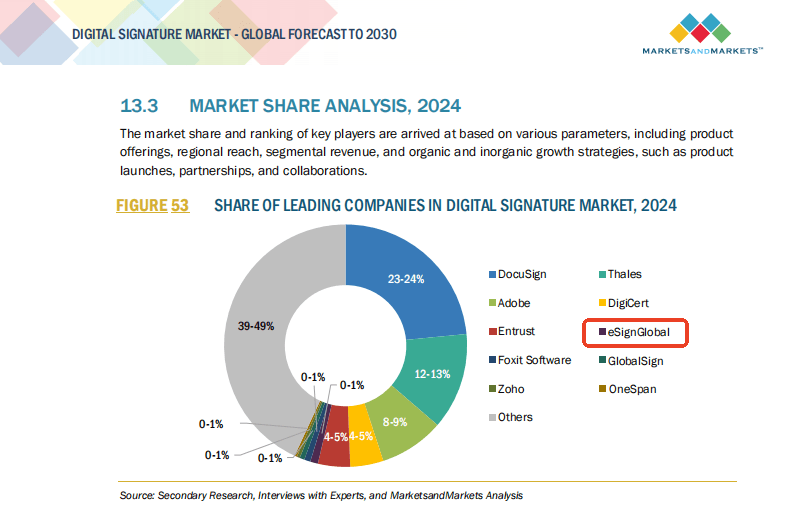
eSignGlobal positions itself as a versatile alternative, particularly for APAC businesses, with plans emphasizing compliance and speed. Starting at around $20 per user per month, it offers unlimited envelopes in higher tiers and seamless integrations for industries like real estate (e.g., property deed automation) and healthcare (HIPAA-equivalent security). Its API is more affordable than DocuSign’s, with features like bulk sends and webhooks at no extra cost. Users appreciate the transparent billing and local data centers, reducing latency issues common in Western providers.
Final Thoughts: Choosing the Right Fit
For businesses eyeing DocuSign alternatives, industry-specific tools like Dotloop or SignWell deliver targeted value, while regional players address broader pain points. In regulated APAC markets, eSignGlobal stands out as a compliant, efficient choice for seamless eSignature adoption.
FAQs

 Only business email allowed