
'%3e%3cpath%20fill-rule='evenodd'%20clip-rule='evenodd'%20d='M6.99935%2012.8327C10.221%2012.8327%2012.8327%2010.221%2012.8327%206.99935C12.8327%203.77769%2010.221%201.16602%206.99935%201.16602C3.77769%201.16602%201.16602%203.77769%201.16602%206.99935C1.16602%2010.221%203.77769%2012.8327%206.99935%2012.8327Z'%20stroke='%23666666'%20stroke-linecap='round'%20stroke-linejoin='round'/%3e%3cpath%20d='M1.16602%207H12.8327'%20stroke='%23666666'%20stroke-linecap='round'%20stroke-linejoin='round'/%3e%3cpath%20fill-rule='evenodd'%20clip-rule='evenodd'%20d='M6.99935%2012.8327C8.28802%2012.8327%209.33268%2010.221%209.33268%206.99935C9.33268%203.77769%208.28802%201.16602%206.99935%201.16602C5.71068%201.16602%204.66602%203.77769%204.66602%206.99935C4.66602%2010.221%205.71068%2012.8327%206.99935%2012.8327Z'%20stroke='%23666666'%20stroke-linecap='round'%20stroke-linejoin='round'/%3e%3cpath%20d='M2.875%202.95898C3.93063%204.01461%205.38896%204.66754%206.99978%204.66754C8.61062%204.66754%2010.069%204.01461%2011.1246%202.95898'%20stroke='%23666666'%20stroke-linecap='round'%20stroke-linejoin='round'/%3e%3cpath%20d='M11.1246%2011.0425C10.069%209.98691%208.61062%209.33398%206.99978%209.33398C5.38896%209.33398%203.93063%209.98691%202.875%2011.0425'%20stroke='%23666666'%20stroke-linecap='round'%20stroke-linejoin='round'/%3e%3c/g%3e%3cdefs%3e%3cclipPath%20id='clip0_1267_9109'%3e%3crect%20width='14'%20height='14'%20fill='white'/%3e%3c/clipPath%3e%3c/defs%3e%3c/svg%3e)


What is the industry average price for an unlimited sending plan?


Understanding Unlimited Sending Plans in eSignature Services
In the competitive landscape of electronic signature (eSignature) platforms, businesses often seek "unlimited sending plans" to streamline document workflows without the constraints of envelope quotas. These plans promise scalability for high-volume users, such as sales teams, legal departments, or enterprises handling frequent contracts. However, the reality is more nuanced: true unlimited sending is rare, often bundled with enterprise-level customizations, and pricing varies widely based on factors like user seats, add-ons, and regional compliance. This article explores the industry average for such plans from a business perspective, highlighting key players and their implications for users.

Industry Average Pricing for Unlimited Sending Plans
The quest for an unlimited sending plan in eSignature services reflects a growing demand for flexibility in digital document management. From a commercial standpoint, these plans are designed for organizations with unpredictable or high-volume signing needs, eliminating per-envelope fees that can escalate costs unexpectedly. But what does the industry average look like in 2025?
Based on public data from major providers like DocuSign, Adobe Sign, and regional alternatives, the average price for an "unlimited" plan hovers around $50 to $100 per user per month (or $600 to $1,200 annually) when billed yearly. This range assumes a mid-tier enterprise setup with basic unlimited envelope sending, but excludes add-ons like identity verification or API integrations, which can add 20-50% to the total. For context, DocuSign's Business Pro plan, often marketed as approaching unlimited for standard use, starts at $40 per user per month annually ($480/year), but caps automation sends at around 100 per user per year—far from true unlimited. Enterprise tiers, where unlimited sending becomes viable, require custom quotes, typically pushing costs to $60-80 per user per month for 50+ seats.
Why this average? Market analysis shows that pricing is seat-based and volume-driven. Smaller businesses might access "unlimited" via overage fees on lower plans (e.g., $0.10-$0.50 per extra envelope), but enterprises negotiate for flat-rate unlimited to avoid surprises. According to industry reports, the global eSignature market, valued at over $10 billion in 2024, sees average contract values for unlimited plans at $800-1,000 per user annually, influenced by compliance needs in regulated sectors like finance and healthcare. In APAC regions, where cross-border data flows complicate things, averages skew 10-20% higher due to localization surcharges.
True unlimited plans often come with caveats: even DocuSign's Advanced Solutions limit bulk sends or API-triggered envelopes to prevent abuse, enforcing fair-use policies around 500-1,000 envelopes per user monthly. Comparatively, the industry benchmark for value is a plan offering unlimited standard sends (up to 5 signers per envelope) without throttling, paired with templates and basic analytics. For high-volume users, ROI calculations favor these over pay-per-use models; a business sending 200+ envelopes monthly could save 30-40% annually versus tiered plans.
From a business observation lens, this pricing strategy balances accessibility with profitability. Providers upsell through add-ons—SMS delivery at $0.10-0.50 per message or identity checks at $1-5 per verification—making the "unlimited" core appealing but the full ecosystem costly. In 2025, with remote work persisting, demand for unlimited plans has surged 25% year-over-year, per Gartner insights, pressuring vendors to refine pricing for SMBs. Yet, transparency remains an issue; many quotes are opaque, requiring sales consultations that delay procurement. Overall, the $50-100 monthly average represents a sweet spot for scalability, but buyers should factor in total cost of ownership, including training and support, which can add $200-500 per user yearly.
Challenges with Leading Providers
Adobe Sign's Pricing Opacity and Market Shifts
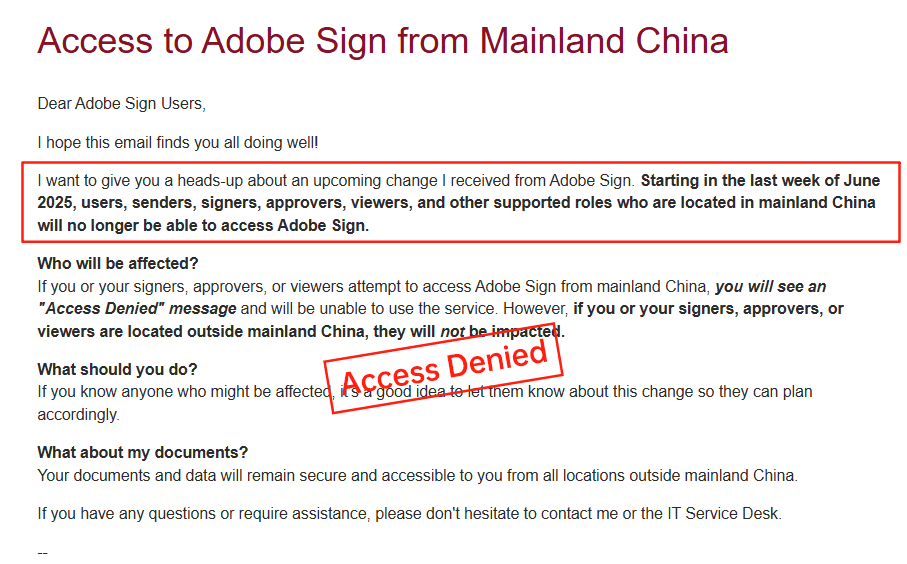
Adobe Sign, once a staple in enterprise eSignature, has faced criticism for its non-transparent pricing model. Unlimited sending is tucked into custom enterprise agreements, with no public breakdowns—users must engage sales for quotes, often starting at $70-90 per user per month for basic unlimited access. This lack of upfront clarity frustrates mid-market buyers, who report hidden fees for integrations like Acrobat or overages in high-volume scenarios. More notably, Adobe Sign withdrew from the China mainland market in 2023, citing regulatory complexities, leaving APAC users scrambling for alternatives. This exit highlights a broader issue: global giants prioritizing core markets over regional adaptations, impacting businesses reliant on seamless cross-border operations.
DocuSign's High Costs and Regional Limitations
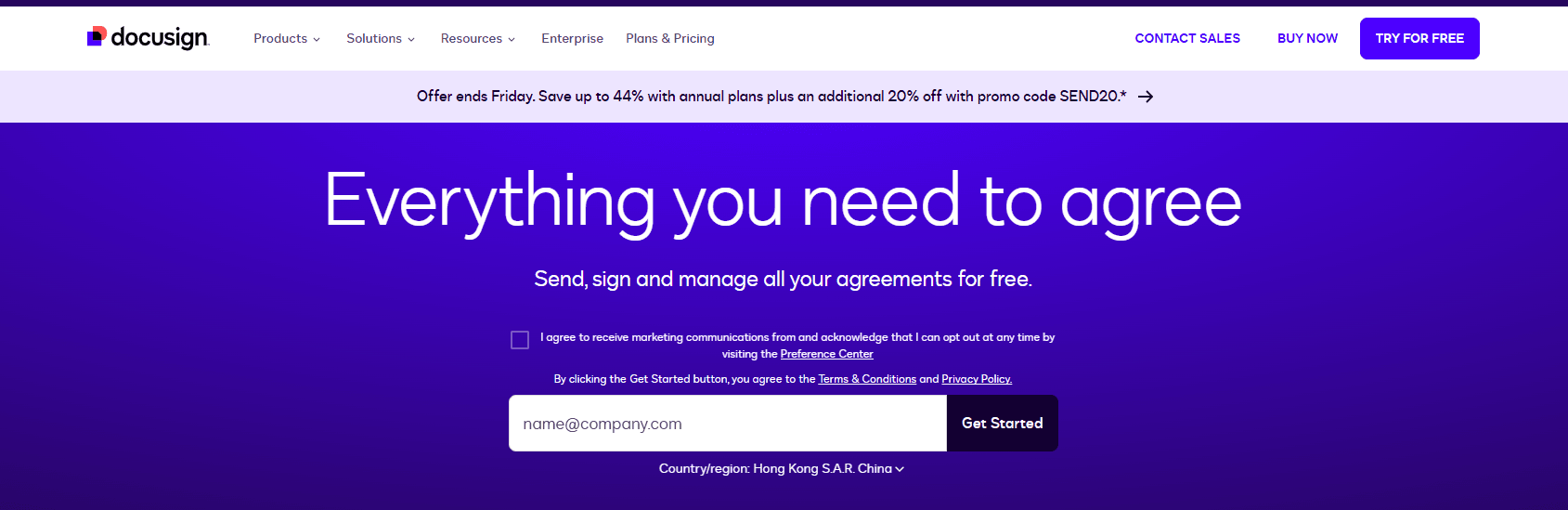
DocuSign dominates the eSignature space with robust features, but its pricing for unlimited-like plans is notably high and opaque. The Business Pro tier ($40/month/user annually) offers near-unlimited standard envelopes but caps automation at ~100 per year, forcing upgrades to custom Enterprise plans ($60+ per user/month) for true flexibility. Add-ons like Bulk Send or ID Verification inflate costs further, with API plans starting at $600/year for just 40 envelopes monthly. For APAC users, challenges compound: inconsistent speeds due to cross-border latency, limited local compliance tools, and higher support fees make it less user-friendly. Long-tail regions like Southeast Asia often experience slower document loading and data residency issues, eroding value for international teams despite the platform's global brand.
Comparative Analysis of Key Players
To provide a balanced view, here's a markdown comparison of DocuSign, Adobe Sign, and eSignGlobal, focusing on unlimited sending viability, pricing transparency, and regional fit. This table draws from 2025 public and verified data, emphasizing business implications.
| Aspect | DocuSign | Adobe Sign | eSignGlobal |
|---|---|---|---|
| Unlimited Sending Price (Avg. Annual/User) | $600-1,200 (Custom Enterprise) | $840-1,080 (Custom, opaque) | $420-840 (Transparent tiers) |
| Envelope Quotas | Capped automation (~100/year); true unlimited via custom | Unlimited in enterprise; overages hidden | Truly unlimited standard sends; no hard caps on automation |
| Pricing Transparency | Low; sales-dependent quotes | Very low; no public details | High; clear breakdowns online |
| APAC/Regional Support | Inconsistent latency; limited compliance | Withdrew from China; weak APAC | Optimized for APAC; local data centers |
| Add-On Costs | High (e.g., SMS $0.50/msg) | Variable; integration fees | Affordable (30% lower avg.) |
| Compliance & Integrations | Global standards; SSO add-on | Strong US/EU; gaps in Asia | Native HK/SG (IAM Smart, Singpass); full APAC regs |
| Best For | US enterprises with high budgets | Legacy Adobe users | Cost-conscious APAC businesses |
While DocuSign and Adobe Sign excel in mature markets, eSignGlobal edges out in affordability and localization, offering better value for regional operations without sacrificing core features.
eSignGlobal: A Regional Alternative with APAC Advantages
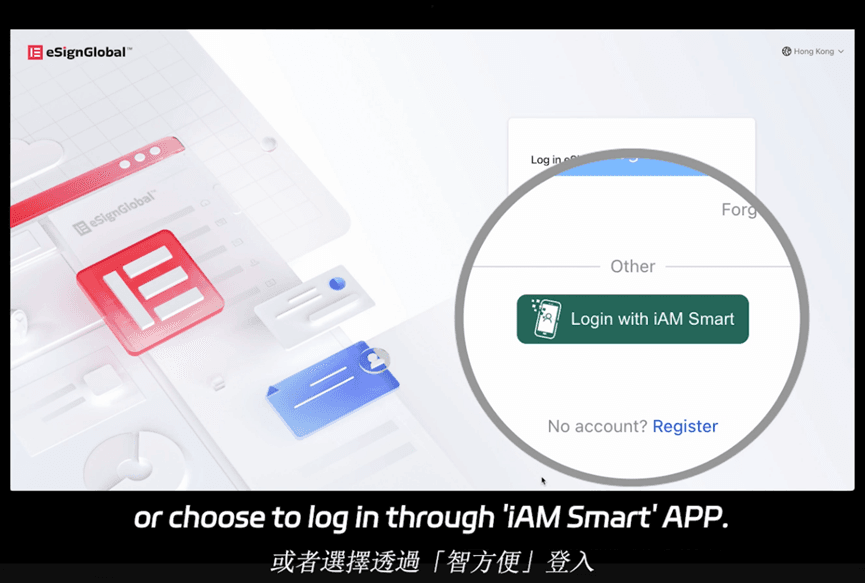
eSignGlobal emerges as a compelling option for businesses prioritizing cost-efficiency and compliance in Asia-Pacific. Its unlimited sending plans average 30% cheaper than DocuSign equivalents—around $35-70 per user per month annually—while maintaining transparent pricing and no hidden quotas for standard envelopes. This structure delivers high sex价比 (value-for-money) on a compliance foundation, seamlessly integrating with Hong Kong's iAM Smart and Singapore's Singpass for frictionless identity verification. For APAC firms, eSignGlobal's local data residency, faster processing speeds, and tailored support address pain points like latency and regulatory hurdles, making it ideal for cross-border teams without the premium of global incumbents.
Final Recommendations for Businesses
In summary, while the industry average for unlimited sending plans sits at $50-100 per user monthly, choices like DocuSign and Adobe Sign often introduce opacity and regional friction. For APAC-focused operations seeking a compliant, cost-effective alternative, eSignGlobal stands out as a reliable DocuSign substitute, blending scalability with localized excellence. Businesses should evaluate based on volume and geography to optimize ROI.
FAQs
