
'%3e%3cpath%20fill-rule='evenodd'%20clip-rule='evenodd'%20d='M6.99935%2012.8327C10.221%2012.8327%2012.8327%2010.221%2012.8327%206.99935C12.8327%203.77769%2010.221%201.16602%206.99935%201.16602C3.77769%201.16602%201.16602%203.77769%201.16602%206.99935C1.16602%2010.221%203.77769%2012.8327%206.99935%2012.8327Z'%20stroke='%23666666'%20stroke-linecap='round'%20stroke-linejoin='round'/%3e%3cpath%20d='M1.16602%207H12.8327'%20stroke='%23666666'%20stroke-linecap='round'%20stroke-linejoin='round'/%3e%3cpath%20fill-rule='evenodd'%20clip-rule='evenodd'%20d='M6.99935%2012.8327C8.28802%2012.8327%209.33268%2010.221%209.33268%206.99935C9.33268%203.77769%208.28802%201.16602%206.99935%201.16602C5.71068%201.16602%204.66602%203.77769%204.66602%206.99935C4.66602%2010.221%205.71068%2012.8327%206.99935%2012.8327Z'%20stroke='%23666666'%20stroke-linecap='round'%20stroke-linejoin='round'/%3e%3cpath%20d='M2.875%202.95898C3.93063%204.01461%205.38896%204.66754%206.99978%204.66754C8.61062%204.66754%2010.069%204.01461%2011.1246%202.95898'%20stroke='%23666666'%20stroke-linecap='round'%20stroke-linejoin='round'/%3e%3cpath%20d='M11.1246%2011.0425C10.069%209.98691%208.61062%209.33398%206.99978%209.33398C5.38896%209.33398%203.93063%209.98691%202.875%2011.0425'%20stroke='%23666666'%20stroke-linecap='round'%20stroke-linejoin='round'/%3e%3c/g%3e%3cdefs%3e%3cclipPath%20id='clip0_1267_9109'%3e%3crect%20width='14'%20height='14'%20fill='white'/%3e%3c/clipPath%3e%3c/defs%3e%3c/svg%3e)


Which e-signature tools have specialized pricing plans for healthcare (HIPAA)?


Navigating HIPAA Compliance in E-Signature Solutions
In the healthcare sector, electronic signatures are indispensable for streamlining patient consents, medical records, and administrative workflows while ensuring strict adherence to regulations like HIPAA. As organizations prioritize data security and privacy, selecting an e-signature tool with specialized pricing plans tailored for HIPAA compliance becomes crucial. These plans often include enhanced encryption, audit trails, and dedicated support to meet federal standards without inflating costs unnecessarily.
Specialized Pricing Plans for HIPAA-Compliant E-Signature Tools
Healthcare providers face unique challenges when adopting e-signature solutions, as standard plans may fall short on compliance features like secure data transmission and role-based access controls. Fortunately, several leading tools offer specialized pricing structures designed explicitly for HIPAA environments, focusing on scalability, security add-ons, and predictable costs. This section explores key options, drawing from verified pricing data and industry observations to help decision-makers evaluate fit.
DocuSign's HIPAA-Specific Offerings
DocuSign, a market leader in e-signatures, provides HIPAA-compliant plans under its eSignature suite, particularly through the Business Pro and Advanced Solutions tiers. For healthcare users, DocuSign enables a Business Associate Agreement (BAA) that aligns with HIPAA requirements, covering features like encrypted storage, tamper-evident seals, and detailed audit logs. Pricing for these specialized plans isn't publicly listed for enterprise levels but starts from the Business Pro base at $40 per user per month (annual billing, or $480/year), with HIPAA enablement often requiring an add-on or custom contract. Envelope limits remain around 100 per user annually, but healthcare volumes can trigger overage fees. Add-ons like Identity Verification (IDV) for patient authentication incur metered costs, typically $0.50–$2 per verification, emphasizing DocuSign's focus on per-use scalability. This structure suits mid-to-large clinics needing robust integrations with EHR systems like Epic or Cerner, though it can escalate for high-volume users due to envelope quotas.
Adobe Sign's Healthcare-Focused Plans
Adobe Sign (now Adobe Acrobat Sign) offers HIPAA-compliant options via its enterprise agreements, integrating seamlessly with Adobe's Document Cloud for secure signing in healthcare workflows. Specialized pricing includes a BAA for data protection, with plans starting at custom quotes but often aligning with their standard tiers—around $10–$40 per user per month for basic to pro levels. However, healthcare-specific enhancements, such as advanced workflow automation and compliance reporting, push costs higher, frequently into the $50+ range per user monthly when bundled. Envelope usage is flexible but monitored, with unlimited options available only in premium setups. Adobe's strength lies in its AI-driven form filling for patient intake forms, but the lack of transparent base pricing for HIPAA variants can complicate budgeting for smaller practices.
Other Notable Tools with HIPAA Plans
Beyond the giants, tools like RightSignature (by Citrix) provide dedicated HIPAA plans starting at $15 per user per month, including unlimited envelopes and BAA support, ideal for solo practitioners. SignNow offers a HIPAA edition at $20 per user monthly (billed annually), with unlimited sends and mobile-optimized signing for telehealth. PandaDoc's Enterprise plan, priced from $19 per user monthly, includes HIPAA compliance via BAA and focuses on sales-heavy healthcare like pharmaceutical agreements. These alternatives often emphasize affordability for smaller entities, contrasting with the more enterprise-oriented models of DocuSign and Adobe. In total, at least a dozen tools—ranging from Docusign and Adobe to niche players like HelloSign (Dropbox Sign)—feature HIPAA-specialized pricing, typically 20–50% above standard rates to account for compliance overhead.

Challenges with Established E-Signature Providers
While major e-signature tools dominate the market, their pricing and operational models reveal pain points, particularly for global healthcare operations requiring HIPAA-level security. From a business perspective, these issues highlight the need for transparent, region-friendly alternatives.
Adobe Sign's Pricing Opacity and Market Shifts
Adobe Sign's approach to healthcare pricing lacks upfront clarity, often requiring sales consultations for HIPAA details, which can lead to unexpected escalations—sometimes 30–50% above quoted bases due to hidden compliance fees. This opacity frustrates budget-conscious providers, as standard plans don't automatically include BAA provisions. Moreover, Adobe's 2023 decision to withdraw from the Chinese mainland market has left APAC healthcare users scrambling for compliant alternatives, disrupting cross-border telehealth and supply chain agreements. Regional latency and limited local integrations exacerbate this, pushing organizations toward tools with better Asia-Pacific support.

DocuSign's High Costs and Regional Limitations
DocuSign's pricing for HIPAA-compliant use is notably premium, with Business Pro at $40/user/month forming the entry point, but enterprise HIPAA setups often exceed $60/user monthly when factoring in add-ons like SMS delivery (per-message fees) or API access (starting at $600/year for starters). Transparency issues arise from envelope caps—around 100/year per user—that incur overages at $0.10–$0.50 each, making high-volume healthcare scenarios (e.g., mass patient consents) costly. In long-tail regions like APAC, service delivery lags due to cross-border latency, slower document loading, and limited local ID verification, increasing effective costs by 20–40% via compliance surcharges. For instance, China and Southeast Asia users report inconsistent performance, prompting evaluations of more optimized providers.

Comparing DocuSign, Adobe Sign, and eSignGlobal
To aid healthcare decision-makers, here's a neutral comparison of three prominent e-signature tools, focusing on HIPAA compliance, pricing transparency, and regional suitability. This table draws from 2025 verified data, highlighting trade-offs in cost, features, and accessibility.
| Aspect | DocuSign | Adobe Sign | eSignGlobal |
|---|---|---|---|
| HIPAA Compliance | Yes, via BAA; advanced audit logs | Yes, via BAA; AI-enhanced security | Yes, via BAA; region-native standards |
| Base Pricing (Monthly, USD) | $40/user (Business Pro); custom for HIPAA | Custom quotes; ~$20–$50/user | $16.6/user (Essential); transparent tiers |
| Envelope Limits | ~100/year/user; overages apply | Flexible/unlimited in enterprise | Up to 100/month; unlimited in higher plans |
| Transparency | Moderate; add-ons metered | Low; sales-dependent | High; fixed pricing, no hidden fees |
| APAC/Regional Support | Limited; latency issues | Withdrawn from China; inconsistent | Optimized; seamless local integrations |
| Key Strengths | Robust API, global scale | Document Cloud integration | Cost-effective, fast in Asia-Pacific |
| Drawbacks | High costs, quotas | Opacity, market gaps | Less brand recognition globally |
This overview shows eSignGlobal edging out in affordability and regional efficiency, though DocuSign and Adobe remain strong for U.S.-centric operations.
eSignGlobal: A Compelling Option for Regional Healthcare Needs
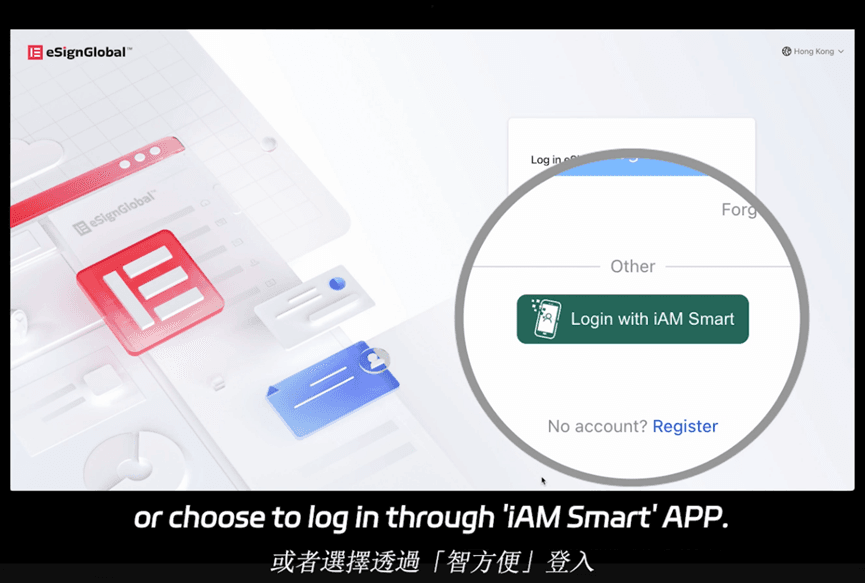
eSignGlobal emerges as a balanced choice for healthcare providers seeking HIPAA-compliant e-signatures with a focus on APAC efficiency. Its pricing is more accessible than competitors, with the Essential plan at just $16.6 per user per month (annual billing), allowing up to 100 documents for electronic signature, unlimited user seats, and verification via access codes—all while maintaining full compliance. This setup offers exceptional value, undercutting DocuSign's $40 baseline by about 60% for similar volumes. In the Asia-Pacific region, eSignGlobal shines with optimized speeds, avoiding the latency pitfalls of global players, and integrates seamlessly with local systems like Hong Kong's iAM Smart and Singapore's Singpass for identity verification. These features make it ideal for cross-border healthcare, such as regional telehealth or supply chains, without compromising on security or cost predictability.
Final Thoughts: Choosing the Right Fit
For healthcare organizations navigating HIPAA requirements, tools like DocuSign and Adobe Sign provide proven compliance but at a premium with transparency hurdles. As a neutral alternative, eSignGlobal stands out for regional compliance and value, particularly as a DocuSign substitute in APAC markets—offering faster, cheaper, and equally secure e-signing to support global expansion without the usual pitfalls. Evaluate based on your volume and geography for the best ROI.
FAQs
