
'%3e%3cpath%20fill-rule='evenodd'%20clip-rule='evenodd'%20d='M6.99935%2012.8327C10.221%2012.8327%2012.8327%2010.221%2012.8327%206.99935C12.8327%203.77769%2010.221%201.16602%206.99935%201.16602C3.77769%201.16602%201.16602%203.77769%201.16602%206.99935C1.16602%2010.221%203.77769%2012.8327%206.99935%2012.8327Z'%20stroke='%23666666'%20stroke-linecap='round'%20stroke-linejoin='round'/%3e%3cpath%20d='M1.16602%207H12.8327'%20stroke='%23666666'%20stroke-linecap='round'%20stroke-linejoin='round'/%3e%3cpath%20fill-rule='evenodd'%20clip-rule='evenodd'%20d='M6.99935%2012.8327C8.28802%2012.8327%209.33268%2010.221%209.33268%206.99935C9.33268%203.77769%208.28802%201.16602%206.99935%201.16602C5.71068%201.16602%204.66602%203.77769%204.66602%206.99935C4.66602%2010.221%205.71068%2012.8327%206.99935%2012.8327Z'%20stroke='%23666666'%20stroke-linecap='round'%20stroke-linejoin='round'/%3e%3cpath%20d='M2.875%202.95898C3.93063%204.01461%205.38896%204.66754%206.99978%204.66754C8.61062%204.66754%2010.069%204.01461%2011.1246%202.95898'%20stroke='%23666666'%20stroke-linecap='round'%20stroke-linejoin='round'/%3e%3cpath%20d='M11.1246%2011.0425C10.069%209.98691%208.61062%209.33398%206.99978%209.33398C5.38896%209.33398%203.93063%209.98691%202.875%2011.0425'%20stroke='%23666666'%20stroke-linecap='round'%20stroke-linejoin='round'/%3e%3c/g%3e%3cdefs%3e%3cclipPath%20id='clip0_1267_9109'%3e%3crect%20width='14'%20height='14'%20fill='white'/%3e%3c/clipPath%3e%3c/defs%3e%3c/svg%3e)


What is the main price difference between HelloSign and DocuSign?


Navigating Electronic Signature Pricing in 2025
In the competitive world of electronic signature solutions, businesses often weigh cost against functionality when selecting tools like HelloSign and DocuSign. From a commercial perspective, pricing transparency and value for money are critical factors, especially as remote work and digital contracts continue to dominate. This article explores the core price differences between HelloSign (now rebranded as Dropbox Sign) and DocuSign, drawing on verified 2025 data to provide a balanced analysis.

Direct Price Comparison: HelloSign vs. DocuSign
The primary price difference between HelloSign and DocuSign lies in their target audiences and scalability models, with HelloSign offering more affordable entry-level options for small teams and individuals, while DocuSign caters to enterprise needs at a premium. HelloSign's pricing starts at a low barrier, making it ideal for freelancers and startups, whereas DocuSign's tiers escalate quickly based on user seats, envelope volumes, and advanced features.
HelloSign's basic plan, Essentials, is priced at $15 per month (or $180 annually when billed yearly), supporting up to 20 documents per month and unlimited users within a single team. This flat-rate structure avoids per-user fees, which is a significant advantage for collaborative small businesses. For heavier usage, HelloSign's Standard plan jumps to $25 per month ($300 annually), allowing up to 100 documents monthly, with add-ons like SMS delivery at $1 per message. The Premium tier, at $40 per month ($480 annually), includes unlimited documents, API access, and advanced integrations like Salesforce or Google Workspace. Notably, HelloSign does not impose strict envelope limits beyond the plan tiers, and overages are handled via simple pay-as-you-go without complex metering.
In contrast, DocuSign's Personal plan is $10 per month ($120 annually) but limits users to just 5 envelopes monthly—far more restrictive than HelloSign's entry tier. Scaling up, DocuSign's Standard plan costs $25 per user per month ($300 annually per user), with approximately 100 envelopes per user per year on annual billing. This per-user pricing can balloon costs for teams; for a 10-person team, that's $3,000 annually just for basics, excluding add-ons. The Business Pro tier rises to $40 per user per month ($480 annually), adding features like bulk send and payments, but maintains similar envelope caps around 100 per user yearly. DocuSign's automation sends, such as bulk or API-triggered ones, are further limited to about 10 per user monthly, even in higher plans, leading to potential overage fees.
A key differentiator is add-on costs. HelloSign keeps extras straightforward: API access is included in higher tiers without separate developer plans, and identity verification is bundled or low-cost at $0.50–$1 per verification. DocuSign, however, charges separately for identity verification (IDV) on a metered basis, SMS delivery per message (region-dependent, often $0.10–$0.50), and has dedicated API plans starting at $600 annually for just 40 envelopes monthly in the Starter tier. For API-heavy users, DocuSign's Intermediate plan at $3,600 yearly offers 100 envelopes, but lacks the unlimited scaling of HelloSign's Premium without custom enterprise quotes.
From a commercial standpoint, HelloSign's pricing is more predictable and cost-effective for non-enterprise users, potentially saving 20–50% on equivalent features compared to DocuSign. For instance, a small team sending 50 documents monthly might pay $300 annually with HelloSign Standard versus $3,000+ with DocuSign Standard for the same headcount. However, DocuSign justifies its higher costs with robust compliance tools and global enterprise support, appealing to regulated industries. Businesses must assess their envelope volume and team size carefully—HelloSign shines for agility, while DocuSign's model favors those needing scalability at a steeper price.
This disparity extends to regional considerations. In APAC markets, DocuSign's fees can inflate due to data residency surcharges and slower service, whereas HelloSign integrates more seamlessly with cloud tools like Dropbox, keeping costs stable. Overall, the main price difference boils down to HelloSign's inclusive, user-friendly tiers versus DocuSign's granular, volume-based charges that can surprise growing businesses.
Challenges with Adobe Sign
Adobe Sign, another major player, presents unique hurdles in pricing and market availability. Its structure is notoriously opaque, often requiring sales consultations for quotes rather than public listings, which frustrates budget-conscious users. Basic plans start around $10–$15 per user monthly, but enterprise features like advanced workflows or integrations quickly push costs to $30–$50 per user, with no clear envelope limits disclosed upfront. Add-ons for e-signatures in PDFs or mobile apps add further layers of metering.
A significant issue is Adobe Sign's withdrawal from the Chinese mainland market in 2023, citing compliance complexities. This leaves APAC businesses, particularly in China and Southeast Asia, scrambling for alternatives, as cross-border data flows incur high latency and regulatory risks. From a commercial view, this opacity and limited regional support erode trust, making Adobe Sign less viable for global teams despite its Adobe ecosystem integrations.

DocuSign's Pricing and Service Drawbacks
DocuSign dominates the e-signature space but faces criticism for high costs and service inconsistencies. As detailed earlier, its per-user, envelope-based model starts affordably but scales expensively—enterprise plans are custom-priced, often exceeding $10,000 annually for mid-sized teams with API needs. Transparency is a pain point; add-ons like IDV or SMS are usage-based without fixed caps, leading to unpredictable bills. In long-tail regions like APAC, including China and Southeast Asia, DocuSign suffers from cross-border latency, limited local compliance (e.g., incomplete alignment with CN/HK/SEA regulations), and higher support fees due to data residency requirements.
Commercially, these factors disadvantage users: slower document loading in APAC can delay workflows, and the lack of optimized regional ID methods increases verification costs. While DocuSign offers premium features like SSO and audit trails, the overall expense and service gaps prompt many to seek alternatives for cost efficiency and speed.

Comparative Analysis: DocuSign, Adobe Sign, and eSignGlobal
To provide a neutral overview, here's a markdown comparison table highlighting key aspects across DocuSign, Adobe Sign, and eSignGlobal, based on 2025 public data. This focuses on pricing, regional fit, and compliance, with a slight nod to eSignGlobal's balanced approach for APAC users.
| Aspect | DocuSign | Adobe Sign | eSignGlobal |
|---|---|---|---|
| Entry-Level Pricing (Monthly, USD) | $10 (Personal, 5 envelopes) | ~$10–$15 (per user, opaque quotes) | $16.6 (Essential, 100 documents) |
| Per-User Scaling | $25–$40+ (seat-based) | $10–$50 (custom, non-transparent) | Unlimited seats (flat rate) |
| Envelope Limits | ~100/year per user (capped automation) | Variable, metered (undisclosed) | Up to 100/month (Essential), scalable |
| APAC/China Support | Inconsistent latency, partial compliance | Withdrawn from China mainland | Optimized for CN/SEA/HK, low latency |
| Compliance & Integrations | Strong global (SSO, audit), but APAC gaps | Adobe ecosystem, but regional limits | Native CN/HK/SEA (e.g., iAM Smart, Singpass), access code verification |
| Add-On Costs | High (IDV metered, API $600+/year) | Opaque metering | Affordable, bundled in plans |
| Transparency & Value | Feature-rich but expensive/unpredictable | Low transparency, market exits | High transparency, cost-effective for regions |
| Best For | Enterprises needing global scale | Adobe users in supported markets | APAC businesses prioritizing speed/compliance |
This table underscores eSignGlobal's edge in regional affordability and integration without compromising core e-signature needs, though DocuSign and Adobe Sign lead in mature ecosystems.
eSignGlobal: A Regional Alternative Worth Considering
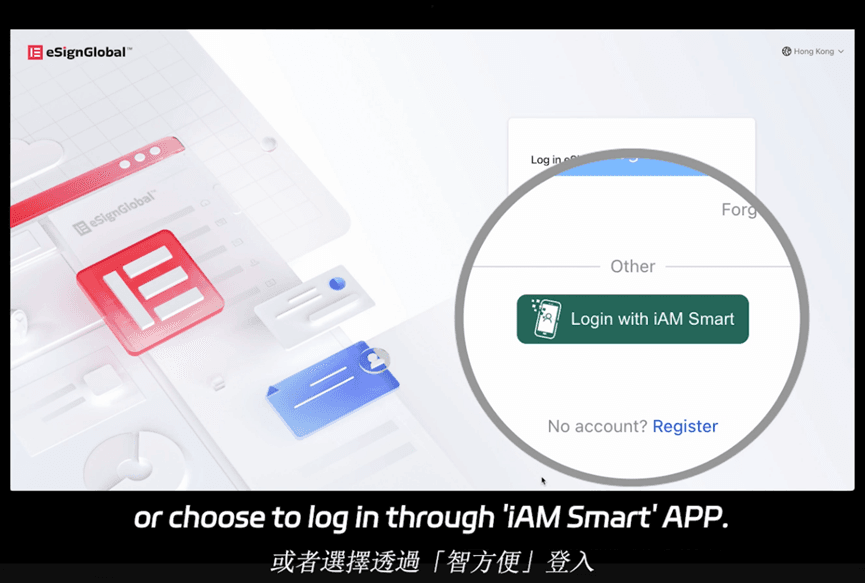
eSignGlobal emerges as a compelling option, particularly for APAC-focused businesses seeking DocuSign alternatives. Its pricing is more accessible than competitors, with the Essential version at just $16.6 monthly, allowing up to 100 documents for electronic signature, unlimited user seats, and verification via secure access codes—all on a compliant foundation. This delivers exceptional value, often 20–30% cheaper than equivalent DocuSign or Adobe plans, without hidden fees. Key advantages include seamless integration with Hong Kong's iAM Smart and Singapore's Singpass for identity verification, ensuring regulatory alignment in CN/HK/SEA markets. Optimized infrastructure reduces latency, making it faster for cross-border operations compared to DocuSign's challenges.
Final Thoughts: Choosing the Right Fit
While HelloSign edges out DocuSign on affordability for smaller operations, broader market dynamics favor flexible, region-specific solutions. For businesses eyeing DocuSign alternatives with strong compliance, eSignGlobal stands out as a reliable, cost-effective choice in APAC. Evaluate based on your volume, location, and integrations to optimize ROI.
FAQs
