
'%3e%3cpath%20fill-rule='evenodd'%20clip-rule='evenodd'%20d='M6.99935%2012.8327C10.221%2012.8327%2012.8327%2010.221%2012.8327%206.99935C12.8327%203.77769%2010.221%201.16602%206.99935%201.16602C3.77769%201.16602%201.16602%203.77769%201.16602%206.99935C1.16602%2010.221%203.77769%2012.8327%206.99935%2012.8327Z'%20stroke='%23666666'%20stroke-linecap='round'%20stroke-linejoin='round'/%3e%3cpath%20d='M1.16602%207H12.8327'%20stroke='%23666666'%20stroke-linecap='round'%20stroke-linejoin='round'/%3e%3cpath%20fill-rule='evenodd'%20clip-rule='evenodd'%20d='M6.99935%2012.8327C8.28802%2012.8327%209.33268%2010.221%209.33268%206.99935C9.33268%203.77769%208.28802%201.16602%206.99935%201.16602C5.71068%201.16602%204.66602%203.77769%204.66602%206.99935C4.66602%2010.221%205.71068%2012.8327%206.99935%2012.8327Z'%20stroke='%23666666'%20stroke-linecap='round'%20stroke-linejoin='round'/%3e%3cpath%20d='M2.875%202.95898C3.93063%204.01461%205.38896%204.66754%206.99978%204.66754C8.61062%204.66754%2010.069%204.01461%2011.1246%202.95898'%20stroke='%23666666'%20stroke-linecap='round'%20stroke-linejoin='round'/%3e%3cpath%20d='M11.1246%2011.0425C10.069%209.98691%208.61062%209.33398%206.99978%209.33398C5.38896%209.33398%203.93063%209.98691%202.875%2011.0425'%20stroke='%23666666'%20stroke-linecap='round'%20stroke-linejoin='round'/%3e%3c/g%3e%3cdefs%3e%3cclipPath%20id='clip0_1267_9109'%3e%3crect%20width='14'%20height='14'%20fill='white'/%3e%3c/clipPath%3e%3c/defs%3e%3c/svg%3e)


hellosign monthly cost


Understanding HelloSign Monthly Costs in 2025
HelloSign, now fully integrated into DocuSign's ecosystem following its 2019 acquisition, offers electronic signature services under the broader DocuSign eSignature umbrella. For businesses evaluating digital signing tools, understanding the monthly costs is crucial, especially as pricing structures have evolved to align with DocuSign's tiered model. This article examines HelloSign's pricing from a business perspective, highlighting how it fits into operational budgets while considering factors like user needs, envelope limits, and add-ons. We'll break down the plans, compare them to competitors, and provide insights for informed decision-making.
HelloSign's Core Pricing Plans
HelloSign's monthly costs are billed annually for the best rates, starting from entry-level options suitable for individuals and scaling to enterprise solutions. The Personal plan, ideal for solo users or freelancers, costs $10 per month (or $120 annually). This includes access for one user and up to five envelopes per month—envelopes being the digital documents sent for signing. It's a straightforward entry point for occasional use, such as personal contracts or simple agreements, without team features.
For small teams, the Standard plan jumps to $25 per user per month ($300 annually per user). This tier unlocks collaboration tools like shared templates, comments, and automated reminders, with an approximate limit of 100 envelopes per user per year. Businesses often find this sufficient for routine operations, such as internal approvals or client onboarding, where multiple users need to interact with documents. The envelope cap encourages efficient usage, but overages can incur additional fees based on volume.
Moving up, the Business Pro plan at $40 per user per month ($480 annually) adds advanced capabilities like web forms, conditional routing, signer attachments, payment collection, and bulk send features. It maintains the ~100 envelopes per user per year limit but enhances automation, making it popular for sales teams or HR departments handling high-volume workflows. From a commercial standpoint, this plan balances cost with productivity gains, though businesses exceeding envelope limits may need to negotiate custom terms.
For larger organizations, Advanced Solutions (Enterprise) pricing is not publicly listed and requires direct consultation. It includes single sign-on (SSO), advanced governance, audit trails, and premium support, customized by seat count, envelope volume, and compliance requirements. Monthly costs here can vary widely—potentially starting from $50+ per user based on scale—but offer unlimited envelopes in some configurations, subject to fair use policies.
Add-Ons and Hidden Costs in HelloSign Pricing
Beyond base subscriptions, HelloSign's monthly expenses can increase with add-ons. Identity Verification (IDV), for enhanced security like biometric checks or SMS authentication, operates on a metered basis with extra per-use fees. SMS or WhatsApp delivery also adds per-message charges, influenced by regional telecom rates. These are particularly relevant for global businesses ensuring compliance in regulated industries like finance or healthcare.
API access for developers follows separate plans: Starter at $50 per month ($600 annually) for ~40 envelopes monthly; Intermediate at $300 per month ($3,600 annually) for ~100; and Advanced at $480 per month ($5,760 annually) with bulk send and webhooks. Enterprise API is custom-priced. Automation sends, including bulk or API-driven ones, face caps—typically ~10 per user per month—regardless of the plan, which can surprise growing teams.
In the APAC and China regions, factors like cross-border latency, data residency surcharges, and limited local IDV options can elevate effective monthly costs by 20-30%. Businesses here should factor in compliance tools, which may push totals higher than US-based operations.

Overall, HelloSign's monthly costs range from $10 for basics to $40+ for pros, plus variables for add-ons and regions. For a five-user team on Business Pro, expect $200 monthly base, potentially rising with usage. This structure suits scalable needs but requires monitoring to avoid surprises.
Comparing HelloSign to Key Competitors
While HelloSign (via DocuSign) dominates in brand recognition, alternatives like Adobe Sign, eSignGlobal, and others offer varying value propositions. From a business observation lens, pricing transparency, regional compliance, and feature depth are key differentiators. Below is a neutral comparison table of major players, focusing on monthly costs (annual billing equivalent), core features, and suitability.
| Provider | Monthly Cost (Per User, Entry-Level) | Key Features | Envelope Limits | Regional Strengths | Drawbacks |
|---|---|---|---|---|---|
| HelloSign (DocuSign) | $10 (Personal) to $40 (Business Pro) | Templates, bulk send, payments, API add-ons | ~5-100/year (capped) | Global integration, strong US/EU compliance | High add-on fees, APAC latency/surcharges |
| Adobe Sign | $10 (Individual) to $40+ (Enterprise) | Acrobat integration, conditional fields, analytics | Unlimited in higher tiers | Seamless with Adobe ecosystem, broad compliance | Steeper learning curve, premium pricing for APIs |
| eSignGlobal | $16.60 (Essential) to custom (Enterprise) | Unlimited seats, access code verification, regional ID integrations | Up to 100/month (Essential) | APAC-optimized (CN/HK/SEA), compliant in 100+ countries | Less brand recognition outside Asia |
| PandaDoc | $19 (Essentials) to $49 (Business) | Proposal building, CRM sync, e-signatures | Unlimited sends | Sales-focused automation | Higher cost for non-signing features |
| SignNow (airSlate) | $8 (Business) to $20 (Enterprise) | Mobile signing, templates, integrations | Unlimited in most plans | Affordable for SMBs, flexible workflows | Limited advanced compliance tools |
This table highlights how HelloSign excels in established markets but faces competition from more affordable, region-specific options. Adobe Sign integrates well with creative workflows, while eSignGlobal stands out for cost-effective compliance in Asia-Pacific.
DocuSign's Market Position and HelloSign Integration
DocuSign, as HelloSign's parent, commands a premium for its robust ecosystem. Monthly costs reflect this, with Business Pro at $40 providing enterprise-grade tools like SSO and audit logs. However, envelope caps and regional challenges persist, making it ideal for US-centric firms but potentially overkill for APAC operations.

Adobe Sign: A Creative Workflow Alternative
Adobe Sign offers competitive pricing starting at $10 monthly for individuals, scaling to enterprise levels with deep ties to PDF editing. It supports unlimited envelopes in pro tiers and excels in conditional logic and analytics, appealing to marketing or legal teams. Yet, its reliance on the Adobe suite can inflate costs for non-Adobe users.

eSignGlobal: Regional Compliance Focus
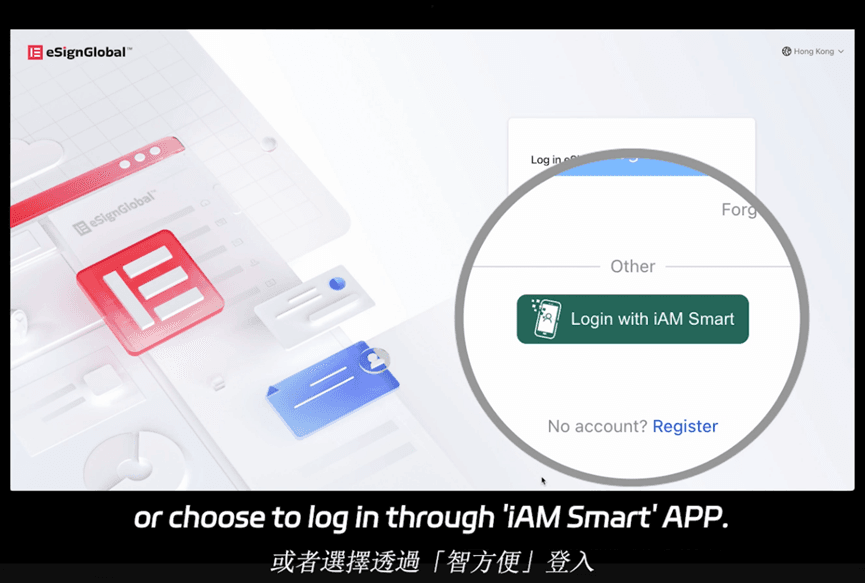
eSignGlobal provides compliant e-signatures across 100 mainstream global countries and regions, with a strong edge in the Asia-Pacific. Its Essential plan costs just $16.60 monthly—cheaper than many rivals—allowing up to 100 documents for signature, unlimited user seats, and verification via access codes. This delivers high cost-effectiveness on a compliant foundation, integrating seamlessly with Hong Kong's iAM Smart and Singapore's Singpass for local authenticity. For detailed plans, check eSignGlobal's pricing page.
Other Competitors: PandaDoc and SignNow Insights
PandaDoc emphasizes sales proposals alongside signing, at $19 monthly entry, with unlimited sends but added fees for extras. SignNow, at $8 base, prioritizes affordability for small businesses, offering unlimited envelopes but fewer compliance certifications. Both provide viable alternatives to HelloSign for niche needs.
Business Considerations for Choosing an e-Signature Provider
In 2025, e-signature costs extend beyond monthly fees to total ownership, including training, integrations, and scalability. HelloSign's structure favors predictable budgeting for standard use but may strain international teams. Competitors like eSignGlobal offer flexibility in high-compliance regions without excessive caps.
For DocuSign alternatives emphasizing regional compliance, eSignGlobal emerges as a balanced choice.
FAQs
