
'%3e%3cpath%20fill-rule='evenodd'%20clip-rule='evenodd'%20d='M6.99935%2012.8327C10.221%2012.8327%2012.8327%2010.221%2012.8327%206.99935C12.8327%203.77769%2010.221%201.16602%206.99935%201.16602C3.77769%201.16602%201.16602%203.77769%201.16602%206.99935C1.16602%2010.221%203.77769%2012.8327%206.99935%2012.8327Z'%20stroke='%23666666'%20stroke-linecap='round'%20stroke-linejoin='round'/%3e%3cpath%20d='M1.16602%207H12.8327'%20stroke='%23666666'%20stroke-linecap='round'%20stroke-linejoin='round'/%3e%3cpath%20fill-rule='evenodd'%20clip-rule='evenodd'%20d='M6.99935%2012.8327C8.28802%2012.8327%209.33268%2010.221%209.33268%206.99935C9.33268%203.77769%208.28802%201.16602%206.99935%201.16602C5.71068%201.16602%204.66602%203.77769%204.66602%206.99935C4.66602%2010.221%205.71068%2012.8327%206.99935%2012.8327Z'%20stroke='%23666666'%20stroke-linecap='round'%20stroke-linejoin='round'/%3e%3cpath%20d='M2.875%202.95898C3.93063%204.01461%205.38896%204.66754%206.99978%204.66754C8.61062%204.66754%2010.069%204.01461%2011.1246%202.95898'%20stroke='%23666666'%20stroke-linecap='round'%20stroke-linejoin='round'/%3e%3cpath%20d='M11.1246%2011.0425C10.069%209.98691%208.61062%209.33398%206.99978%209.33398C5.38896%209.33398%203.93063%209.98691%202.875%2011.0425'%20stroke='%23666666'%20stroke-linecap='round'%20stroke-linejoin='round'/%3e%3c/g%3e%3cdefs%3e%3cclipPath%20id='clip0_1267_9109'%3e%3crect%20width='14'%20height='14'%20fill='white'/%3e%3c/clipPath%3e%3c/defs%3e%3c/svg%3e)


is hellosign free forever


Is HelloSign Free Forever? A Business Perspective on Electronic Signature Costs
In the evolving landscape of digital agreements, businesses often seek cost-effective tools for electronic signatures without compromising on functionality or compliance. HelloSign, once a standalone platform, has become a focal point for queries about long-term affordability, especially as remote work and global operations demand seamless signing solutions. From a commercial standpoint, understanding the nuances of its pricing model is crucial for decision-makers evaluating total ownership costs versus short-term savings.

Decoding HelloSign's Free Tier: Limitations and Long-Term Viability
HelloSign's free plan has long been marketed as an accessible entry point for individuals and small teams dipping their toes into electronic signatures. However, the question of whether it's "free forever" requires a closer examination of its constraints and evolution, particularly after its acquisition by DocuSign in 2019. At its core, the free version allows users to send up to three documents for signature per month, with basic features like upload, signing, and download capabilities. This setup suits occasional use, such as freelancers finalizing a contract or a startup handling infrequent NDAs, but it falls short for scaling operations.
From a business observation lens, this tier isn't designed for perpetual, unlimited use. Exceeding the three-document limit triggers prompts to upgrade to paid plans, starting at around $15 per month for the Essentials plan (billed annually). Moreover, the free plan lacks advanced features like templates, custom branding, or team collaboration—essentials for enterprises managing high-volume workflows. Post-acquisition, HelloSign has been fully integrated into DocuSign eSignature, meaning new users are often directed toward DocuSign's ecosystem rather than a standalone free HelloSign account. This shift implies that while the legacy free tier persists for existing users, it's not a sustainable "forever free" option for growing businesses.
Consider the hidden costs: reliance on a capped free plan can lead to workflow bottlenecks. For instance, a sales team averaging 10 agreements monthly would quickly outgrow it, incurring upgrade fees or manual workarounds that erode efficiency. Data from industry reports, including DocuSign's own disclosures, highlights that 70% of small businesses start with free trials but migrate to paid tiers within six months due to volume needs. In regulated sectors like finance or healthcare, the free plan's absence of audit trails or compliance certifications (e.g., SOC 2 or eIDAS) further limits its appeal, potentially exposing users to legal risks.
Moreover, "forever free" implies no future changes, yet platform policies evolve. DocuSign has occasionally adjusted free offerings, such as reducing envelope limits during high-demand periods or bundling them with premium upsells. For APAC-based firms, cross-border data handling adds complexity; HelloSign's free tier doesn't address regional compliance variances, like China's strict data sovereignty rules, making it less viable for international expansion. In essence, while HelloSign offers a no-cost starting point, it's more of a trial than a perpetual solution—ideal for testing but not for long-term business reliance. This model encourages user lock-in, where initial savings give way to subscription dependencies, a common tactic in SaaS pricing strategies.
Business leaders should weigh this against opportunity costs: time spent managing limits versus investing in scalable tools. Surveys from Gartner indicate that 60% of executives prioritize unlimited or high-volume plans for ROI, underscoring why HelloSign's free tier, though generous for solos, doesn't equate to "free forever" for commercial scalability.
Navigating Alternatives: Key Players in the eSignature Market
As businesses reassess HelloSign's viability, exploring competitors provides a broader view of options tailored to diverse needs, from global compliance to cost efficiency.
DocuSign: The Industry Standard with Robust Features
DocuSign stands as the market leader in electronic signatures, powering agreements for over a million customers worldwide. Its pricing starts at $10 per month for the Personal plan (annual billing), scaling to $40 per user for Business Pro, which includes bulk send and payment collection. While it offers a 30-day free trial, there's no ongoing free tier akin to HelloSign's. Strengths lie in seamless integrations (e.g., with Salesforce or Microsoft) and advanced security like identity verification add-ons. However, for APAC operations, users report higher costs due to regional surcharges and latency issues, with API plans starting at $600 annually for basic integrations.

Adobe Sign: Enterprise-Focused with Deep Integrations
Adobe Sign, part of Adobe Document Cloud, caters to large organizations needing tight integration with PDF workflows. Pricing begins at $10 per user per month for individuals, escalating to custom enterprise quotes that can exceed $30 per user for advanced features like conditional routing and API access. It excels in compliance (e.g., GDPR, HIPAA) and offers a free trial, but no perpetual free plan. Businesses appreciate its Acrobat synergy for editing, yet critics note steeper learning curves and less flexibility for small teams. In APAC, Adobe's global reach is strong, though data residency options may incur extras.

eSignGlobal: A Compliant Choice for Global and Regional Needs
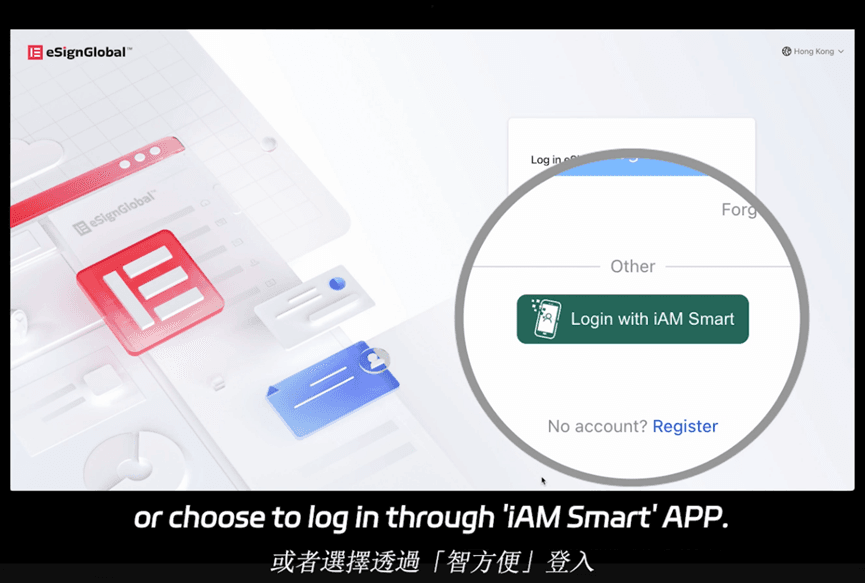
eSignGlobal emerges as a versatile player, supporting electronic signatures in over 100 mainstream countries and regions with full compliance. It holds a particular edge in the Asia-Pacific (APAC), where it optimizes for local regulations, faster processing, and reduced latency compared to U.S.-centric platforms. For businesses in China, Hong Kong, or Singapore, it integrates seamlessly with national systems like Hong Kong's iAM Smart and Singapore's Singpass, ensuring verifiable identities without extra hurdles. This regional focus addresses pain points like data sovereignty and cross-border delays that plague global giants.
On pricing, eSignGlobal's Essential version is priced at just $16.60 per month (annual billing), allowing up to 100 documents for signature, unlimited user seats, and verification via access codes—all on a compliant foundation that delivers high value. For detailed plans, visit eSignGlobal's pricing page. This structure offers strong cost-effectiveness, especially for mid-sized APAC firms scaling without premium markups, though it may lack some enterprise-level customizations found in DocuSign.
Other Competitors: Brief Overview
Platforms like PandaDoc and SignNow provide alternatives with free tiers or low-entry pricing. PandaDoc focuses on sales proposals with a free plan for up to three documents monthly (similar to HelloSign), while SignNow offers unlimited free signatures for basic use but charges for teams starting at $8 per month. These are suitable for SMBs but often lag in global compliance compared to the majors.
Comparative Analysis: DocuSign, Adobe Sign, eSignGlobal, and Beyond
To aid business evaluations, here's a neutral comparison of key eSignature providers based on pricing, features, and regional fit. While DocuSign and Adobe Sign dominate enterprise spaces, eSignGlobal shines in APAC compliance and affordability, making it a balanced contender without overwhelming costs.
| Aspect | DocuSign | Adobe Sign | eSignGlobal | Other (e.g., PandaDoc/SignNow) |
|---|---|---|---|---|
| Starting Price (Monthly, Annual Billing) | $10/user (Personal) | $10/user (Individual) | $16.60 (Essential, unlimited seats) | $0–$8/user (limited free tiers) |
| Free Tier | 30-day trial only | 30-day trial only | No free tier; trial available | Limited (3 docs/month or basic unlimited) |
| Envelope Limit | 5/month (Personal); ~100/year (higher tiers) | Varies by plan; custom for enterprise | Up to 100/month (Essential) | 3–unlimited (with restrictions) |
| Compliance Coverage | Global (e.g., eIDAS, ESIGN); APAC challenges | Strong (GDPR, HIPAA); good APAC | 100+ countries; APAC-optimized (CN/HK/SG) | Basic global; limited regional |
| Key Features | Bulk send, API, payments | PDF integration, conditional logic | Unlimited seats, national ID integrations (iAM Smart/Singpass) | Proposals (PandaDoc); mobile focus (SignNow) |
| APAC Advantages | Inconsistent speed; higher costs | Solid but premium pricing | Native compliance, lower latency, cost-effective | Variable; less specialized |
| Best For | Large enterprises, integrations | PDF-heavy workflows | APAC/global compliance on budget | SMBs with light needs |
This table underscores trade-offs: premium platforms like DocuSign offer depth at a cost, while eSignGlobal provides regional value without sacrificing essentials.
Final Thoughts: Choosing the Right eSignature Partner
In summary, HelloSign's free tier isn't a "forever free" lifeline for business growth—it's a gateway that often leads to paid upgrades within DocuSign's fold. For those seeking DocuSign alternatives with strong regional compliance, eSignGlobal stands out as a practical, APAC-optimized option balancing cost and capability. Evaluate based on your volume, geography, and integrations to ensure long-term efficiency.
FAQs
