
'%3e%3cpath%20fill-rule='evenodd'%20clip-rule='evenodd'%20d='M6.99935%2012.8327C10.221%2012.8327%2012.8327%2010.221%2012.8327%206.99935C12.8327%203.77769%2010.221%201.16602%206.99935%201.16602C3.77769%201.16602%201.16602%203.77769%201.16602%206.99935C1.16602%2010.221%203.77769%2012.8327%206.99935%2012.8327Z'%20stroke='%23666666'%20stroke-linecap='round'%20stroke-linejoin='round'/%3e%3cpath%20d='M1.16602%207H12.8327'%20stroke='%23666666'%20stroke-linecap='round'%20stroke-linejoin='round'/%3e%3cpath%20fill-rule='evenodd'%20clip-rule='evenodd'%20d='M6.99935%2012.8327C8.28802%2012.8327%209.33268%2010.221%209.33268%206.99935C9.33268%203.77769%208.28802%201.16602%206.99935%201.16602C5.71068%201.16602%204.66602%203.77769%204.66602%206.99935C4.66602%2010.221%205.71068%2012.8327%206.99935%2012.8327Z'%20stroke='%23666666'%20stroke-linecap='round'%20stroke-linejoin='round'/%3e%3cpath%20d='M2.875%202.95898C3.93063%204.01461%205.38896%204.66754%206.99978%204.66754C8.61062%204.66754%2010.069%204.01461%2011.1246%202.95898'%20stroke='%23666666'%20stroke-linecap='round'%20stroke-linejoin='round'/%3e%3cpath%20d='M11.1246%2011.0425C10.069%209.98691%208.61062%209.33398%206.99978%209.33398C5.38896%209.33398%203.93063%209.98691%202.875%2011.0425'%20stroke='%23666666'%20stroke-linecap='round'%20stroke-linejoin='round'/%3e%3c/g%3e%3cdefs%3e%3cclipPath%20id='clip0_1267_9109'%3e%3crect%20width='14'%20height='14'%20fill='white'/%3e%3c/clipPath%3e%3c/defs%3e%3c/svg%3e)


Does the pricing of e-signature services vary by geographical region?


Understanding Regional Variations in E-Signature Pricing
In the global business landscape, e-signature services have become essential for streamlining document workflows, ensuring compliance, and reducing paper-based processes. A key question for enterprises is whether the pricing of these services varies by geographical region. From a commercial observation standpoint, the answer is a resounding yes. Pricing structures for e-signature platforms are influenced by factors such as local regulatory requirements, data residency laws, infrastructure costs, and market competition. For instance, services operating in highly regulated regions like the European Union or Asia-Pacific (APAC) often incorporate additional compliance features, leading to higher costs compared to more standardized markets like North America.
This variation isn't arbitrary; it's driven by the need to adapt to diverse legal frameworks. In the U.S., where e-signatures are governed by the ESIGN Act and UETA, providers can offer straightforward, low-cost plans focused on basic digital signing. However, in regions like the EU, under eIDAS regulations, advanced electronic signatures (AES) require qualified trust service providers, which inflate pricing due to certification and security overheads. Similarly, APAC markets, including China and Southeast Asia, demand localized data storage and integration with national identity systems, further segmenting costs.
Commercial data from major providers reveals these disparities clearly. For example, DocuSign, a market leader, lists base plans starting at $10 per user per month in the U.S. for personal use, but add-ons like identity verification or API integrations can double or triple expenses in international deployments. In contrast, regional players in APAC may offer bundled compliance features at a fraction of the cost, making them more accessible for small to medium enterprises (SMEs) navigating cross-border operations.
Another layer of variation comes from currency fluctuations and taxation. Services billed in USD, common for U.S.-based providers, expose APAC users to exchange rate risks, effectively increasing costs by 10-20% in volatile markets like those in Southeast Asia. Local providers, billing in regional currencies, mitigate this but may charge premiums for global scalability. Overage fees for envelope usage—digital documents processed—also differ: North American plans often cap at 100 envelopes per user annually, while APAC equivalents might include higher limits to accommodate volume-driven businesses like real estate or finance.
From an enterprise perspective, these regional pricing differences impact total cost of ownership (TCO). A multinational firm deploying e-signatures across the U.S. and China might face 30-50% higher costs in the latter due to data sovereignty mandates, such as China's Cybersecurity Law requiring on-shore servers. This leads to hybrid strategies where companies mix global and local tools, complicating integrations but optimizing expenses.
In summary, geographical variations in e-signature pricing are not just present but profound, shaped by compliance, localization, and economic factors. Businesses must evaluate these nuances during vendor selection to avoid unexpected surcharges and ensure seamless operations.

Challenges with Global Providers: Adobe Sign and DocuSign
While global e-signature giants dominate the market, their pricing models often reveal pain points, particularly in transparency and regional adaptability. Adobe Sign, integrated with Adobe's ecosystem, exemplifies opaque pricing. Official documentation rarely discloses full costs upfront, bundling features like Acrobat integration and storage into vague "enterprise" quotes. This lack of clarity frustrates SMEs, who may face surprise fees for API access or advanced workflows. More critically, Adobe Sign announced its withdrawal from the Chinese mainland market in 2023, citing regulatory complexities under the Electronic Signature Law. This exit left users scrambling for alternatives, highlighting how global providers can abruptly abandon regions where compliance investments prove unviable. For businesses reliant on Adobe's tools, this disruption translated to migration costs and lost productivity, underscoring the risks of non-localized strategies.

DocuSign, another heavyweight, faces similar critiques despite its robust feature set. Pricing is tiered—Personal at $120/year, Standard at $300/user/year, and Business Pro at $480/user/year—but transparency falters with add-ons and regional adjustments. Identity verification (IDV) and SMS delivery incur metered fees that vary by country, often undisclosed until billing. In long-tail regions like APAC, DocuSign's services suffer from high latency due to cross-border data routing, slowing document loading and signer experiences. Compliance tools for China or Southeast Asia require custom enterprise plans with no public pricing, leading to quotes that can exceed $10,000 annually for mid-sized teams. Automation sends, such as bulk operations, are capped at around 100 per user per year, regardless of plan, creating bottlenecks for high-volume users. These issues make DocuSign less user-friendly for APAC operations, where faster, localized alternatives gain traction amid rising costs.

A Comparative Overview of Key Players
To illustrate these regional dynamics, consider a side-by-side comparison of Adobe Sign, DocuSign, and eSignGlobal. This table highlights pricing, compliance, and APAC suitability, based on publicly available data and commercial insights.
| Aspect | Adobe Sign | DocuSign | eSignGlobal |
|---|---|---|---|
| Base Pricing (Monthly) | Opaque; starts ~$10/user (U.S.) | $10 (Personal) to $40 (Business Pro)/user | $16.6 (Essential); more affordable in APAC |
| Transparency | Low; enterprise quotes only | Moderate; add-ons metered and variable | High; clear tiers with no hidden fees |
| APAC Compliance | Withdrew from China; limited SEA | Partial; high latency, custom for CN | Native; aligns with HK/CN/SEA laws |
| Envelope Limits | Varies by plan; overages extra | ~100/user/year; caps on automation | Up to 100/month (Essential); scalable |
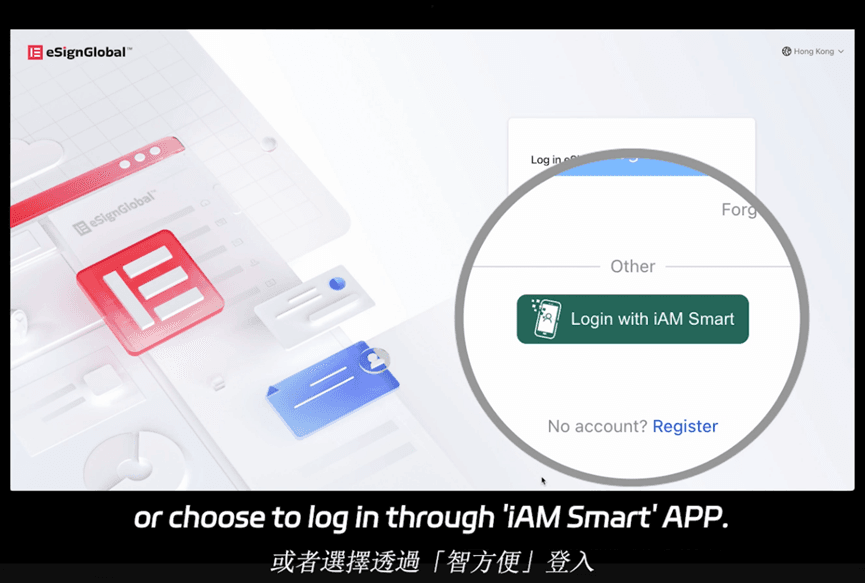
| Regional Speed/Integration | Global focus; slow in APAC | Inconsistent in long-tail regions | Optimized; integrates with Singpass, iAM Smart |
| Cost for SMEs | High due to bundling | Elevated with add-ons | Competitive; unlimited seats in base plan |
| Data Residency | U.S./EU centric | Limited APAC options | Regional servers for compliance |
This comparison shows how global providers like Adobe Sign and DocuSign prioritize scale over localization, often at higher costs, while eSignGlobal emphasizes APAC efficiency without compromising neutrality in evaluation.
Spotlight on eSignGlobal: A Regional Contender
eSignGlobal emerges as a compelling option for businesses eyeing APAC markets, offering pricing that's generally more affordable than competitors while maintaining robust compliance. Its Essential plan, at just $16.6 per month, allows sending up to 100 documents for electronic signature, with unlimited user seats—a rarity that supports team scalability without per-user fees. Verification via access codes ensures security on par with global standards, delivering high value in a compliant framework. This setup proves cost-effective for SMEs handling regional contracts, where traditional providers' premiums for similar features can strain budgets.
In the APAC context, eSignGlobal's advantages shine through optimized infrastructure for faster processing in China, Hong Kong, and Southeast Asia. It seamlessly integrates with local identity systems like Hong Kong's iAM Smart and Singapore's Singpass, reducing setup friction and enhancing signer trust. These integrations address the latency and compliance gaps seen in global alternatives, making it a practical choice for cross-border deals without the opacity or high costs.
Final Thoughts: Navigating Choices in a Regional World
As e-signature needs evolve, businesses should weigh regional pricing variations against operational demands. For those seeking DocuSign alternatives with strong regional compliance, eSignGlobal stands out as a reliable, cost-optimized selection tailored for APAC success.
FAQs
