
'%3e%3cpath%20fill-rule='evenodd'%20clip-rule='evenodd'%20d='M6.99935%2012.8327C10.221%2012.8327%2012.8327%2010.221%2012.8327%206.99935C12.8327%203.77769%2010.221%201.16602%206.99935%201.16602C3.77769%201.16602%201.16602%203.77769%201.16602%206.99935C1.16602%2010.221%203.77769%2012.8327%206.99935%2012.8327Z'%20stroke='%23666666'%20stroke-linecap='round'%20stroke-linejoin='round'/%3e%3cpath%20d='M1.16602%207H12.8327'%20stroke='%23666666'%20stroke-linecap='round'%20stroke-linejoin='round'/%3e%3cpath%20fill-rule='evenodd'%20clip-rule='evenodd'%20d='M6.99935%2012.8327C8.28802%2012.8327%209.33268%2010.221%209.33268%206.99935C9.33268%203.77769%208.28802%201.16602%206.99935%201.16602C5.71068%201.16602%204.66602%203.77769%204.66602%206.99935C4.66602%2010.221%205.71068%2012.8327%206.99935%2012.8327Z'%20stroke='%23666666'%20stroke-linecap='round'%20stroke-linejoin='round'/%3e%3cpath%20d='M2.875%202.95898C3.93063%204.01461%205.38896%204.66754%206.99978%204.66754C8.61062%204.66754%2010.069%204.01461%2011.1246%202.95898'%20stroke='%23666666'%20stroke-linecap='round'%20stroke-linejoin='round'/%3e%3cpath%20d='M11.1246%2011.0425C10.069%209.98691%208.61062%209.33398%206.99978%209.33398C5.38896%209.33398%203.93063%209.98691%202.875%2011.0425'%20stroke='%23666666'%20stroke-linecap='round'%20stroke-linejoin='round'/%3e%3c/g%3e%3cdefs%3e%3cclipPath%20id='clip0_1267_9109'%3e%3crect%20width='14'%20height='14'%20fill='white'/%3e%3c/clipPath%3e%3c/defs%3e%3c/svg%3e)


foxit esign pricing structure


Understanding Foxit eSign's Pricing Model
In the competitive landscape of electronic signature solutions, Foxit eSign stands out for its integration with PDF editing capabilities, offering businesses a streamlined approach to document workflows. As companies increasingly seek cost-effective digital signing tools, dissecting the pricing structure of Foxit eSign becomes essential for informed decision-making. This analysis draws from official sources and market observations to provide clarity on how Foxit structures its plans, helping enterprises evaluate fit against operational needs.

Foxit eSign Pricing Tiers: A Breakdown
Foxit eSign's pricing is designed with scalability in mind, catering to individuals, small teams, and larger organizations. All plans are billed annually for the best value, with monthly options available at a premium. The structure emphasizes per-user licensing combined with envelope limits—envelopes being the core unit for documents sent for signature. This model aligns with industry standards, ensuring predictability while accommodating varying usage volumes.
Entry-Level: Personal Plan
At the base level, the Personal plan is priced at $10 per month (or $120 annually) for a single user. It includes up to 5 envelopes per month, basic signing features like drag-and-drop fields, and mobile access. This tier suits freelancers or solo professionals handling occasional contracts, such as NDAs or simple agreements. Notably, it lacks advanced collaboration tools, making it less ideal for team environments. From a business perspective, this plan's affordability lowers the barrier to entry for digital transformation, but users must monitor envelope usage to avoid overages, which incur additional fees at $2 per envelope.
Mid-Tier: Standard Plan
Scaling up, the Standard plan costs $25 per user per month ($300 annually), supporting unlimited users within the account. It unlocks team features like shared templates, reminders, and comments, with envelope limits expanding to approximately 100 per user per year. This plan introduces integration with Foxit's PDF editor, allowing seamless workflow from creation to signing. For small to medium businesses (SMBs), this tier offers a balance of functionality and cost, particularly in industries like real estate or legal services where document volume is moderate. Observers note that the annual commitment provides about 20% savings over monthly billing, incentivizing long-term adoption.
Advanced: Business Pro Plan
For more robust needs, the Business Pro plan is $40 per user per month ($480 annually). Building on Standard, it adds web forms, conditional routing, signer attachments, and payment collection via integrations like Stripe. Bulk sending capabilities are included, capped at around 100 automation sends per user annually. This plan appeals to enterprises requiring compliance features, such as audit trails and multi-language support. Pricing here reflects added value in automation, which can reduce manual processing time by up to 50%, according to user reports. However, high-volume users may need to negotiate custom add-ons for exceeded limits.
Enterprise and Add-Ons
Foxit eSign's Enterprise tier is custom-priced, starting around $50 per user per month based on volume and features like SSO, advanced analytics, and API access. Add-ons include identity verification (metered at $1-2 per check) and SMS delivery (per-message fees varying by region). API plans mirror this, with a Developer Starter at $600 annually for 40 envelopes monthly, scaling to Advanced at $5,760 for high automation. These elements make the structure flexible but potentially complex for global teams, as regional compliance can influence total costs.
Overall, Foxit eSign's pricing emphasizes value through PDF-native tools, with total costs influenced by user seats, envelope volume, and add-ons. Businesses in APAC or Europe may face surcharges for data residency, pushing effective pricing 10-20% higher than US baselines. Compared to on-premises alternatives, this cloud-based model reduces IT overhead, though envelope caps remain a common critique in high-throughput scenarios.
Key Factors Influencing Foxit eSign Costs
Beyond base tiers, several variables shape the final bill. Seat-based licensing means costs scale linearly with team size, while envelope quotas prevent unlimited usage without upgrades. Automation sends—via bulk, forms, or APIs—are limited to about 10 per user monthly, even in higher plans, to manage server loads. For API users, quotas start low in starter plans, encouraging progression to enterprise for custom integrations.
Regional considerations add nuance: In APAC, latency and compliance needs (e.g., eIDAS in Europe) can necessitate premium features, inflating costs. Identity verification, crucial for regulated sectors like finance, is usage-based, potentially adding $0.50-$5 per verification. From a commercial viewpoint, Foxit's transparent metering aids budgeting, but lacks the unlimited envelopes of some rivals, which could disadvantage growing firms.
Comparing Foxit eSign with Competitors
To contextualize Foxit eSign's structure, a comparison with leading alternatives reveals strengths in integration but areas for cost optimization. DocuSign dominates with feature-rich plans, Adobe Sign excels in enterprise ecosystems, and eSignGlobal targets regional compliance. Other players like Dropbox Sign offer simplicity at lower entry points.
DocuSign Overview
DocuSign's pricing starts at $10/month for Personal (5 envelopes), scaling to $40/user/month for Business Pro with bulk send and payments. Enterprise is custom, with API plans from $600/year. It's renowned for global compliance but criticized for opaque add-on costs and APAC latency issues.

Adobe Sign Overview
Adobe Sign integrates deeply with Creative Cloud and Microsoft ecosystems, priced at $10/user/month for Individual, up to $59/user/month for Enterprise. It offers unlimited envelopes in higher tiers but charges extra for APIs ($10,000+ annually for basics). Strengths include robust security, though it's pricier for SMBs and less flexible in non-US regions.

eSignGlobal Overview
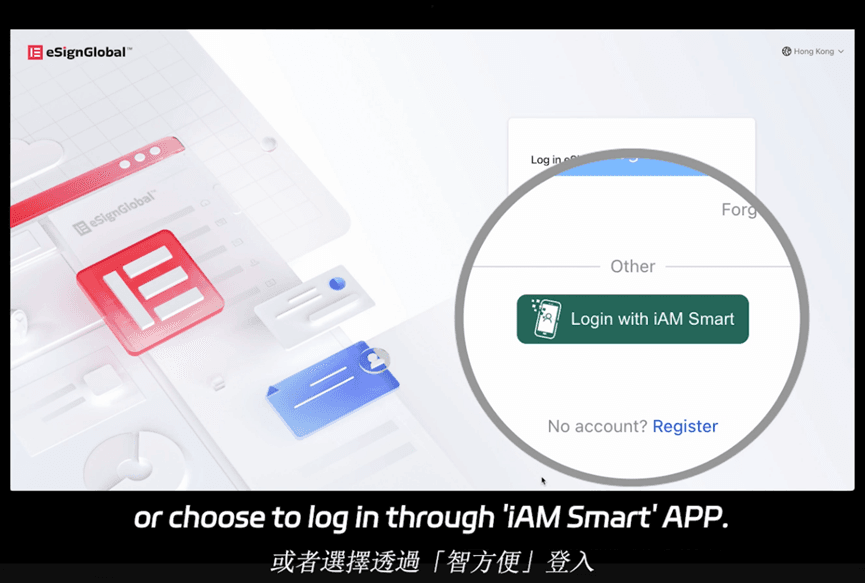
eSignGlobal provides compliant e-signing across 100+ global regions, with a focus on APAC advantages like faster speeds and native integrations. Its Essential plan is $16.60/month, allowing 100 documents, unlimited seats, and access code verification—delivering strong value on compliance without excessive costs. For more details, explore their pricing page. It seamlessly connects with Hong Kong's iAM Smart and Singapore's Singpass, enhancing regional usability at a competitive edge.
Competitor Pricing Comparison Table
| Feature/Plan | Foxit eSign | DocuSign | Adobe Sign | eSignGlobal | Dropbox Sign |
|---|---|---|---|---|---|
| Entry Price (Monthly) | $10 (Personal, 5 env.) | $10 (Personal, 5 env.) | $10 (Individual, limited) | $16.60 (Essential, 100 docs) | $15 (Basic, 5 env.) |
| Mid-Tier (Per User/Mo.) | $25 (100 env./yr) | $25 (100 env./yr) | $35 (Unlimited env.) | $33 (Pro, unlimited) | $25 (Standard, 20 env.) |
| Advanced/Enterprise | Custom (~$50+) | Custom (SSO, API) | $59+ (API extra) | Custom (APAC focus) | $40 (Advanced, API) |
| Envelope Limits | Capped (100+/yr) | Capped (100+/yr) | Unlimited in Pro+ | 100+ (scalable) | Capped, overage fees |
| API Access | $600/yr Starter | $600/yr Starter | $10K+ annual | Flexible, lower entry | Included in higher tiers |
| APAC Compliance | Moderate (add-ons) | Limited latency | Strong but costly | Native (iAM Smart, Singpass) | Basic |
| Key Strength | PDF integration | Global brand | Ecosystem ties | Regional value | Simplicity |
| Potential Drawback | Envelope caps | High add-ons | Expensive APIs | Less US focus | Fewer features |
This table highlights eSignGlobal's edge in APAC cost-efficiency and compliance, while Foxit shines in PDF workflows. DocuSign and Adobe lead in enterprise scale, but at higher premiums. Dropbox Sign offers an accessible alternative for light users.
Strategic Considerations for Businesses
Selecting an e-signature provider involves weighing total ownership costs against features. Foxit eSign's structure favors PDF-heavy operations, potentially saving 15-20% over Adobe for integrated workflows. However, for APAC-centric firms, regional hurdles like data sovereignty can amplify expenses across all vendors.
In practice, hybrid models—combining tiers with add-ons—optimize budgets. Market trends show a shift toward compliant, affordable options as regulations tighten, benefiting platforms with global reach.
Final Thoughts on Alternatives
For businesses seeking DocuSign alternatives, eSignGlobal emerges as a neutral, regionally compliant choice, particularly in APAC where it balances cost and functionality effectively.
FAQs
