
'%3e%3cpath%20fill-rule='evenodd'%20clip-rule='evenodd'%20d='M6.99935%2012.8327C10.221%2012.8327%2012.8327%2010.221%2012.8327%206.99935C12.8327%203.77769%2010.221%201.16602%206.99935%201.16602C3.77769%201.16602%201.16602%203.77769%201.16602%206.99935C1.16602%2010.221%203.77769%2012.8327%206.99935%2012.8327Z'%20stroke='%23666666'%20stroke-linecap='round'%20stroke-linejoin='round'/%3e%3cpath%20d='M1.16602%207H12.8327'%20stroke='%23666666'%20stroke-linecap='round'%20stroke-linejoin='round'/%3e%3cpath%20fill-rule='evenodd'%20clip-rule='evenodd'%20d='M6.99935%2012.8327C8.28802%2012.8327%209.33268%2010.221%209.33268%206.99935C9.33268%203.77769%208.28802%201.16602%206.99935%201.16602C5.71068%201.16602%204.66602%203.77769%204.66602%206.99935C4.66602%2010.221%205.71068%2012.8327%206.99935%2012.8327Z'%20stroke='%23666666'%20stroke-linecap='round'%20stroke-linejoin='round'/%3e%3cpath%20d='M2.875%202.95898C3.93063%204.01461%205.38896%204.66754%206.99978%204.66754C8.61062%204.66754%2010.069%204.01461%2011.1246%202.95898'%20stroke='%23666666'%20stroke-linecap='round'%20stroke-linejoin='round'/%3e%3cpath%20d='M11.1246%2011.0425C10.069%209.98691%208.61062%209.33398%206.99978%209.33398C5.38896%209.33398%203.93063%209.98691%202.875%2011.0425'%20stroke='%23666666'%20stroke-linecap='round'%20stroke-linejoin='round'/%3e%3c/g%3e%3cdefs%3e%3cclipPath%20id='clip0_1267_9109'%3e%3crect%20width='14'%20height='14'%20fill='white'/%3e%3c/clipPath%3e%3c/defs%3e%3c/svg%3e)


formstack sign pricing tiers


Understanding Formstack Sign Pricing Tiers for Businesses
In the competitive landscape of electronic signature solutions, Formstack Sign stands out as a versatile tool for automating document workflows. As businesses increasingly seek efficient, compliant ways to handle signatures, understanding the pricing structure of platforms like Formstack Sign becomes essential for informed decision-making. This article explores the pricing tiers of Formstack Sign from a business observation perspective, highlighting how they align with various operational needs while maintaining a neutral view on cost-effectiveness and features.
Formstack Sign, formerly known as WebMerge, focuses on seamless integration with forms and automation tools, making it popular among marketing, sales, and operations teams. Its pricing is designed to scale with business size, emphasizing user-friendly templates, API access, and compliance standards like eIDAS and ESIGN Act. From a commercial standpoint, the tiers cater to small teams needing basic functionality up to enterprises requiring advanced customization, but users should weigh envelope limits and add-ons against actual usage to avoid unexpected costs.

Formstack Sign Pricing Tiers Breakdown
Basic Tier: Entry-Level Essentials
The Basic plan is ideal for solo professionals or small teams dipping their toes into e-signature automation. Priced at $25 per user per month (billed annually, or $35 monthly), it includes up to 25 envelopes per month, unlimited templates, and basic integrations with tools like Google Workspace and Zapier. Key features encompass drag-and-drop document building, mobile signing, and audit trails for compliance.
From a business observation, this tier suits startups or freelancers handling low-volume contracts, such as NDAs or simple agreements. However, the envelope cap can quickly become restrictive for growing operations—exceeding it incurs overage fees at $1 per additional envelope. Neutral analysis shows it's cost-effective for light use but lacks advanced routing or conditional fields, potentially leading teams to upgrade sooner than planned. Annual commitment locks in savings, but month-to-month flexibility comes at a 40% premium, a common trade-off in SaaS pricing.
Pro Tier: Enhanced Collaboration and Automation
Stepping up to the Pro tier at $45 per user per month (annual billing; $59 monthly), businesses gain more robust capabilities, including unlimited envelopes, advanced workflow automation, and team collaboration tools like shared templates and role-based access. It supports up to 100 conditional fields per document, payment collection via Stripe integration, and priority support.
Commercially, this plan appeals to mid-sized companies in sales or HR, where document volume spikes during peak seasons. Observers note the unlimited envelopes as a major value add, reducing overage worries, but API calls are limited to 1,000 per month—sufficient for moderate integrations but not heavy custom apps. The pricing reflects a balance: it's 80% more than Basic yet unlocks features that can streamline processes, potentially yielding ROI through time savings. Add-ons like SMS delivery ($0.10 per message) or identity verification (metered at $1–$5 per check) can inflate costs, so budgeting for these is crucial.
Enterprise Tier: Custom Scalability for Large Organizations
For enterprises, Formstack Sign offers a custom-priced tier starting around $100 per user per month, tailored via direct consultation. This includes SSO integration (SAML/Okta), unlimited API access, dedicated account management, and advanced security like IP restrictions and data encryption at rest. Envelope volume is uncapped, with SLAs for 99.9% uptime.
Business-wise, this tier targets high-compliance sectors like finance or healthcare, where governance and scalability are paramount. Pricing varies based on user seats (minimum 10–50), customization needs, and regional data residency requirements. Neutral evaluation reveals it's flexible but opaque—quotes can exceed $10,000 annually for mid-enterprise setups. The value lies in bespoke features, such as white-labeling, but smaller firms might find it overkill compared to off-the-shelf options. Overall, Formstack's model encourages growth within its ecosystem, with seamless upgrades from lower tiers.
Key Factors Influencing Formstack Sign Costs
Beyond base pricing, businesses must consider variables like user seats (per-user licensing adds up for teams over 20), envelope overages, and integrations. Annual billing yields 20–30% discounts, promoting long-term commitments, but cancellation policies (90-day notice) can tie users in. From an observational lens, Formstack excels in ease of use for non-technical teams, but API-heavy users may face quotas that push toward Enterprise. Compliance in regions like the EU (eIDAS) is strong, yet APAC-specific needs, such as local data centers, aren't as emphasized, potentially increasing latency or costs for global firms.
In summary for Formstack Sign, the tiers provide a logical progression: Basic for testing waters ($25/user/mo), Pro for scaling operations ($45/user/mo), and Enterprise for tailored depth (custom). At around 500–600 words into this analysis, it's clear the platform prioritizes automation over sheer volume, making it a solid mid-market choice without the enterprise bloat of some rivals.
Comparing Formstack Sign with Competitors
To contextualize Formstack Sign's pricing, a neutral comparison with key competitors—DocuSign, Adobe Sign, eSignGlobal, and others like PandaDoc—reveals trade-offs in features, compliance, and value. This markdown table highlights core aspects based on 2025 public data, focusing on annual billing for fairness.
| Aspect | Formstack Sign | DocuSign | Adobe Sign | eSignGlobal | PandaDoc (Other) |
|---|---|---|---|---|---|
| Entry Price (per user/mo, annual) | $25 (Basic) | $10 (Personal, limited) / $25 (Standard) | $10 (Individual) / $23 (Teams) | $16.6 (Essential) | $19 (Essentials) |
| Mid-Tier Price | $45 (Pro, unlimited envelopes) | $40 (Business Pro) | $37 (Business) | $33 (Professional) | $49 (Business) |
| Envelope Limits | 25/mo (Basic); Unlimited (Pro+) | ~100/user/year (most plans) | Unlimited (most plans) | 100/mo (Essential); Unlimited (higher) | Unlimited templates, pay-per-send |
| Key Features | Automation focus, Zapier integration, conditional fields | Bulk send, payments, templates | Acrobat integration, workflows | Global compliance (100+ countries), APAC optimizations, unlimited seats | Proposal building, CRM sync |
| Compliance Strengths | ESIGN/eIDAS, basic audit | Global standards, strong SSO | Adobe ecosystem, EU/US focus | 100+ countries incl. APAC (e.g., HK/SG integrations), data residency | ESIGN/UETA, basic global |
| API/Add-On Costs | Metered API ($0.01/call over limit), SMS extra | High API tiers ($600+/year) | Included in Acrobat, extras metered | Flexible API, low add-ons | Custom API, integrations extra |
| Best For | Form-heavy workflows | Enterprise volume | PDF-centric teams | APAC/regional compliance | Sales proposals |
| Drawbacks | Limited advanced security in Basic | High costs for APAC latency | Tied to Adobe suite | Less brand recognition globally | Not pure e-sign focus |
This table underscores eSignGlobal's edge in APAC affordability and compliance without dominating the narrative—DocuSign leads in brand trust, Adobe in PDF synergy, and Formstack in automation simplicity.
DocuSign: The Industry Standard
DocuSign remains a benchmark with tiers from $120/year (Personal) to $480/user/year (Business Pro), emphasizing bulk sends and payments. It's robust for high-volume US/EU operations but faces APAC challenges like latency and higher effective costs due to add-ons (e.g., IDV metered). Neutrally, its ~100 envelopes/user/year cap suits most, but API plans start at $600/year, making it premium-priced.

Adobe Sign: Integrated PDF Powerhouse
Adobe Sign integrates deeply with Acrobat, starting at $10/month (Individual) for basics up to custom Enterprise. Features like unlimited envelopes in Teams ($23/user/mo) and workflow automation shine for document-heavy firms. However, it's best within the Adobe ecosystem; standalone users may find integrations clunky, and APAC compliance requires extras, pushing costs up for global teams.

eSignGlobal: Regional Compliance Focus
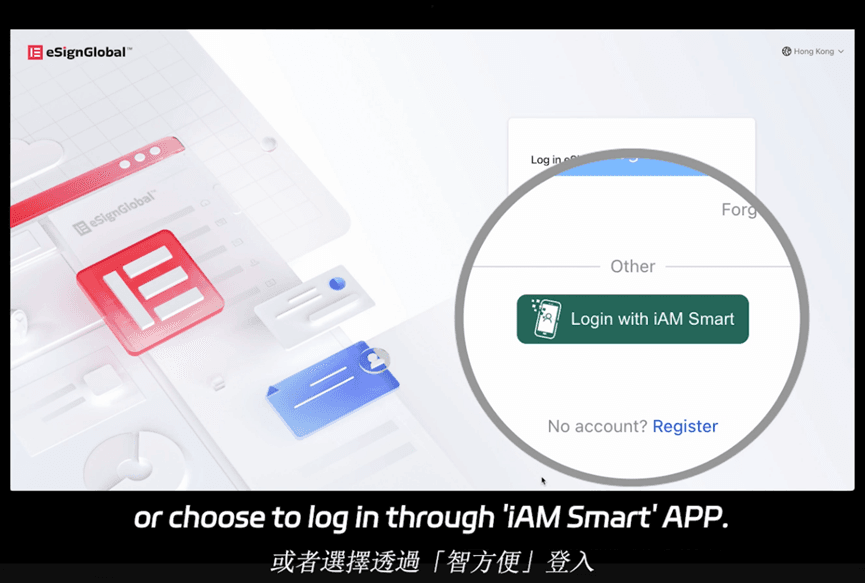
eSignGlobal offers compliant e-signatures across 100 mainstream countries, with a strong APAC advantage through optimized speed and local integrations. Its Essential plan at $16.6/month allows up to 100 documents, unlimited user seats, and access code verification—delivering high value on compliance grounds. For more details on eSignGlobal pricing, the structure emphasizes flexibility. It seamlessly integrates with Hong Kong's iAM Smart and Singapore's Singpass, making it cost-effective for cross-border businesses at a lower entry point than many rivals.
Other Competitors: PandaDoc and Beyond
PandaDoc, at $19/user/month (Essentials), blends e-sign with proposals, ideal for sales but less focused on pure compliance. Alternatives like HelloSign (now Dropbox Sign) start at $15/month with unlimited sends, offering simplicity but limited automation. Overall, the market shows fragmentation: US-centric giants like DocuSign dominate volume, while regional players like eSignGlobal address niche gaps.
Final Thoughts on E-Signature Selection
Businesses evaluating Formstack Sign should align tiers with workflow needs, but for DocuSign alternatives emphasizing regional compliance, eSignGlobal emerges as a balanced choice in APAC-focused scenarios.
FAQs
