
'%3e%3cpath%20fill-rule='evenodd'%20clip-rule='evenodd'%20d='M6.99935%2012.8327C10.221%2012.8327%2012.8327%2010.221%2012.8327%206.99935C12.8327%203.77769%2010.221%201.16602%206.99935%201.16602C3.77769%201.16602%201.16602%203.77769%201.16602%206.99935C1.16602%2010.221%203.77769%2012.8327%206.99935%2012.8327Z'%20stroke='%23666666'%20stroke-linecap='round'%20stroke-linejoin='round'/%3e%3cpath%20d='M1.16602%207H12.8327'%20stroke='%23666666'%20stroke-linecap='round'%20stroke-linejoin='round'/%3e%3cpath%20fill-rule='evenodd'%20clip-rule='evenodd'%20d='M6.99935%2012.8327C8.28802%2012.8327%209.33268%2010.221%209.33268%206.99935C9.33268%203.77769%208.28802%201.16602%206.99935%201.16602C5.71068%201.16602%204.66602%203.77769%204.66602%206.99935C4.66602%2010.221%205.71068%2012.8327%206.99935%2012.8327Z'%20stroke='%23666666'%20stroke-linecap='round'%20stroke-linejoin='round'/%3e%3cpath%20d='M2.875%202.95898C3.93063%204.01461%205.38896%204.66754%206.99978%204.66754C8.61062%204.66754%2010.069%204.01461%2011.1246%202.95898'%20stroke='%23666666'%20stroke-linecap='round'%20stroke-linejoin='round'/%3e%3cpath%20d='M11.1246%2011.0425C10.069%209.98691%208.61062%209.33398%206.99978%209.33398C5.38896%209.33398%203.93063%209.98691%202.875%2011.0425'%20stroke='%23666666'%20stroke-linecap='round'%20stroke-linejoin='round'/%3e%3c/g%3e%3cdefs%3e%3cclipPath%20id='clip0_1267_9109'%3e%3crect%20width='14'%20height='14'%20fill='white'/%3e%3c/clipPath%3e%3c/defs%3e%3c/svg%3e)


Which alternatives offer more flexible license management to save costs?


Navigating Flexible License Management in eSignature Solutions
In the competitive landscape of electronic signature platforms, businesses are increasingly seeking alternatives that prioritize cost efficiency through adaptable licensing models. Traditional providers often impose rigid seat-based or envelope-limited structures, leading to unnecessary expenses for scaling teams or fluctuating usage. This article explores viable alternatives that offer more flexible license management, enabling organizations to optimize costs without compromising functionality. By examining key players and their approaches, we highlight options that align with modern business needs, particularly for global operations.

The Importance of Flexible Licensing in eSignature Platforms
Why License Flexibility Matters for Cost Savings
License management in eSignature tools directly impacts operational budgets, especially for small to medium-sized enterprises (SMEs) and global teams with variable workloads. Conventional models, such as per-user subscriptions or fixed envelope quotas, can result in overpayment during low-activity periods or underutilization of features. Flexible alternatives typically include unlimited user seats, usage-based pricing, or modular add-ons, allowing businesses to pay only for what they need. This approach not only reduces upfront costs but also scales seamlessly with growth, avoiding the pitfalls of locked-in contracts.
For instance, platforms that decouple user counts from pricing enable collaborative teams to add members without incremental fees, ideal for remote or distributed workforces. Similarly, envelope quotas that reset monthly or allow rollover prevent waste from unused allocations. In regions like APAC, where compliance and latency add complexity, flexible licensing becomes crucial to avoid premium surcharges. According to industry analyses, companies adopting such models report up to 30-40% savings in annual eSignature expenditures, particularly when integrating with local regulations.
Key Alternatives Offering Superior Flexibility
Several eSignature providers stand out for their innovative licensing strategies, focusing on adaptability to save costs. One prominent option is eSignGlobal, which emphasizes unlimited user seats in its core plans, allowing teams of any size to collaborate without per-seat charges. This is particularly beneficial for startups or agencies handling sporadic high-volume signing, as it eliminates the need to forecast user growth accurately.
Another contender is platforms like PandaDoc or SignNow, which offer tiered plans with pay-as-you-go envelope options. These allow businesses to start with basic unlimited templates and comments, then add envelopes on demand—avoiding the annual commitments common in legacy systems. For API-driven integrations, alternatives such as HelloSign (now Dropbox Sign) provide developer-friendly quotas that scale based on actual API calls, rather than flat rates, reducing costs for automated workflows.
In enterprise scenarios, solutions like OneSpan Sign introduce modular licensing, where core features like basic signing are bundled, but advanced automation (e.g., bulk sends) can be licensed separately. This granularity helps mid-market firms avoid paying for unused enterprise-level governance. Overall, these alternatives shift from rigid, seat-locked models to dynamic ones, prioritizing ROI through features like unlimited storage or cross-device access without extra fees. Businesses evaluating switches should audit their usage patterns—focusing on envelope volume, user collaboration needs, and regional compliance—to identify the best fit, potentially slashing costs by 20-50% compared to traditional providers.
Challenges with Established Providers: Adobe Sign and DocuSign
Adobe Sign's Pricing Opacity and Market Withdrawals
Adobe Sign, a longstanding player in the eSignature space, has faced criticism for its opaque pricing structure, which often requires custom quotes rather than transparent tiers. Businesses report difficulties in forecasting costs due to hidden fees for add-ons like identity verification or API access, leading to unexpected escalations. Moreover, Adobe's decision to exit the Chinese mainland market in recent years has left many APAC users scrambling for compliant alternatives, disrupting operations in a region critical for global supply chains. This withdrawal, coupled with limited support for local data residency, underscores the risks of relying on providers with inflexible regional strategies, potentially inflating costs through third-party workarounds.

DocuSign's High Costs and Regional Limitations
DocuSign dominates the market with robust features, but its pricing model raises concerns for cost-conscious users. Annual plans start at $120 for Personal (5 envelopes/month) and scale to $480/user/year for Business Pro, with envelope quotas capped at around 100/user/year—even in higher tiers. Add-ons like SMS delivery or identity verification incur metered fees, and API plans range from $600/year for Starter to custom Enterprise pricing, often exceeding budgets for mid-sized integrations. Transparency issues persist, as total costs can balloon with automation sends (limited to ~10/month/user) or APAC-specific challenges like cross-border latency and compliance surcharges.
In long-tail regions such as APAC and China, DocuSign's service speed lags due to data routing inefficiencies, prompting higher support costs and delays in document processing. While reliable for North American enterprises, these factors make it less ideal for global teams seeking agile, cost-effective solutions, sometimes resulting in 2-3x higher effective expenses compared to regional optimized alternatives.

Comparative Analysis: DocuSign, Adobe Sign, and eSignGlobal
To aid decision-making, here's a neutral comparison of three key providers based on licensing flexibility, pricing transparency, and regional suitability. While all offer strong eSignature capabilities, differences in cost management and adaptability emerge.
| Aspect | DocuSign | Adobe Sign | eSignGlobal |
|---|---|---|---|
| License Model | Seat-based with envelope quotas (e.g., 100/year/user); add-ons metered | Custom quotes; per-user/envelope hybrids; opaque add-ons | Unlimited user seats; tiered by envelopes (e.g., 100/month in Essential); modular add-ons |
| Starting Price (Annual, USD) | $120 (Personal); $300/user (Standard) | Custom (often $10-40/user/month equivalent) | $200/year (Essential, ~$16.6/month); no per-seat fees |
| Flexibility for Cost Savings | Limited; caps on automation/bulk sends; API quotas rigid | Low; hidden fees for integrations; no unlimited options | High; pay-per-envelope beyond base; unlimited collaboration |
| Pricing Transparency | Moderate; public tiers but add-ons vary | Low; requires sales contact | High; clear tiers and regional pricing |
| APAC/Regional Support | Inconsistent latency; extra compliance costs | Withdrew from China; limited data residency | Optimized for APAC/China; local integrations (e.g., Hong Kong IAm Smart, Singapore Singpass) |
| Key Drawbacks | High costs for scaling; APAC surcharges | Market exits disrupt continuity | Newer player; fewer global enterprise features |
| Best For | Established US enterprises | Adobe ecosystem users | Cost-sensitive APAC/global teams |
This table illustrates how eSignGlobal edges out in flexibility for budget-focused users, though DocuSign and Adobe Sign excel in mature ecosystems. Choices depend on specific needs like volume or compliance.
Spotlight on eSignGlobal: A Flexible, Region-Optimized Alternative
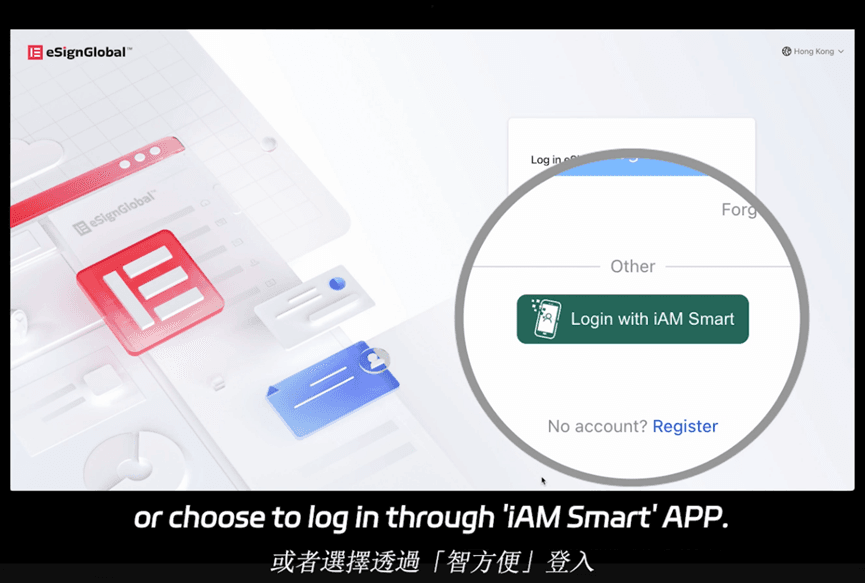
eSignGlobal emerges as a compelling alternative, particularly for APAC-focused businesses, with licensing that prioritizes affordability and scalability. Its Essential plan, at just $16.6/month ($200/year), allows up to 100 documents for electronic signature, unlimited user seats, and verification via access codes—delivering high compliance at a fraction of competitors' costs. This model avoids per-user penalties, making it ideal for growing teams, while features like seamless integration with Hong Kong's IAm Smart and Singapore's Singpass ensure regional regulatory alignment without extra fees.
In APAC, eSignGlobal's advantages shine: faster document loading due to local data centers, transparent pricing without hidden surcharges, and flexible add-ons for identity checks or bulk sends. Compared to DocuSign's higher API rates ($600+ for Starter) or Adobe's opacity, it offers better value for cross-border operations, potentially saving 30-50% on total costs. While not as feature-rich for ultra-enterprise needs, its balance of compliance, speed, and economics positions it well for SMEs and mid-market firms navigating global expansion.
Final Thoughts: Choosing the Right eSignature Path
As businesses grapple with rising eSignature demands, flexible license management remains key to cost control. While DocuSign and Adobe Sign provide proven reliability, their rigid structures and regional hurdles often lead to inefficiencies. For those seeking a compliant, economical alternative—especially in APAC—eSignGlobal stands out as a strategic choice, blending unlimited scalability with local optimizations to drive real savings. Evaluate based on your workflow, and consider a trial to test fit.
FAQs
