
'%3e%3cpath%20fill-rule='evenodd'%20clip-rule='evenodd'%20d='M6.99935%2012.8327C10.221%2012.8327%2012.8327%2010.221%2012.8327%206.99935C12.8327%203.77769%2010.221%201.16602%206.99935%201.16602C3.77769%201.16602%201.16602%203.77769%201.16602%206.99935C1.16602%2010.221%203.77769%2012.8327%206.99935%2012.8327Z'%20stroke='%23666666'%20stroke-linecap='round'%20stroke-linejoin='round'/%3e%3cpath%20d='M1.16602%207H12.8327'%20stroke='%23666666'%20stroke-linecap='round'%20stroke-linejoin='round'/%3e%3cpath%20fill-rule='evenodd'%20clip-rule='evenodd'%20d='M6.99935%2012.8327C8.28802%2012.8327%209.33268%2010.221%209.33268%206.99935C9.33268%203.77769%208.28802%201.16602%206.99935%201.16602C5.71068%201.16602%204.66602%203.77769%204.66602%206.99935C4.66602%2010.221%205.71068%2012.8327%206.99935%2012.8327Z'%20stroke='%23666666'%20stroke-linecap='round'%20stroke-linejoin='round'/%3e%3cpath%20d='M2.875%202.95898C3.93063%204.01461%205.38896%204.66754%206.99978%204.66754C8.61062%204.66754%2010.069%204.01461%2011.1246%202.95898'%20stroke='%23666666'%20stroke-linecap='round'%20stroke-linejoin='round'/%3e%3cpath%20d='M11.1246%2011.0425C10.069%209.98691%208.61062%209.33398%206.99978%209.33398C5.38896%209.33398%203.93063%209.98691%202.875%2011.0425'%20stroke='%23666666'%20stroke-linecap='round'%20stroke-linejoin='round'/%3e%3c/g%3e%3cdefs%3e%3cclipPath%20id='clip0_1267_9109'%3e%3crect%20width='14'%20height='14'%20fill='white'/%3e%3c/clipPath%3e%3c/defs%3e%3c/svg%3e)


What is the cost of e-signature solutions for financial services (high regulation)?


Navigating E-Signature Costs in Financial Services: A Business Perspective
In the financial services sector, where regulatory compliance is paramount, electronic signature solutions have become indispensable for streamlining document workflows while ensuring adherence to standards like GDPR, SOX, and eIDAS. These tools not only accelerate processes such as loan approvals and contract executions but also mitigate risks associated with manual handling. However, determining the true cost requires a nuanced understanding of pricing models tailored to high-regulation environments. From a business standpoint, the investment must balance security features, scalability, and total ownership costs, especially as firms navigate global operations and varying regional demands.

Understanding the Costs of E-Signature Solutions for Financial Services
Financial institutions operate under stringent regulations that demand robust identity verification, audit trails, and data sovereignty. E-signature providers cater to this by offering tiered plans with add-ons for compliance-heavy features like multi-factor authentication (MFA), biometric checks, and integration with financial APIs. Costs can vary widely based on user seats, document volume (often measured in "envelopes"), and automation limits, with annual billing typically providing discounts over monthly options. For high-regulation sectors, expect premiums for enterprise-grade security and support, pushing average annual spends per user from $300 to over $1,000, depending on scale.
Key Factors Influencing Pricing in Regulated Environments
Several elements drive the cost of e-signature solutions for financial services:
-
Compliance and Security Add-Ons: Features like identity verification (IDV), including document scanning, liveness detection, and SMS-based MFA, are often metered. In financial contexts, these can add 20-50% to base costs due to regulatory mandates. For instance, bulk sends for mass client onboarding or payment integrations require higher tiers to handle sensitive data securely.
-
Envelope and Usage Quotas: Basic plans limit envelopes (each containing multiple documents and signers) to 5-10 per month per user, insufficient for financial firms processing thousands. Enterprise plans offer "unlimited" access but cap automation sends (e.g., bulk or API-triggered) at around 100 per user annually, with overages billed extra.
-
Seat-Based Licensing and Scalability: Pricing is per user or seat, scaling with team size. Financial services often need 50+ seats for cross-departmental use, inflating costs. API integrations for CRM or banking systems add developer plan fees, starting at $600/year for basic access.
-
Regional and Customization Factors: In high-regulation areas like the EU or APAC, data residency and local compliance (e.g., APAC's cross-border latency) can introduce surcharges. Enterprise customizations for SSO, advanced auditing, and 24/7 support further elevate prices, often negotiated but rarely below $40/user/month.
Overall, for a mid-sized financial firm with 50 users and moderate volume, base costs might range from $15,000-$50,000 annually, excluding add-ons. High-regulation demands push this toward the upper end, as providers bundle premium features to meet standards like PCI-DSS for payment-linked signatures.
Pricing Breakdown for Major E-Signature Providers
Leading providers structure pricing around core plans, with financial services leaning toward professional or enterprise tiers for regulatory needs.
Adobe Sign, part of Adobe Acrobat ecosystem, emphasizes seamless integration with PDF workflows but is notorious for opaque pricing. Individual plans start around $10-15/month, but business tiers for regulated use climb to $30-50/user/month, with enterprise quotes customized and often undisclosed publicly. Add-ons like advanced IDV or API access incur variable fees, making total costs unpredictable—potentially 30% higher than advertised due to hidden compliance modules. Notably, Adobe Sign withdrew from the Chinese mainland market in 2023, citing regulatory challenges, which limits options for APAC-focused financial firms and forces reliance on global alternatives with potential latency issues.

DocuSign, a market leader, offers transparent public pricing for standard plans but reveals complexities in regulated scenarios. The Personal plan is $120/year ($10/month) for 5 envelopes/month, suitable only for low-volume use. Standard at $300/user/year ($25/month) includes team collaboration and ~100 envelopes/user/year, while Business Pro ($480/user/year or $40/month) adds bulk sends, conditional logic, and payment collection—essential for financial workflows. Enterprise plans are custom, often exceeding $50/user/month with SSO and advanced audits, but API tiers like Starter ($600/year for 40 envelopes/month) or Advanced ($5,760/year) are required for integrations. Drawbacks include high costs for add-ons (e.g., IDV metered per use) and transparency issues in long-tail regions like APAC, where cross-border latency slows document loading and incurs extra governance fees, frustrating users in high-regulation financial hubs.

Challenges with Leading Providers in High-Regulation Financial Services
While DocuSign and Adobe Sign dominate, their models present hurdles for financial services. Adobe's pricing lacks upfront clarity, with enterprise deals often ballooning due to unlisted fees for compliance tools, and its China exit disrupts APAC operations, where financial firms need localized data handling. DocuSign's steep pricing—especially for automation caps and regional add-ons—can lead to unexpected overages, while service speed in APAC lags, impacting time-sensitive approvals. These issues highlight a gap for cost-effective, regulation-aligned alternatives.
Comparative Analysis: DocuSign, Adobe Sign, and eSignGlobal
To aid decision-making, here's a neutral comparison of key providers for financial services, focusing on pricing, compliance, and regional fit. While all meet core e-signature standards, differences emerge in transparency and APAC optimization.
| Aspect | DocuSign | Adobe Sign | eSignGlobal |
|---|---|---|---|
| Base Pricing (per user/month, annual) | $25-$40 (Standard to Business Pro); Custom Enterprise | $30-$50 (Business); Custom Enterprise, opaque add-ons | $16.6 (Essential); Scalable tiers up to $40 for advanced |
| Envelope Limits | ~100/year/user; Caps on automation | Unlimited in higher tiers, but metered add-ons | Up to 100/month in Essential; Unlimited in Pro |
| Compliance Features | Strong IDV, SSO, audits; APAC surcharges | MFA, eIDAS/GDPR; Limited APAC post-China exit | Access code verification, Singpass/IAm Smart integration; Full APAC compliance |
| API/Integrations | $600-$5,760/year tiers; Robust but costly | PDF-centric; Variable API fees | Flexible, cost-effective; Unlimited seats in base plans |
| Regional Suitability (APAC/High-Reg) | Inconsistent speed, higher costs | Withdrawn from China; Latency issues | Optimized for CN/SEA/HK; Lower latency, data residency |
| Total Cost Transparency | Moderate; Hidden regional fees | Low; Negotiated deals | High; Predictable, value-driven |
| Best For | Global enterprises with budget | PDF-heavy US/EU firms | APAC financial services seeking affordability |
This table underscores eSignGlobal's edge in cost-efficiency and regional compliance without compromising security, though established players like DocuSign offer broader global ecosystems.
Spotlight on eSignGlobal: A Regional Alternative for Financial Compliance
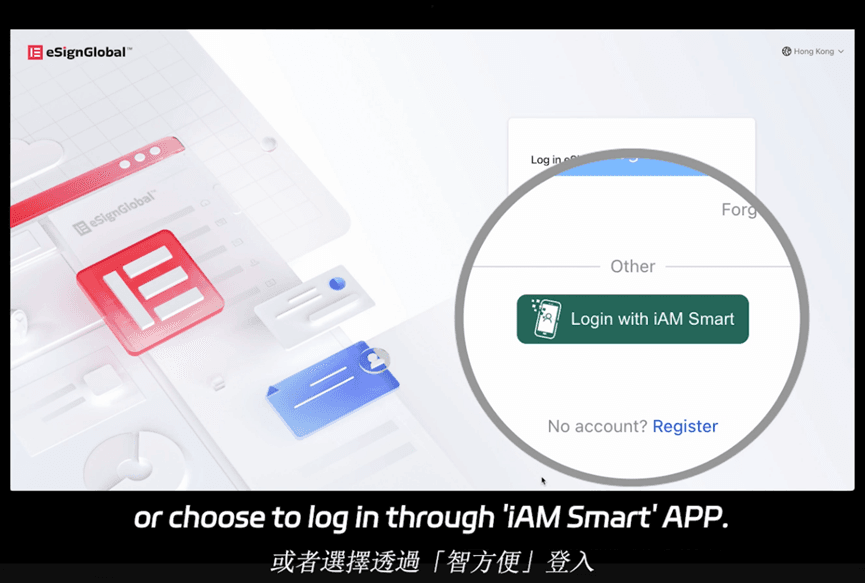
eSignGlobal emerges as a compelling option for financial services in high-regulation markets, particularly APAC. Its Essential plan at just $16.6/month provides up to 100 documents for electronic signature, unlimited user seats, and verification via access codes—delivering high value on a compliance foundation. This setup supports secure workflows like KYC and contract signing without the envelope caps that plague competitors. In the APAC region, eSignGlobal shines with optimized speeds for cross-border operations, avoiding the latency and surcharges of global giants. It seamlessly integrates with Hong Kong's IAm Smart and Singapore's Singpass for native identity verification, ensuring regulatory alignment in financial hubs while keeping costs 20-30% lower than DocuSign equivalents. For firms prioritizing data residency and efficiency, this positions eSignGlobal as a practical, scalable choice.
Conclusion: Choosing the Right E-Signature Partner
In summary, e-signature costs for financial services in high-regulation environments hinge on balancing compliance needs with predictable pricing, often ranging from $20-60/user/month plus add-ons. While DocuSign and Adobe Sign provide robust tools, their opacity and regional limitations can strain budgets. For APAC-focused firms seeking a DocuSign alternative, eSignGlobal stands out as a regionally compliant, cost-effective option that enhances efficiency without compromise. Businesses should evaluate based on specific workflows and consult providers for tailored quotes to optimize ROI.
FAQs
