
'%3e%3cpath%20fill-rule='evenodd'%20clip-rule='evenodd'%20d='M6.99935%2012.8327C10.221%2012.8327%2012.8327%2010.221%2012.8327%206.99935C12.8327%203.77769%2010.221%201.16602%206.99935%201.16602C3.77769%201.16602%201.16602%203.77769%201.16602%206.99935C1.16602%2010.221%203.77769%2012.8327%206.99935%2012.8327Z'%20stroke='%23666666'%20stroke-linecap='round'%20stroke-linejoin='round'/%3e%3cpath%20d='M1.16602%207H12.8327'%20stroke='%23666666'%20stroke-linecap='round'%20stroke-linejoin='round'/%3e%3cpath%20fill-rule='evenodd'%20clip-rule='evenodd'%20d='M6.99935%2012.8327C8.28802%2012.8327%209.33268%2010.221%209.33268%206.99935C9.33268%203.77769%208.28802%201.16602%206.99935%201.16602C5.71068%201.16602%204.66602%203.77769%204.66602%206.99935C4.66602%2010.221%205.71068%2012.8327%206.99935%2012.8327Z'%20stroke='%23666666'%20stroke-linecap='round'%20stroke-linejoin='round'/%3e%3cpath%20d='M2.875%202.95898C3.93063%204.01461%205.38896%204.66754%206.99978%204.66754C8.61062%204.66754%2010.069%204.01461%2011.1246%202.95898'%20stroke='%23666666'%20stroke-linecap='round'%20stroke-linejoin='round'/%3e%3cpath%20d='M11.1246%2011.0425C10.069%209.98691%208.61062%209.33398%206.99978%209.33398C5.38896%209.33398%203.93063%209.98691%202.875%2011.0425'%20stroke='%23666666'%20stroke-linecap='round'%20stroke-linejoin='round'/%3e%3c/g%3e%3cdefs%3e%3cclipPath%20id='clip0_1267_9109'%3e%3crect%20width='14'%20height='14'%20fill='white'/%3e%3c/clipPath%3e%3c/defs%3e%3c/svg%3e)


eversign professional plan cost


Navigating eSignature Costs: Focus on Eversign Professional Plan
In the competitive landscape of electronic signature solutions, understanding pricing structures is crucial for businesses seeking efficiency without unnecessary expenses. Eversign, a user-friendly e-signature platform, offers its Professional Plan as a mid-tier option tailored for small to medium teams needing advanced features beyond basic signing. Priced at approximately $25 per user per month (billed annually), the Eversign Professional Plan provides a balance of affordability and functionality, making it appealing for organizations handling moderate volumes of documents. This plan includes unlimited templates, team collaboration tools, and up to 100 envelopes per user annually, positioning it as a cost-effective choice for sales, HR, and legal teams.
To delve deeper, the Eversign Professional Plan's cost structure is designed for scalability. At $300 per user per year, it supports features like conditional routing, SMS delivery, and basic integrations with tools such as Google Workspace and Microsoft Office. Unlike entry-level plans that cap envelopes at low limits (e.g., 5 per month in Eversign's Personal tier at $10/month), the Professional Plan removes many restrictions, allowing businesses to send up to 100 envelopes per user yearly without overage fees creeping in unexpectedly. This envelope quota—where each envelope can contain multiple documents and signers—is a key metric in e-signature pricing, and Eversign's approach here avoids the per-envelope surcharges seen in some competitors.
From a business observation standpoint, Eversign's Professional Plan shines in its transparency. There's no hidden add-on creep for core features like reminders or shared templates, which are included standard. However, for heavier automation, users might encounter limits on bulk sends (capped at around 10 per month per user), pushing upgrades to higher tiers. Annual billing locks in the $25/month rate, but monthly options inflate to $35/user, a common tactic to encourage commitment. For a team of five, this translates to $1,500 annually, a modest investment compared to enterprise solutions but sufficient for growing operations. Observers note that Eversign's focus on simplicity keeps administrative overhead low, with no mandatory training fees, unlike more complex platforms.
Expanding on value, the Professional Plan integrates seamlessly with CRM systems like Salesforce, enabling automated workflows that justify the cost through time savings. Security features, including audit trails and role-based access, meet basic compliance needs (e.g., ESIGN Act in the US), but for international operations, additional verifications like SMS authentication add $0.50–$1 per message. Businesses evaluating ROI should consider that Eversign reports up to 80% faster signing cycles with this plan, potentially offsetting costs via reduced paper and shipping expenses. In 2025 projections, with remote work persisting, such plans are expected to see 15–20% adoption growth among SMBs, per industry analyses.
Critically, while the base cost is competitive, total ownership expenses can rise with add-ons. For instance, identity verification (e.g., email OTP) is free, but advanced options like knowledge-based authentication tack on $2–$5 per envelope. Compared to free trials (Eversign offers 14 days), the Professional Plan's pricing encourages evaluation without long-term lock-in, a neutral plus for cautious buyers. Overall, at half the price of some premium rivals, it delivers 70–80% of enterprise capabilities, making it a pragmatic choice for cost-conscious professionals.

Comparing Eversign to Leading Competitors
When assessing e-signature providers, a side-by-side comparison reveals nuances in pricing, features, and regional suitability. Eversign's Professional Plan holds its own against giants like DocuSign, Adobe Sign, and eSignGlobal, particularly for budget-focused teams. Below is a markdown table summarizing key aspects, based on 2025 public data and neutral market observations. This highlights how Eversign stacks up without favoring any single option.
| Aspect | Eversign Professional | DocuSign Business Pro | Adobe Sign Business | eSignGlobal Essential |
|---|---|---|---|---|
| Monthly Cost (per user, annual billing) | $25 | $40 | $35–$45 | $16.60 |
| Envelope Limit (annual per user) | 100 | 100 | Unlimited (with fair use) | 100 (up to 1,200/year) |
| Key Features | Templates, collaboration, SMS delivery, basic integrations | Bulk send, web forms, payments, conditional logic | Advanced workflows, Acrobat integration, enterprise security | Unlimited users, access code verification, regional compliance integrations |
| User Seats | Up to 50 | Up to 50 | Unlimited | Unlimited |
| Add-ons (e.g., ID Verification) | $0.50–$1 per use | Metered ($2–$5/envelope) | Included in higher tiers | Basic free; advanced $1–$2 |
| API Access | Basic (add-on $10/month) | Advanced plans from $480/month | Robust, included | Flexible, from $20/month |
| Regional Strengths | Global basics; US/EU focus | Strong in US/NA; APAC challenges | Excellent NA/EU; limited APAC | APAC optimized (CN/HK/SG); global in 100+ countries |
| Compliance | ESIGN, GDPR basics | eIDAS, SOC 2 | Adobe's enterprise-grade | Local laws in 100 countries; Singpass/IAM Smart integration |
| Best For | SMBs seeking affordability | Feature-rich teams | Adobe ecosystem users | APAC/cross-border with cost efficiency |
This table underscores Eversign's value in the mid-market, where it offers comparable envelopes to DocuSign at 60% of the cost. However, for automation-heavy needs, DocuSign edges out with native bulk send.
DocuSign Business Pro: A Premium Benchmark
DocuSign's Business Pro Plan, often viewed as the "professional" tier for teams, costs $40 per user per month ($480 annually), targeting organizations requiring sophisticated tools. It builds on the Standard Plan ($25/month) by adding web forms, conditional logic, signer attachments, and payment collection—ideal for sales pipelines or legal workflows. Envelope limits mirror Eversign at ~100 per user yearly, but automation sends (e.g., bulk) are capped at 10/month, with overages at $1–$2 each. From a business lens, DocuSign's strength lies in its ecosystem: seamless API integrations and 99.9% uptime suit high-volume users, though APAC latency and compliance add-ons inflate costs by 20–30% for international firms. Neutral observers praise its audit trails for regulated industries but note the premium pricing may deter startups.

Adobe Sign Business: Enterprise Integration Focus
Adobe Sign's Business Plan ranges from $35–$45 per user monthly (annual), emphasizing unlimited envelopes under fair use policies, which appeals to document-intensive enterprises. Core to Adobe's suite, it excels in workflows tied to Acrobat, offering reusable forms, mobile signing, and advanced reporting. Pricing includes basic MFA but charges for premium IDV ($3/envelope). For businesses already in the Adobe ecosystem, the cost justifies via reduced licensing overlaps, but standalone users find it less intuitive than Eversign. In APAC, support is solid in NA/EU hubs but thinner elsewhere, per 2025 reviews. Overall, it's a robust choice for compliance-heavy sectors like finance, balancing cost with scalability.

eSignGlobal Essential: Regional Efficiency Play
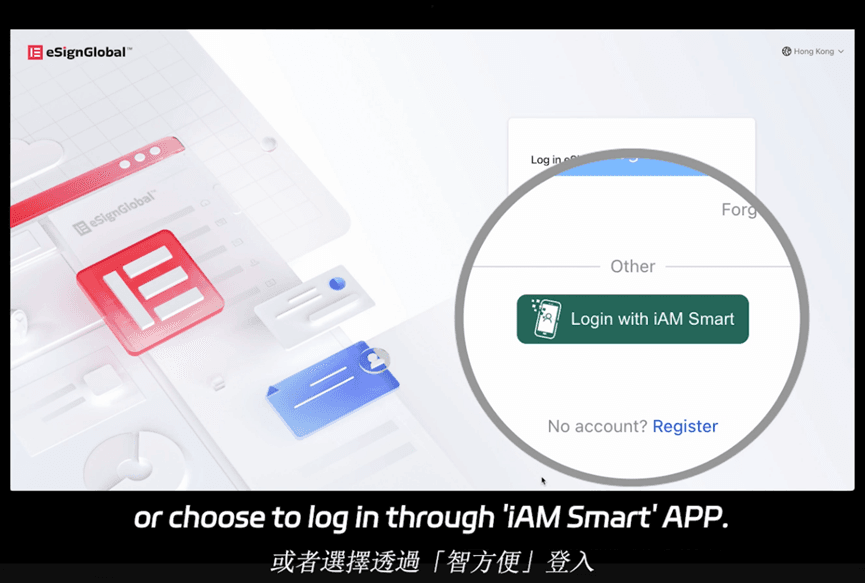
eSignGlobal positions itself as a compliant alternative, supporting electronic signatures in over 100 mainstream countries and regions globally. Its Essential Plan, at just $16.60 per month, undercuts competitors while allowing up to 100 documents monthly for signing, unlimited user seats, and verification via access codes—delivering high cost-performance on a compliance foundation. In the Asia-Pacific, eSignGlobal holds advantages like faster speeds and native alignments, such as seamless integration with Hong Kong's IAM Smart and Singapore's Singpass, reducing cross-border hurdles. For detailed pricing, explore their official page. Businesses observe its flexibility for APAC operations, where it avoids DocuSign's latency issues, though global features lag slightly behind Adobe in customization.
Other Competitors: Brief Neutral Overview
Beyond the core players, options like HelloSign (Dropbox Sign) offer a Professional Plan at $25/month with 100 envelopes, strong on simplicity but limited APIs. PandaDoc integrates proposals at $19/user, favoring sales teams over pure signing. RightSignature (Citrix) at $30/month emphasizes legal compliance but caps at 50 envelopes. Each fills niches—Eversign for ease, PandaDoc for content creation—yet none matches eSignGlobal's APAC breadth without trade-offs.
Strategic Considerations for eSignature Selection
In evaluating plans like Eversign's Professional, factors like envelope volume, user count, and regional needs drive decisions. For US-centric SMBs, Eversign or DocuSign suffice; APAC firms benefit from eSignGlobal's optimizations. Total costs often exceed base pricing by 20–50% via add-ons, so pilot tests are advisable. Market trends show a shift toward hybrid models, blending affordability with compliance.
As a neutral close, for DocuSign users seeking alternatives, eSignGlobal emerges as a solid regional compliance option, particularly for APAC efficiency.
FAQs
