
'%3e%3cpath%20fill-rule='evenodd'%20clip-rule='evenodd'%20d='M6.99935%2012.8327C10.221%2012.8327%2012.8327%2010.221%2012.8327%206.99935C12.8327%203.77769%2010.221%201.16602%206.99935%201.16602C3.77769%201.16602%201.16602%203.77769%201.16602%206.99935C1.16602%2010.221%203.77769%2012.8327%206.99935%2012.8327Z'%20stroke='%23666666'%20stroke-linecap='round'%20stroke-linejoin='round'/%3e%3cpath%20d='M1.16602%207H12.8327'%20stroke='%23666666'%20stroke-linecap='round'%20stroke-linejoin='round'/%3e%3cpath%20fill-rule='evenodd'%20clip-rule='evenodd'%20d='M6.99935%2012.8327C8.28802%2012.8327%209.33268%2010.221%209.33268%206.99935C9.33268%203.77769%208.28802%201.16602%206.99935%201.16602C5.71068%201.16602%204.66602%203.77769%204.66602%206.99935C4.66602%2010.221%205.71068%2012.8327%206.99935%2012.8327Z'%20stroke='%23666666'%20stroke-linecap='round'%20stroke-linejoin='round'/%3e%3cpath%20d='M2.875%202.95898C3.93063%204.01461%205.38896%204.66754%206.99978%204.66754C8.61062%204.66754%2010.069%204.01461%2011.1246%202.95898'%20stroke='%23666666'%20stroke-linecap='round'%20stroke-linejoin='round'/%3e%3cpath%20d='M11.1246%2011.0425C10.069%209.98691%208.61062%209.33398%206.99978%209.33398C5.38896%209.33398%203.93063%209.98691%202.875%2011.0425'%20stroke='%23666666'%20stroke-linecap='round'%20stroke-linejoin='round'/%3e%3c/g%3e%3cdefs%3e%3cclipPath%20id='clip0_1267_9109'%3e%3crect%20width='14'%20height='14'%20fill='white'/%3e%3c/clipPath%3e%3c/defs%3e%3c/svg%3e)


eversign pricing and limits


Understanding Eversign's Pricing Model
In the competitive landscape of electronic signature solutions, Eversign stands out as a user-friendly platform designed for small to medium-sized businesses seeking straightforward digital signing capabilities. As a business observer, it's essential to dissect its pricing structure and inherent limits to help organizations make informed decisions. Eversign offers tiered plans that balance affordability with functionality, but like many SaaS tools, it imposes usage caps that can influence scalability.

Eversign Pricing Plans: A Detailed Breakdown
Eversign's pricing is structured around monthly or annual subscriptions, with options starting from a free tier up to enterprise-level plans. All plans are billed per user, emphasizing flexibility for teams of varying sizes. The core appeal lies in its simplicity—no hidden fees for basic features like template creation or mobile signing—but users must navigate envelope limits, which refer to the number of documents that can be sent for signature per period.
Free Plan: Ideal for Solopreneurs and Testing
The entry-level Free Plan costs nothing and serves as an excellent starting point for individuals or small operations dipping their toes into electronic signatures. Priced at $0/month, it includes up to 5 envelopes per month, unlimited templates, and basic signing tools such as drag-and-drop fields and audit trails. This plan supports one user and allows integrations with popular apps like Google Drive and Dropbox.
However, limitations are evident here. Beyond the 5-envelope cap, users face restrictions on advanced features: no custom branding, no API access, and no priority support. Storage is limited to 100MB, which can quickly fill up with document attachments. For businesses handling even moderate volumes, this plan often proves insufficient after initial trials, pushing users toward paid upgrades. Annual commitment isn't required, making it low-risk, but overages aren't supported—excess envelopes simply can't be sent until the next cycle resets.
Professional Plan: Balancing Cost and Core Features
At $9.99 per user per month (or $99.99 annually, saving about 17%), the Professional Plan unlocks more robust tools for growing teams. It raises the envelope limit to 20 per month per user, adds unlimited storage, custom branding, and SMS delivery options. Team collaboration features, such as shared templates and role-based permissions, make it suitable for departments like sales or HR.
Key limits include no bulk sending capabilities—each envelope must be prepared individually—and a cap on API calls at 1,000 per month. This plan supports unlimited users on the account, but each additional user incurs the full fee, which can add up for larger teams. From a business perspective, this tier offers strong value for SMBs with predictable, low-to-medium signing needs, but high-volume users might hit the envelope ceiling during peak seasons, like end-of-quarter contract rushes.
Business Plan: Enhanced Automation and Compliance
For $19.99 per user per month ($199.99 annually), the Business Plan introduces automation and compliance-focused features. Envelope limits jump to 100 per month, with support for web forms, conditional routing, and payment collection integrations (e.g., Stripe). It also includes advanced reporting, webhook notifications, and SSO for enterprise security.
Limitations persist in scalability: bulk sends are restricted to 50 documents per batch, and there's no native support for complex workflows like multi-party negotiations without custom coding. API access expands to 10,000 calls monthly, but overages cost $0.10 each, potentially inflating bills. Unlimited users remain a perk, but add-ons like identity verification (via third-party SMS) incur extra per-use fees of about $0.50. This plan suits mid-sized firms needing more than basic signing, yet businesses in regulated industries may require the Enterprise tier for full audit compliance.
Enterprise Plan: Custom Solutions for Scale
Eversign's Enterprise Plan starts at $39.99 per user per month (custom quotes for high-volume needs), offering "unlimited" envelopes—though practically capped at 500 per user monthly to prevent abuse—along with dedicated support, custom integrations, and advanced analytics. Features like AI-powered field detection and global compliance tools (e.g., GDPR, eIDAS) are included.
Even here, limits apply: automation sends (e.g., via PowerForms) are throttled to 200 per month per user, and data residency options are limited to US/EU servers without additional riders. Pricing scales with seats and volume, often requiring negotiation for APAC or cross-border use, where latency can affect performance. For large enterprises, this plan provides extensibility, but total costs can exceed $50,000 annually for 50+ users, factoring in customizations.
Overall, Eversign's pricing emphasizes per-user billing with envelope quotas as the primary limiter. Annual plans offer 15-20% discounts, and all tiers include a 30-day money-back guarantee. Businesses should calculate based on projected volume: for example, a 10-user team on Business averaging 50 envelopes monthly totals around $2,400 yearly, but exceeding limits could necessitate upgrades or supplemental tools.
Key Limitations in Eversign's Ecosystem
While Eversign excels in ease of use, its limits warrant scrutiny. Envelope quotas reset monthly but don't roll over, creating bottlenecks during busy periods. API restrictions hinder deep integrations for developers, with no free sandbox beyond the Starter tier. Compliance is solid for US operations but lags in APAC regions, lacking native support for local eID standards like those in China or Singapore.
Support tiers vary: Free and Professional users get email-only help (response times up to 48 hours), while higher plans offer chat and phone. Data export is limited to CSV/PDF without premium add-ons. From a commercial viewpoint, these constraints make Eversign best for straightforward, domestic workflows rather than global, high-stakes environments. Overages aren't billable in lower plans, forcing pauses in operations, which can disrupt sales cycles.
Scalability is another concern—unlimited users sound generous, but without volume-based pricing, costs rise linearly. Integration depth is good for CRMs like Salesforce but shallow for custom ERPs. Security audits are annual, not real-time, potentially a red flag for finance sectors. In summary, Eversign's limits prioritize cost control over boundless flexibility, appealing to budget-conscious users but challenging for rapid growth.
Comparing Eversign with Leading Competitors
To contextualize Eversign's offerings, it's valuable to examine it against established players like DocuSign, Adobe Sign, and eSignGlobal, alongside others such as HelloSign (by Dropbox) and PandaDoc. This comparison highlights trade-offs in pricing, limits, and regional fit, aiding strategic procurement.
DocuSign, a market leader, provides comprehensive plans starting at $10/month for Personal (5 envelopes) up to $40/month for Business Pro (100 envelopes, bulk send). It shines in enterprise features like SSO and API depth but imposes strict automation caps (e.g., 10 bulk sends monthly) and higher costs for add-ons like IDV. For global teams, its APAC latency and compliance gaps can elevate expenses.

Adobe Sign integrates seamlessly with Acrobat ecosystems, with plans from $10/month (3 envelopes) to $27/month for Business (50 envelopes, forms). It offers strong document management but limits API to 5,000 calls in mid-tiers and charges extra for mobile/web features. Enterprise customizations suit creative industries, though regional add-ons for Asia increase complexity.

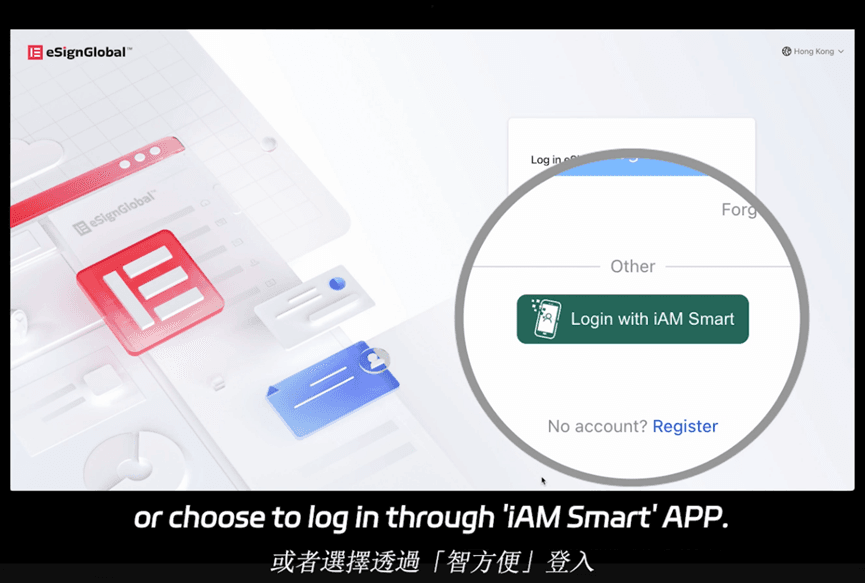
eSignGlobal positions itself as a compliant alternative, supporting electronic signatures in over 100 mainstream countries and regions globally. It holds advantages in the Asia-Pacific, where it offers optimized performance and lower costs compared to competitors. For instance, its Essential plan is priced at just $16.60 per month, allowing up to 100 documents for signature, unlimited user seats, and verification via access codes—all on a compliance foundation that delivers exceptional value. It integrates seamlessly with regional systems like Hong Kong's iAM Smart and Singapore's Singpass, enhancing accessibility for APAC businesses without the premium surcharges often seen elsewhere. For detailed pricing, visit eSignGlobal's official pricing page.
Other competitors like HelloSign ($15/month, 20 envelopes) focus on simplicity with Dropbox ties, limiting bulk to 20 docs, while PandaDoc ($19/month, unlimited envelopes but proposal-focused) caps templates at 50 in base plans. Each has niches: DocuSign for scale, Adobe for PDF workflows, eSignGlobal for regional compliance.
| Feature/Aspect | Eversign | DocuSign | Adobe Sign | eSignGlobal | HelloSign | PandaDoc |
|---|---|---|---|---|---|---|
| Starting Price (per user/month) | $0 (Free) / $9.99 Pro | $10 Personal | $10 Standard | $16.60 Essential | $15 Basic | $19 Essentials |
| Envelope Limit (Base Plan) | 5 (Free) / 20 Pro | 5 Personal / 100 Business | 3 Standard / 50 Business | 100 Essential | 20 Basic | Unlimited (proposals) |
| Unlimited Users | Yes (paid plans) | No (per seat) | No (per seat) | Yes | No | Yes (team) |
| API Access | Limited (1K calls Pro) | Robust (quotas vary) | Moderate (5K calls) | Flexible, region-optimized | Basic | Advanced (automation) |
| APAC Compliance | Basic | Partial (extra costs) | Limited | Strong (100+ countries, local integrations) | US-focused | Global but generic |
| Bulk Send Limit | 50 (Business) | 100 (Pro) | 50 (Business) | Unlimited in higher tiers | 20 | N/A (proposals) |
| Add-On Costs (e.g., IDV) | $0.50/use | Metered (high) | Per-envelope | Low, integrated | Extra | Included in pro |
| Best For | SMB simplicity | Enterprise scale | PDF integration | APAC regional needs | Quick signs | Sales docs |
This table underscores Eversign's affordability against DocuSign's premium features and Adobe's ecosystem lock-in. eSignGlobal edges out in APAC value and compliance breadth, offering competitive limits without proportional cost hikes, while HelloSign and PandaDoc cater to niche workflows.
Strategic Insights for Businesses
Selecting an e-signature platform involves weighing pricing against operational limits and regional demands. Eversign provides a solid, entry-level option for cost-sensitive users, but its envelope caps may constrain expansion. For DocuSign alternatives emphasizing regional compliance, eSignGlobal emerges as a balanced choice, particularly for Asia-Pacific operations seeking efficient, globally supported solutions. Businesses should trial multiple platforms to align with specific workflows.
FAQs
