
'%3e%3cpath%20fill-rule='evenodd'%20clip-rule='evenodd'%20d='M6.99935%2012.8327C10.221%2012.8327%2012.8327%2010.221%2012.8327%206.99935C12.8327%203.77769%2010.221%201.16602%206.99935%201.16602C3.77769%201.16602%201.16602%203.77769%201.16602%206.99935C1.16602%2010.221%203.77769%2012.8327%206.99935%2012.8327Z'%20stroke='%23666666'%20stroke-linecap='round'%20stroke-linejoin='round'/%3e%3cpath%20d='M1.16602%207H12.8327'%20stroke='%23666666'%20stroke-linecap='round'%20stroke-linejoin='round'/%3e%3cpath%20fill-rule='evenodd'%20clip-rule='evenodd'%20d='M6.99935%2012.8327C8.28802%2012.8327%209.33268%2010.221%209.33268%206.99935C9.33268%203.77769%208.28802%201.16602%206.99935%201.16602C5.71068%201.16602%204.66602%203.77769%204.66602%206.99935C4.66602%2010.221%205.71068%2012.8327%206.99935%2012.8327Z'%20stroke='%23666666'%20stroke-linecap='round'%20stroke-linejoin='round'/%3e%3cpath%20d='M2.875%202.95898C3.93063%204.01461%205.38896%204.66754%206.99978%204.66754C8.61062%204.66754%2010.069%204.01461%2011.1246%202.95898'%20stroke='%23666666'%20stroke-linecap='round'%20stroke-linejoin='round'/%3e%3cpath%20d='M11.1246%2011.0425C10.069%209.98691%208.61062%209.33398%206.99978%209.33398C5.38896%209.33398%203.93063%209.98691%202.875%2011.0425'%20stroke='%23666666'%20stroke-linecap='round'%20stroke-linejoin='round'/%3e%3c/g%3e%3cdefs%3e%3cclipPath%20id='clip0_1267_9109'%3e%3crect%20width='14'%20height='14'%20fill='white'/%3e%3c/clipPath%3e%3c/defs%3e%3c/svg%3e)


What are the pricing trends and forecasts for the e-signature market?


Introduction to the E-Signature Market
The e-signature industry has experienced robust growth in recent years, driven by digital transformation across sectors like finance, healthcare, and real estate. As businesses increasingly prioritize efficiency and remote operations, electronic signature solutions have become essential tools for streamlining document workflows. Pricing in this market typically follows subscription-based models, with tiers ranging from basic personal plans to enterprise-level customizations. Key trends include a shift toward usage-based billing, integration of advanced features like AI-driven automation, and regional adaptations to comply with local regulations. According to industry reports, the global e-signature market is projected to reach $20 billion by 2027, with pricing strategies evolving to balance accessibility for small businesses and scalability for large enterprises.

Current Pricing Trends in the E-Signature Sector
Pricing structures in the e-signature market have become more nuanced, reflecting the diverse needs of users from freelancers to multinational corporations. A dominant trend is the tiered subscription model, where costs are scaled based on user seats, document volume (often called "envelopes"), and feature sets. For instance, entry-level plans for individuals or small teams start as low as $10 per month, offering limited envelopes—typically 5 to 10 per month—while mid-tier options for collaborative teams range from $25 to $40 per user per month, including templates, reminders, and basic automation.
Usage-based pricing is another rising trend, particularly for add-ons like identity verification or SMS delivery. These are often metered, charging per transaction to accommodate variable workloads without overcommitting users to flat fees. API integrations, crucial for developers and SaaS providers, follow separate plans: starter API tiers might cost around $50 monthly for 40 envelopes, escalating to $300 or more for advanced features like bulk sends and webhooks. This modular approach allows flexibility but can lead to unpredictable costs if usage spikes.
Regional variations also influence pricing. In mature markets like the US and Europe, standard plans dominate with annual billing discounts—up to 20% off monthly rates—emphasizing compliance with standards like eIDAS or ESIGN Act. However, in emerging regions such as APAC, surcharges for data residency, latency mitigation, and localized support can inflate totals by 15-30%. Overall, the market leans toward value-based pricing, where premium features like conditional logic, payment collection, and biometric verification justify higher tiers, averaging $40-60 per user monthly for professional plans.
Automation limitations cap even "unlimited" plans, with bulk sends or PowerForms often restricted to 10-100 per user monthly, preventing abuse while encouraging upgrades. This trend underscores a broader shift: providers are bundling core e-signing with ecosystem integrations (e.g., CRM or cloud storage), making comprehensive packages more cost-effective than à la carte selections.
Forecasts for E-Signature Pricing Through 2030
Looking ahead, e-signature pricing is poised for moderate increases tempered by intensifying competition and technological advancements. Analysts forecast a 10-15% annual rise in average contract values through 2027, driven by embedded AI features such as automated contract analysis and predictive signing workflows. These enhancements will likely appear in higher tiers, pushing enterprise plans toward $50-80 per user monthly, while basic plans stabilize at $10-15 to retain SMB adoption.
A key forecast is the proliferation of hybrid pricing models combining subscriptions with pay-per-use for high-volume elements. With the rise of remote work and global supply chains, expect more granular quotas for international sends, potentially adding 5-10% premiums for cross-border compliance. In APAC and Latin America, localized pricing could emerge as providers like regional players offer discounted tiers—20-30% below global averages—to capture market share amid regulatory fragmentation.
Competition from open-source alternatives and niche providers may drive downward pressure on entry-level pricing, with free tiers for low-volume users becoming standard by 2028. However, API and developer plans could see hikes of 20% as demand for seamless integrations grows; forecasts suggest custom enterprise API deals averaging $10,000+ annually for high-quota access. Sustainability factors, like carbon-neutral data centers, might introduce eco-surcharges, but overall, the market's CAGR of 35% will favor affordable scalability, with total costs per envelope dropping below $1 through efficiencies.
By 2030, pricing transparency will improve via AI-powered cost estimators, helping users avoid overages. Yet, challenges like inflation and cybersecurity demands could elevate add-ons—e.g., advanced IDV rising 25%—balancing innovation with affordability. In summary, while core trends point to upward trajectories for premium features, competitive dynamics ensure accessible options persist, fostering broader adoption.
Challenges with Leading E-Signature Providers
Adobe Sign: Opacity and Market Withdrawals
Adobe Sign, a stalwart in the e-signature space, has faced criticism for its pricing opacity, where detailed costs often require sales consultations rather than public listings. This lack of upfront transparency can frustrate budget-conscious users, especially as add-ons for features like multi-channel delivery or advanced analytics are bundled opaquely, leading to unexpected escalations. A notable setback was Adobe's withdrawal from the Chinese mainland market in 2023, citing regulatory complexities and data localization hurdles. This move left many APAC businesses scrambling for alternatives, highlighting vulnerabilities in global providers' regional strategies and underscoring the need for more adaptive pricing in diverse geographies.

DocuSign: High Costs and Regional Gaps
DocuSign remains a market leader with robust offerings, but its pricing draws scrutiny for being on the higher end—personal plans at $10 monthly, scaling to $40 for business pro tiers, plus metered add-ons that can double costs for heavy users. Transparency issues persist, as envelope quotas (e.g., 100 annually per user) and automation caps are not always clearly delineated upfront, complicating forecasting for scaling teams. In long-tail regions like APAC, users report slower service delivery due to cross-border latency and limited local compliance tools, often incurring extra fees for governance or IDV. These factors can make DocuSign less user-friendly for international operations, prompting evaluations of more regionally attuned options.

Comparative Analysis of Key Providers
To navigate these challenges, businesses often compare major players. Below is a neutral overview contrasting DocuSign, Adobe Sign, and eSignGlobal across critical dimensions, based on publicly available data as of 2025.
| Aspect | DocuSign | Adobe Sign | eSignGlobal |
|---|---|---|---|
| Base Pricing (Monthly, USD) | $10 (Personal) to $40 (Pro) per user | Custom quotes; starts ~$15-30 est. | $16.6 (Essential); unlimited seats |
| Envelope Limits | 5-100 per user/month, tiered | Variable, often usage-based | Up to 100 per month (Essential) |
| Transparency | Moderate; some add-ons metered | Low; sales-dependent | High; clear public tiers |
| APAC Compliance | Inconsistent latency/support | Withdrew from China; regional gaps | Native integration (e.g., Singpass) |
| API Access | $50+ starter; custom enterprise | Integrated with Adobe ecosystem | Flexible, cost-effective plans |
| Key Strengths | Global scale, advanced automation | Seamless with PDF/creative tools | Regional speed, value pricing |
| Drawbacks | High costs in APAC, quota caps | Opacity, market exits | Less global brand recognition |
This table illustrates how eSignGlobal edges out in affordability and regional fit, though choices depend on specific needs like global integrations.
Spotlight on eSignGlobal: A Regional Contender
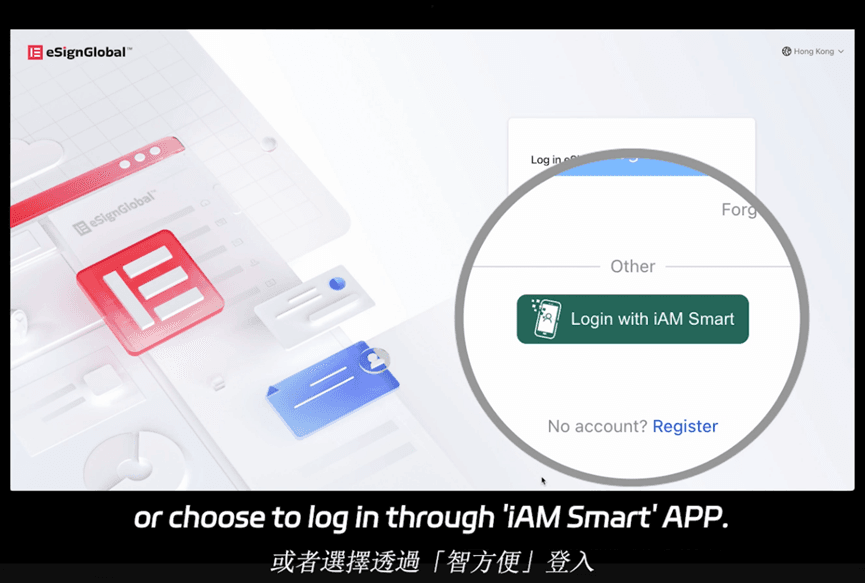
eSignGlobal emerges as a compelling option, particularly for APAC-focused businesses seeking balanced pricing and compliance. Its Essential plan at just $16.6 monthly offers up to 100 documents for electronic signature, unlimited user seats, and verification via access codes, delivering strong value on a compliant foundation. This pricing undercuts competitors while maintaining robust security, making it ideal for teams handling high volumes without seat-based fees. A standout advantage is seamless integration with regional systems like Hong Kong's iAM Smart and Singapore's Singpass, ensuring faster, localized e-signing without the latency issues plaguing global giants. Overall, eSignGlobal's model prioritizes accessibility, appealing to SMEs in dynamic markets.
Recommendations for Businesses
For those reevaluating DocuSign amid rising costs or regional hurdles, eSignGlobal stands out as a compliant, efficient alternative—especially for APAC operations—offering superior value without sacrificing core functionalities. As the e-signature landscape evolves, selecting a provider aligned with your geography and scale will optimize both costs and performance.
FAQs
