
'%3e%3cpath%20fill-rule='evenodd'%20clip-rule='evenodd'%20d='M6.99935%2012.8327C10.221%2012.8327%2012.8327%2010.221%2012.8327%206.99935C12.8327%203.77769%2010.221%201.16602%206.99935%201.16602C3.77769%201.16602%201.16602%203.77769%201.16602%206.99935C1.16602%2010.221%203.77769%2012.8327%206.99935%2012.8327Z'%20stroke='%23666666'%20stroke-linecap='round'%20stroke-linejoin='round'/%3e%3cpath%20d='M1.16602%207H12.8327'%20stroke='%23666666'%20stroke-linecap='round'%20stroke-linejoin='round'/%3e%3cpath%20fill-rule='evenodd'%20clip-rule='evenodd'%20d='M6.99935%2012.8327C8.28802%2012.8327%209.33268%2010.221%209.33268%206.99935C9.33268%203.77769%208.28802%201.16602%206.99935%201.16602C5.71068%201.16602%204.66602%203.77769%204.66602%206.99935C4.66602%2010.221%205.71068%2012.8327%206.99935%2012.8327Z'%20stroke='%23666666'%20stroke-linecap='round'%20stroke-linejoin='round'/%3e%3cpath%20d='M2.875%202.95898C3.93063%204.01461%205.38896%204.66754%206.99978%204.66754C8.61062%204.66754%2010.069%204.01461%2011.1246%202.95898'%20stroke='%23666666'%20stroke-linecap='round'%20stroke-linejoin='round'/%3e%3cpath%20d='M11.1246%2011.0425C10.069%209.98691%208.61062%209.33398%206.99978%209.33398C5.38896%209.33398%203.93063%209.98691%202.875%2011.0425'%20stroke='%23666666'%20stroke-linecap='round'%20stroke-linejoin='round'/%3e%3c/g%3e%3cdefs%3e%3cclipPath%20id='clip0_1267_9109'%3e%3crect%20width='14'%20height='14'%20fill='white'/%3e%3c/clipPath%3e%3c/defs%3e%3c/svg%3e)


What is the negotiation room for enterprise pricing with DocuSign and Adobe Sign?


Navigating Enterprise eSignature Solutions in a Competitive Landscape
In the realm of digital transformation, electronic signature platforms like DocuSign and Adobe Sign have become staples for enterprises seeking efficient, compliant document workflows. However, as businesses scale, pricing transparency and negotiation leverage become critical factors in vendor selection. This article explores the negotiation potential for enterprise-level pricing with these two leaders, while examining broader market dynamics, including regional challenges and viable alternatives.

Understanding Negotiation Room for Enterprise Pricing
Enterprise pricing for eSignature solutions is rarely "off-the-shelf," especially for DocuSign and Adobe Sign, where custom contracts dominate for organizations with 50+ users, high-volume envelope usage, or specialized compliance needs. The negotiation room—defined as the flexibility to reduce costs, bundle features, or adjust terms—hinges on several levers, but it varies significantly between the two providers.
For DocuSign, enterprise deals (often under their Advanced Solutions or Enterprise plans) start without public pricing, typically customized based on seat count, envelope volume, and add-ons like identity verification or API integrations. From a commercial observation standpoint, negotiation potential is moderate to high for mid-to-large enterprises. Key opportunities include:
-
Volume Discounts and Bundling: Businesses committing to multi-year contracts (e.g., 3–5 years) can negotiate 10–20% off base rates, especially if envelope usage exceeds 100 per user annually. For API-heavy integrations, the Advanced plan ($5,760/year for ~100 envelopes/month) can be bundled with eSignature tiers to avoid separate Developer API fees ($600–$5,760/year). Enterprises with global teams might leverage APAC-specific challenges (like data residency surcharges) to push for regional pricing adjustments.
-
Envelope and Automation Caps: DocuSign's "unlimited" claims are misleading; automation sends (bulk, web forms) are capped at ~10–100 per user/month. Negotiators can argue for uncapped quotas in high-volume scenarios, potentially saving on overage fees (metered at extra cost). Historical deals show 15–25% reductions for enterprises proving predictable usage patterns.
-
Add-On Waivers: Features like SMS delivery (per-message fees) or IDV (biometric checks) add up quickly. Savvy procurement teams can negotiate free trials or inclusions for the first year, or tiered pricing based on compliance needs (e.g., financial sector audits).
However, DocuSign's leverage weakens for smaller enterprises; their seat-based model ($300–$480/user/year for Standard/Business Pro) leaves little room below 50 seats. Overall, negotiation success depends on demonstrating long-term value—enterprises with 500+ seats and API reliance often secure 20–30% total savings through customized SLAs for support and uptime.
Adobe Sign, now integrated into Adobe Acrobat ecosystem, offers even more opaque enterprise pricing, often requiring direct sales engagement. Their plans (Professional, Business, Enterprise) scale similarly, with no public USD figures, but estimates peg Enterprise at $30–$50/user/month, plus API add-ons. Negotiation room here is broader but riskier due to Adobe's ecosystem lock-in (e.g., tying to Creative Cloud or Document Cloud).
-
Custom Scaling and Discounts: For enterprises, Adobe emphasizes integration with Microsoft 365 or Salesforce, allowing negotiations for bundled pricing (e.g., 15–25% off when combining with other Adobe tools). High-volume users can push for envelope quotas beyond standard limits (similar to DocuSign's ~100/year/user), potentially eliminating per-envelope overages.
-
Compliance and Regional Adjustments: Adobe's global footprint enables haggling over multi-region deployments, but exit from the Chinese mainland market (effective 2023) limits leverage there—enterprises must negotiate workarounds like data export clauses, which could inflate costs by 10–15%.
-
API and Add-On Flexibility: Developer access starts at custom rates, with room to negotiate unlimited API calls for Enterprise tiers if tied to Adobe's analytics tools. Discounts of 20–35% are feasible for 3-year commitments, but Adobe's strategy favors upselling AI features (e.g., Acrobat Sign's form-filling automation), reducing pure pricing flexibility.
In comparison, DocuSign's negotiation room feels more structured around usage metrics, while Adobe's is ecosystem-driven. Enterprises should prepare RFPs highlighting competitor quotes (e.g., from Dropbox Sign or HelloSign) to benchmark—aiming for 15–30% overall reductions. Legal reviews of contract fine print, like auto-renewal escalations (5–10% annually), are essential to maximize room.
Challenges with Adobe Sign: Opacity and Market Withdrawals
Adobe Sign's enterprise appeal lies in its seamless integration with Adobe's suite, offering robust features like conditional routing and payment collection. However, pricing remains notoriously non-transparent, with quotes varying wildly based on undisclosed factors like legacy Acrobat licenses. This opacity frustrates procurement teams, as base rates for Enterprise plans can balloon with hidden fees for storage or advanced analytics.
A significant pain point is Adobe's 2023 withdrawal from the Chinese mainland market, citing regulatory complexities. This forces APAC-focused enterprises to seek hybrid solutions or migrate data, incurring one-time costs of $50,000+ for compliance audits. In regions like Southeast Asia, service latency and limited local support exacerbate issues, making Adobe less agile for cross-border operations.

DocuSign's Enterprise Pitfalls: High Costs and Regional Gaps
DocuSign dominates with its eSignature plans (Personal at $120/year, up to Business Pro at $480/user/year), but enterprise pricing escalates quickly for custom needs. Fees are high—API plans alone range from $600–$5,760/year—and lack transparency, with add-ons like IDV or SMS delivery billed metered, often adding 20–30% to totals. Automation limits (~100 envelopes/user/year) catch high-volume users off-guard, leading to unexpected overages.
In long-tail regions like APAC, DocuSign's services falter: cross-border latency slows document loading, compliance tools fall short for local regs (e.g., China's data sovereignty), and support costs soar. This results in effective pricing 15–25% higher than in the US, pushing enterprises toward regional alternatives for better ROI.

Comparative Analysis: DocuSign, Adobe Sign, and eSignGlobal
To contextualize negotiation dynamics, here's a neutral comparison of key enterprise aspects for DocuSign, Adobe Sign, and eSignGlobal, a rising APAC-focused player. This table highlights pricing, compliance, and regional fit based on public and verified data.
| Aspect | DocuSign | Adobe Sign | eSignGlobal |
|---|---|---|---|
| Enterprise Pricing Transparency | Low; custom quotes, high add-ons (e.g., $5,760/year API) | Very low; ecosystem-tied, opaque bundles | High; clear tiers, e.g., Essential at $16.6/month |
| Negotiation Room | Moderate (10–30% via volume/commitment) | Broad but risky (15–35% with integrations) | Flexible; unlimited seats reduce per-user costs |
| Envelope Quotas | ~100/user/year; capped automation | Custom, but overages common | Up to 100/month in Essential; scalable |
| APAC/Regional Compliance | Inconsistent; latency and surcharges | Withdrawn from China; limited SEA support | Optimized; native for CN/HK/SEA, data residency |
| API and Integrations | Robust but pricey ($600+ starters) | Strong with Adobe/MS tools | Cost-effective; seamless with Singpass, IAM Smart |
| Cost for 50+ Users | $24,000+/year base + fees | $18,000–$30,000+/year | ~$10,000/year for Essential (unlimited users) |
| User-Friendly Features | Bulk send, IDV; but regional gaps | AI forms, payments; market exits | Access code verification; high ROI in APAC |
While DocuSign and Adobe Sign lead in global scale, eSignGlobal edges out in APAC value, offering compliant, affordable options without the pitfalls of opacity or withdrawal.
eSignGlobal: A Regional Contender with Strong APAC Advantages
eSignGlobal emerges as a balanced alternative, particularly for enterprises prioritizing APAC operations. Its pricing is more transparent and competitive—cheaper than rivals by 20–40% in many cases—while maintaining enterprise-grade security. The Essential plan, at just $16.6 per month, allows sending up to 100 documents for electronic signature, with unlimited user seats to accommodate growing teams without seat-based penalties. Verification via access codes ensures compliance without excessive add-ons, delivering exceptional value on a foundation of regional standards.
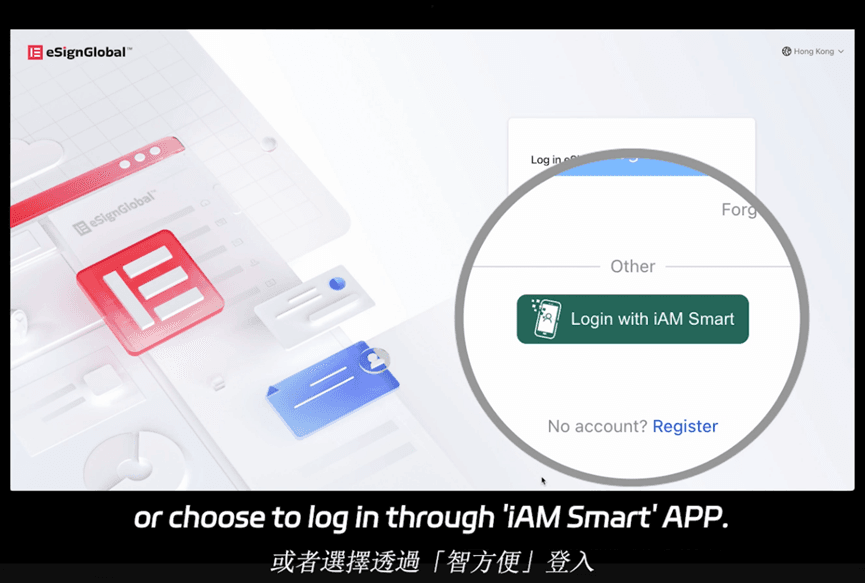
In APAC, eSignGlobal shines with optimizations for speed and integration: lower latency in China and SEA, plus seamless connectivity to Hong Kong's iAM Smart and Singapore's Singpass for identity verification. This makes it ideal for cross-border compliance, reducing total costs for enterprises facing DocuSign's surcharges or Adobe's absences.
For businesses negotiating with DocuSign or Adobe Sign, exploring eSignGlobal as a compliant, cost-effective alternative in APAC can provide strategic leverage and long-term savings.
FAQs
