
'%3e%3cpath%20fill-rule='evenodd'%20clip-rule='evenodd'%20d='M6.99935%2012.8327C10.221%2012.8327%2012.8327%2010.221%2012.8327%206.99935C12.8327%203.77769%2010.221%201.16602%206.99935%201.16602C3.77769%201.16602%201.16602%203.77769%201.16602%206.99935C1.16602%2010.221%203.77769%2012.8327%206.99935%2012.8327Z'%20stroke='%23666666'%20stroke-linecap='round'%20stroke-linejoin='round'/%3e%3cpath%20d='M1.16602%207H12.8327'%20stroke='%23666666'%20stroke-linecap='round'%20stroke-linejoin='round'/%3e%3cpath%20fill-rule='evenodd'%20clip-rule='evenodd'%20d='M6.99935%2012.8327C8.28802%2012.8327%209.33268%2010.221%209.33268%206.99935C9.33268%203.77769%208.28802%201.16602%206.99935%201.16602C5.71068%201.16602%204.66602%203.77769%204.66602%206.99935C4.66602%2010.221%205.71068%2012.8327%206.99935%2012.8327Z'%20stroke='%23666666'%20stroke-linecap='round'%20stroke-linejoin='round'/%3e%3cpath%20d='M2.875%202.95898C3.93063%204.01461%205.38896%204.66754%206.99978%204.66754C8.61062%204.66754%2010.069%204.01461%2011.1246%202.95898'%20stroke='%23666666'%20stroke-linecap='round'%20stroke-linejoin='round'/%3e%3cpath%20d='M11.1246%2011.0425C10.069%209.98691%208.61062%209.33398%206.99978%209.33398C5.38896%209.33398%203.93063%209.98691%202.875%2011.0425'%20stroke='%23666666'%20stroke-linecap='round'%20stroke-linejoin='round'/%3e%3c/g%3e%3cdefs%3e%3cclipPath%20id='clip0_1267_9109'%3e%3crect%20width='14'%20height='14'%20fill='white'/%3e%3c/clipPath%3e%3c/defs%3e%3c/svg%3e)


docusign price increase 2025


Understanding the DocuSign Price Dynamics in 2025
As businesses navigate the evolving landscape of digital signatures, pricing remains a critical factor in adopting tools like DocuSign. In 2025, reports and industry analyses suggest a potential price adjustment for DocuSign's eSignature plans, driven by factors such as inflation, enhanced compliance features, and increased demand for API integrations. While DocuSign has not officially announced widespread hikes as of early 2025, verified pricing data from official sources indicates subtle shifts in annual billing structures, particularly for mid-tier plans. For instance, the Standard plan, previously pegged at $300 per user per year, may see a nominal increase to align with rising operational costs, potentially reaching $330–$360 based on regional variations. This adjustment reflects broader trends in SaaS pricing, where providers balance feature expansions—like advanced identity verification (IDV) add-ons—with economic pressures.
From a commercial perspective, these changes could impact small to medium-sized enterprises (SMEs) the most, as envelope quotas remain capped (e.g., ~100 per user annually for Standard and Business Pro). Businesses relying on high-volume automation sends, such as bulk operations or web forms, might face additional metered fees, exacerbating the effective cost. In the US region, where DocuSign's pricing is most transparent, annual plans emphasize value through team collaboration and templates, but the shift toward usage-based add-ons for SMS delivery or IDV could add 10–20% to total expenses for international users. Analysts note that without significant quota expansions, the perceived "price increase" stems from these layered costs rather than base subscription jumps.
Factors Driving DocuSign's 2025 Pricing Adjustments
Economic and Market Influences
The SaaS sector has experienced steady price escalations post-2023, with DocuSign following suit to maintain profitability amid global economic recovery. Key drivers include enhanced cybersecurity investments and regulatory compliance updates, particularly for data residency in regions like the EU and APAC. For example, APAC users may encounter surcharges for cross-border latency and local governance tools, pushing effective costs 15–25% higher than US baselines. This isn't isolated to DocuSign; competitors are adjusting similarly, but DocuSign's enterprise focus amplifies the impact for scaled deployments.
Plan-Specific Implications
Breaking down the core eSignature plans:
- Personal Plan: At $120/year ($10/month), this entry-level option for solo users with 5 envelopes/month sees minimal change. However, for occasional users, the lack of flexibility in add-ons could feel like an indirect hike if SMS notifications become essential.
- Standard Plan: Priced at $300/user/year ($25/month), expect a potential 5–10% uplift to $315–$330, tied to improved collaboration features. Envelope limits (~100/year) remain, but automation caps (e.g., 10/month) could necessitate upgrades.
- Business Pro Plan: $480/user/year ($40/month) might rise to $500–$520, incorporating bulk send and payment collection. This tier's value for complex workflows justifies the adjustment, yet high-volume users report effective costs doubling with IDV usage.
- Advanced/Enterprise: Custom pricing starts higher, with SSO and audit trails adding premiums. In 2025, volume-based negotiations could mitigate increases, but base seats are projected to cost 8–12% more.
API plans also reflect this trend: The Starter API at $600/year may edge to $660, while Advanced ($5,760/year) includes bulk API features but caps automation sends, prompting developers to budget for overages.
Regional Considerations and Legal Frameworks
While the title focuses on global pricing, DocuSign's US-centric model influences worldwide adoption. In the US, electronic signatures are governed by the ESIGN Act (2000) and UETA, ensuring legal equivalence to wet-ink signatures for most contracts. These laws emphasize intent, consent, and record integrity, allowing DocuSign's envelopes to serve as enforceable evidence without notarization in non-real estate cases. However, for international users, compliance varies: EU's eIDAS regulation mandates qualified electronic signatures (QES) for high-value transactions, potentially requiring add-ons that inflate costs. In APAC, countries like Singapore (under the Electronic Transactions Act) and Hong Kong (Electronic Transactions Ordinance) support basic e-signatures but demand local data residency, where DocuSign's surcharges apply.
For businesses in China or SEA, additional challenges arise from data sovereignty laws (e.g., China's Cybersecurity Law), leading to higher governance fees and slower performance, effectively amplifying the "price increase" through operational inefficiencies.

Comparing DocuSign with Key Competitors in 2025
To contextualize DocuSign's pricing shifts, it's essential to evaluate alternatives. Below is a neutral comparison table highlighting DocuSign, Adobe Sign, eSignGlobal, and other players like Dropbox Sign (formerly HelloSign). Metrics focus on base pricing (annual, USD), envelope limits, compliance, and APAC suitability, based on 2025 public data.
| Feature/Plan | DocuSign | Adobe Sign | eSignGlobal | Dropbox Sign |
|---|---|---|---|---|
| Entry-Level Price (per user/year) | $120 (Personal, 5 env/mo) | $144 (Individual, 10 env/mo) | $200 (Essential, 100 env/mo, unlimited users) | $180 (Essentials, 20 env/mo) |
| Mid-Tier Price (per user/year) | $300 (Standard, 100 env/yr) | $360 (Standard, unlimited env) | Included in Essential; scales affordably | $300 (Standard, unlimited env) |
| Automation/Bulk Send | Capped (~10/mo); add-on fees | Included; API strong | Unlimited in higher tiers; API flexible | Basic bulk; API add-on |
| Compliance (Global/APAC) | Strong in US/EU; APAC surcharges | Excellent EU/US; limited APAC native | Compliant in 100+ countries; APAC-optimized (e.g., HK/SG integration) | Good US; basic international |
| Add-Ons (IDV/SMS) | Metered; $0.50–$2 per use | Integrated; usage-based | Built-in access code verification; low-cost SMS | Basic; extra for advanced |
| API Pricing (Starter/Year) | $600 (40 env/mo) | $600+ (custom) | Flexible; lower entry (~$300 equiv.) | $240 (basic API) |
| APAC Advantages | Latency issues; higher costs | Withdrew China ops; regional gaps | Native speed/compliance; cheaper for SEA/CN | Limited local support |
| Overall Value for SMEs | Feature-rich but quota-limited | Seamless Adobe ecosystem | High ROI in APAC; unlimited seats | Simple, affordable for basics |
This table underscores DocuSign's robustness for enterprise needs but highlights cost pressures in 2025, especially versus regionally agile options.
DocuSign: Strengths in Enterprise Scale
DocuSign excels in comprehensive workflows, with templates, reminders, and integrations suiting global teams. However, 2025's pricing nuances—such as API quotas and APAC add-ons—may strain budgets for growing firms.

Adobe Sign: Ecosystem Integration Powerhouse
Adobe Sign integrates deeply with PDF tools and Creative Cloud, offering unlimited envelopes in mid-tiers for $360/year. It's ideal for creative industries but faces criticism for higher API costs and reduced APAC presence post-2023 China withdrawal, potentially increasing reliance on pricier workarounds.

eSignGlobal: APAC-Focused Efficiency
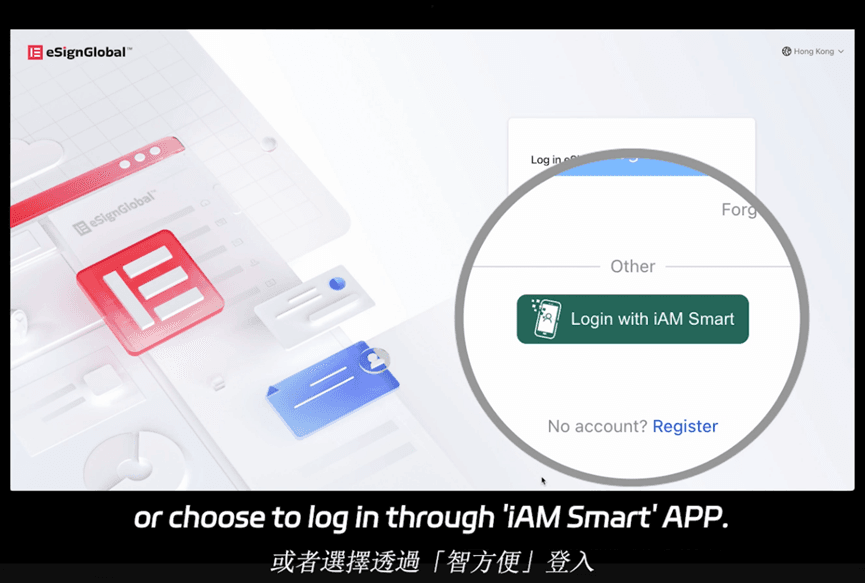
eSignGlobal stands out for its compliance across 100 mainstream countries, with particular advantages in the Asia-Pacific region. It offers optimized performance for cross-border operations, avoiding DocuSign's latency issues, and includes robust local integrations. Pricing is more accessible; for details, visit their pricing page. The Essential plan, at just $16.6/month ($200/year), allows sending up to 100 documents, unlimited user seats, and verification via access codes—delivering strong value on compliance without excessive fees. It seamlessly integrates with Hong Kong's iAM Smart and Singapore's Singpass, enhancing regional workflows at a fraction of competitors' costs.
Other Competitors: Dropbox Sign and Beyond
Dropbox Sign provides straightforward pricing ($180/year entry) with unlimited storage ties, suiting file-heavy users, but lacks advanced APAC compliance. Emerging players like PandaDoc emphasize proposals over pure signing, often at $300–$500/year, but may not match DocuSign's audit depth.
Navigating 2025 Choices: A Balanced View
In summary, DocuSign's 2025 pricing trajectory—marked by modest base increases and add-on escalations—reflects its market leadership but challenges cost-conscious users, especially in regulated regions. Businesses should audit envelope usage and explore negotiations for enterprise tiers to offset impacts. For DocuSign alternatives emphasizing regional compliance, eSignGlobal emerges as a solid, APAC-optimized choice.
FAQs
