
'%3e%3cpath%20fill-rule='evenodd'%20clip-rule='evenodd'%20d='M6.99935%2012.8327C10.221%2012.8327%2012.8327%2010.221%2012.8327%206.99935C12.8327%203.77769%2010.221%201.16602%206.99935%201.16602C3.77769%201.16602%201.16602%203.77769%201.16602%206.99935C1.16602%2010.221%203.77769%2012.8327%206.99935%2012.8327Z'%20stroke='%23666666'%20stroke-linecap='round'%20stroke-linejoin='round'/%3e%3cpath%20d='M1.16602%207H12.8327'%20stroke='%23666666'%20stroke-linecap='round'%20stroke-linejoin='round'/%3e%3cpath%20fill-rule='evenodd'%20clip-rule='evenodd'%20d='M6.99935%2012.8327C8.28802%2012.8327%209.33268%2010.221%209.33268%206.99935C9.33268%203.77769%208.28802%201.16602%206.99935%201.16602C5.71068%201.16602%204.66602%203.77769%204.66602%206.99935C4.66602%2010.221%205.71068%2012.8327%206.99935%2012.8327Z'%20stroke='%23666666'%20stroke-linecap='round'%20stroke-linejoin='round'/%3e%3cpath%20d='M2.875%202.95898C3.93063%204.01461%205.38896%204.66754%206.99978%204.66754C8.61062%204.66754%2010.069%204.01461%2011.1246%202.95898'%20stroke='%23666666'%20stroke-linecap='round'%20stroke-linejoin='round'/%3e%3cpath%20d='M11.1246%2011.0425C10.069%209.98691%208.61062%209.33398%206.99978%209.33398C5.38896%209.33398%203.93063%209.98691%202.875%2011.0425'%20stroke='%23666666'%20stroke-linecap='round'%20stroke-linejoin='round'/%3e%3c/g%3e%3cdefs%3e%3cclipPath%20id='clip0_1267_9109'%3e%3crect%20width='14'%20height='14'%20fill='white'/%3e%3c/clipPath%3e%3c/defs%3e%3c/svg%3e)


How is the per-transaction fee calculated for the DocuSign API?


Navigating DocuSign API Costs: A Business Perspective
In the digital signature landscape, businesses increasingly rely on APIs like DocuSign's to automate workflows, integrate with CRM systems, and streamline contract management. However, understanding the pricing model, particularly the per-transaction fees for the DocuSign API, can be a complex puzzle for developers and enterprises. This article dives into how these fees are calculated, drawing from official 2025 pricing data, while offering a balanced commercial analysis of DocuSign's approach alongside competitors.
How DocuSign API Per-Transaction Fees Are Calculated
The Foundation: Envelope-Based Transactions
At the core of DocuSign's API pricing is the concept of an "envelope," which represents a single transaction or document package sent for electronic signature. This includes one or more documents, signers, and associated actions like routing or notifications. Unlike flat-rate subscriptions, DocuSign's API operates on a tiered model where per-transaction fees are tied to envelope usage, making it essential for businesses to forecast volume accurately.
For 2025, DocuSign's Developer API plans are billed annually and include a base quota of envelopes per month. The per-transaction fee isn't a standalone charge but emerges from overages beyond these quotas or through metered add-ons. According to verified public documentation, the Starter plan costs $600 per year and provides approximately 40 envelopes per month. If your integration exceeds this—say, due to high-volume API calls for sending contracts—the additional envelopes incur per-transaction fees. These overages are calculated at a rate of roughly $0.10 to $0.50 per envelope, depending on the plan tier and negotiated enterprise terms, though exact rates require contacting sales for custom quotes.
Breaking Down the Calculation Formula
To calculate the effective per-transaction fee, consider this step-by-step approach based on DocuSign's structure:
-
Determine Your Plan Tier: Select from Starter ($600/year, ~40 envelopes/month), Intermediate ($3,600/year, ~100 envelopes/month), Advanced ($5,760/year, ~100 envelopes/month with extras like Bulk Send API), or Enterprise (custom). The base fee covers the quota, so per-transaction costs only apply to excess usage.
-
Track Envelope Consumption: Each API call that initiates a signature process (e.g., via the Envelopes::create endpoint) counts as one envelope. Features like Bulk Send or PowerForms can multiply this— a single bulk operation might generate dozens of envelopes, each billed individually.
-
Apply Quota and Overage Rates: Quotas reset monthly. For example, on the Intermediate plan, your first 100 envelopes are "free" within the annual fee. Beyond that, overages are metered. Public data indicates overage fees start at about $0.15 per envelope for mid-tier plans, scaling with volume. Total cost = (Base Annual Fee) + (Overage Envelopes × Per-Envelope Rate).
-
Factor in Add-Ons and Multipliers: Not all transactions are equal. Identity Verification (IDV) adds per-use fees (e.g., $1–$5 per verification for biometrics or SMS auth), while SMS/WhatsApp deliveries tack on telecom-dependent charges (around $0.05–$0.20 per message). Automation sends, like those via API webhooks, are capped at ~10 per user per month, with extras billed per transaction. For high-automation setups, this can inflate costs by 20–50%.
-
Annual vs. Monthly Billing Impact: Annual plans lock in lower effective rates, but monthly billing increases per-transaction equivalents due to higher base pricing (e.g., Starter jumps to ~$50/month). Businesses with variable transaction volumes should model scenarios: For 150 envelopes/month on Intermediate, you'd pay the $3,600 base plus ~$750 in overages annually ($0.15 × 50 extra × 12 months).
Real-World Implications for Businesses
From a commercial standpoint, this model favors predictable, low-to-mid volume users but penalizes scalability. A SaaS company integrating DocuSign API for customer onboarding might start with Intermediate for $3,600/year, covering 1,200 envelopes annually. If growth pushes usage to 2,000 envelopes, per-transaction overages add $120–$300 yearly, plus any IDV fees for compliance-heavy industries like finance. Enterprise customizations can negotiate down to $0.05 per envelope for volumes over 10,000, but smaller developers often face opaque scaling costs.
Automation limitations further complicate calculations: Even "unlimited" plans cap API-driven bulk sends at ~100 per user/year, treating each as a separate transaction. Regional factors, like APAC latency surcharges, can indirectly raise effective fees by 10–15% through added support or compliance add-ons. Overall, the per-transaction fee calculation rewards planning but demands vigilant API monitoring to avoid surprises—tools like DocuSign's usage dashboard help, yet many users report underestimating multipliers from features like Connect webhooks.
This envelope-centric approach ensures revenue predictability for DocuSign but can feel rigid for agile businesses. In 2025, with API integrations booming, accurate forecasting via tools like envelope simulators is crucial to maintain cost efficiency.
Challenges in the eSignature Market: Transparency and Regional Hurdles
Adobe Sign's Pricing Opacity and Market Withdrawal
Adobe Sign, once a strong contender in the eSignature space, has drawn criticism for its lack of pricing transparency. Unlike DocuSign's tiered public plans, Adobe's costs often require sales consultations, with per-transaction fees hidden behind custom quotes. This opacity frustrates SMBs seeking quick integrations, as envelope equivalents (called "agreements") come with unpredictable add-ons for API access or advanced auth. More notably, Adobe Sign exited the China mainland market in 2023, citing regulatory complexities, leaving APAC users scrambling for alternatives. This move highlighted vulnerabilities in global providers, forcing businesses to pivot amid disrupted workflows and data residency issues.

DocuSign's High Costs and User Pain Points
DocuSign, while a market leader, faces backlash for its premium pricing and lack of transparency in scaling fees. API plans start high—$600/year for basics—and per-transaction overages can balloon expenses for growing teams, especially with non-transparent add-ons like IDV or SMS delivery. In long-tail regions like APAC, services suffer from inconsistent speeds due to cross-border latency, higher compliance surcharges, and limited local integrations, making it less ideal for China, Hong Kong, or SEA operations. Users often cite these as user-unfriendly, with effective costs 20–30% higher than advertised due to regional governance needs.

Comparing DocuSign, Adobe Sign, and eSignGlobal
To provide clarity for businesses evaluating options, here's a neutral comparison based on 2025 public data, focusing on API pricing, regional fit, and transparency:
| Aspect | DocuSign | Adobe Sign | eSignGlobal |
|---|---|---|---|
| API Base Pricing (Annual, Entry-Level) | $600 (40 envelopes/month) | Custom (opaque, ~$500–$1,000 est.) | $200 (Essential, 100 docs/month) |
| Per-Transaction Fee Structure | Envelope overages ~$0.10–$0.50; add-ons metered | Hidden in quotes; agreement-based overages | Transparent: Included in quota; low overage ~$0.05/doc |
| Transparency | Moderate (public tiers, but custom overages) | Low (sales-dependent) | High (fixed plans, no hidden fees) |
| APAC/Regional Support | Inconsistent latency; extra compliance costs | Withdrew from China; limited SEA | Optimized for CN/SEA/HK; local data residency |
| Compliance & Integrations | Global standards; SSO/IDV add-ons | Strong Adobe ecosystem; exited CN | Native to HK IAm Smart, SG Singpass; cost-effective IDV |
| Scalability for SMBs | High-volume caps; enterprise-focused | Flexible but pricey for API | Unlimited seats; affordable growth |
| Overall Cost-Effectiveness | Premium; suits large enterprises | Variable; integration-heavy | Balanced; 20–40% cheaper for APAC |
This table underscores eSignGlobal's edge in affordability and regional alignment, though DocuSign excels in global enterprise features, and Adobe in creative tool integrations—choices depend on specific needs.
eSignGlobal: A Compelling Regional Alternative
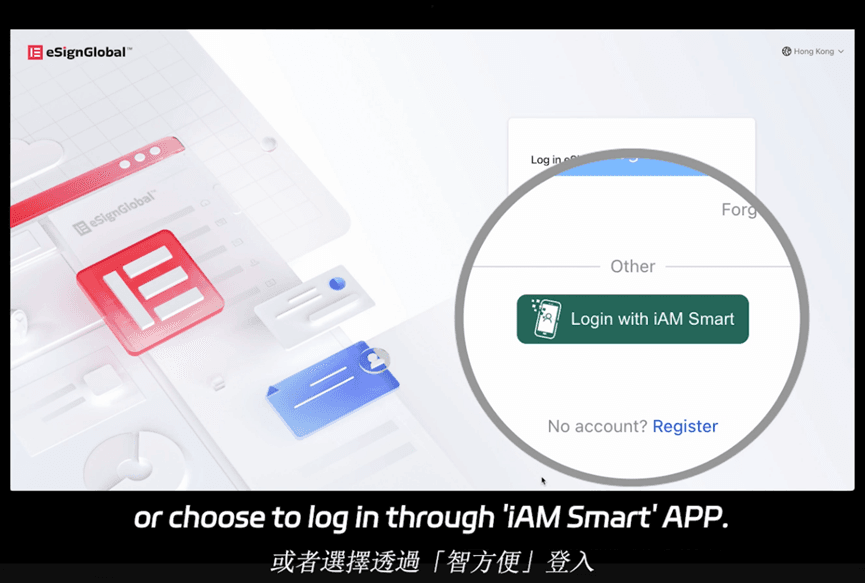
For businesses in APAC seeking a DocuSign alternative, eSignGlobal stands out with its tailored advantages. Pricing is more accessible, with the Essential plan at just $16.6 per month (annual billing), allowing up to 100 documents for electronic signature, unlimited user seats, and verification via access codes—all on a compliant foundation that prioritizes data security without excessive add-ons. This setup delivers exceptional value, often 20–30% cheaper than competitors for similar volumes, while integrating seamlessly with regional systems like Hong Kong's IAm Smart for identity verification and Singapore's Singpass for secure auth. In latency-prone areas, eSignGlobal's optimized infrastructure ensures faster document handling, reducing workflow friction for cross-border teams.
Final Thoughts: Choosing the Right eSignature Partner
While DocuSign's API per-transaction model offers robust tools for global operations, its costs and regional limitations prompt many to explore alternatives. For APAC-focused businesses prioritizing compliance, speed, and affordability, eSignGlobal emerges as a strong, regionally attuned choice—bridging the gaps left by giants like DocuSign and Adobe Sign. Evaluate based on your transaction volume and geography to optimize ROI.
FAQs
