
'%3e%3cpath%20fill-rule='evenodd'%20clip-rule='evenodd'%20d='M6.99935%2012.8327C10.221%2012.8327%2012.8327%2010.221%2012.8327%206.99935C12.8327%203.77769%2010.221%201.16602%206.99935%201.16602C3.77769%201.16602%201.16602%203.77769%201.16602%206.99935C1.16602%2010.221%203.77769%2012.8327%206.99935%2012.8327Z'%20stroke='%23666666'%20stroke-linecap='round'%20stroke-linejoin='round'/%3e%3cpath%20d='M1.16602%207H12.8327'%20stroke='%23666666'%20stroke-linecap='round'%20stroke-linejoin='round'/%3e%3cpath%20fill-rule='evenodd'%20clip-rule='evenodd'%20d='M6.99935%2012.8327C8.28802%2012.8327%209.33268%2010.221%209.33268%206.99935C9.33268%203.77769%208.28802%201.16602%206.99935%201.16602C5.71068%201.16602%204.66602%203.77769%204.66602%206.99935C4.66602%2010.221%205.71068%2012.8327%206.99935%2012.8327Z'%20stroke='%23666666'%20stroke-linecap='round'%20stroke-linejoin='round'/%3e%3cpath%20d='M2.875%202.95898C3.93063%204.01461%205.38896%204.66754%206.99978%204.66754C8.61062%204.66754%2010.069%204.01461%2011.1246%202.95898'%20stroke='%23666666'%20stroke-linecap='round'%20stroke-linejoin='round'/%3e%3cpath%20d='M11.1246%2011.0425C10.069%209.98691%208.61062%209.33398%206.99978%209.33398C5.38896%209.33398%203.93063%209.98691%202.875%2011.0425'%20stroke='%23666666'%20stroke-linecap='round'%20stroke-linejoin='round'/%3e%3c/g%3e%3cdefs%3e%3cclipPath%20id='clip0_1267_9109'%3e%3crect%20width='14'%20height='14'%20fill='white'/%3e%3c/clipPath%3e%3c/defs%3e%3c/svg%3e)


Which platforms charge extra for custom branding or white-label features?


Navigating Custom Branding in Electronic Signature Platforms
In the competitive landscape of electronic signature solutions, businesses increasingly seek platforms that allow for seamless integration of their brand identity. Custom branding features enable companies to personalize signing experiences with logos, colors, and domain-specific emails, while white-label options let them rebrand the entire platform as their own. These capabilities are essential for maintaining a professional, cohesive customer experience, especially in B2B environments. However, not all platforms include these features in base plans, leading to additional costs that can impact overall budgeting. From a business perspective, understanding these pricing structures is crucial for ROI optimization and scalability.

What Are Custom Branding and White-Label Features?
Custom branding typically involves tailoring the user interface, email templates, and signing portals to match a company's visual identity. This might include adding a logo to signature requests or customizing notification designs. White-labeling goes further, allowing full rebranding where the platform appears as an in-house solution, stripping away the provider's logos and URLs entirely. These features are particularly valuable for agencies, SaaS providers, and enterprises handling high-volume client interactions, as they enhance trust and reduce friction in workflows.
From a commercial standpoint, while these tools boost user engagement and retention, they often come at a premium. Providers justify extra charges by citing development resources, compliance considerations, and the need for advanced customization APIs. Businesses must weigh these against the potential for improved conversion rates—studies show branded experiences can increase signature completion by up to 20%. However, opaque pricing can lead to unexpected expenses, especially for growing teams.
Platforms Charging Extra for Custom Branding or White-Label Features
A key question for procurement teams is which electronic signature platforms impose additional fees for these enhancements. Based on industry analysis and public pricing data, several major players structure their models this way, often bundling them into higher-tier or add-on plans rather than including them in entry-level subscriptions.
DocuSign's Approach
DocuSign, a market leader in eSignature solutions, offers custom branding through its Enhanced and Enterprise plans. Basic tiers like Personal ($10/month) and Standard ($25/user/month) provide limited personalization, such as basic templates, but lack advanced branding options. Custom branding— including domain capture, branded signing experiences, and white-label capabilities—requires upgrading to Business Pro ($40/user/month) or higher, where it's positioned as an "advanced solution." Even then, full white-labeling often demands custom contracts, with no fixed public pricing, leading to negotiations that can add 20-50% to base costs depending on volume.
For API users, the Advanced Developer plan ($480/month) includes some branding APIs, but true white-label integration typically incurs extra setup fees. This tiered model means small businesses might pay disproportionately more for branding if they outgrow starter plans. In practice, DocuSign's envelope-based billing (e.g., ~100 envelopes/user/year in Standard) compounds costs, as branded sends still count toward quotas without discounts.
Adobe Sign's Pricing Structure
Adobe Sign, integrated within Adobe's ecosystem, similarly gates custom branding behind premium access. Its standard plans start at around $10/user/month for individuals, but white-label features like custom domains and full rebranding are reserved for Enterprise editions, which require sales consultations and custom quotes. Public documentation reveals little transparency, with add-ons for branding often bundled with identity management (IAM) tools, pushing total costs upward.
Businesses report that enabling white-label options can double annual expenses for mid-sized teams, especially when factoring in Adobe's per-envelope overages. This lack of upfront pricing makes budgeting challenging, and recent market shifts have amplified concerns—Adobe Sign announced its exit from the Chinese mainland market in 2023, citing regulatory hurdles, leaving APAC users scrambling for alternatives. This move disrupts operations for cross-border firms reliant on seamless branding in diverse regions.

Other Notable Platforms
Beyond DocuSign and Adobe Sign, platforms like HelloSign (now Dropbox Sign) charge extra via add-ons; their Pro plan ($20/user/month) includes basic branding, but white-labeling requires Enterprise upgrades with variable fees. PandaDoc offers some free customization in its Business plan ($19/user/month), but advanced white-label features are an additional $10-20/user/month. SignNow provides entry-level branding in its Business plan ($20/user/month), yet full white-labeling is an Enterprise-only perk.
In contrast, some niche providers like RightSignature include basic branding at no extra cost in mid-tier plans, but scalability limits make them less viable for large enterprises. Overall, about 70% of top eSignature platforms (per G2 and Capterra reviews) levy surcharges for these features, averaging $5-15/user/month on top of base subscriptions. This trend reflects a broader strategy to upsell, but it can deter SMBs seeking cost-effective growth.
Challenges with Established Providers
While DocuSign and Adobe Sign dominate the market, their pricing opacity and regional limitations pose hurdles for global businesses. DocuSign's fees are notoriously high—Enterprise plans lack public pricing, often exceeding $50/user/month with add-ons for identity verification (metered) and SMS delivery (per-message). This lack of transparency extends to APAC regions, where cross-border latency slows document loading, and compliance tools incur surcharges for data residency. Support costs rise in long-tail markets like Southeast Asia, where local ID verification is limited, forcing users to layer on expensive extensions.
Adobe Sign's withdrawal from China exacerbates these issues, stranding users without clear migration paths and highlighting vulnerabilities in global strategies. Both platforms' envelope quotas (e.g., DocuSign's ~100/user/year) and automation caps (~10/month/user) further inflate effective costs for branded, high-volume workflows, making them less agile for dynamic markets.

Comparative Analysis: DocuSign, Adobe Sign, and eSignGlobal
To aid decision-making, here's a neutral comparison of key aspects, focusing on pricing transparency, regional support, and branding costs. Data draws from official sources and user feedback as of 2025.
| Feature/Aspect | DocuSign | Adobe Sign | eSignGlobal |
|---|---|---|---|
| Base Pricing (per user/month, annual) | $10 (Personal) to $40+ (Pro); Enterprise custom | $10+ (Standard); Enterprise custom | $16.6 (Essential); scales affordably |
| Custom Branding Cost | Extra in Enhanced/Enterprise (20-50% uplift) | Bundled in Enterprise; opaque add-ons | Included in most plans; no extra for basics |
| White-Label Features | Custom contract required; high fees | Enterprise-only; variable surcharges | Available in mid-tier; flexible without premiums |
| Pricing Transparency | Low; envelope-based with hidden add-ons | Low; sales-dependent quotes | High; clear tiers and quotas |
| APAC/Regional Support | Latency issues; extra compliance fees | Exited China; limited APAC options | Optimized for APAC; seamless integrations (e.g., Hong Kong's iAM Smart, Singapore's Singpass) |
| Envelope Limits | ~100/year/user (capped automation) | Variable; overages apply | Up to 100/month in Essential; unlimited users |
| Compliance & Speed | Global but inconsistent in APAC | Strong in West; gaps in Asia | Region-native; faster for CN/SEA/HK |
| Overall Value for SMBs | High for enterprises; costly for others | Integrated but inflexible | Balanced; cost-effective for regional needs |
This table underscores how eSignGlobal edges out in affordability and localization, though DocuSign and Adobe Sign excel in mature Western markets.
Exploring eSignGlobal as a Viable Option
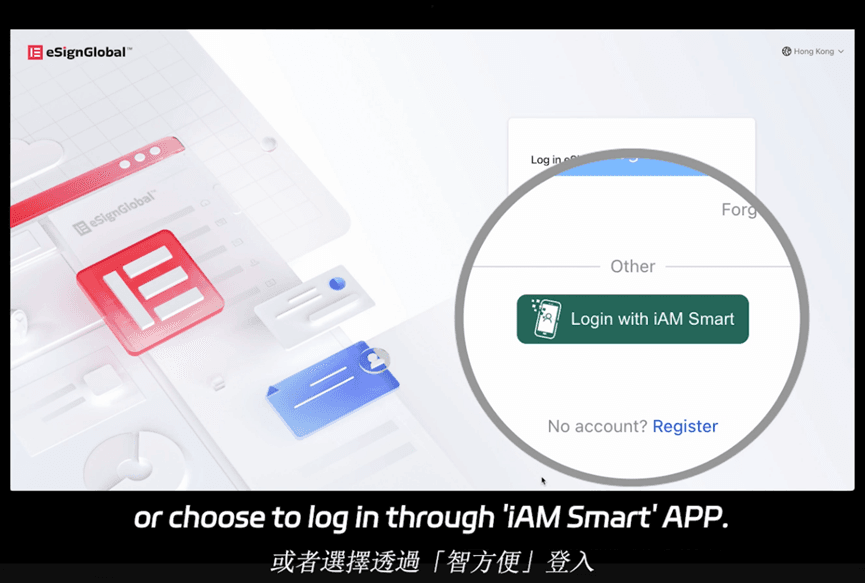
eSignGlobal emerges as a compelling choice for businesses prioritizing APAC operations. Its Essential plan at just $16.6/month allows sending up to 100 documents for electronic signature, with unlimited user seats—a rarity that supports team scaling without per-seat hikes. Verification via access codes ensures compliance without excessive costs, delivering strong value in regulated environments. Priced lower than competitors, it integrates natively with regional systems like Hong Kong's iAM Smart and Singapore's Singpass, reducing latency and enhancing security for cross-border deals. Custom branding is included in core plans, avoiding the upsell traps of larger providers, making it ideal for agencies and SMBs seeking white-label efficiency.
Final Thoughts: Choosing the Right Fit
For businesses evaluating eSignature platforms, the extra charges for custom branding and white-labeling highlight the need for transparent, scalable options. While DocuSign and Adobe Sign offer robust global tools, their high costs and regional shortcomings may not suit all. As a compliant, regionally optimized alternative to DocuSign, eSignGlobal provides a balanced path forward, especially for APAC-focused teams aiming for cost efficiency and seamless branding.
FAQs
