
'%3e%3cpath%20fill-rule='evenodd'%20clip-rule='evenodd'%20d='M6.99935%2012.8327C10.221%2012.8327%2012.8327%2010.221%2012.8327%206.99935C12.8327%203.77769%2010.221%201.16602%206.99935%201.16602C3.77769%201.16602%201.16602%203.77769%201.16602%206.99935C1.16602%2010.221%203.77769%2012.8327%206.99935%2012.8327Z'%20stroke='%23666666'%20stroke-linecap='round'%20stroke-linejoin='round'/%3e%3cpath%20d='M1.16602%207H12.8327'%20stroke='%23666666'%20stroke-linecap='round'%20stroke-linejoin='round'/%3e%3cpath%20fill-rule='evenodd'%20clip-rule='evenodd'%20d='M6.99935%2012.8327C8.28802%2012.8327%209.33268%2010.221%209.33268%206.99935C9.33268%203.77769%208.28802%201.16602%206.99935%201.16602C5.71068%201.16602%204.66602%203.77769%204.66602%206.99935C4.66602%2010.221%205.71068%2012.8327%206.99935%2012.8327Z'%20stroke='%23666666'%20stroke-linecap='round'%20stroke-linejoin='round'/%3e%3cpath%20d='M2.875%202.95898C3.93063%204.01461%205.38896%204.66754%206.99978%204.66754C8.61062%204.66754%2010.069%204.01461%2011.1246%202.95898'%20stroke='%23666666'%20stroke-linecap='round'%20stroke-linejoin='round'/%3e%3cpath%20d='M11.1246%2011.0425C10.069%209.98691%208.61062%209.33398%206.99978%209.33398C5.38896%209.33398%203.93063%209.98691%202.875%2011.0425'%20stroke='%23666666'%20stroke-linecap='round'%20stroke-linejoin='round'/%3e%3c/g%3e%3cdefs%3e%3cclipPath%20id='clip0_1267_9109'%3e%3crect%20width='14'%20height='14'%20fill='white'/%3e%3c/clipPath%3e%3c/defs%3e%3c/svg%3e)


cpas docusign cost


Understanding DocuSign Costs for CPAs
Certified Public Accountants (CPAs) often rely on electronic signature platforms like DocuSign to streamline client agreements, tax forms, audit reports, and compliance documents. In a field where accuracy, security, and efficiency are paramount, understanding the true cost of DocuSign is essential for budgeting and selecting the right tools. This article breaks down DocuSign's pricing structure, tailored to the needs of accounting professionals, while exploring factors like envelope limits, add-ons, and API integrations that can impact overall expenses.
DocuSign's pricing is tiered based on user needs, with plans billed annually for the best rates. For a solo CPA or small firm, the Personal plan starts at $120 per year ($10 per month), offering up to 5 envelopes per month. An envelope typically includes one or more documents sent for signature, which suits occasional use like basic client consents. However, for CPAs handling higher volumes—such as quarterly filings or multi-party audits—the Standard plan at $300 per user per year ($25 per month) becomes more practical. This includes team collaboration features, comments, reminders, and templates, with approximately 100 envelopes per user annually on an annual plan.
As practices grow, the Business Pro plan at $480 per user per year ($40 per month) adds advanced capabilities like web forms, conditional logic, signer attachments, payment collection, and bulk send—crucial for CPAs managing bulk tax extensions or client onboarding. Envelope limits remain around 100 per user per year, but automation sends (e.g., bulk or API-triggered) are capped at about 10 per month per user, even in higher tiers. For larger firms, Advanced Solutions (Enterprise) pricing is custom, often starting in the thousands per year based on seats, volume, and compliance needs like SSO and advanced audits.
Add-ons can significantly inflate costs for CPAs. Identity Verification (IDV), vital for secure client authentication in financial documents, is metered and adds extra fees for features like biometric checks or SMS authentication. SMS or WhatsApp delivery incurs per-message charges, varying by region. API plans for integrating DocuSign into accounting software (e.g., QuickBooks or custom workflows) start at $600 per year for the Starter tier (40 envelopes/month), scaling to $5,760 for Advanced (100 envelopes/month plus bulk API). Enterprise API is bespoke, ideal for firms automating high-volume e-signatures.
For CPAs in the US, where most operate, electronic signatures are governed by the ESIGN Act of 2000 and UETA (Uniform Electronic Transactions Act), adopted in 49 states. These laws ensure e-signatures have the same legal validity as wet signatures for most contracts, including tax and financial documents, provided intent to sign is clear and records are retained. However, exceptions apply to wills, family law, and certain UCC transactions. CPAs must ensure platforms like DocuSign comply with IRS e-signature guidelines for forms like 8879, emphasizing audit trails and tamper-evident seals. In cross-border scenarios, additional regulations like GDPR in Europe or PIPEDA in Canada may require enhanced data residency options, potentially increasing DocuSign costs through compliance add-ons.
Overall, a mid-sized CPA firm with 5 users on Business Pro might face $2,400 annually in base fees, plus $500–$1,000 for add-ons and overages if exceeding envelope limits. API usage could add another $3,000+, making total costs $5,000–$10,000 yearly. Businesses should monitor usage via DocuSign's dashboard to avoid surprise fees, and annual billing saves up to 17% compared to monthly.

Comparing DocuSign with Key Competitors
While DocuSign dominates the e-signature market, alternatives like Adobe Sign, eSignGlobal, and others offer varying value propositions for CPAs seeking cost efficiency, compliance, or regional focus. Below, we compare these platforms across pricing, features, and suitability for accounting workflows, drawing from 2025 public data.
DocuSign Overview
DocuSign excels in global reach and integrations, with robust templates and audit logs tailored for CPA compliance. Its strength lies in enterprise-scale features, but pricing can escalate quickly for volume users. For CPAs, the platform's payment collection and bulk send streamline billing and client batches effectively.

Adobe Sign Overview
Adobe Sign, part of Adobe Document Cloud, integrates seamlessly with PDF tools, making it appealing for CPAs who handle scanned forms or Acrobat workflows. Pricing mirrors DocuSign's structure: Personal at $10/month (5 envelopes), Standard at $25/user/month (up to 100 envelopes/year), and Business at $40/user/month with advanced routing and forms. Enterprise is custom, emphasizing AI-powered form filling and mobile signing. However, add-ons for identity verification and API access (starting at $600/year) can match DocuSign's costs, and it's less flexible for non-Adobe ecosystems. For US CPAs, it complies with ESIGN/UETA, but global support lags in APAC latency.

eSignGlobal Overview
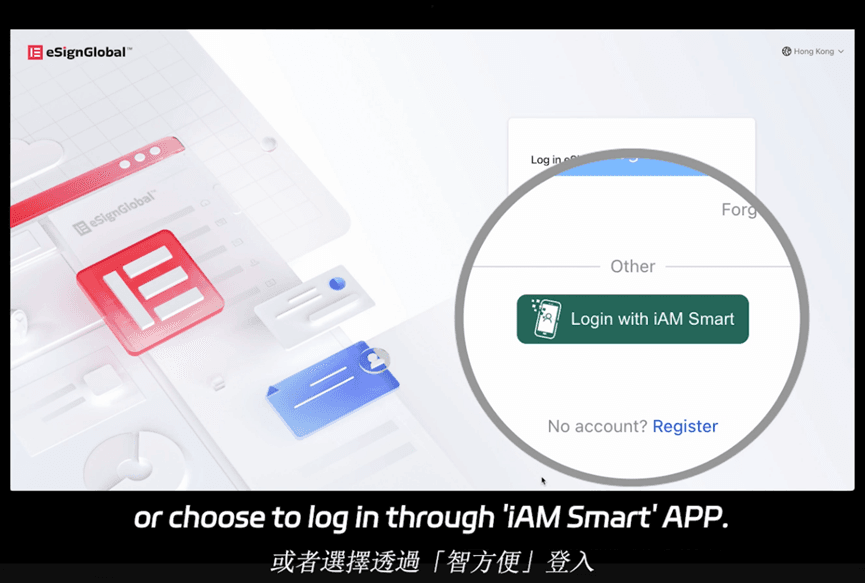
eSignGlobal positions itself as a compliant, cost-effective option, particularly for APAC-focused CPAs dealing with cross-border clients. It supports electronic signatures in over 100 mainstream countries and regions globally, ensuring adherence to local laws like ESIGN in the US, eIDAS in Europe, and regional standards in Asia. In the Asia-Pacific, it holds advantages in speed and integration, such as seamless connectivity with Hong Kong's iAM Smart and Singapore's Singpass for secure authentication—ideal for CPAs serving multinational audits or investments. Pricing is transparent and competitive; the Essential plan costs just $16.60 per month (annual billing), allowing up to 100 documents for signature, unlimited user seats, and verification via access codes. This high value-on-compliance setup often undercuts competitors by 20–30% for similar features, without envelope overage penalties. For detailed plans, visit eSignGlobal's pricing page. CPAs benefit from its regional data centers, reducing latency and compliance surcharges common in global platforms.
Other Competitors: HelloSign and PandaDoc
HelloSign (by Dropbox) offers a user-friendly interface at $15/user/month for Essentials (unlimited envelopes, basic templates), scaling to $25 for Standard with custom branding—suitable for smaller CPA teams but lacking deep API for automation. PandaDoc focuses on proposals with e-signatures, starting at $19/user/month (Pro plan, unlimited docs), emphasizing analytics for sales-heavy accounting firms, though it's pricier for pure compliance needs.
| Feature/Aspect | DocuSign | Adobe Sign | eSignGlobal | HelloSign | PandaDoc |
|---|---|---|---|---|---|
| Starting Price (Annual, per User/Month) | $10 (Personal) | $10 (Personal) | $16.60 (Essential) | $15 (Essentials) | $19 (Pro) |
| Envelope/Document Limit | 5–100/year (tiered) | 5–100/year (tiered) | Up to 100/month (Essential) | Unlimited (Essentials) | Unlimited (Pro) |
| User Seats | 1–50+ (seated) | 1–50+ (seated) | Unlimited | Up to 20 (Standard) | Unlimited teams |
| Key Strengths for CPAs | Bulk send, payments, API | PDF integration, AI forms | APAC compliance, integrations (iAM Smart/Singpass) | Simple UI, Dropbox sync | Proposal analytics, templates |
| Add-Ons (IDV/SMS) | Metered ($0.50+/use) | Metered (similar) | Included in base, low-cost | Basic MFA free | Optional, usage-based |
| Global Compliance | Strong (ESIGN, eIDAS) | Good (ESIGN focus) | 100+ countries, APAC optimized | US/EU primary | Global, but sales-oriented |
| API Pricing | $600+/year | $600+/year | Flexible, included in plans | Basic free tier | $49+/month add-on |
| Best For | Enterprise firms | PDF-heavy workflows | Regional APAC/US hybrid | Small teams | Sales-accounting blend |
| Drawbacks | High overages, caps on automation | Adobe ecosystem lock-in | Less brand recognition | Limited advanced logic | Not pure e-sign focus |
This comparison highlights how eSignGlobal edges out in cost-efficiency and regional compliance without sacrificing core CPA needs like secure verification.
Final Thoughts on E-Signature Choices for CPAs
For CPAs evaluating DocuSign costs against alternatives, the decision hinges on volume, integrations, and geography. While DocuSign provides reliable global standards, its pricing may strain smaller practices. As a neutral alternative emphasizing regional compliance, eSignGlobal offers a strong option for APAC-aligned workflows.
FAQs
