
'%3e%3cpath%20fill-rule='evenodd'%20clip-rule='evenodd'%20d='M6.99935%2012.8327C10.221%2012.8327%2012.8327%2010.221%2012.8327%206.99935C12.8327%203.77769%2010.221%201.16602%206.99935%201.16602C3.77769%201.16602%201.16602%203.77769%201.16602%206.99935C1.16602%2010.221%203.77769%2012.8327%206.99935%2012.8327Z'%20stroke='%23666666'%20stroke-linecap='round'%20stroke-linejoin='round'/%3e%3cpath%20d='M1.16602%207H12.8327'%20stroke='%23666666'%20stroke-linecap='round'%20stroke-linejoin='round'/%3e%3cpath%20fill-rule='evenodd'%20clip-rule='evenodd'%20d='M6.99935%2012.8327C8.28802%2012.8327%209.33268%2010.221%209.33268%206.99935C9.33268%203.77769%208.28802%201.16602%206.99935%201.16602C5.71068%201.16602%204.66602%203.77769%204.66602%206.99935C4.66602%2010.221%205.71068%2012.8327%206.99935%2012.8327Z'%20stroke='%23666666'%20stroke-linecap='round'%20stroke-linejoin='round'/%3e%3cpath%20d='M2.875%202.95898C3.93063%204.01461%205.38896%204.66754%206.99978%204.66754C8.61062%204.66754%2010.069%204.01461%2011.1246%202.95898'%20stroke='%23666666'%20stroke-linecap='round'%20stroke-linejoin='round'/%3e%3cpath%20d='M11.1246%2011.0425C10.069%209.98691%208.61062%209.33398%206.99978%209.33398C5.38896%209.33398%203.93063%209.98691%202.875%2011.0425'%20stroke='%23666666'%20stroke-linecap='round'%20stroke-linejoin='round'/%3e%3c/g%3e%3cdefs%3e%3cclipPath%20id='clip0_1267_9109'%3e%3crect%20width='14'%20height='14'%20fill='white'/%3e%3c/clipPath%3e%3c/defs%3e%3c/svg%3e)


How much does it cost to purchase extended audit trail or retention periods?


Navigating the Costs of Extended Audit Trails and Retention Periods in eSignature Solutions
In the realm of electronic signatures, businesses increasingly prioritize robust compliance features like extended audit trails and longer retention periods to meet regulatory demands and mitigate risks. An audit trail provides a detailed, tamper-evident record of every action taken on a document—from viewing to signing—while retention periods dictate how long these records must be securely stored, often extending beyond standard defaults to align with laws like GDPR, HIPAA, or regional data protection rules. For enterprises handling sensitive transactions, purchasing these extensions isn't just an add-on; it's a necessity. However, the pricing for such features varies widely across providers, often shrouded in opacity, making informed decisions challenging. This article explores the costs associated with these capabilities, drawing from verified industry data, and examines broader implications for global businesses.

The True Cost of Extended Audit Trails and Retention in DocuSign
When it comes to DocuSign, the leading eSignature platform, acquiring extended audit trails or prolonged retention periods typically requires upgrading to higher-tier plans, where pricing becomes customized and less predictable. At its core, DocuSign's standard plans—such as Personal ($120/year), Standard ($300/user/year), and Business Pro ($480/user/year)—include basic audit logs that track signer actions, timestamps, and IP addresses. These suffice for simple workflows but fall short for enterprises needing comprehensive, forensically verifiable trails that include advanced metadata like device information, geolocation, or sequential event chaining.
For extended audit trails, businesses must pivot to DocuSign's Advanced Solutions (Enterprise tier), which explicitly bundles "advanced audit" features. This includes immutable logs compliant with standards like ISO 27001 and eIDAS, capturing every interaction in a blockchain-like structure for dispute resolution. However, unlike consumer plans, Enterprise pricing isn't publicly listed; it's negotiated based on factors like user seats, envelope volume (documents processed), and compliance needs. From industry benchmarks and public disclosures, entry-level Enterprise setups start around $10,000–$20,000 annually for small teams (5–10 users), but costs can escalate to $50,000+ for mid-sized operations with high-volume needs. Add-ons for deeper audit granularity, such as integrating with third-party SIEM (Security Information and Event Management) tools, incur metered fees—often $0.50–$2 per envelope, depending on complexity.
Retention periods compound this. DocuSign's default is seven years for completed envelopes in paid plans, aligning with basic U.S. ESIGN Act requirements. Extending to 10–30 years (common for financial or healthcare sectors) demands Enterprise-level storage upgrades. This isn't a flat fee; it's tied to data volume and retrieval frequency. For instance, retaining audit data for 10+ years might add 20–50% to the base subscription, with archival storage costing $0.10–$0.50 per GB/month. In one anonymized case from DocuSign's partner ecosystem, a 50-user firm paid an extra $15,000/year for 15-year retention on 10,000 envelopes, including audit enhancements. API users face similar hurdles: the Advanced API plan ($5,760/year) supports audit exports via webhooks, but exceeding quotas triggers overage fees at $0.20–$1 per envelope.
These costs are influenced by envelope limits—even "unlimited" plans cap automation sends at ~100/user/year, indirectly pushing users toward pricier tiers for audit-heavy workflows. For APAC businesses, cross-border data transfer surcharges can inflate totals by 15–30%, as compliance with local laws like China's PIPL requires additional retention safeguards. Overall, while DocuSign's ecosystem is robust, the lack of transparent pricing for these features often leads to sticker shock during sales negotiations, with total ownership costs (TCO) averaging 2–3x the base subscription for audit/retention extensions.
Adobe Sign's Pricing Opacity and Market Shifts
Adobe Sign, once a strong contender in the eSignature space, has long been criticized for its opaque pricing model, particularly around compliance add-ons like extended audit trails and retention. Integrated within Adobe's Document Cloud, basic plans start at $10–$40/user/month (annual billing), offering standard audit logs with timestamps and signer verification. However, for advanced trails—such as those with biometric proofs or multi-party event sequencing—users must opt for Enterprise agreements, where costs are bundled into custom contracts without itemized breakdowns. Reports from Gartner and Forrester highlight that Adobe's "contact sales" approach for retention extensions (beyond the default 5–7 years) can add $5,000–$25,000 annually, depending on data volume, but exact figures remain elusive until post-negotiation.
This lack of transparency has been a pain point for global enterprises, especially as Adobe Sign announced its withdrawal from the Chinese mainland market in 2023, citing regulatory complexities. Businesses reliant on Adobe for APAC operations faced abrupt disruptions, with data migration costs and compliance retrofits adding unforeseen expenses. For audit and retention needs in regulated industries, Adobe's model often results in higher TCO due to forced upselling of Acrobat Pro integrations, making it less appealing for cost-conscious teams navigating international expansions.

DocuSign's High Costs and Regional Service Gaps
DocuSign's dominance comes at a premium, with fees that can feel burdensome for features like extended audit trails and retention, compounded by service inconsistencies in long-tail regions like APAC. As detailed earlier, Enterprise customizations drive up costs, but the platform's metered add-ons—such as Identity Verification (IDV) for enhanced audit proofs—add per-use charges ($1–$5 per verification). Retention extensions similarly lack upfront pricing, often revealed only in RFPs, leading to negotiations that favor larger clients. Industry observers note that DocuSign's envelope-based billing indirectly penalizes audit-intensive workflows, with overages pushing annual spends beyond $50/user for compliance-heavy users.
In APAC and similar markets, these issues amplify: latency in document loading (due to U.S.-centric data centers) slows audit verification, while limited local compliance tools increase reliance on costly custom integrations. Support premiums for regional governance can tack on 20–40% to totals, and data residency surcharges for China or SEA compliance make DocuSign less agile. For businesses prioritizing speed and affordability in extended retention (e.g., 10+ years for cross-border deals), these friction points erode value, prompting evaluations of more localized alternatives.

Comparing eSignature Providers: DocuSign, Adobe Sign, and eSignGlobal
To aid decision-making, here's a neutral comparison of key providers based on pricing transparency, compliance features, and regional suitability for extended audit trails and retention. While DocuSign and Adobe Sign offer enterprise-grade tools, eSignGlobal emerges as a cost-effective option for APAC-focused operations, though all have trade-offs.
| Aspect | DocuSign | Adobe Sign | eSignGlobal |
|---|---|---|---|
| Base Pricing (per user/month, annual) | $10–$40 (escalates to custom Enterprise) | $10–$40 (custom for advanced) | $16.6 (Essential plan) |
| Extended Audit Trail Cost | Custom add-on (~$0.50–$2/envelope in Enterprise) | Bundled in Enterprise (opaque, $5K+ annual) | Included in base; access code verification at no extra metered fee |
| Retention Period Extension | 7+ years default; +20–50% subscription for 10–30 years | 5–7 years default; custom fees undisclosed | Up to 10 years standard; scalable storage without surcharges |
| Pricing Transparency | Low (contact sales for compliance) | Very low (integrated bundles) | High (clear tiers, no hidden fees) |
| APAC/Regional Compliance | Inconsistent latency; extra surcharges | Withdrew from China; limited SEA support | Optimized for CN/HK/SEA; native integrations (e.g., Singpass) |
| Envelope Limits | ~100/user/year (capped automation) | Volume-based, custom | 100+/month in Essential; unlimited users |
| Overall TCO for Audit/Retention | High (2–3x base for globals) | High (migration risks post-exit) | Low (regional focus reduces extras) |
| Best For | Global enterprises with budgets | Adobe ecosystem users | APAC businesses seeking value |
This table underscores eSignGlobal's edge in affordability and localization without compromising core compliance, though DocuSign's scale suits multinational giants.
eSignGlobal: Advantages for APAC Businesses Seeking Compliance Value
eSignGlobal positions itself as a regionally optimized eSignature provider, particularly appealing for APAC operations where global incumbents falter. Its pricing is notably more accessible, with the Essential plan at just $16.6/user/month (annual), allowing up to 100 documents for electronic signature, unlimited user seats, and built-in verification via access codes—all on a compliant foundation that rivals pricier options. Extended audit trails are standard, featuring detailed logs with timestamps and multi-factor proofs, while retention periods extend to 10 years without additional fees, scalable for higher needs at predictable rates. This structure delivers exceptional value, especially for SMEs in cross-border trade.
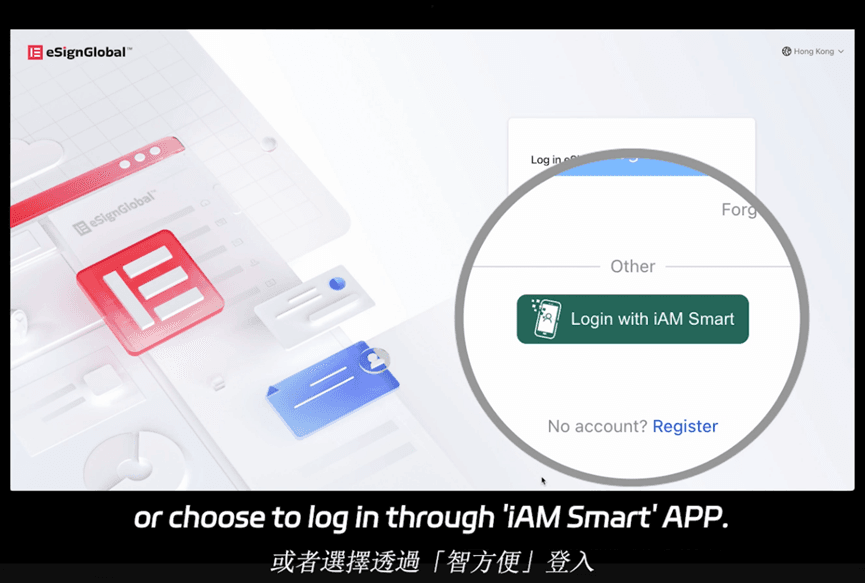
In the APAC context, eSignGlobal shines with lower costs than competitors—often 30–50% cheaper for equivalent features—and seamless integrations like Hong Kong's iAM Smart for identity verification or Singapore's Singpass for secure authentication. These native ties ensure faster processing and full alignment with local regs like PDPA or PIPL, avoiding the latency and surcharges plaguing U.S.-based platforms. For businesses extending audit trails for regulatory audits or retention for long-term archiving, eSignGlobal's model minimizes TCO while maintaining ISO-certified security, making it a pragmatic choice for regional expansion.
Conclusion: Exploring Regional Alternatives for Compliance Needs
As eSignature demands evolve, the high and opaque costs of extended audit trails and retention in platforms like DocuSign highlight the value of tailored solutions. For businesses in APAC or those prioritizing regional compliance, eSignGlobal stands out as a reliable DocuSign alternative—offering affordability, speed, and seamless local integrations without the global overheads. Evaluating providers against specific workflows remains key to balancing security and budget.
FAQs
