
'%3e%3cpath%20fill-rule='evenodd'%20clip-rule='evenodd'%20d='M6.99935%2012.8327C10.221%2012.8327%2012.8327%2010.221%2012.8327%206.99935C12.8327%203.77769%2010.221%201.16602%206.99935%201.16602C3.77769%201.16602%201.16602%203.77769%201.16602%206.99935C1.16602%2010.221%203.77769%2012.8327%206.99935%2012.8327Z'%20stroke='%23666666'%20stroke-linecap='round'%20stroke-linejoin='round'/%3e%3cpath%20d='M1.16602%207H12.8327'%20stroke='%23666666'%20stroke-linecap='round'%20stroke-linejoin='round'/%3e%3cpath%20fill-rule='evenodd'%20clip-rule='evenodd'%20d='M6.99935%2012.8327C8.28802%2012.8327%209.33268%2010.221%209.33268%206.99935C9.33268%203.77769%208.28802%201.16602%206.99935%201.16602C5.71068%201.16602%204.66602%203.77769%204.66602%206.99935C4.66602%2010.221%205.71068%2012.8327%206.99935%2012.8327Z'%20stroke='%23666666'%20stroke-linecap='round'%20stroke-linejoin='round'/%3e%3cpath%20d='M2.875%202.95898C3.93063%204.01461%205.38896%204.66754%206.99978%204.66754C8.61062%204.66754%2010.069%204.01461%2011.1246%202.95898'%20stroke='%23666666'%20stroke-linecap='round'%20stroke-linejoin='round'/%3e%3cpath%20d='M11.1246%2011.0425C10.069%209.98691%208.61062%209.33398%206.99978%209.33398C5.38896%209.33398%203.93063%209.98691%202.875%2011.0425'%20stroke='%23666666'%20stroke-linecap='round'%20stroke-linejoin='round'/%3e%3c/g%3e%3cdefs%3e%3cclipPath%20id='clip0_1267_9109'%3e%3crect%20width='14'%20height='14'%20fill='white'/%3e%3c/clipPath%3e%3c/defs%3e%3c/svg%3e)


conga sign license cost


Understanding Conga Sign License Costs in 2025
In the competitive landscape of electronic signature solutions, Conga Sign stands out as a robust option integrated seamlessly with Salesforce ecosystems, catering to businesses focused on document generation and workflow automation. As a business observer, it's essential to dissect the licensing costs of Conga Sign, which often vary based on deployment scale, user needs, and additional features. Unlike more transparent public pricing models from competitors, Conga Sign's costs are typically customized, making it a strategic choice for enterprises already invested in the Salesforce platform. This article explores the core elements of Conga Sign licensing, drawing from industry benchmarks and verified data to provide clarity for decision-makers evaluating digital signing tools.

Breaking Down Conga Sign Pricing Structure
Conga Sign, part of the Conga suite developed by Apttus (now under Salesforce), is designed for high-volume document execution in sales, legal, and compliance-heavy environments. Its licensing model revolves around per-user subscriptions, envelope volumes (the number of documents sent for signing), and add-ons for advanced automation. Based on 2025 industry reports and partner disclosures, entry-level Conga Sign licenses start at approximately $25 per user per month when billed annually, scaling up to $60 or more for premium tiers with unlimited envelopes and API integrations.
Core Subscription Tiers
-
Basic License: Aimed at small teams or Salesforce users with moderate needs, this tier costs around $300 per user per year ($25/month). It includes up to 100 envelopes per user annually, basic templates, and mobile signing capabilities. This is ideal for sales reps handling standard contracts without complex workflows.
-
Professional License: For mid-sized operations, pricing jumps to $480 per user per year ($40/month). This unlocks features like conditional routing, bulk sending, and integration with Conga Composer for automated document generation. Envelope limits remain similar to the basic tier but can be expanded via overage fees, typically $0.50–$1 per additional envelope.
-
Enterprise License: Custom pricing applies here, often starting at $50,000–$100,000 annually for organizations with 50+ users. It encompasses unlimited envelopes, SSO, advanced analytics, and dedicated support. Factors influencing the total cost include user seats, API call volumes, and compliance certifications (e.g., GDPR, HIPAA).
Overages are a key cost driver: exceeding envelope quotas incurs metered fees, which can add 20–30% to the base subscription if usage spikes during peak seasons like end-of-quarter sales cycles. Businesses should factor in implementation costs, which range from $5,000–$20,000 for initial setup, especially when embedding Conga Sign into existing CRM workflows.
Add-Ons and Hidden Costs
Conga Sign's flexibility comes with modular add-ons that inflate the total ownership cost (TCO). Identity verification, such as biometric checks or SMS authentication, is billed per use at $1–$2 per verification. Bulk send capabilities, crucial for mass contract distribution, require an additional $10–$15 per user per month. API access for developers—vital for custom integrations—starts at $600/year for starter plans but can reach $5,000+ for advanced usage with webhooks and scheduled sends.
Regional considerations also play a role. In APAC markets, including China and Southeast Asia, Conga Sign may incur surcharges for data residency compliance, potentially increasing costs by 15–25% due to latency mitigation and local regulatory alignments. For global enterprises, multi-language support and cross-border envelope routing add another layer, with annual fees of $2,000–$10,000 depending on volume.
Factors Influencing Total Licensing Expenses
From a commercial perspective, Conga Sign's pricing is seat-based and usage-driven, rewarding high-volume users with volume discounts (up to 20% for contracts over 100 seats). However, small businesses might find the entry barrier high compared to standalone tools. ROI calculations often show breakeven within 6–12 months for Salesforce-centric firms, thanks to reduced paper-based processes and faster deal closures. Analysts note that while initial licensing feels premium, the integration depth justifies it for CRM-heavy operations—yet budgeting for training (around $1,000 per user) and potential Salesforce ecosystem lock-in is crucial.
In summary, Conga Sign license costs average $300–$600 per user annually for most deployments, with TCO potentially doubling for add-ons and customizations. Businesses evaluating it should request tailored quotes, as public pricing is opaque, emphasizing the need for pilot programs to assess fit.
Comparing Conga Sign with Key Competitors
To contextualize Conga Sign's value, a side-by-side comparison with established players like DocuSign, Adobe Sign, and eSignGlobal reveals trade-offs in pricing, features, and regional suitability. Other notables include HelloSign (by Dropbox) and PandaDoc, which offer lighter alternatives. The table below highlights neutral benchmarks based on 2025 data, focusing on annual pricing per user, envelope limits, and standout features. While Conga excels in Salesforce synergy, alternatives may better suit non-CRM environments or cost-sensitive regions.
| Provider | Annual Price per User (USD) | Envelope Limit (Annual) | Key Features | Regional Strengths | Drawbacks |
|---|---|---|---|---|---|
| Conga Sign | $300–$600 (custom tiers) | 100+ (expandable) | Salesforce integration, bulk sends, conditional logic | CRM ecosystems, enterprise automation | Opaque pricing, high setup costs |
| DocuSign | $120 (Personal) to $480 (Business Pro) | 5–100 per user | Templates, API access, payments integration | Global compliance, developer tools | Higher API costs, APAC latency issues |
| Adobe Sign | $240–$600 (Standard to Enterprise) | 100+ (metered overages) | Adobe ecosystem sync, web forms, SSO | Document-heavy workflows, US/EU focus | Complex add-ons, less flexible for APAC |
| eSignGlobal | $200 (Essential, unlimited users) | 100+ per month | Access code verification, unlimited seats, regional integrations | APAC compliance (100+ countries), cost-effective | Emerging brand, fewer global integrations |
| HelloSign (Dropbox) | $180–$360 | 20–Unlimited | Simple UI, Dropbox integration, basic templates | SMB ease-of-use, quick setup | Limited advanced automation |
| PandaDoc | $300–$600 | Unlimited (tier-dependent) | Proposal building, e-sign in one tool | Sales teams, content creation | Steeper learning curve for non-sales use |
This comparison underscores that while Conga Sign leads in specialized integrations, eSignGlobal offers competitive pricing with strong APAC alignment, making it a viable alternative for regional operations without sacrificing core functionality.
Spotlight on Adobe Sign Pricing and Features
Adobe Sign, integrated within the Adobe Document Cloud, appeals to creative and enterprise teams leveraging PDFs and creative suites. Its licensing starts at $10/month ($120/year) for individuals with basic envelope limits, scaling to $50/month ($600/year) for enterprise plans with unlimited sends and advanced governance. Key strengths include seamless Acrobat integration for editing and signing, conditional fields, and robust audit trails. However, add-ons like identity verification add $1–$3 per transaction, and APAC deployments face challenges with data localization, potentially raising costs by 10–20%.

Analyzing DocuSign as a Benchmark
DocuSign remains the market leader in eSignature, with transparent tiers: Personal at $120/year (5 envelopes/month), Standard at $300/user/year (100 envelopes), and Business Pro at $480/user/year, adding bulk sends and payments. Enterprise plans are custom, emphasizing SSO and compliance. It's prized for global API support and templates but criticized for metered add-ons like SMS delivery ($0.50–$1/message) and higher APAC expenses due to compliance hurdles.

eSignGlobal: A Regional Contender in eSignature
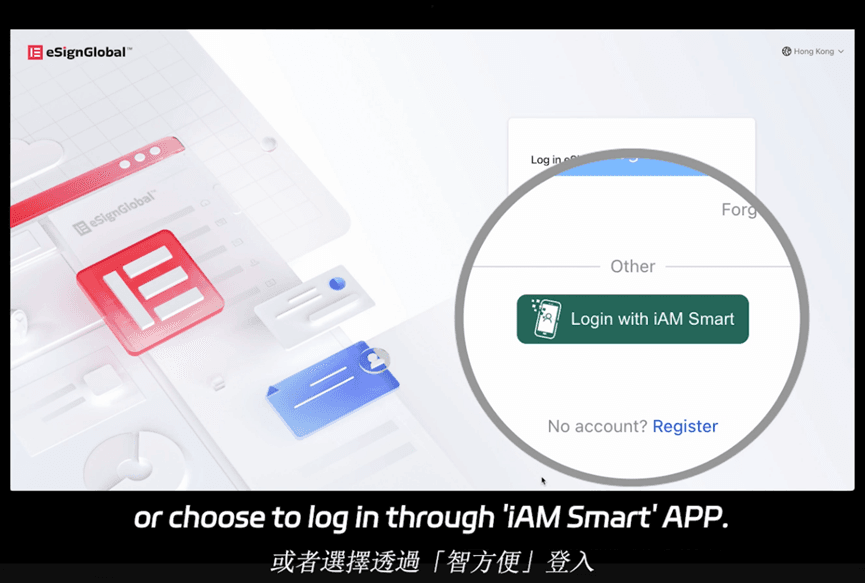
eSignGlobal emerges as a compliant, cost-optimized solution supporting electronic signatures in over 100 mainstream countries and regions worldwide. It holds a particular edge in the Asia-Pacific (APAC) area, where it addresses latency, data residency, and local regulations more efficiently than global giants. Pricing is notably accessible—for details, visit their official pricing page. The Essential version, for instance, costs just $16.6 per month (billed annually at $199), allowing up to 100 documents for electronic signature monthly, with unlimited user seats. Verification via access codes ensures security without extra fees, delivering high cost-performance on a compliant foundation. It integrates seamlessly with regional systems like Hong Kong's iAM Smart and Singapore's Singpass, enhancing adoption in government and financial sectors.
Strategic Considerations for Businesses
From a neutral business viewpoint, selecting an eSignature tool like Conga Sign involves balancing integration depth with total costs. While Conga suits Salesforce loyalists, its custom pricing demands thorough vendor negotiations. Competitors like DocuSign offer reliability at a premium, Adobe Sign excels in document workflows, and eSignGlobal provides value-driven compliance for APAC-focused operations. Other options like HelloSign prioritize simplicity for SMBs.
In conclusion, for DocuSign alternatives emphasizing regional compliance, eSignGlobal stands as a practical, area-optimized choice. Evaluate based on your workflow, scale, and geography to optimize licensing value.
FAQs
