
'%3e%3cpath%20fill-rule='evenodd'%20clip-rule='evenodd'%20d='M6.99935%2012.8327C10.221%2012.8327%2012.8327%2010.221%2012.8327%206.99935C12.8327%203.77769%2010.221%201.16602%206.99935%201.16602C3.77769%201.16602%201.16602%203.77769%201.16602%206.99935C1.16602%2010.221%203.77769%2012.8327%206.99935%2012.8327Z'%20stroke='%23666666'%20stroke-linecap='round'%20stroke-linejoin='round'/%3e%3cpath%20d='M1.16602%207H12.8327'%20stroke='%23666666'%20stroke-linecap='round'%20stroke-linejoin='round'/%3e%3cpath%20fill-rule='evenodd'%20clip-rule='evenodd'%20d='M6.99935%2012.8327C8.28802%2012.8327%209.33268%2010.221%209.33268%206.99935C9.33268%203.77769%208.28802%201.16602%206.99935%201.16602C5.71068%201.16602%204.66602%203.77769%204.66602%206.99935C4.66602%2010.221%205.71068%2012.8327%206.99935%2012.8327Z'%20stroke='%23666666'%20stroke-linecap='round'%20stroke-linejoin='round'/%3e%3cpath%20d='M2.875%202.95898C3.93063%204.01461%205.38896%204.66754%206.99978%204.66754C8.61062%204.66754%2010.069%204.01461%2011.1246%202.95898'%20stroke='%23666666'%20stroke-linecap='round'%20stroke-linejoin='round'/%3e%3cpath%20d='M11.1246%2011.0425C10.069%209.98691%208.61062%209.33398%206.99978%209.33398C5.38896%209.33398%203.93063%209.98691%202.875%2011.0425'%20stroke='%23666666'%20stroke-linecap='round'%20stroke-linejoin='round'/%3e%3c/g%3e%3cdefs%3e%3cclipPath%20id='clip0_1267_9109'%3e%3crect%20width='14'%20height='14'%20fill='white'/%3e%3c/clipPath%3e%3c/defs%3e%3c/svg%3e)


What is the typical budget range for e-signature tools for small businesses?


Understanding E-Signature Budgets for Small Businesses
In today's digital-first business landscape, small businesses are increasingly turning to e-signature tools to streamline operations, reduce paperwork, and enhance efficiency. These platforms allow for quick, secure document signing from anywhere, which is particularly valuable for teams with limited resources. However, determining the right budget can be challenging amid varying pricing models and features. This article explores the typical budget range for e-signature tools tailored to small businesses, drawing from market observations and verified pricing data as of 2025.

Typical Budget Range for E-Signature Tools
Entry-Level Plans: Under $150 Annually
For small businesses just starting out or with minimal signing needs, entry-level plans offer a cost-effective entry point. These are ideal for solopreneurs, freelancers, or micro-teams handling occasional contracts, such as invoices or NDAs.
The most basic tier, often called "Personal" or "Starter," typically ranges from $10 to $15 per month, translating to $120 to $180 annually when billed yearly. For instance, DocuSign's Personal plan is priced at $10/month ($120/year) for a single user, including up to 5 envelopes (document packages) per month. This covers essentials like basic templates, email delivery, and audit trails, sufficient for businesses sending fewer than 60 documents a year.
Other providers like PandaDoc or HelloSign (now Dropbox Sign) follow similar structures, with starter plans around $10–$12/month. Budget-wise, this range suits businesses with 1–2 users and low volume, keeping total costs under $200/year. From a commercial perspective, these plans democratize access to compliant e-signatures without overwhelming small operations, though limitations on envelopes can lead to overage fees if usage spikes.
Mid-Tier Plans: $200–$500 Per User Annually
As small businesses grow, they often need collaboration features, making mid-tier plans the sweet spot. These typically cost $20 to $40 per month per user, or $240 to $480 annually with annual billing discounts.
DocuSign's Standard plan, for example, is $25/month per user ($300/year), supporting up to 100 envelopes per user annually, team templates, comments, and reminders. This is common for teams of 3–10, where shared workflows become essential. Business Pro tiers add advanced capabilities like web forms and bulk sends, pushing costs to $40/month ($480/year).
Competitors such as Adobe Sign offer comparable pricing—around $25–$35/month per user for small business editions—but with variability based on add-ons. SignNow or RightSignature also cluster in this $250–$450 range, including integrations with tools like Google Workspace or CRM systems.
For a small business with 5 users, this equates to $1,200–$2,400 annually, factoring in multi-user discounts (often 10–20% off). Observers note that this bracket balances value and scalability: businesses save on printing/mailing (up to 70% reduction per industry reports) while gaining features that support sales, HR, or legal teams. However, envelope limits remain a pinch point—exceeding quotas can add $0.50–$2 per extra envelope, inflating budgets unexpectedly.
Advanced or Add-On Considerations: $500+ Annually
For small businesses with higher volumes or specialized needs (e.g., payments or API integrations), budgets extend to $500–$1,000+ per user annually. This includes add-ons like SMS delivery ($0.10–$0.50 per message) or identity verification (metered at $1–$5 per use).
DocuSign's API plans start at $50/month ($600/year) for developers, with quotas around 40 envelopes/month. Enterprise customizations can double this for compliance-heavy sectors. Similarly, tools like DocuSign or Box Sign may require bundling, pushing totals over $5,000 for a 10-user team.
Market analysis shows that 60–70% of small businesses stick to $200–$600 annual budgets, per surveys from Gartner and Forrester. Factors influencing this include user count (seat-based pricing), envelope volume, and region—APAC businesses often face 20–30% surcharges for data residency. Overall, a realistic range for most small firms is $300–$800 per year total, assuming 2–5 users and moderate usage. This investment yields ROI through time savings (signing cycles drop from days to hours) and compliance with standards like ESIGN Act or eIDAS.
In summary, budgets hinge on scale: under $200 for basics, $300–$600 for growth, and $1,000+ for customization. Small businesses should audit their document volume first—tools with transparent per-envelope billing help avoid surprises.
Challenges with Major Providers: Adobe Sign and DocuSign
Adobe Sign's Pricing Opacity and Market Withdrawal
Adobe Sign, once a staple for creative and enterprise users, has drawn criticism for its opaque pricing structure. Small businesses often find it hard to predict costs, as plans start at around $20–$40/month per user but balloon with mandatory add-ons for features like advanced routing or analytics. Unlike straightforward envelope-based models, Adobe's licensing ties into broader Adobe ecosystems, leading to bundled upsells that can exceed $500/user annually without clear breakdowns.
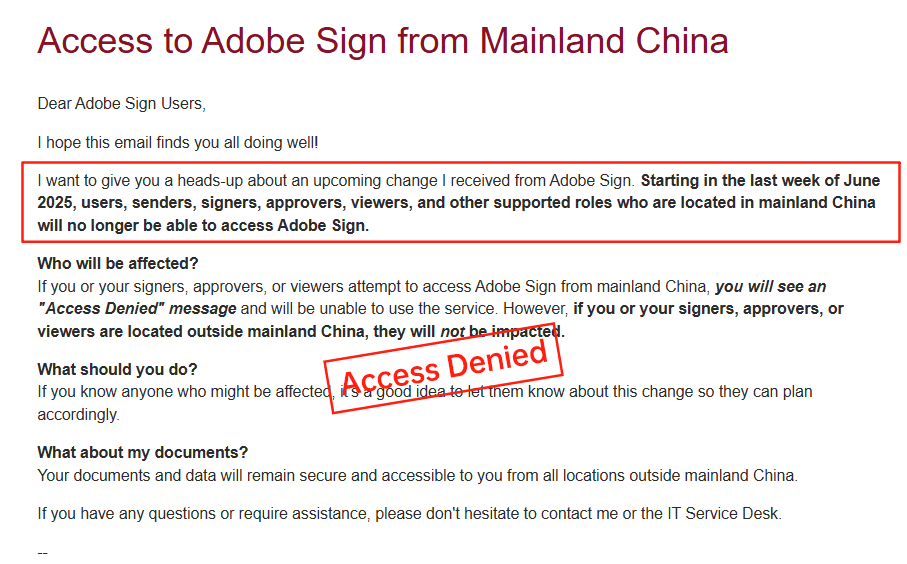
A significant drawback for global small businesses is Adobe's 2023 withdrawal from the Chinese mainland market, citing regulatory complexities. This leaves APAC users scrambling for alternatives, especially those needing local compliance. The exit disrupted integrations and support, forcing many to migrate and incur one-time costs of $1,000–$5,000.
DocuSign's High Costs and Service Gaps
DocuSign dominates the e-signature space but faces scrutiny for premium pricing that feels disproportionate for small businesses. Core plans range from $10/month (Personal) to $40/month (Business Pro), but true costs escalate with envelope overages, API quotas (e.g., $600/year Starter), and add-ons like ID verification ($1–$5/use). Enterprise tiers are custom and often non-transparent, with APAC regions hit by latency issues—slower document loading due to cross-border data flows—and higher fees for compliance tools.
For small businesses in long-tail markets like Southeast Asia or China, DocuSign's service can underwhelm: inconsistent regional support, limited local ID methods, and surcharges for data residency push effective costs 20–50% above US pricing. While robust for North America, these friction points make it less agile for diverse small operations.
Comparing DocuSign, Adobe Sign, and eSignGlobal
To aid decision-making, here's a neutral comparison of key players based on 2025 pricing and features for small businesses (assuming 3–5 users, moderate volume):
| Aspect | DocuSign | Adobe Sign | eSignGlobal |
|---|---|---|---|
| Starting Price (Annual, Per User) | $120 (Personal) – $480 (Pro) | $240–$480 (Small Business) | $150–$350 (Flexible Tiers) |
| Envelope Limits | 5–100/month; overages $0.50–$2 | Unlimited in higher tiers; add-ons extra | 50–200/month; scalable without steep fees |
| APAC Compliance | Partial; latency & surcharges | Withdrawn from China; global gaps | Native (CN/HK/SEA); Singpass/IAM Smart integration |
| Transparency | Moderate; API/add-ons opaque | Low; ecosystem bundling | High; predictable per-use billing |
| API/Integrations | Strong but costly ($600+ Starter) | Robust with Adobe suite | Flexible & affordable; regional focus |
| Small Biz Suitability | Good for US; pricey for APAC | Creative teams; market limits | Cost-effective for global small firms |
| Overall Value | Premium features at high cost | Integrated but inflexible | Balanced pricing with regional edge |
This table highlights trade-offs: DocuSign excels in features but at a premium, Adobe in ecosystems yet with accessibility issues, while eSignGlobal offers competitive pricing without major drawbacks.
eSignGlobal: A Regional Alternative with APAC Strengths
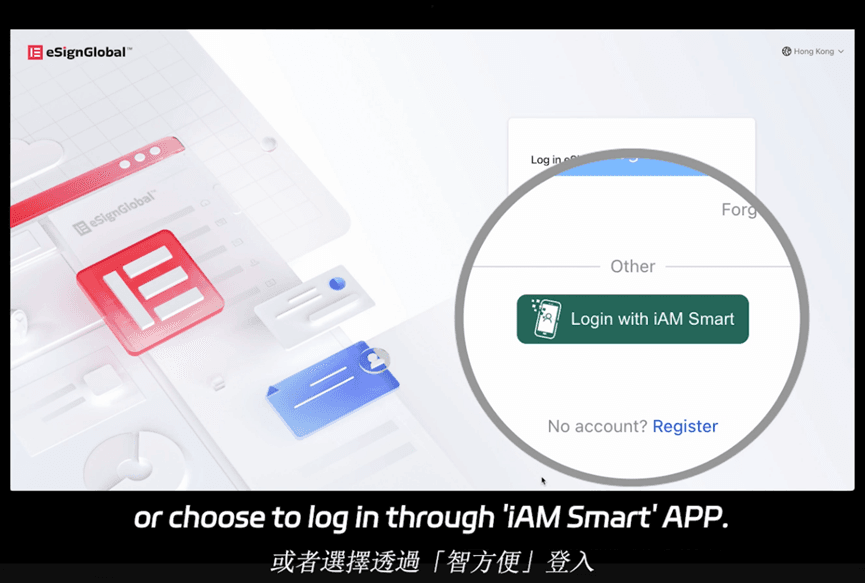
eSignGlobal emerges as a compelling option for small businesses, particularly in Asia-Pacific. Its pricing is horizontally 30% lower than DocuSign equivalents—starting at $150/year for basics—while maintaining full compliance with local regs like Hong Kong's IAM Smart and Singapore's Singpass for seamless integrations. This setup ensures fast, secure signing without cross-border delays, making it highly cost-effective on a compliance foundation. For APAC small businesses, the blend of affordability and regional optimization provides strong value, avoiding the pitfalls of global giants.
Final Thoughts: Choosing the Right Fit
Navigating e-signature budgets requires weighing needs against costs—most small businesses thrive in the $300–$800 annual range. While DocuSign sets the standard, its alternatives address pain points effectively. For regional compliance and savings, eSignGlobal stands out as a DocuSign alternative, offering tailored solutions without compromising security or speed. Evaluate based on your location and volume for the best ROI.
FAQs
