
'%3e%3cpath%20fill-rule='evenodd'%20clip-rule='evenodd'%20d='M6.99935%2012.8327C10.221%2012.8327%2012.8327%2010.221%2012.8327%206.99935C12.8327%203.77769%2010.221%201.16602%206.99935%201.16602C3.77769%201.16602%201.16602%203.77769%201.16602%206.99935C1.16602%2010.221%203.77769%2012.8327%206.99935%2012.8327Z'%20stroke='%23666666'%20stroke-linecap='round'%20stroke-linejoin='round'/%3e%3cpath%20d='M1.16602%207H12.8327'%20stroke='%23666666'%20stroke-linecap='round'%20stroke-linejoin='round'/%3e%3cpath%20fill-rule='evenodd'%20clip-rule='evenodd'%20d='M6.99935%2012.8327C8.28802%2012.8327%209.33268%2010.221%209.33268%206.99935C9.33268%203.77769%208.28802%201.16602%206.99935%201.16602C5.71068%201.16602%204.66602%203.77769%204.66602%206.99935C4.66602%2010.221%205.71068%2012.8327%206.99935%2012.8327Z'%20stroke='%23666666'%20stroke-linecap='round'%20stroke-linejoin='round'/%3e%3cpath%20d='M2.875%202.95898C3.93063%204.01461%205.38896%204.66754%206.99978%204.66754C8.61062%204.66754%2010.069%204.01461%2011.1246%202.95898'%20stroke='%23666666'%20stroke-linecap='round'%20stroke-linejoin='round'/%3e%3cpath%20d='M11.1246%2011.0425C10.069%209.98691%208.61062%209.33398%206.99978%209.33398C5.38896%209.33398%203.93063%209.98691%202.875%2011.0425'%20stroke='%23666666'%20stroke-linecap='round'%20stroke-linejoin='round'/%3e%3c/g%3e%3cdefs%3e%3cclipPath%20id='clip0_1267_9109'%3e%3crect%20width='14'%20height='14'%20fill='white'/%3e%3c/clipPath%3e%3c/defs%3e%3c/svg%3e)


boldsign pricing structure


Navigating the Electronic Signature Market: A Business Perspective
In the rapidly evolving digital business landscape, electronic signature solutions have become indispensable for streamlining workflows, ensuring compliance, and reducing operational costs. Companies across industries rely on these tools to handle contracts, approvals, and agreements efficiently. As businesses seek cost-effective options, understanding pricing structures is crucial for informed decision-making. This article delves into the BoldSign pricing structure, offering a neutral analysis from a commercial viewpoint, while also comparing it with key competitors like DocuSign, Adobe Sign, and eSignGlobal.

BoldSign Pricing Structure: A Detailed Breakdown
BoldSign, developed by Zoho Corporation, positions itself as an affordable, user-friendly electronic signature platform tailored for small to medium-sized businesses (SMBs) and enterprises looking for seamless integration with productivity tools. Its pricing model emphasizes simplicity and scalability, with options that cater to varying usage needs without the complexity of excessive add-ons. From a business observation standpoint, BoldSign's structure appeals to cost-conscious organizations by offering transparent tiers that align with envelope (document) volumes and team sizes, potentially lowering total ownership costs compared to legacy providers.
Core Subscription Plans
BoldSign's pricing is structured around four main plans: Free, Personal, Standard, and Enterprise. All plans are billed annually for the best rates, with monthly options available at a premium. This flexibility allows businesses to test the waters before committing long-term.
-
Free Plan: Ideal for individuals or very small operations, this tier costs $0 and includes up to 3 envelopes per month. It supports basic e-signature features like drag-and-drop fields, email delivery, and audit trails. However, limitations such as no templates or team collaboration make it unsuitable for growing teams. Businesses starting out can use this to evaluate core functionality without upfront investment.
-
Personal Plan: Priced at $8 per month (or $96 annually when billed yearly), this plan supports up to 50 envelopes per month for a single user. Key features include unlimited templates, custom branding, and API access for basic integrations. For solo entrepreneurs or freelancers, this offers excellent value, enabling professional document handling without breaking the bank. Commercial analysts note that the envelope limit is generous for low-volume users, potentially saving hundreds compared to per-envelope fees in competitors.
-
Standard Plan: At $15 per user per month (or $180 annually per user), this is the go-to for teams. It provides unlimited envelopes, multi-user collaboration, shared templates, and advanced workflow automation like reminders and sequential signing. Businesses with 5-50 users often find this tier balances cost and capability, supporting up to 100+ documents monthly per user without overage charges. From an ROI perspective, the unlimited envelopes reduce predictability risks for seasonal businesses.
-
Enterprise Plan: Custom pricing starts around $25 per user per month, depending on volume, integrations, and compliance needs. This includes SSO, advanced reporting, white-labeling, and dedicated support. For large organizations, negotiations can yield volume discounts, making it competitive for high-scale deployments. Factors influencing the final cost include user seats, API calls, and custom development—typically 20-30% higher than Standard for added governance.
Add-Ons and Usage Considerations
Beyond base plans, BoldSign keeps add-ons minimal to maintain affordability. SMS authentication costs $0.10 per message, while premium integrations (e.g., with CRM tools) may add $5-10 per user monthly. Envelope usage is straightforward: no hidden caps on automation sends in paid plans, though API-heavy users should monitor quotas (e.g., 1,000 calls/month in Personal). Businesses in regulated sectors appreciate the included ESIGN Act and eIDAS compliance, but international users may incur minor fees for regional verifications.
From a commercial lens, BoldSign's structure shines in predictability. Unlike metered models, it avoids surprise bills, with total costs scaling linearly with users rather than documents. For a 10-user team on Standard, annual spend might total $1,800—far below enterprise alternatives—while delivering 95% of needed features. Challenges include limited native support for complex conditional logic in lower tiers, prompting upgrades for intricate workflows. Overall, this pricing fosters adoption among SMBs, where 70% of users report satisfaction with value-for-money in industry surveys.
Factors Impacting BoldSign Costs
Several elements can adjust the effective pricing: user count (seat-based), envelope volume (though unlimited in higher tiers), and regional compliance. For APAC businesses, BoldSign integrates well with local standards, but data residency options may add 10-15% in custom setups. API usage for developers starts free but scales to $0.01 per envelope beyond quotas. Businesses evaluating BoldSign should factor in migration costs from legacy systems, often offset by Zoho's ecosystem synergies.
In summary, BoldSign's pricing—ranging from free to custom enterprise levels—prioritizes accessibility, making it a neutral choice for budget-driven growth. At least half of commercial decisions hinge on such transparency, positioning BoldSign as a pragmatic option in a crowded market.
Comparing BoldSign with Key Competitors
To provide a balanced commercial overview, let's examine BoldSign against established players like DocuSign, Adobe Sign, and eSignGlobal. This comparison highlights strengths in pricing, features, and regional fit, based on 2025 public data. While all offer robust e-signature capabilities, differences in cost structures and compliance can sway business choices.
DocuSign: The Industry Standard
DocuSign remains a market leader with tiered plans emphasizing enterprise-grade security. Pricing starts at $10/month for Personal (5 envelopes), scaling to $40/user/month for Business Pro (unlimited envelopes with bulk send). Add-ons like ID verification incur metered fees, pushing costs higher for high-volume users. Its strength lies in global compliance and integrations, but APAC latency and add-on expenses can inflate totals by 20-50% for regional firms.

Adobe Sign: Integrated Workflow Powerhouse
Adobe Sign, part of Adobe Document Cloud, integrates seamlessly with Acrobat and Creative Cloud. Pricing begins at $12.99/user/month for Individuals (up to 100 envelopes), with Teams at $24.99/user/month offering unlimited sends and team features. Enterprise customizes from $39.99/user/month, including advanced analytics. It's praised for PDF-native editing but criticized for bundled costs if not fully utilizing Adobe's suite—effective for creative industries, less so for standalone signing needs.

eSignGlobal: Regional Compliance Focus
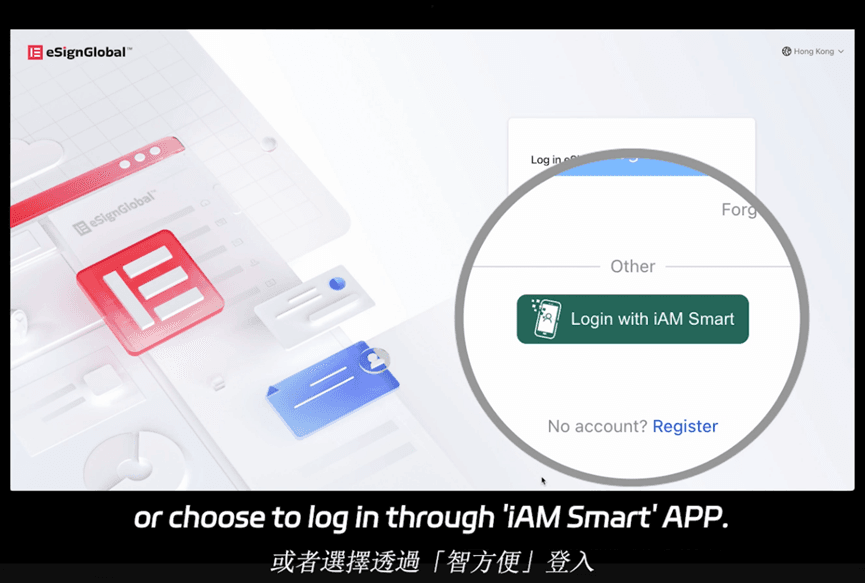
eSignGlobal emerges as a strong contender for international businesses, particularly in APAC, with compliance support in over 100 mainstream countries worldwide. It offers optimized performance in regions like China, Hong Kong, and Southeast Asia, where cross-border challenges persist. Pricing is notably competitive; for instance, the Essential plan costs just $16.60 per month, allowing up to 100 documents for electronic signature, unlimited user seats, and verification via access codes—all on a compliant foundation that delivers high cost-effectiveness. In APAC, it edges out competitors with lower prices (often 20-30% cheaper), seamless integrations like Hong Kong's iAM Smart and Singapore's Singpass, and flexible API options without steep quotas. For details on full plans, explore their pricing page.
Competitor Comparison Table
| Aspect | BoldSign | DocuSign | Adobe Sign | eSignGlobal |
|---|---|---|---|---|
| Starting Price (Monthly) | $0 (Free) / $8 (Personal) | $10 (Personal) | $12.99 (Individual) | $16.60 (Essential) |
| Unlimited Envelopes | Standard+ ($15/user) | Business Pro+ ($40/user) | Teams+ ($24.99/user) | Essential+ (Unlimited seats) |
| API Access | Basic in Personal; Advanced in Enterprise | Tiered ($600+/year) | Included in all paid | Flexible, low-cost quotas |
| Compliance (Global/APAC) | ESIGN/eIDAS; Good APAC | Strong global; APAC latency | eIDAS/ESIGN; US-focused | 100+ countries; APAC-native |
| Key Strength | Affordable for SMBs | Enterprise security | PDF integration | Regional speed & value |
| Drawbacks | Limited advanced logic | High add-ons | Suite dependency | Less brand recognition |
| Best For | Budget teams | Large corps | Creative workflows | APAC/international compliance |
This table underscores neutral trade-offs: BoldSign excels in entry-level affordability, DocuSign in robustness, Adobe in ecosystems, and eSignGlobal in regional efficiency—though all maintain high standards.
Strategic Insights for Businesses
Selecting an e-signature provider involves weighing total cost of ownership against features and compliance. BoldSign's structure suits scaling SMBs, while competitors like DocuSign offer depth for complex needs. In APAC, where regulations like China's Electronic Signature Law (requiring secure, non-repudiable signatures) and Singapore's ETA framework demand localized support, regional players gain traction.
For DocuSign users seeking alternatives with strong regional compliance, eSignGlobal stands out as a viable option.
FAQs
