
'%3e%3cpath%20fill-rule='evenodd'%20clip-rule='evenodd'%20d='M6.99935%2012.8327C10.221%2012.8327%2012.8327%2010.221%2012.8327%206.99935C12.8327%203.77769%2010.221%201.16602%206.99935%201.16602C3.77769%201.16602%201.16602%203.77769%201.16602%206.99935C1.16602%2010.221%203.77769%2012.8327%206.99935%2012.8327Z'%20stroke='%23666666'%20stroke-linecap='round'%20stroke-linejoin='round'/%3e%3cpath%20d='M1.16602%207H12.8327'%20stroke='%23666666'%20stroke-linecap='round'%20stroke-linejoin='round'/%3e%3cpath%20fill-rule='evenodd'%20clip-rule='evenodd'%20d='M6.99935%2012.8327C8.28802%2012.8327%209.33268%2010.221%209.33268%206.99935C9.33268%203.77769%208.28802%201.16602%206.99935%201.16602C5.71068%201.16602%204.66602%203.77769%204.66602%206.99935C4.66602%2010.221%205.71068%2012.8327%206.99935%2012.8327Z'%20stroke='%23666666'%20stroke-linecap='round'%20stroke-linejoin='round'/%3e%3cpath%20d='M2.875%202.95898C3.93063%204.01461%205.38896%204.66754%206.99978%204.66754C8.61062%204.66754%2010.069%204.01461%2011.1246%202.95898'%20stroke='%23666666'%20stroke-linecap='round'%20stroke-linejoin='round'/%3e%3cpath%20d='M11.1246%2011.0425C10.069%209.98691%208.61062%209.33398%206.99978%209.33398C5.38896%209.33398%203.93063%209.98691%202.875%2011.0425'%20stroke='%23666666'%20stroke-linecap='round'%20stroke-linejoin='round'/%3e%3c/g%3e%3cdefs%3e%3cclipPath%20id='clip0_1267_9109'%3e%3crect%20width='14'%20height='14'%20fill='white'/%3e%3c/clipPath%3e%3c/defs%3e%3c/svg%3e)


blueink pricing for notary


Understanding Blueink's Pricing for Notary Services
In the evolving landscape of digital notarization, businesses and individuals increasingly seek efficient, compliant solutions for remote online notarization (RON). Blueink, a versatile e-signature platform, has positioned itself as a key player by integrating notary features that streamline legal validations without the need for in-person meetings. This article delves into Blueink's pricing structure specifically for notary services, offering a neutral commercial perspective on its value proposition, limitations, and how it stacks up in a competitive market.
What is Blueink and Its Notary Capabilities?
Blueink provides a cloud-based platform for electronic signatures and notarizations, emphasizing ease of use for small to medium enterprises (SMEs) and legal professionals. Its notary services enable remote online notarization, where users can verify identities, record audio-visual sessions, and apply digital seals compliant with standards like those from the U.S. states adopting RON laws (e.g., Florida, Texas, and Virginia). Key features include tamper-evident seals, audit trails, and integration with video conferencing tools, making it suitable for real estate closings, affidavits, and power of attorney documents.
From a business standpoint, Blueink's notary pricing is designed to be accessible yet scalable, avoiding the steep enterprise costs seen in larger platforms. This approach appeals to freelancers, law firms, and remote teams looking to digitize notary processes amid rising demand post-pandemic.
Blueink's Core Pricing Tiers for Notary Services
Blueink structures its pricing around subscription plans that bundle e-signatures with optional notary add-ons, billed annually for cost savings. As of 2025, the platform offers three main tiers: Basic, Professional, and Enterprise, with notary functionality available as an upgrade.
-
Basic Plan: Priced at $15 per user per month (or $144 annually), this entry-level option includes unlimited e-signatures but limits notary sessions to 5 per month. It's ideal for occasional users, such as independent notaries or small consultancies handling low-volume tasks like simple acknowledgments. Notary features here are basic: identity verification via knowledge-based authentication (KBA) and email/SMS OTP, without advanced biometrics.
-
Professional Plan: At $35 per user per month ($336 annually), this tier unlocks up to 50 notary sessions monthly, adding audio-video recording and electronic journals for compliance with RON statutes. Businesses benefit from team collaboration tools, like shared templates for notary workflows, which reduce administrative overhead. This plan suits mid-sized firms, such as title companies or estate planners, where notary volume justifies the investment.
-
Enterprise Plan: Custom pricing starts around $60 per user per month, scaling based on volume (e.g., 200+ sessions). It includes premium features like biometric verification, SSO integration, and dedicated support. For high-stakes industries like finance or healthcare, this ensures adherence to eIDAS or ESIGN Act requirements, with unlimited storage for notary journals.
Add-ons for notary services are metered: Each additional session beyond the plan limit costs $5–$10, depending on complexity (e.g., multi-party notarizations). Identity verification extras, such as ID scanning or liveness detection, add $2–$5 per use. Annual contracts often include discounts of 15–20%, making it economical for predictable notary needs.
Factors Influencing Blueink's Notary Pricing
Pricing transparency is a strength for Blueink, with no hidden fees for core notary tools, unlike some competitors that bundle them opaquely. However, costs can escalate with usage: High-volume users might face overage charges, and international compliance (e.g., for EU eIDAS Level 3) requires custom add-ons, potentially increasing totals by 30%. Regional variations apply; U.S.-focused users enjoy lower rates, while global operations incur surcharges for data residency.
From a commercial observation, Blueink's model promotes adoption among cost-conscious users by starting low and scaling linearly. This contrasts with legacy notary services, reducing per-transaction costs from $25 (traditional in-person) to under $10 digitally. Yet, for enterprises, the lack of unlimited notary quotas in lower tiers could deter large-scale deployment, pushing users toward custom negotiations.
Limitations and Value Assessment for Notary Users
While Blueink excels in user-friendly interfaces—boasting a 4.8/5 rating on G2 for ease of setup—its notary pricing isn't without drawbacks. Session limits reset monthly, which can disrupt workflows for seasonal businesses like tax preparers. Integration with CRM tools (e.g., Salesforce) is robust but requires the Professional tier, adding to effective costs. Compliance coverage is strong in the U.S. but limited in APAC or EU without extras, where local laws demand specific certifications.
Overall, Blueink delivers solid ROI for notary services: A Professional user handling 30 sessions monthly might spend $420 annually, saving hours compared to physical notarizations. For SMEs, it's a pragmatic choice, balancing affordability with reliability in a market projected to grow 25% yearly through 2030.

Comparing Blueink to Key Competitors in e-Signature and Notary Platforms
To contextualize Blueink's notary pricing, it's essential to benchmark against established players. The e-signature market, valued at $4.5 billion in 2024, is dominated by platforms offering notary integrations, but pricing and regional compliance vary widely. Below, we examine DocuSign, Adobe Sign, eSignGlobal, and other notables like Dropbox Sign and PandaDoc, focusing on notary-relevant features.
DocuSign: Enterprise-Focused Powerhouse
DocuSign leads with comprehensive e-signature and notary tools, particularly for U.S. RON compliance. Its pricing starts at $10/month for Personal (limited to basic signatures, no notary), escalating to $40/user/month for Business Pro, which includes notary add-ons like ID verification and bulk sends. Notary sessions are metered at $10–$15 each beyond quotas, with Enterprise plans custom-priced for unlimited access. Strengths include robust APIs and global support, but costs can balloon for high-volume notary use, often exceeding $500/user/year.

Adobe Sign: Integrated Workflow Solution
Adobe Sign, part of Adobe's ecosystem, integrates seamlessly with PDF tools for notary workflows. Pricing begins at $10/user/month for Individuals (e-sign only), with Teams at $25/user/month adding basic notary via add-ons ($5–$10/session). Enterprise tiers ($40+/user/month) offer advanced features like biometric auth and e-journals. It's praised for security (SOC 2 compliant) but criticized for complex setup and higher add-on fees in non-U.S. regions, making it less ideal for budget-conscious notary users.

eSignGlobal: Regional Compliance Specialist
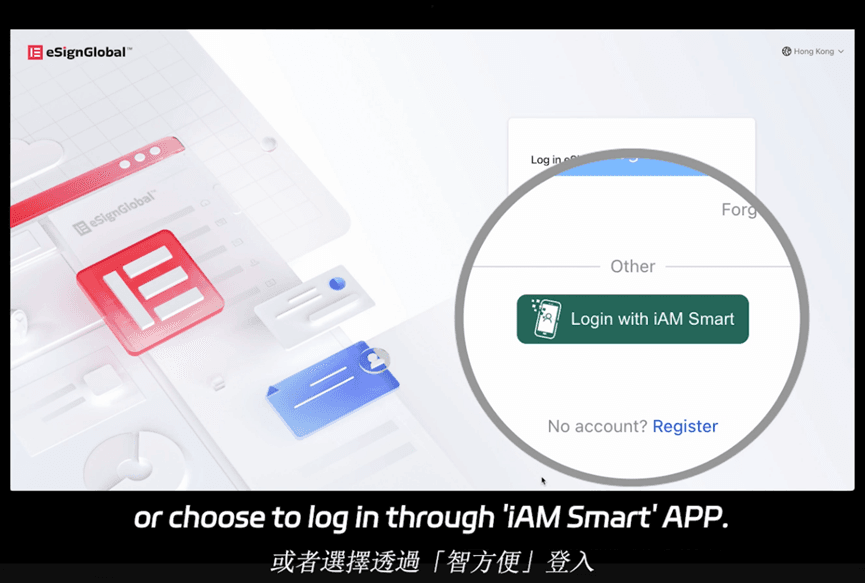
eSignGlobal emerges as a strong contender for APAC and global operations, supporting compliant e-signatures and notary equivalents in over 100 mainstream countries. Its platform optimizes for cross-border needs, with advantages in speed and local integrations. Pricing is competitive: The Essential plan at $16.6/month allows up to 100 documents for electronic signature, unlimited user seats, and verification via access codes—delivering high value on compliance without excessive costs. Higher tiers scale affordably, integrating seamlessly with Hong Kong's iAM Smart and Singapore's Singpass for identity verification. For businesses eyeing APAC expansion, eSignGlobal's regional-native approach often undercuts competitors by 20–30% while maintaining ESIGN and eIDAS alignment. For detailed plans, visit eSignGlobal's pricing page.
Other Competitors: Dropbox Sign and PandaDoc
Dropbox Sign (formerly HelloSign) offers notary at $15/user/month base, with sessions at $8 each—simple but limited in advanced compliance. PandaDoc focuses on sales docs, pricing from $19/user/month, adding notary for $10/session; it's workflow-heavy but notary features lag for legal precision.
| Feature/Platform | Blueink (Notary Focus) | DocuSign | Adobe Sign | eSignGlobal | Dropbox Sign | PandaDoc |
|---|---|---|---|---|---|---|
| Starting Price (Monthly, USD) | $15/user | $10 (no notary) / $40 w/ notary | $10 (no notary) / $25 w/ notary | $16.6 (Essential) | $15/user | $19/user |
| Notary Sessions Included | 5–50 (tiered) | Metered ($10–15 each) | Metered ($5–10 each) | Up to 100 docs (unlimited seats) | Metered ($8 each) | Metered ($10 each) |
| Compliance Coverage | Strong U.S. RON; limited global | Global (ESIGN, eIDAS) | Global w/ add-ons | 100+ countries; APAC optimized | U.S.-centric | Basic U.S./EU |
| Add-Ons for ID Verification | $2–5/use | Included in Pro+ | $5+/use | Access code + local integrations (e.g., iAM Smart) | Basic KBA | Formula-based |
| Best For | SMEs, low-volume notary | Enterprises, high automation | PDF-heavy workflows | APAC/global compliance | Simple integrations | Sales teams |
| Annual Cost for 50 Sessions (Est.) | $400–$600 | $800+ | $600+ | $200–$400 | $500 | $550 |
| Regional Edge | Affordable U.S. scaling | API depth | Adobe ecosystem | Cost-effective APAC | Dropbox sync | Template variety |
This comparison highlights trade-offs: Blueink offers balanced notary pricing for U.S. users, while eSignGlobal shines in affordability and regional compliance without sacrificing features.
Final Thoughts on Choosing a Notary e-Signature Platform
In summary, Blueink's notary pricing provides a cost-effective entry for digital validation needs, particularly for U.S.-based operations seeking simplicity. However, for businesses prioritizing global reach and APAC efficiency, alternatives like eSignGlobal stand out as a neutral, compliant DocuSign substitute, emphasizing regional optimization and value. Evaluate based on your volume, geography, and integrations to ensure the best fit.
FAQs
