
'%3e%3cpath%20fill-rule='evenodd'%20clip-rule='evenodd'%20d='M6.99935%2012.8327C10.221%2012.8327%2012.8327%2010.221%2012.8327%206.99935C12.8327%203.77769%2010.221%201.16602%206.99935%201.16602C3.77769%201.16602%201.16602%203.77769%201.16602%206.99935C1.16602%2010.221%203.77769%2012.8327%206.99935%2012.8327Z'%20stroke='%23666666'%20stroke-linecap='round'%20stroke-linejoin='round'/%3e%3cpath%20d='M1.16602%207H12.8327'%20stroke='%23666666'%20stroke-linecap='round'%20stroke-linejoin='round'/%3e%3cpath%20fill-rule='evenodd'%20clip-rule='evenodd'%20d='M6.99935%2012.8327C8.28802%2012.8327%209.33268%2010.221%209.33268%206.99935C9.33268%203.77769%208.28802%201.16602%206.99935%201.16602C5.71068%201.16602%204.66602%203.77769%204.66602%206.99935C4.66602%2010.221%205.71068%2012.8327%206.99935%2012.8327Z'%20stroke='%23666666'%20stroke-linecap='round'%20stroke-linejoin='round'/%3e%3cpath%20d='M2.875%202.95898C3.93063%204.01461%205.38896%204.66754%206.99978%204.66754C8.61062%204.66754%2010.069%204.01461%2011.1246%202.95898'%20stroke='%23666666'%20stroke-linecap='round'%20stroke-linejoin='round'/%3e%3cpath%20d='M11.1246%2011.0425C10.069%209.98691%208.61062%209.33398%206.99978%209.33398C5.38896%209.33398%203.93063%209.98691%202.875%2011.0425'%20stroke='%23666666'%20stroke-linecap='round'%20stroke-linejoin='round'/%3e%3c/g%3e%3cdefs%3e%3cclipPath%20id='clip0_1267_9109'%3e%3crect%20width='14'%20height='14'%20fill='white'/%3e%3c/clipPath%3e%3c/defs%3e%3c/svg%3e)


is blueink a cheap alternative to docusign


Is Blueink a Cost-Effective Alternative to DocuSign?
In the competitive landscape of electronic signature solutions, businesses often seek affordable options that deliver essential functionality without compromising compliance or usability. DocuSign, a market leader, is renowned for its robust features but comes with a premium price tag. Blueink, on the other hand, positions itself as a streamlined, budget-friendly alternative aimed at small to medium-sized enterprises (SMEs) looking to digitize workflows efficiently. The question arises: can Blueink truly serve as a cheap substitute for DocuSign while meeting similar needs? This analysis draws from verified pricing data and feature comparisons to evaluate their viability side by side.
Blueink's pricing structure is notably more accessible, starting at around $15 per user per month for its basic plan (billed annually), which includes unlimited envelopes, templates, and basic integrations. This contrasts sharply with DocuSign's Personal plan at $10 per month for just five envelopes, or its Standard tier at $25 per user per month for up to 100 envelopes annually. For teams handling moderate volumes, Blueink's unlimited sending capability eliminates overage fees that can quickly inflate DocuSign costs—especially for API-driven automations, where DocuSign caps bulk sends at about 100 per user per year. Blueink also offers a free tier for up to three envelopes monthly, ideal for freelancers or low-volume users testing the waters, something DocuSign lacks entirely.
Functionally, Blueink covers core e-signature needs like multi-signer workflows, mobile signing, and audit trails, aligning with DocuSign's foundational offerings. However, it falls short in advanced areas such as conditional logic fields, payment integrations, or enterprise-grade SSO, which DocuSign's Business Pro plan ($40 per user per month) provides. For instance, businesses requiring bulk sending or web forms might find Blueink's tools sufficient for simpler campaigns but inadequate for complex, high-stakes transactions. Compliance is another differentiator: DocuSign excels in global standards like ESIGN and eIDAS, with add-ons for identity verification (IDV) at extra metered costs. Blueink supports basic U.S. and EU compliance but lacks the depth for regulated industries like finance or healthcare, potentially necessitating additional tools.
From a total cost of ownership perspective, Blueink shines for cost-conscious users. A small team of five on Blueink's starter plan might spend under $900 annually, versus $1,500+ on DocuSign Standard, factoring in envelope limits and add-ons like SMS delivery (per-message fees on both, but Blueink's are generally lower). Scalability is a caveat—Blueink's higher tiers jump to $50+ per user for premium features, narrowing the gap with DocuSign for larger operations. User reviews highlight Blueink's intuitive interface and quick setup, reducing training time compared to DocuSign's steeper learning curve. Yet, for integrations with enterprise systems like Salesforce or Microsoft Dynamics, DocuSign's ecosystem is more mature, potentially saving long-term development costs.
In scenarios like remote sales teams or freelance contract management, Blueink proves a viable cheap alternative, delivering 80-90% of DocuSign's value at half the price. However, for global enterprises with high-volume needs or stringent compliance, the savings might not outweigh DocuSign's reliability. Businesses should audit their envelope volume and feature requirements; tools like Blueink's pricing calculator can help simulate costs against DocuSign's opaque enterprise quotes.

Exploring Key DocuSign Competitors
To contextualize Blueink's positioning, it's essential to examine other prominent alternatives. The e-signature market is diverse, with players varying in focus from global compliance to regional optimization. Below, we overview DocuSign alongside Adobe Sign, eSignGlobal, and select others, emphasizing pricing, features, and suitability.
DocuSign: The Industry Standard
DocuSign remains the go-to for comprehensive e-signature solutions, particularly for U.S.-centric businesses. Its 2025 pricing (annual billing) starts with the Personal plan at $120/year for one user and five envelopes monthly, scaling to Standard ($300/user/year) for team collaboration and templates, and Business Pro ($480/user/year) adding bulk send, web forms, and payments. API plans range from $600/year for starters (40 envelopes/month) to custom enterprise options. While feature-rich, envelope caps (around 100/user/year) and add-ons like IDV (metered) can drive up costs, especially in APAC where latency and compliance surcharges apply. DocuSign's strength lies in integrations and audit trails, but it's often critiqued for premium pricing without unlimited sends.

Adobe Sign: Enterprise-Focused Integration
Adobe Sign, part of Adobe's Document Cloud, appeals to organizations already in the Adobe ecosystem, offering seamless ties to Acrobat and Creative Cloud. Pricing begins at $10/user/month for individuals (limited to basic signing), escalating to $23/user/month for standard teams (unlimited documents, templates) and $40/user/month for business plans with workflow automation and API access. It supports unlimited envelopes in higher tiers but charges extra for advanced analytics or SMS delivery. Compliance is strong across ESIGN, UETA, and GDPR, with robust IDV options. However, its interface can feel clunky for non-Adobe users, and APAC support lags in local integrations, making it less ideal for cross-border operations compared to more agile rivals.

eSignGlobal: Regional Compliance Specialist
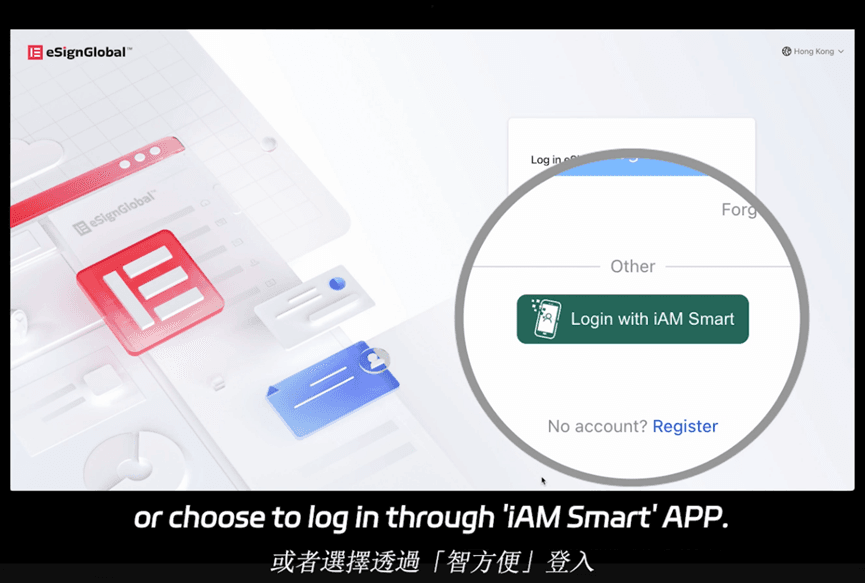
eSignGlobal emerges as a strong contender for businesses prioritizing APAC and global compliance without the bloat of U.S.-heavy platforms. It supports e-signatures in over 100 mainstream countries and regions, with particular advantages in Asia-Pacific through optimized speed, data residency options, and native alignments like China's electronic seal standards. Pricing is transparent and competitive; for details, visit eSignGlobal's pricing page. The Essential version starts at just $16.6 per month, allowing up to 100 documents for electronic signature, unlimited user seats, and verification via access codes—all on a compliant foundation that delivers high value. It integrates seamlessly with regional systems such as Hong Kong's iAM Smart and Singapore's Singpass, enhancing accessibility for local workflows. While it may not match DocuSign's depth in Western enterprise features, its cost-efficiency and regional focus make it appealing for SMEs expanding in SEA or China, where competitors face higher latency or surcharges.
Other Notable Alternatives
Beyond these, options like PandaDoc (starting at $19/user/month, strong in proposals) and HelloSign (now Dropbox Sign, $15/user/month with unlimited sends) offer niche strengths. PandaDoc excels in sales document automation but lacks broad API flexibility, while HelloSign prioritizes simplicity for small teams. Blueink fits here as a lightweight player, but none rival eSignGlobal's APAC edge.
Competitor Comparison Table
| Feature/Aspect | DocuSign | Adobe Sign | eSignGlobal | Blueink | Other (e.g., PandaDoc) |
|---|---|---|---|---|---|
| Starting Price (per user/month, annual) | $10 (Personal, limited) | $10 (Individual) | $16.6 (Essential) | $15 (Starter) | $19 (Essentials) |
| Envelope Limits | 5-100/user/year (tiered) | Unlimited (higher tiers) | Up to 100 (Essential) | Unlimited (basic) | Unlimited templates |
| User Seats | Seat-based (1-50+) | Seat-based | Unlimited (Essential) | Seat-based | Unlimited collaborators |
| Compliance Coverage | Global (ESIGN, eIDAS) | Strong (GDPR, UETA) | 100+ countries, APAC focus | Basic U.S./EU | U.S.-centric |
| Key Strengths | Integrations, API depth | Adobe ecosystem | Regional speed, integrations (iAM Smart, Singpass) | Affordability, simplicity | Proposal automation |
| Add-On Costs | High (IDV, SMS metered) | Moderate (analytics) | Low, bundled compliance | Minimal | Payment integrations |
| Best For | Enterprises | Adobe users | APAC/global compliance | SMEs on budget | Sales teams |
This table highlights trade-offs: DocuSign and Adobe Sign lead in enterprise scale, but eSignGlobal offers superior value for compliant, regional operations at lower costs, with Blueink as a budget entry point.
Conclusion
Navigating e-signature alternatives requires balancing cost, features, and compliance. While Blueink serves as a cheap DocuSign substitute for basic needs, scaling businesses may benefit from broader options. For DocuSign users seeking alternatives with strong regional compliance, eSignGlobal stands out as a practical choice.
FAQs
