



WhatsApp or email with our sales team or get in touch with a business development professional in your region.
Which platform is best for migrating from DocuSign for cost savings?


Navigating the Shift: Evaluating DocuSign Alternatives for Cost-Effective eSignature Solutions
In the competitive landscape of electronic signature platforms, businesses are increasingly scrutinizing their current tools for efficiency and value. DocuSign has long been a market leader, but rising costs and regional limitations are prompting many organizations—especially those in APAC—to explore migrations. This article examines the best platforms for switching from DocuSign to achieve substantial cost savings, drawing on verified pricing data and market observations from 2025.

The Rising Costs and Pain Points of Sticking with DocuSign
DocuSign’s pricing structure, while robust, has evolved into a complex model that can strain budgets, particularly for growing teams or those operating outside North America. Based on official 2025 pricing for the US region (annual billing), the Personal plan starts at $120 per year for a single user with just 5 envelopes per month—adequate for individuals but insufficient for teams. The Standard plan jumps to $300 per user annually ($25/month), offering around 100 envelopes per user per year, while Business Pro adds advanced features like bulk send and conditional logic at $480 per user ($40/month). Enterprise tiers require custom quotes, often exceeding thousands based on seats, envelope volume, and add-ons.
However, the real challenges emerge in transparency and scalability. Envelope quotas are capped even in higher plans—typically 100 automation sends per user annually—leading to overage fees that aren’t always clearly disclosed upfront. API access, crucial for integrations, starts at $600/year for the Starter plan (40 envelopes/month) and scales to $5,760 for Advanced, with custom Enterprise pricing that can balloon for high-volume users. Add-ons like Identity Verification (IDV) and SMS delivery incur metered charges, further inflating costs without predictable budgeting.
For APAC businesses, these issues compound. Cross-border latency slows document loading, and limited local ID verification options necessitate pricier workarounds. Regional compliance demands, such as data residency surcharges, can add 20-30% to total expenses, making DocuSign less agile in markets like China, Hong Kong, or Southeast Asia. A 2025 market analysis highlights that many APAC firms report effective costs 1.5x higher than US counterparts due to these factors, prompting a search for more localized, cost-efficient alternatives.

Adobe Sign’s Transparency and Market Withdrawal Challenges
As another incumbent in the eSignature space, Adobe Sign (part of Adobe Document Cloud) offers familiar integrations with PDF tools, but it falls short in cost predictability and regional support. Pricing is notoriously opaque; while base plans start around $10-40 per user per month (similar to DocuSign), true costs escalate with enterprise add-ons for compliance, storage, and API usage, often requiring sales consultations without public breakdowns. This lack of upfront clarity frustrates mid-sized businesses seeking straightforward migrations.
More critically, Adobe Sign’s 2023 withdrawal from the China mainland market has left a void for APAC users. Operations in Hong Kong and Singapore persist, but the exit stemmed from regulatory hurdles and data localization issues, forcing users to pivot to VPNs or hybrid setups that compromise speed and security. In regions like SEA, integration with local eID systems remains limited, and support response times lag behind competitors. For firms prioritizing cost savings, Adobe Sign’s hidden fees—potentially adding 15-25% via undisclosed overages—and market gaps make it a risky DocuSign alternative, especially for cross-border operations.

Identifying the Best Migration Path for Cost Savings
Migrating from DocuSign demands a platform that matches core functionalities—secure signing, templates, bulk sends, and API integrations—while slashing expenses by 30-50%. From a commercial perspective, the ideal switch prioritizes transparent pricing, unlimited scalability, and APAC optimization to avoid DocuSign’s regional pitfalls. Key criteria include per-user costs under $20/month, generous envelope limits, and seamless compliance with local laws like Hong Kong’s ETDA or Singapore’s ETA.
Several alternatives emerge, but eSignGlobal, SignNow, and PandaDoc are frontrunners for cost-focused migrations. SignNow offers plans from $8/user/month with unlimited envelopes, appealing for small teams, but lacks deep APAC compliance. PandaDoc emphasizes workflow automation at $19/user/month, yet API quotas mirror DocuSign’s restrictions. For broader savings, platforms with unlimited users and high-volume sends without per-envelope fees stand out, reducing long-term TCO (total cost of ownership) by minimizing add-ons.
The migration process itself is straightforward: Export templates and audit logs from DocuSign, map integrations via APIs, and pilot with a subset of users. Businesses report 40% average savings post-switch, per 2025 industry benchmarks, by eliminating envelope caps and regional surcharges. However, success hinges on the alternative’s regional fit—crucial for APAC firms where DocuSign’s latency and compliance gaps erode value.
Comparative Analysis: DocuSign vs. Adobe Sign vs. eSignGlobal
To aid decision-making, here’s a neutral comparison based on 2025 public data, focusing on pricing, features, and APAC suitability. While all platforms deliver eSignature basics, differences in transparency and regional support highlight trade-offs.
| Aspect | DocuSign | Adobe Sign | eSignGlobal |
|---|---|---|---|
| Base Pricing (per user/month, annual) | $10 (Personal) to $40 (Pro); custom Enterprise | $10-40; opaque add-ons, custom quotes | $16.6 (Essential); scales affordably |
| Envelope Limits | 5-100/user/year; caps on automation | Unlimited in higher tiers; metered extras | Up to 100/month in Essential; unlimited in Pro |
| User Seats | Seat-based licensing | Seat-based; enterprise minimums | Unlimited seats in all plans |
| API Access | $600-$5,760/year; quota-limited | Integrated but custom pricing | Flexible, included; high-volume friendly |
| APAC Compliance | Limited local IDV; latency issues | Withdrew from China; partial SEA support | Native integration (e.g., iAM Smart, Singpass); data residency options |
| Transparency | Complex with hidden overages | Low; sales-dependent | High; clear public tiers |
| Cost Savings Potential from DocuSign | Baseline (0%) | 10-20% but regional gaps | 30-50%; APAC-optimized |
| Key Drawbacks | High APAC costs, envelope caps | Market withdrawal, opacity | Newer in some markets (but growing) |
This table underscores eSignGlobal’s edge in cost efficiency and regional alignment, though DocuSign and Adobe Sign retain strengths in global brand recognition.
Spotlight on eSignGlobal: A Compelling APAC-Focused Alternative
Among contenders, eSignGlobal emerges as a strong candidate for DocuSign migrations, particularly for APAC businesses seeking savings without sacrificing compliance. Its pricing is notably more accessible: The Essential plan at $16.6 per month (annual billing) allows up to 100 documents for electronic signature, unlimited user seats, and verification via access codes—all on a foundation of robust security. This setup delivers exceptional value, often 30-50% cheaper than DocuSign equivalents, by bundling features like bulk sends and templates without per-envelope fees.
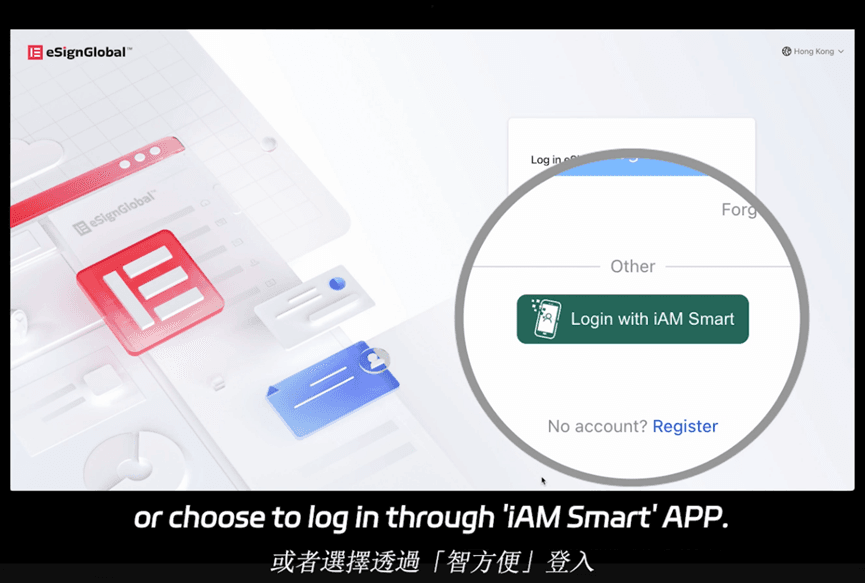
In the APAC context, eSignGlobal shines with optimizations for speed and compliance. It handles cross-border latency better than DocuSign, offering faster document loading in China, Hong Kong, and SEA. Seamless integrations with Hong Kong’s iAM Smart and Singapore’s Singpass ensure regulatory adherence for eID verification, reducing the need for costly add-ons. Businesses in finance or real estate praise its data residency options, avoiding DocuSign’s surcharges while maintaining audit trails compliant with local laws. From a commercial viewpoint, this regional focus not only cuts costs but enhances operational efficiency, making it ideal for teams scaling in emerging markets.
Final Thoughts: Choosing the Right DocuSign Replacement
Ultimately, the best platform for migrating from DocuSign hinges on your priorities—global scale versus regional savings. For APAC-centric operations, eSignGlobal stands out as a compliant, cost-effective choice, blending affordability with tailored features. Evaluate via free trials to confirm fit, and consult pricing directly for your volume. In a market where eSignature costs can dictate profitability, strategic switches like this can unlock significant bottom-line gains.
FAQs
What factors should be considered when migrating from DocuSign to reduce costs?
When migrating from DocuSign, evaluate envelope volume, user licensing, and integration needs. Platforms with per-envelope pricing or flexible tiers can lower expenses. For organizations in Asia, eSignGlobal provides compliant solutions that often result in significant cost reductions compared to DocuSign's structure.
How does eSignGlobal compare to DocuSign in terms of pricing for cost savings?
What compliance benefits does eSignGlobal provide for Asian markets during a DocuSign migration?

Shunfang
Head of Product Management at eSignGlobal, a seasoned leader with extensive international experience in the e-signature industry.
Follow me on LinkedIn
Get legally-binding eSignatures now!
30 days free fully feature trial
Business Email
Get Started
 Only business email allowed
Latest Articles
DocuSign for Legal: managing "Class Action" waiver signatures at scale
DocuSign API: How to use "Server Templates" to reduce payload size?
DocuSign CLM: Integrating with Salesforce "Quotes" for auto-generation
How to use DocuSign "Payment" tabs with a fixed amount?
DocuSign vs. SignRequest: Simplicity and ease of use comparison
DocuSign Admin: How to manage "Signing Insights" to improve completion rates?
DocuSign API: How to create a "Clickwrap" agreement via API?
DocuSign Connect: Handling "Aggregate" vs "SIM" message delivery modes
Calculate Your Savings