
'%3e%3cpath%20fill-rule='evenodd'%20clip-rule='evenodd'%20d='M6.99935%2012.8327C10.221%2012.8327%2012.8327%2010.221%2012.8327%206.99935C12.8327%203.77769%2010.221%201.16602%206.99935%201.16602C3.77769%201.16602%201.16602%203.77769%201.16602%206.99935C1.16602%2010.221%203.77769%2012.8327%206.99935%2012.8327Z'%20stroke='%23666666'%20stroke-linecap='round'%20stroke-linejoin='round'/%3e%3cpath%20d='M1.16602%207H12.8327'%20stroke='%23666666'%20stroke-linecap='round'%20stroke-linejoin='round'/%3e%3cpath%20fill-rule='evenodd'%20clip-rule='evenodd'%20d='M6.99935%2012.8327C8.28802%2012.8327%209.33268%2010.221%209.33268%206.99935C9.33268%203.77769%208.28802%201.16602%206.99935%201.16602C5.71068%201.16602%204.66602%203.77769%204.66602%206.99935C4.66602%2010.221%205.71068%2012.8327%206.99935%2012.8327Z'%20stroke='%23666666'%20stroke-linecap='round'%20stroke-linejoin='round'/%3e%3cpath%20d='M2.875%202.95898C3.93063%204.01461%205.38896%204.66754%206.99978%204.66754C8.61062%204.66754%2010.069%204.01461%2011.1246%202.95898'%20stroke='%23666666'%20stroke-linecap='round'%20stroke-linejoin='round'/%3e%3cpath%20d='M11.1246%2011.0425C10.069%209.98691%208.61062%209.33398%206.99978%209.33398C5.38896%209.33398%203.93063%209.98691%202.875%2011.0425'%20stroke='%23666666'%20stroke-linecap='round'%20stroke-linejoin='round'/%3e%3c/g%3e%3cdefs%3e%3cclipPath%20id='clip0_1267_9109'%3e%3crect%20width='14'%20height='14'%20fill='white'/%3e%3c/clipPath%3e%3c/defs%3e%3c/svg%3e)


docusign pricing australia


Understanding DocuSign Pricing in Australia
As businesses in Australia increasingly adopt digital tools for contract management, electronic signature solutions like DocuSign have become essential for streamlining operations while ensuring compliance. From a commercial perspective, DocuSign's pricing structure in Australia mirrors its global model but incorporates regional nuances, such as currency conversion to AUD and adaptations for local regulations. This article explores DocuSign's pricing tiers, key features, and how they align with Australian market needs, while comparing it to competitors for a balanced view.
Australia's electronic signature landscape is governed primarily by the Electronic Transactions Act 1999 (ETA) and the Electronic Transactions (Victoria) Act 2000, which provide a framework similar to the U.S. ESIGN Act. These laws recognize electronic signatures as legally binding equivalents to wet-ink signatures, provided they demonstrate intent to sign, are reliable, and meet any specific requirements for the transaction type. For instance, simple contracts like NDAs or service agreements can use basic e-signatures, but high-value or regulated sectors—such as finance under the Corporations Act 2001 or real estate—may require advanced authentication like knowledge-based verification or biometrics to mitigate fraud risks. The Australian government, through initiatives like myGovID, encourages digital adoption, but cross-border deals must also comply with international standards like the UNCITRAL Model Law. This regulatory environment favors platforms that offer robust audit trails and identity verification, influencing pricing for add-ons in Australia.

DocuSign Pricing Tiers for Australian Businesses
DocuSign's pricing in Australia is typically quoted in USD but converted to AUD at prevailing rates, with annual billing offering discounts (e.g., 15-20% off monthly equivalents). As of 2025, the core eSignature plans remain consistent with global offerings, starting from entry-level for solopreneurs to enterprise solutions. Australian users benefit from local data centers in Sydney for faster performance and compliance with the Privacy Act 1988, but APAC-specific challenges like higher latency for cross-border sends can impact effective costs.
Personal Plan: Ideal for Individuals and Small-Scale Use
At $10 USD per month ($120/year) or approximately AUD 15/month (AUD 180/year), the Personal plan suits freelancers, real estate agents, or consultants handling low-volume signing. It includes up to 5 envelopes (documents for signing) per month, basic templates, and integrations with tools like Google Workspace. In Australia, this plan is popular for simple lease agreements or freelance contracts, where ETA compliance is straightforward without needing advanced features. However, exceeding the envelope limit incurs overage fees of about $1-2 USD per additional envelope.
Standard Plan: For Team Collaboration
Priced at $25 USD per user per month ($300/year/user) or AUD 38/user/month (AUD 450/year), the Standard plan supports up to 50 users and around 100 envelopes per user annually (10/month for monthly billing). Key additions include team-shared templates, comments, reminders, and collaborative commenting—valuable for Australian SMEs in sales or HR. For instance, a Sydney-based startup could use this for offer letters, ensuring audit logs meet Australian Securities and Investments Commission (ASIC) standards if needed. Automation sends, like bulk emails, are capped at about 10 per user/month, which may limit scalability for growing teams.
Business Pro Plan: Advanced Features for Complex Workflows
For $40 USD per user per month ($480/year/user) or AUD 60/user/month (AUD 720/year), Business Pro builds on Standard with web forms, conditional logic, signer attachments, payment collection, and bulk send capabilities. This tier is geared toward Australian businesses in finance or legal sectors requiring conditional fields (e.g., auto-calculating fees in loan docs) or integrating payments via Stripe. Envelope limits remain similar (~100/year/user), but add-ons like SMS delivery (per-message fees, ~AUD 0.50-1) or identity verification (metered, ~AUD 2-5 per use) can add 20-30% to costs. In regulated industries, these features help satisfy the ETA's reliability clause.
Enterprise and API Plans: Customized for Scale
Enterprise pricing is bespoke, starting from AUD 50,000+ annually based on seats, volume, and features like SSO, advanced analytics, and premium support. For developers, API plans range from Starter ($600 USD/year, ~40 envelopes/month) to Advanced ($5,760 USD/year, with bulk API and webhooks). Australian enterprises, especially in fintech or government, often opt for these to integrate with local systems like Xero or MYOB, but APAC data residency surcharges (up to 10-15% extra) apply due to compliance with the Notifiable Data Breaches scheme. Overall, total costs factor in seats, envelopes, and add-ons, potentially reaching AUD 10,000-50,000/year for mid-sized firms.
From a business observation standpoint, DocuSign's model emphasizes scalability but can feel premium-priced for Australian SMBs facing economic pressures like inflation. Regional support is strong, with local sales teams, but envelope caps and add-on metering may surprise users transitioning from paper-based processes.

Comparing DocuSign with Key Competitors in Australia
To evaluate DocuSign's value in the Australian market, it's useful to compare it with alternatives like Adobe Sign, eSignGlobal, and others. These platforms vary in pricing, compliance focus, and APAC optimization, influencing choices for businesses prioritizing cost, integration, or regional regulations.
Adobe Sign: A Robust but Costly Option
Adobe Sign, integrated with Adobe Acrobat ecosystem, offers similar tiers starting at $15 USD/month for individuals (AUD 23/month) up to enterprise custom pricing. It excels in PDF editing and enterprise security, with features like conditional routing and API access. In Australia, it complies with ETA via strong audit trails, but pricing can escalate quickly—Standard at $30 USD/user/month (AUD 45) includes unlimited envelopes in higher plans, unlike DocuSign's caps. Drawbacks include steeper learning curves and higher costs for add-ons like SMS (~AUD 1/message). For creative agencies or large corps using Adobe suite, it's seamless, but SMBs may find it overkill.

DocuSign: The Market Leader with Proven Reliability
DocuSign remains the gold standard for global compliance, including Australia's ETA, with extensive features for automation and integrations. Its pricing, as detailed earlier, balances accessibility with enterprise depth, though envelope limits and APAC add-ons can inflate costs. Strengths include widespread adoption (e.g., by Aussie banks like NAB) and robust support, making it a safe bet for multinational firms. However, for purely local operations, the USD-based structure and regional surcharges may deter budget-conscious users.
eSignGlobal: APAC-Focused Efficiency
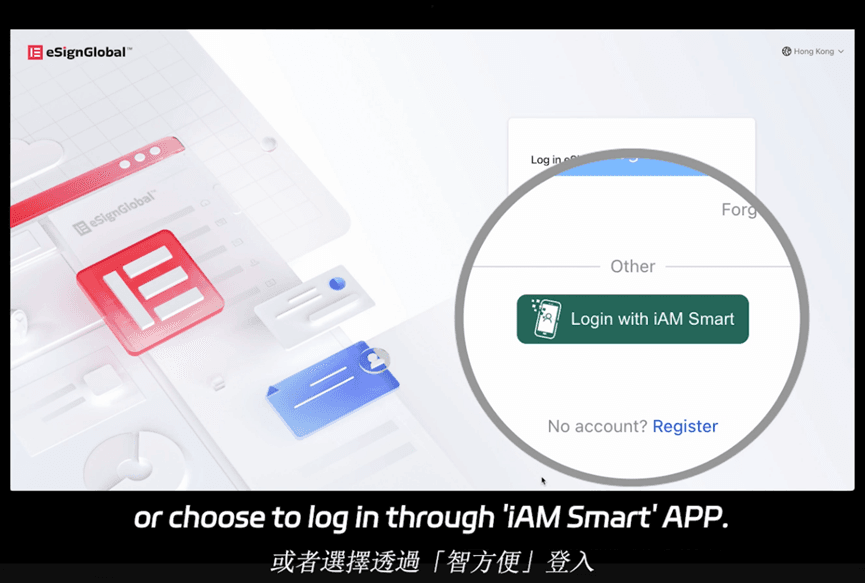
eSignGlobal stands out for its compliance across 100 mainstream countries, including full alignment with Australia's ETA and APAC regulations like Hong Kong's ETLO and Singapore's ETA. It offers advantages in the Asia-Pacific, such as optimized speeds for cross-border deals and seamless integrations with local systems—e.g., Hong Kong's iAM Smart for identity verification and Singapore's Singpass for secure authentication. Pricing is notably competitive; the Essential plan costs just $16.60 USD/month (AUD 25/month), allowing up to 100 documents for signature, unlimited user seats, and verification via access codes, all on a compliant basis that delivers high value-for-money. For more details on plans, visit eSignGlobal's pricing page. This makes it appealing for Australian businesses expanding into SEA or China, where DocuSign's latency and costs can be hurdles, without compromising on features like bulk sends or audit logs.
Competitor Comparison Table
| Feature/Aspect | DocuSign | Adobe Sign | eSignGlobal | Other (e.g., PandaDoc) |
|---|---|---|---|---|
| Starting Price (AUD/month) | ~15 (Personal) | ~23 (Individual) | ~25 (Essential) | ~20 (Essentials) |
| Envelope Limit | 5-100/user/year (capped) | Unlimited in higher tiers | 100+/unlimited users | Unlimited templates, 20 docs/mo |
| Australia Compliance | Full ETA support + add-ons | ETA via PDF security | Native ETA + APAC integrations | Basic ETA, US-focused |
| APAC Strengths | Good, but latency/add-on costs | Moderate, Adobe ecosystem | Optimized speed, regional IDs | Limited, general global |
| Key Add-Ons | SMS/IDV (metered, ~AUD 1-5) | Biometrics (extra) | Free access code verify + Singpass | Templates (included) |
| Best For | Enterprises, global teams | PDF-heavy workflows | APAC expansion, cost-efficiency | Marketing/docs collaboration |
| Overall Value | Premium reliability | Integrated but pricey | High ROI for regional compliance | Affordable for non-complex needs |
Other competitors like PandaDoc or SignNow offer entry-level pricing under AUD 30/month with unlimited templates, but they lag in deep APAC compliance compared to eSignGlobal's regional edge. From a neutral commercial lens, DocuSign leads in brand trust, Adobe in ecosystem depth, while eSignGlobal provides balanced, cost-effective options for Australia-Asia bridges.
In summary, DocuSign's pricing suits diverse Australian needs but warrants scrutiny for caps and add-ons. For alternatives emphasizing regional compliance, eSignGlobal emerges as a solid, area-optimized choice.
FAQs
