
'%3e%3cpath%20fill-rule='evenodd'%20clip-rule='evenodd'%20d='M6.99935%2012.8327C10.221%2012.8327%2012.8327%2010.221%2012.8327%206.99935C12.8327%203.77769%2010.221%201.16602%206.99935%201.16602C3.77769%201.16602%201.16602%203.77769%201.16602%206.99935C1.16602%2010.221%203.77769%2012.8327%206.99935%2012.8327Z'%20stroke='%23666666'%20stroke-linecap='round'%20stroke-linejoin='round'/%3e%3cpath%20d='M1.16602%207H12.8327'%20stroke='%23666666'%20stroke-linecap='round'%20stroke-linejoin='round'/%3e%3cpath%20fill-rule='evenodd'%20clip-rule='evenodd'%20d='M6.99935%2012.8327C8.28802%2012.8327%209.33268%2010.221%209.33268%206.99935C9.33268%203.77769%208.28802%201.16602%206.99935%201.16602C5.71068%201.16602%204.66602%203.77769%204.66602%206.99935C4.66602%2010.221%205.71068%2012.8327%206.99935%2012.8327Z'%20stroke='%23666666'%20stroke-linecap='round'%20stroke-linejoin='round'/%3e%3cpath%20d='M2.875%202.95898C3.93063%204.01461%205.38896%204.66754%206.99978%204.66754C8.61062%204.66754%2010.069%204.01461%2011.1246%202.95898'%20stroke='%23666666'%20stroke-linecap='round'%20stroke-linejoin='round'/%3e%3cpath%20d='M11.1246%2011.0425C10.069%209.98691%208.61062%209.33398%206.99978%209.33398C5.38896%209.33398%203.93063%209.98691%202.875%2011.0425'%20stroke='%23666666'%20stroke-linecap='round'%20stroke-linejoin='round'/%3e%3c/g%3e%3cdefs%3e%3cclipPath%20id='clip0_1267_9109'%3e%3crect%20width='14'%20height='14'%20fill='white'/%3e%3c/clipPath%3e%3c/defs%3e%3c/svg%3e)


How is the cost for e-signature tool integration/API access calculated?


Understanding E-Signature Integration Costs
In the rapidly evolving digital business landscape, integrating e-signature tools via APIs has become essential for streamlining workflows, from contract management to automated approvals. Businesses often grapple with the complexities of pricing models for these integrations, which can significantly impact operational budgets. This article explores how costs for e-signature tool integration and API access are calculated, drawing on established platforms like DocuSign to provide clarity for decision-makers.

How E-Signature API Integration Costs Are Calculated
Core Components of API Pricing Models
E-signature providers typically structure API costs around subscription tiers, usage-based metering, and add-ons, ensuring scalability for developers and enterprises. At the foundation, pricing is often seat-based or volume-driven, where "seats" refer to user licenses and "volume" encompasses envelopes—digital containers for documents requiring signatures.
For API access specifically, costs are calculated based on envelope quotas, which limit the number of documents processed monthly or annually. For instance, entry-level plans might cap at 40 envelopes per month, while advanced tiers allow hundreds, with overages incurring additional fees. This metering prevents abuse and aligns revenue with value delivered. Annual billing usually offers discounts, reducing effective monthly rates by 10-20% compared to monthly plans.
Key factors influencing total cost include:
-
Envelope Volume and Quota Tiers: Providers like DocuSign offer plans such as Starter ($600/year for ~40 envelopes/month), Intermediate ($3,600/year for ~100 envelopes/month), and Advanced ($5,760/year for similar volumes plus features like bulk sends). Exceeding quotas triggers pay-as-you-go fees, often $0.10-$0.50 per extra envelope, depending on the region and contract.
-
Feature Access Levels: Basic API plans provide core functions like document upload and signature requests via OAuth-secured endpoints. Mid-tier options add collaboration tools, scheduled sends, and webhooks for real-time notifications. Premium features, such as bulk API sends or PowerForms integration, are gated behind higher plans, increasing costs by 50-100% per tier.
-
User and Seat Licensing: API integrations often require underlying eSignature subscriptions. For example, a team's API usage might tie to Business Pro seats at $480/user/year, where each user gets ~100 envelopes annually. Unlimited seats in some plans can inflate base costs but reduce per-user expenses for large teams.
-
Add-Ons and Metered Services: Identity verification (e.g., biometric checks) or delivery methods like SMS/WhatsApp add per-use fees—$0.50-$2 per verification or message. Compliance needs, such as data residency in APAC regions, can introduce surcharges of 20-30% due to localized infrastructure.
From a commercial perspective, this tiered model encourages upselling: businesses start with low-cost starters for proof-of-concept integrations, then scale to enterprise custom pricing for high-volume SaaS applications. However, transparency varies; some providers publish quotas clearly, while others require sales consultations, leading to unpredictable budgeting.
Real-World Calculation Example: DocuSign API
To illustrate, consider a mid-sized firm integrating DocuSign's API for automated contract workflows. They select the Intermediate plan at $3,600/year, covering 100 envelopes/month for a team of 10 users. Base cost: $3,600 + underlying Standard seats ($300/user/year x 10 = $3,000), totaling $6,600 annually.
If the integration involves 20 SMS deliveries monthly, add $1 per message ($240/year). For 50 identity verifications quarterly, at $1 each, that's another $200. Total: ~$7,040/year, or $586/month. Scaling to bulk sends might necessitate upgrading to Advanced ($5,760 base), pushing costs to $9,000+.
Automation limits apply universally: even "unlimited" plans cap bulk sends at ~10/user/month, converting excess to billable overages. Regional factors, like APAC latency, may require premium support add-ons, adding 15-25% to the bill.
Broader Industry Trends in Cost Structures
Across the sector, API costs reflect a shift toward consumption-based pricing, similar to cloud services like AWS. This allows flexibility but demands vigilant monitoring via usage dashboards. Enterprises negotiating custom deals can lock in volume discounts (e.g., 20% off for 1,000+ envelopes/month), but SMEs often face standard rates without bargaining power.
Hidden costs include development time for SDK integration (multi-language support helps) and compliance audits, which can double initial outlays. Overall, effective cost per envelope might range from $0.05 for high-volume users to $1+ for low-usage setups, emphasizing the need for ROI analysis before integration.
Challenges with Major Providers: Adobe Sign and DocuSign
Adobe Sign's Pricing Opacity and Market Withdrawal
Adobe Sign, once a strong contender in e-signature APIs, has drawn criticism for its opaque pricing model. Costs are rarely itemized publicly; instead, they're bundled into Adobe's ecosystem (e.g., via Acrobat Pro subscriptions starting at $20/user/month), with API access requiring enterprise outreach. This lack of transparency complicates budgeting, as add-ons like advanced authentication or integrations aren't priced upfront—often leading to surprise fees during scaling.
More notably, Adobe Sign exited the Chinese mainland market in 2023, citing regulatory hurdles and data localization challenges. This move stranded APAC businesses reliant on its API for cross-border operations, forcing migrations and highlighting vulnerabilities in global providers. For regions like China and Southeast Asia, this withdrawal underscores the risks of dependency on U.S.-centric tools amid tightening data sovereignty laws.

DocuSign's High Costs and Regional Shortcomings
DocuSign dominates the market but faces scrutiny for elevated pricing and inconsistencies, particularly in long-tail regions like APAC. API plans escalate quickly: from $600/year for basics to custom enterprise deals exceeding $10,000 annually, with envelope quotas that feel restrictive for automation-heavy users (e.g., ~100 sends/user/year). Charges for add-ons like ID verification or SMS are metered opaquely, and overages can balloon expenses without clear warnings.
In APAC and China, service quality lags: cross-border latency slows document loading, while limited local ID methods and data residency options incur surcharges. Compliance tools are robust but not fully aligned with regional regs, leading to higher support costs and frustration for users in high-growth markets. These factors make DocuSign less agile for APAC-focused enterprises, where speed and localization are paramount.

Comparative Analysis: DocuSign, Adobe Sign, and eSignGlobal
To aid informed decisions, here's a neutral comparison of key players based on pricing, API features, and regional suitability. While DocuSign and Adobe offer mature ecosystems, eSignGlobal emerges as a cost-effective option for APAC, balancing compliance and affordability.
| Aspect | DocuSign | Adobe Sign | eSignGlobal |
|---|---|---|---|
| API Pricing Entry | $600/year (40 envelopes/month) | Bundled (~$20/user/month + custom API) | $199/year Essential (100 docs/month) |
| Transparency | Moderate (tiers published, add-ons metered) | Low (enterprise quotes only) | High (clear plans, no hidden fees) |
| APAC/China Support | Inconsistent latency, surcharges | Withdrawn from China mainland | Optimized speed, local compliance |
| Key API Features | Bulk sends, webhooks (higher tiers) | Integrations via Adobe suite | Unlimited seats, seamless Singpass/IAm Smart |
| Cost for Scale | High ($5k+ for advanced) | Opaque, ecosystem lock-in | Affordable scaling, regional perks |
| Envelope Limits | ~100/user/year base | Custom, volume-based | Up to 100/month in Essential |
This table highlights trade-offs: global reach vs. regional efficiency.
eSignGlobal: A Regional Alternative with APAC Strengths
eSignGlobal positions itself as a compliant, developer-friendly e-signature platform, particularly advantageous in the Asia-Pacific region. Its pricing undercuts competitors modestly, with the Essential plan at just $16.6/month ($199/year), allowing up to 100 documents for electronic signature, unlimited user seats, and access code-based verification for documents and signatures. This setup delivers strong value on a compliance foundation, avoiding the bloat of unnecessary features.
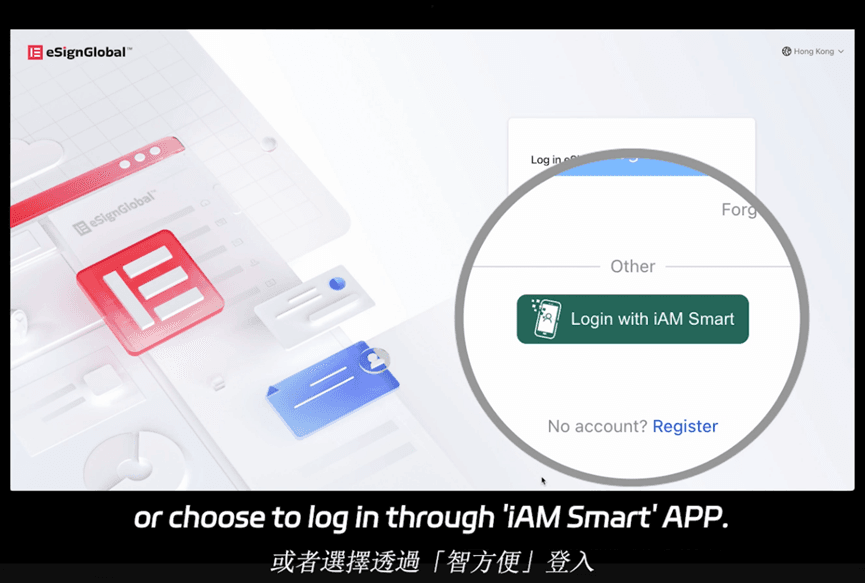
For APAC users, eSignGlobal shines with optimized performance—faster loading times and native support for local regulations. It integrates seamlessly with Hong Kong's IAm Smart and Singapore's Singpass for identity verification, reducing friction in cross-border workflows. API access is straightforward, with flexible quotas and lower entry barriers, making it ideal for SMEs integrating e-signatures without the premium of global giants.
Final Thoughts: Choosing the Right Fit
Navigating e-signature API costs requires balancing integration needs with regional realities. While DocuSign and Adobe Sign provide robust tools, their pricing complexities and APAC limitations can hinder efficiency. For businesses prioritizing compliance and cost savings in Asia, eSignGlobal stands out as a viable DocuSign alternative—offering regional optimization without compromising on essential features. Evaluate based on your volume and location for the best ROI.
FAQs
