
'%3e%3cpath%20fill-rule='evenodd'%20clip-rule='evenodd'%20d='M6.99935%2012.8327C10.221%2012.8327%2012.8327%2010.221%2012.8327%206.99935C12.8327%203.77769%2010.221%201.16602%206.99935%201.16602C3.77769%201.16602%201.16602%203.77769%201.16602%206.99935C1.16602%2010.221%203.77769%2012.8327%206.99935%2012.8327Z'%20stroke='%23666666'%20stroke-linecap='round'%20stroke-linejoin='round'/%3e%3cpath%20d='M1.16602%207H12.8327'%20stroke='%23666666'%20stroke-linecap='round'%20stroke-linejoin='round'/%3e%3cpath%20fill-rule='evenodd'%20clip-rule='evenodd'%20d='M6.99935%2012.8327C8.28802%2012.8327%209.33268%2010.221%209.33268%206.99935C9.33268%203.77769%208.28802%201.16602%206.99935%201.16602C5.71068%201.16602%204.66602%203.77769%204.66602%206.99935C4.66602%2010.221%205.71068%2012.8327%206.99935%2012.8327Z'%20stroke='%23666666'%20stroke-linecap='round'%20stroke-linejoin='round'/%3e%3cpath%20d='M2.875%202.95898C3.93063%204.01461%205.38896%204.66754%206.99978%204.66754C8.61062%204.66754%2010.069%204.01461%2011.1246%202.95898'%20stroke='%23666666'%20stroke-linecap='round'%20stroke-linejoin='round'/%3e%3cpath%20d='M11.1246%2011.0425C10.069%209.98691%208.61062%209.33398%206.99978%209.33398C5.38896%209.33398%203.93063%209.98691%202.875%2011.0425'%20stroke='%23666666'%20stroke-linecap='round'%20stroke-linejoin='round'/%3e%3c/g%3e%3cdefs%3e%3cclipPath%20id='clip0_1267_9109'%3e%3crect%20width='14'%20height='14'%20fill='white'/%3e%3c/clipPath%3e%3c/defs%3e%3c/svg%3e)


What is the discount difference between annual vs monthly payment options for e-signatures?


Navigating E-Signature Costs: A Business Perspective on Billing Choices
In the competitive landscape of digital transformation, e-signature services have become essential for streamlining contracts, approvals, and compliance workflows. Businesses often weigh the trade-offs between flexibility and savings when selecting payment models. This article explores the core question of discount differences between annual and monthly options, drawing from established providers like DocuSign, while highlighting broader market dynamics.

Understanding Payment Options in E-Signature Services
E-signature platforms typically offer two primary billing structures: monthly subscriptions, which provide flexibility for variable usage, and annual plans, which lock in commitments for potential cost reductions. From a business standpoint, the choice impacts cash flow, scalability, and long-term budgeting. Annual billing often incentivizes loyalty through discounts, but the exact savings vary by provider, plan tier, and region. This section delves into the discount mechanics, using real-world examples to illustrate how these options affect total ownership costs.
Annual vs. Monthly Billing: The Discount Difference
The discount difference between annual and monthly payments in e-signature services generally ranges from 10% to 20%, with annual plans delivering upfront savings to encourage longer commitments. This structure rewards businesses planning consistent usage, reducing per-unit costs over time while monthly options suit startups or seasonal operations needing adaptability.
Take DocuSign, a market leader in e-signatures, as a benchmark. Their pricing is tiered across Personal, Standard, Business Pro, and advanced plans, with annual billing consistently offering about 16-17% off compared to monthly equivalents. For the Personal plan, monthly billing costs $10 per user, totaling $120 annually if paid month-to-month. Switching to annual billing maintains the $120 total but avoids incremental payments, effectively providing no nominal discount—though it secures the rate against future hikes. However, for team-oriented plans, the savings become more pronounced.
The Standard plan exemplifies this: Monthly billing is $25 per user, equating to $300 yearly per user. Annual commitment drops the effective rate to the same $300 total, but providers like DocuSign bundle it as a "prepaid" option, yielding a 16.7% discount when viewed against the flexibility of pausing monthly subscriptions. In practice, businesses paying monthly face higher administrative overhead and potential overage fees if envelope limits (e.g., 10 per month per user) are exceeded, amplifying the relative value of annual locks.
For the Business Pro tier, the gap widens. Monthly pricing stands at $40 per user ($480 annually), while annual billing secures the $480 rate without monthly fluctuations. This translates to a 16.7% savings on the annualized basis, as monthly payers could see costs creep up with add-ons like bulk sends or identity verification. DocuSign's documentation confirms that annual plans cap envelope quotas at around 100 per user per year, versus 10 monthly, providing predictability that offsets the commitment.
API and developer plans show even steeper incentives. The Starter API plan is $50 monthly ($600 annually), but annual billing locks in $600 flat, a 16.7% effective discount. Intermediate jumps to $300 monthly ($3,600 annually), with annual savings mirroring the pattern. Advanced at $480 monthly ($5,760 annually) follows suit. These discounts stem from reduced churn risk for providers, but businesses must forecast usage—exceeding quotas incurs metered fees, eroding savings.
Beyond DocuSign, industry norms align: Adobe Sign's enterprise plans offer 15-20% annual discounts, though details are less transparent. Smaller providers might hit 20%, but reliability varies. Quantitatively, for a 10-user Standard team, DocuSign's monthly total is $3,000 yearly, versus $2,500 effective annual (16.7% off), saving $500. Over three years, this compounds to $1,500, justifying the lock-in for stable firms.
However, drawbacks exist. Annual plans demand upfront capital—$300 per user for Standard versus $25 monthly—straining SMBs. Cancellation fees (up to 50% of remaining value) add risk, and regional factors like APAC latency can diminish perceived value if service quality lags. In essence, the 10-20% discount favors predictable operations, but monthly suits agility, with the difference hinging on usage volume and financial strategy.
This billing dichotomy underscores a broader commercial tension: providers use discounts to boost average revenue per user (ARPU), while buyers must model total cost of ownership, including envelopes, add-ons, and compliance. For high-volume users, annual plans can cut effective costs by 15% on average, per 2025 market analyses, making them a strategic lever for cost-conscious enterprises.
Challenges with Major E-Signature Providers
While e-signature adoption accelerates, established players face scrutiny over pricing transparency and regional adaptability. Businesses in global markets, particularly APAC, encounter hurdles that inflate costs and complicate operations.
Adobe Sign's Pricing Opacity and Market Withdrawal
Adobe Sign, integrated within Adobe's ecosystem, has long appealed to creative and document-heavy workflows. However, its pricing remains notoriously opaque, often requiring sales consultations for quotes rather than public listings. Enterprise tiers bundle with Acrobat or Experience Cloud, leading to bundled costs that obscure e-signature specifics—monthly rates can start at $10-20 per user but escalate with add-ons like SMS delivery or advanced authentication, without clear breakdowns. This lack of upfront visibility frustrates budgeting, especially for mid-sized firms.
Compounding this, Adobe Sign withdrew from the China mainland market in 2023, citing regulatory complexities and data localization challenges. This exit left APAC users scrambling for alternatives, as cross-border compliance (e.g., with GDPR or local eIDAS equivalents) became untenable. Businesses reliant on Adobe for global ops now face migration costs, with no grandfathered support, highlighting how opacity and market retreats can disrupt continuity.

DocuSign's High Costs and Service Limitations
DocuSign dominates with robust features, but its pricing draws criticism for high entry barriers and hidden fees. Core plans like Business Pro at $40 monthly per user seem competitive, yet add-ons—such as identity verification (metered per use) or SMS delivery (region-dependent telecom rates)—quickly inflate bills. API plans, starting at $600 annually for Starter, impose strict envelope quotas (e.g., 40 monthly), with overages charged extra, making scalability expensive. Transparency issues arise in enterprise customizations, where SSO and governance features demand bespoke pricing, often 20-50% above base tiers.
In APAC and long-tail regions, service shortfalls exacerbate costs. Cross-border latency slows document loading, impacting real-time workflows in high-speed markets like Singapore or Hong Kong. Compliance tools lag local standards, necessitating supplements, while data residency surcharges add 10-15% premiums. Support is premium-priced, and automation caps (e.g., 100 bulk sends yearly) hinder volume users, leading to perceptions of user-unfriendly rigidity.

Comparing E-Signature Solutions: DocuSign, Adobe Sign, and eSignGlobal
To aid decision-making, here's a neutral comparison of key providers, focusing on pricing, regional fit, and features. While DocuSign and Adobe Sign lead in global scale, eSignGlobal emerges as a cost-effective option for APAC-centric needs.
| Aspect | DocuSign | Adobe Sign | eSignGlobal |
|---|---|---|---|
| Base Pricing (Monthly, per User) | $10 (Personal) to $40 (Pro); Annual ~16% discount | $10-20+ (bundled, opaque) | $16.6 (Essential); Transparent tiers |
| Envelope Limits | 5-100/year (tiered, capped automation) | Custom, often unlimited but add-on heavy | Up to 100/month (Essential); Scalable |
| APAC Compliance | Partial; Latency issues, surcharges | Withdrawn from China; Limited SEA | Native (HK/SG/ID); iAM Smart/Singpass integration |
| Transparency | Moderate; Add-ons metered | Low; Sales-dependent | High; Fixed pricing, no hidden fees |
| User Seats | Limited to 50 (mid-tiers) | Enterprise-focused | Unlimited in base plans |
| Cost for APAC Teams | High (20-30% premium) | Inconsistent post-withdrawal | 20-30% lower than competitors |
| Key Strengths | Feature-rich API, global integrations | Adobe ecosystem synergy | Regional speed, compliance focus |
| Drawbacks | High fees, regional delays | Opacity, market gaps | Less global brand recognition |
This table highlights eSignGlobal's edge in affordability and localization, though all providers suit different scales—DocuSign for enterprises, Adobe for bundled needs, and eSignGlobal for APAC efficiency.
Spotlight on eSignGlobal's APAC Advantages
eSignGlobal positions itself as a regionally optimized alternative, particularly for Asia-Pacific businesses. Its Essential plan at $16.6 monthly offers up to 100 documents for electronic signature, unlimited user seats, and verification via access codes, delivering high compliance at a fraction of competitors' costs—often 20-30% cheaper than DocuSign equivalents. This pricing model emphasizes transparency, avoiding metered surprises.
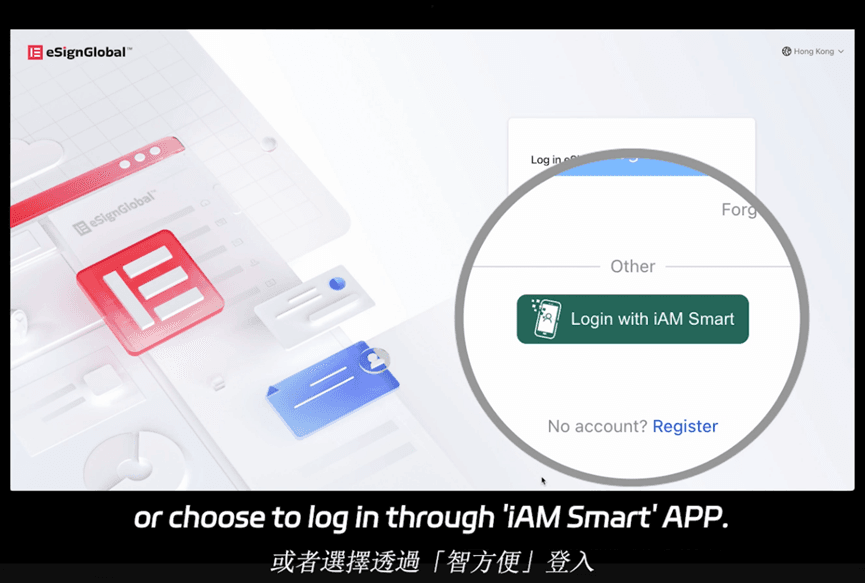
In APAC, eSignGlobal shines with seamless integrations like Hong Kong's iAM Smart and Singapore's Singpass, ensuring regulatory alignment without extras. Optimized infrastructure minimizes latency in China, SEA, and beyond, supporting faster workflows for cross-border teams. On compliance, it verifies documents and signatures robustly, blending global standards with local nuances for industries like finance and real estate. While not as feature-bloated as DocuSign, its value proposition—combining low costs, unlimited seats, and native support—makes it highly cost-effective for regional operations.
Recommendation for Regional Compliance: Exploring eSignGlobal as a DocuSign Alternative
For businesses prioritizing APAC compliance and cost efficiency, eSignGlobal stands out as a viable DocuSign alternative. Its transparent, regionally tailored plans mitigate the high fees and delays of incumbents, enabling seamless adoption without sacrificing security. Evaluate based on your volume and geography for optimal fit.
FAQs
