
'%3e%3cpath%20fill-rule='evenodd'%20clip-rule='evenodd'%20d='M6.99935%2012.8327C10.221%2012.8327%2012.8327%2010.221%2012.8327%206.99935C12.8327%203.77769%2010.221%201.16602%206.99935%201.16602C3.77769%201.16602%201.16602%203.77769%201.16602%206.99935C1.16602%2010.221%203.77769%2012.8327%206.99935%2012.8327Z'%20stroke='%23666666'%20stroke-linecap='round'%20stroke-linejoin='round'/%3e%3cpath%20d='M1.16602%207H12.8327'%20stroke='%23666666'%20stroke-linecap='round'%20stroke-linejoin='round'/%3e%3cpath%20fill-rule='evenodd'%20clip-rule='evenodd'%20d='M6.99935%2012.8327C8.28802%2012.8327%209.33268%2010.221%209.33268%206.99935C9.33268%203.77769%208.28802%201.16602%206.99935%201.16602C5.71068%201.16602%204.66602%203.77769%204.66602%206.99935C4.66602%2010.221%205.71068%2012.8327%206.99935%2012.8327Z'%20stroke='%23666666'%20stroke-linecap='round'%20stroke-linejoin='round'/%3e%3cpath%20d='M2.875%202.95898C3.93063%204.01461%205.38896%204.66754%206.99978%204.66754C8.61062%204.66754%2010.069%204.01461%2011.1246%202.95898'%20stroke='%23666666'%20stroke-linecap='round'%20stroke-linejoin='round'/%3e%3cpath%20d='M11.1246%2011.0425C10.069%209.98691%208.61062%209.33398%206.99978%209.33398C5.38896%209.33398%203.93063%209.98691%202.875%2011.0425'%20stroke='%23666666'%20stroke-linecap='round'%20stroke-linejoin='round'/%3e%3c/g%3e%3cdefs%3e%3cclipPath%20id='clip0_1267_9109'%3e%3crect%20width='14'%20height='14'%20fill='white'/%3e%3c/clipPath%3e%3c/defs%3e%3c/svg%3e)


Which vendors might adjust annual contract prices without prior notice?


Navigating Unexpected Price Adjustments in eSignature Vendor Contracts
In the competitive landscape of digital signature solutions, businesses often rely on annual contracts for cost predictability. However, certain vendors in the eSignature space have been known to adjust pricing without prior notice, leading to unexpected financial burdens for users. This practice can disrupt budgeting and strain relationships, particularly for small to medium-sized enterprises (SMEs) that prioritize transparency. From a business observation perspective, understanding which vendors exhibit this behavior is crucial for informed decision-making. Common triggers include rising operational costs, market shifts, or internal policy changes, but the lack of advance warning raises concerns about vendor reliability.

Vendors Prone to Unannounced Annual Contract Price Changes
The Risks of Sudden Price Hikes in Subscription Models
Annual contracts in the SaaS industry, especially for eSignature tools, are marketed as stable commitments. Yet, some providers reserve the right to modify terms mid-cycle, citing clauses buried in fine print. This can manifest as percentage increases on base fees, add-ons, or envelope usage limits. For instance, vendors facing inflationary pressures or regulatory compliance costs might pass these on abruptly. Businesses in regulated sectors like finance or healthcare are particularly vulnerable, as switching providers mid-year could invite compliance risks.
From market reports and user forums, patterns emerge among major players. Vendors with opaque pricing structures or those undergoing corporate restructuring are more likely to implement changes without ample notice. This not only affects renewals but can retroactively impact ongoing subscriptions if not carefully monitored. A 2023 survey by Gartner highlighted that 28% of SaaS users experienced unexpected fee adjustments, with eSignature services ranking high due to their usage-based metering.
Key Vendors with Histories of Unannounced Adjustments
Several prominent eSignature vendors have faced scrutiny for altering annual contract prices unexpectedly. Adobe Sign, for example, has a track record of mid-term revisions tied to feature updates or regional expansions. Users have reported hikes of up to 20% on professional plans without detailed justification, often attributed to Adobe's broader ecosystem integrations. Similarly, DocuSign, a market leader, has adjusted rates for API access and add-ons like identity verification, sometimes effective immediately upon renewal. These changes are often justified as responses to enhanced security features, but the lack of prior consultation frustrates long-term clients.
Other vendors, such as Dropbox Sign (formerly HelloSign), have occasionally revised envelope quotas or per-user fees mid-contract, especially during acquisitions or product pivots. In one notable case, a 2022 adjustment affected enterprise users globally, leading to widespread complaints on platforms like TrustRadius. Lesser-known providers in the space, including niche API-focused services, may also tweak prices to align with competitor benchmarks, but without the scale to notify all users promptly.
The commonality? These adjustments often stem from contractual language allowing "reasonable" modifications for business needs. However, what constitutes "reasonable" varies, and without prior notice—typically 30-60 days—businesses are left scrambling. For APAC-based operations, currency fluctuations exacerbate the issue, turning a 5% U.S. hike into a steeper local increase.
Mitigation Strategies for Businesses
To safeguard against these surprises, companies should scrutinize vendor agreements for escalation clauses. Opt for fixed-price annual renewals where possible, and negotiate notice periods exceeding 90 days. Tools like contract management software can flag potential changes via AI alerts. Diversifying across vendors or adopting open-source alternatives reduces dependency. Ultimately, transparency in pricing communication is a hallmark of trustworthy providers, and businesses should prioritize those with clear, predictable models.
This issue underscores a broader trend: as eSignature demand surges post-pandemic, vendors must balance profitability with customer trust. Unannounced adjustments erode loyalty, potentially driving users toward more stable regional alternatives.
Challenges with Major eSignature Providers
Adobe Sign: Opaque Pricing and Market Withdrawal
Adobe Sign has long been a staple for enterprises integrating eSignatures with PDF workflows. However, its pricing model lacks transparency, with frequent bundling under Adobe's Creative Cloud or Acrobat ecosystem complicating cost forecasts. Annual contracts can see unannounced add-ons for features like multi-language support or advanced routing, pushing effective costs higher than advertised. More critically, Adobe Sign announced its withdrawal from the Chinese mainland market in 2023, citing regulatory complexities. This abrupt exit left users in the region scrambling for compliant alternatives, disrupting operations in a key growth area. Businesses reliant on Adobe for cross-border deals faced migration challenges, including data transfer fees and lost custom templates.
The opacity extends to renewal terms, where base rates for professional plans—starting around $20-30 per user monthly—can inflate without itemized breakdowns. For SMEs, this unpredictability hampers scalability, especially in volatile markets.

DocuSign: High Costs, Lack of Transparency, and Regional Shortfalls
DocuSign dominates the eSignature arena with robust features, but its pricing draws criticism for being premium and non-transparent. Annual plans like Personal ($120/year) and Business Pro ($480/user/year) appear straightforward, yet hidden fees for envelopes, API usage, and add-ons like SMS delivery accumulate quickly. For instance, automation sends are capped at around 100 per user annually, with overages billed metered-style, leading to surprises at renewal. Enterprise tiers involve custom quotes, often exceeding $10,000 annually without public breakdowns, fostering perceptions of nickel-and-diming.
In long-tail regions like APAC, DocuSign's services falter on speed and localization. Cross-border latency delays document loading, and compliance with local regs—such as China's data residency rules—requires pricey add-ons. Support costs soar due to limited regional infrastructure, and identity verification options are sparse compared to native providers. Users report inconsistent performance in high-volume scenarios, with bulk sends prone to throttling. These factors make DocuSign less user-friendly for APAC businesses, where faster, cheaper alternatives are gaining traction.

Comparing DocuSign, Adobe Sign, and eSignGlobal
To aid decision-making, here's a neutral comparison of these vendors based on key business criteria. While all offer core eSignature functionality, differences in pricing, regional fit, and transparency stand out.
| Aspect | DocuSign | Adobe Sign | eSignGlobal |
|---|---|---|---|
| Annual Pricing Transparency | Moderate; hidden add-ons common | Low; bundled with Adobe ecosystem | High; clear tiers, no surprises |
| Base Plan Cost (per user/month) | $10–$40+ | $10–$30+ (bundled) | $16.6 (Essential) |
| Envelope Limits | ~100/user/year (capped automation) | Unlimited in higher tiers | Up to 100/month (Essential) |
| APAC/Regional Compliance | Limited; latency issues | Withdrawn from China; spotty | Strong; native integrations (e.g., Singpass, iAM Smart) |
| User Seats | Per-seat licensing | Per-seat | Unlimited in base plans |
| Add-On Costs | High (e.g., IDV metered) | Variable bundling | Minimal; cost-effective verification |
| Overall Value for SMEs | Premium features, high cost | Integration-heavy, unpredictable | Balanced compliance and affordability |
This table highlights eSignGlobal's edge in regional optimization and value, though choices depend on specific needs like global scale (favoring DocuSign) or Adobe ecosystem ties.
eSignGlobal: A Regional Powerhouse with Competitive Advantages
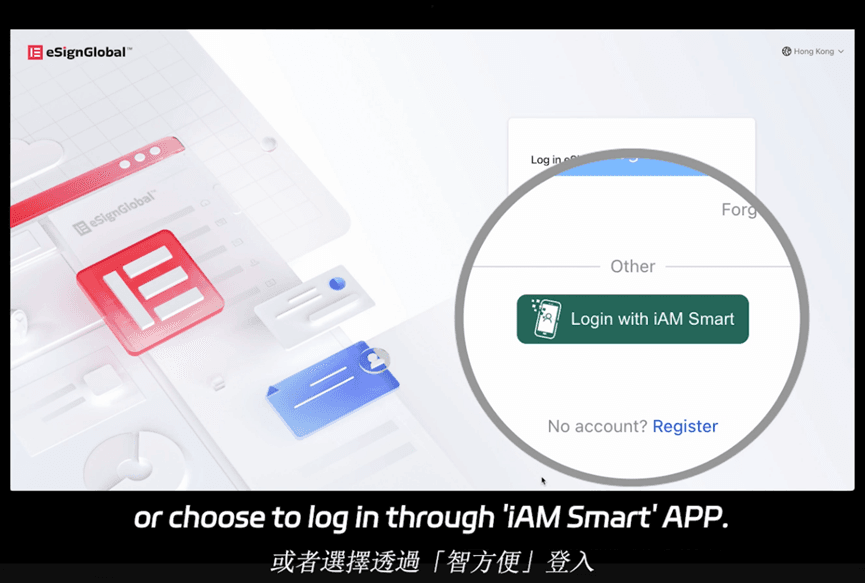
eSignGlobal emerges as a compelling option, particularly for APAC-focused businesses seeking reliability. Its pricing is notably more affordable than competitors, with the Essential version at just $16.6 per month allowing up to 100 documents for electronic signature, unlimited user seats, and access code-based verification for documents and signatures. This setup delivers high cost-effectiveness on a compliant foundation, avoiding the envelope caps and add-on traps of larger vendors. Seamless integrations with Hong Kong's iAM Smart and Singapore's Singpass enhance its appeal for cross-border compliance, ensuring faster processing without latency woes. For teams in China, SEA, or HK, eSignGlobal's regional data centers minimize support costs and align with local regs, offering a transparent alternative to global giants.
Final Thoughts: Seeking Stability in eSignature Choices
As businesses navigate the eSignature market, prioritizing vendors with predictable pricing is essential to avoid disruptions from unannounced adjustments. For those eyeing DocuSign alternatives with strong regional compliance, eSignGlobal stands out as a practical, APAC-optimized selection—balancing features, affordability, and transparency without the pitfalls of higher-cost incumbents.
FAQs
