
'%3e%3cpath%20fill-rule='evenodd'%20clip-rule='evenodd'%20d='M6.99935%2012.8327C10.221%2012.8327%2012.8327%2010.221%2012.8327%206.99935C12.8327%203.77769%2010.221%201.16602%206.99935%201.16602C3.77769%201.16602%201.16602%203.77769%201.16602%206.99935C1.16602%2010.221%203.77769%2012.8327%206.99935%2012.8327Z'%20stroke='%23666666'%20stroke-linecap='round'%20stroke-linejoin='round'/%3e%3cpath%20d='M1.16602%207H12.8327'%20stroke='%23666666'%20stroke-linecap='round'%20stroke-linejoin='round'/%3e%3cpath%20fill-rule='evenodd'%20clip-rule='evenodd'%20d='M6.99935%2012.8327C8.28802%2012.8327%209.33268%2010.221%209.33268%206.99935C9.33268%203.77769%208.28802%201.16602%206.99935%201.16602C5.71068%201.16602%204.66602%203.77769%204.66602%206.99935C4.66602%2010.221%205.71068%2012.8327%206.99935%2012.8327Z'%20stroke='%23666666'%20stroke-linecap='round'%20stroke-linejoin='round'/%3e%3cpath%20d='M2.875%202.95898C3.93063%204.01461%205.38896%204.66754%206.99978%204.66754C8.61062%204.66754%2010.069%204.01461%2011.1246%202.95898'%20stroke='%23666666'%20stroke-linecap='round'%20stroke-linejoin='round'/%3e%3cpath%20d='M11.1246%2011.0425C10.069%209.98691%208.61062%209.33398%206.99978%209.33398C5.38896%209.33398%203.93063%209.98691%202.875%2011.0425'%20stroke='%23666666'%20stroke-linecap='round'%20stroke-linejoin='round'/%3e%3c/g%3e%3cdefs%3e%3cclipPath%20id='clip0_1267_9109'%3e%3crect%20width='14'%20height='14'%20fill='white'/%3e%3c/clipPath%3e%3c/defs%3e%3c/svg%3e)


airslate business cloud pricing


Understanding airSlate Business Cloud Pricing
In the competitive landscape of digital workflow automation, airSlate Business Cloud stands out as a versatile platform that integrates electronic signatures, document generation, and process automation. For businesses evaluating options in 2025, understanding its pricing structure is crucial for aligning costs with operational needs. airSlate offers a tiered subscription model designed for scalability, catering to small teams up to enterprise-level operations. Pricing is typically billed annually for better value, with monthly options available at a premium. Let's break down the core plans and factors influencing total costs.
Core Subscription Plans
airSlate's pricing revolves around four main plans: Free, Starter, Business, and Enterprise. The Free plan provides basic access to test the platform's capabilities without upfront costs, ideal for individuals or small-scale trials. It includes up to 3 documents per month, basic eSignature tools, and limited integrations, but lacks advanced automation features.
The Starter plan, priced at approximately $24 per user per month (or $288 annually), targets growing teams. It supports unlimited users within the organization, up to 100 documents monthly, and includes essential features like drag-and-drop workflow builders, mobile signing, and integrations with tools such as Google Workspace and Microsoft Office. This tier is suitable for sales or HR teams handling routine contracts without complex routing.
For more robust needs, the Business plan escalates to $48 per user per month ($576 annually). It removes document limits, adding advanced automation bots for data extraction, conditional routing, and API access. Users benefit from unlimited templates, audit trails, and compliance tools aligned with standards like GDPR and eIDAS. This plan is popular among mid-sized firms in legal or finance sectors where workflow efficiency directly impacts productivity.
Enterprise pricing is custom-quoted, starting around $100 per user per month, depending on volume and customization. It includes dedicated support, SSO integration, advanced analytics, and unlimited scalability for high-volume operations. Businesses in regulated industries often opt for this to ensure seamless compliance and white-labeling options.
Add-Ons and Usage-Based Costs
Beyond base subscriptions, airSlate employs a modular approach for add-ons, which can significantly affect the bottom line. SMS delivery for notifications costs about $0.10 per message, while advanced identity verification (e.g., KBA or biometric checks) adds $1–$5 per verification. API usage is metered in the higher tiers, with overage fees for exceeding quotas—typically 10,000 calls monthly in Business plans.
Envelope or document limits are a key consideration: Starter caps at 100, while Business and Enterprise offer unlimited sends, but automation bots (like bulk processing) incur extra credits at $0.05–$0.20 each. Regional factors, such as data storage in APAC, may add 10–20% surcharges for compliance. Overall, total costs for a 10-user Business setup could range from $6,000–$8,000 annually, excluding add-ons, making it competitive for automation-heavy users.
Factors Influencing Pricing Decisions
From a business perspective, airSlate's value lies in its no-code automation, reducing reliance on IT for custom workflows. However, pricing transparency can vary; while base plans are straightforward, custom Enterprise quotes require sales consultations. Compared to legacy tools, airSlate emphasizes ROI through time savings—studies suggest up to 80% reduction in document processing. For APAC markets, latency and local compliance integrations are strengths, though global enterprises must weigh scalability against per-user fees. In 2025, with rising remote work, airSlate's flexible seating (unlimited in most plans) appeals to distributed teams.

Comparing airSlate with Key Competitors
While airSlate excels in workflow automation, the eSignature market is crowded with established players like DocuSign, Adobe Sign, and regional alternatives such as eSignGlobal. A neutral evaluation reveals trade-offs in pricing, features, and regional fit. DocuSign dominates with its robust ecosystem but at a premium; Adobe Sign integrates deeply with PDF tools; eSignGlobal prioritizes APAC compliance. Other notables include HelloSign (now Dropbox Sign) for simplicity and PandaDoc for sales-focused proposals. Below, we compare these based on 2025 public data, focusing on annual pricing per user, envelope limits, and key differentiators.
DocuSign Overview
DocuSign remains a market leader in eSignature, offering plans from Personal ($120/year for 5 envelopes/month) to Business Pro ($480/user/year for ~100 envelopes/user/year). It shines in enterprise features like bulk send and payments, but API plans start at $600/year with quotas. APAC users face higher costs due to compliance add-ons and latency issues.

Adobe Sign Overview
Adobe Sign integrates seamlessly with Acrobat for PDF-heavy workflows, with plans starting at $22.99/user/month (billed annually) for individuals, scaling to Enterprise (custom). It supports unlimited envelopes in higher tiers but charges extra for SMS ($0.50/message) and advanced verification. Strong in North America, it lags in APAC localization compared to niche players.

eSignGlobal Overview
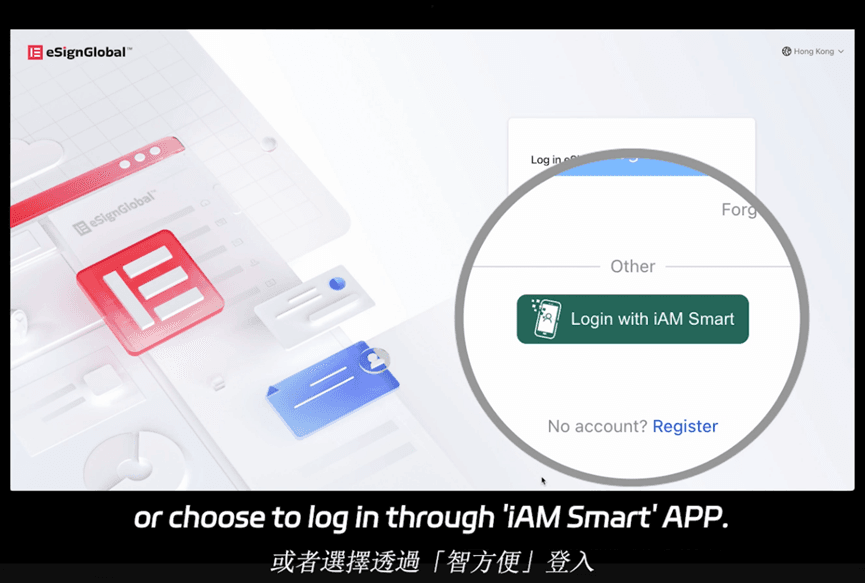
eSignGlobal positions itself as a compliant, cost-effective option, supporting eSignature in over 100 mainstream countries and regions globally. In the APAC region, it holds advantages like optimized speed and native integrations, with pricing that's generally more affordable than competitors. The Essential plan, for instance, costs just $16.60 per month and allows sending up to 100 documents for electronic signature, with unlimited user seats and verification via access codes. This delivers high cost-performance on a compliance foundation, seamlessly integrating with Hong Kong's iAM Smart and Singapore's Singpass for enhanced regional security. For detailed pricing options, businesses can explore tailored bundles.
Competitive Comparison Table
| Feature/Plan | airSlate Business Cloud | DocuSign | Adobe Sign | eSignGlobal | Dropbox Sign (HelloSign) | PandaDoc |
|---|---|---|---|---|---|---|
| Starting Price (Annual/User) | $288 (Starter) | $120 (Personal, 1 user) | $276 (Individual) | $199 (Essential) | $180 (Essentials) | $348 (Essentials) |
| Envelope Limit (Base) | 100/month (Starter); Unlimited (Business) | 5/month (Personal); ~100/year/user (Pro) | Unlimited (Teams+) | 100/month (Essential); Unlimited (Pro) | 20/month (Essentials) | Unlimited (with templates) |
| User Seats | Unlimited (most plans) | Per-user licensing | Per-user | Unlimited | Up to 50 (base) | Per-user |
| Key Strengths | No-code automation, bots | Bulk send, API depth | PDF integration, compliance | APAC compliance (100+ regions), iAM Smart/Singpass | Simple UI, Dropbox sync | Proposal templates, payments |
| Add-Ons (e.g., SMS/IDV) | $0.10/msg; $1–5/verification | Metered (~$0.10/msg; extra for IDV) | $0.50/msg; custom IDV | Included in base; low-cost regional | Basic SMS included | $0.20/msg; basic verification |
| APAC Suitability | Good latency, regional storage | Higher costs, latency issues | Limited localization | Optimized speed, native compliance | Moderate | Sales-focused, less regional |
| Best For | Workflow automation teams | Enterprise compliance | PDF-centric users | Regional APAC businesses | SMB simplicity | Sales proposals |
| Drawbacks | Custom Enterprise quotes opaque | High per-envelope caps | Steeper learning curve | Less global brand recognition | Limited automation | Proposal bias over general eSign |
This table highlights eSignGlobal's edge in APAC affordability and compliance without sacrificing core features, though DocuSign leads in global scale. airSlate differentiates via automation, appealing to process-oriented firms, while Adobe Sign suits Adobe ecosystem users. Dropbox Sign offers budget-friendly basics, and PandaDoc targets sales efficiency.
Strategic Considerations for Businesses
Selecting an eSignature platform involves balancing cost, features, and geography. airSlate's pricing supports automation-driven growth, but competitors like DocuSign provide proven reliability at a premium. For businesses eyeing DocuSign alternatives, especially those prioritizing regional compliance, eSignGlobal emerges as a neutral, value-oriented choice in APAC and beyond. Evaluate based on your volume and integrations for optimal fit.
FAQs
