
'%3e%3cpath%20fill-rule='evenodd'%20clip-rule='evenodd'%20d='M6.99935%2012.8327C10.221%2012.8327%2012.8327%2010.221%2012.8327%206.99935C12.8327%203.77769%2010.221%201.16602%206.99935%201.16602C3.77769%201.16602%201.16602%203.77769%201.16602%206.99935C1.16602%2010.221%203.77769%2012.8327%206.99935%2012.8327Z'%20stroke='%23666666'%20stroke-linecap='round'%20stroke-linejoin='round'/%3e%3cpath%20d='M1.16602%207H12.8327'%20stroke='%23666666'%20stroke-linecap='round'%20stroke-linejoin='round'/%3e%3cpath%20fill-rule='evenodd'%20clip-rule='evenodd'%20d='M6.99935%2012.8327C8.28802%2012.8327%209.33268%2010.221%209.33268%206.99935C9.33268%203.77769%208.28802%201.16602%206.99935%201.16602C5.71068%201.16602%204.66602%203.77769%204.66602%206.99935C4.66602%2010.221%205.71068%2012.8327%206.99935%2012.8327Z'%20stroke='%23666666'%20stroke-linecap='round'%20stroke-linejoin='round'/%3e%3cpath%20d='M2.875%202.95898C3.93063%204.01461%205.38896%204.66754%206.99978%204.66754C8.61062%204.66754%2010.069%204.01461%2011.1246%202.95898'%20stroke='%23666666'%20stroke-linecap='round'%20stroke-linejoin='round'/%3e%3cpath%20d='M11.1246%2011.0425C10.069%209.98691%208.61062%209.33398%206.99978%209.33398C5.38896%209.33398%203.93063%209.98691%202.875%2011.0425'%20stroke='%23666666'%20stroke-linecap='round'%20stroke-linejoin='round'/%3e%3c/g%3e%3cdefs%3e%3cclipPath%20id='clip0_1267_9109'%3e%3crect%20width='14'%20height='14'%20fill='white'/%3e%3c/clipPath%3e%3c/defs%3e%3c/svg%3e)


adobe sign enterprise pricing


Navigating Enterprise eSignature Pricing in 2025
In the competitive landscape of digital signature solutions, enterprise pricing remains a critical factor for businesses scaling their document workflows. As organizations prioritize compliance, integration, and cost-efficiency, understanding the nuances of offerings like Adobe Sign becomes essential. This analysis draws from verified public sources and industry benchmarks to provide a balanced view, focusing on how enterprise plans address high-volume needs while comparing key players.

Adobe Sign Enterprise Pricing: A Detailed Breakdown
Adobe Sign, now integrated within Adobe Acrobat ecosystem, offers robust enterprise solutions tailored for large organizations handling complex workflows. Unlike consumer plans, enterprise pricing is customized and not publicly listed on Adobe's site, requiring direct contact with sales for quotes. This opacity stems from the need to factor in variables like user seats, document volume, integrations, and compliance requirements. Based on 2024-2025 industry reports and analyst insights (e.g., Gartner and Forrester), typical enterprise setups start at around $30-50 per user per month when billed annually, but can escalate significantly for advanced features.
Core Enterprise Tiers and Features
Adobe Sign's enterprise plans build on its standard offerings, emphasizing scalability and security. The base enterprise configuration often includes unlimited envelopes (documents for signing), but with fair usage policies that cap automation sends at around 100-500 per user annually, depending on the contract. Key inclusions are:
- Unlimited Users and Seats: Unlike SMB plans limited to 50 users, enterprise allows scalable licensing for thousands of seats, ideal for global teams.
- Advanced Workflow Automation: Features like conditional routing, bulk sending, and API access enable seamless integration with CRM systems (e.g., Salesforce, Microsoft Dynamics).
- Compliance and Security: ESIGN Act, eIDAS, and GDPR compliance, plus SSO, audit trails, and identity verification via Adobe's ID services or third-party providers.
- Add-Ons Impacting Cost: Identity verification (e.g., biometric checks) adds $0.50-$2 per verification. SMS delivery incurs per-message fees ($0.10-$0.50), and custom branding or premium support can add 20-30% to the base rate.
For a mid-sized enterprise with 100 users and moderate volume (e.g., 10,000 envelopes/year), annual costs might range from $36,000 to $60,000, excluding add-ons. High-volume users (e.g., financial services) could see quotes exceeding $100,000 due to enhanced governance tools like data residency options and AI-driven redaction.
Pricing Factors and Hidden Costs
Several elements drive Adobe Sign's enterprise pricing, making it a premium choice for Adobe ecosystem users. Seat-based licensing means costs scale linearly with users, but volume discounts apply for commitments over 500 seats. Envelope quotas are "unlimited" in theory, but overages for API-driven sends (e.g., via REST APIs) trigger metered billing at $0.10-$0.50 per envelope.
Regional considerations add complexity: In APAC, cross-border data flows may require additional compliance modules, increasing costs by 15-25%. Integration with Adobe Experience Cloud can bundle savings, but standalone enterprise users report higher effective pricing compared to rivals. Analyst data from IDC highlights that total cost of ownership (TCO) for Adobe Sign averages 20% above competitors due to its tight coupling with Adobe's suite, which may not suit non-Adobe environments.
Pros and Cons for Enterprises
Adobe Sign excels in seamless integration with PDF tools and enterprise software, offering a polished user experience for document-heavy industries like legal and real estate. However, its customization process can delay onboarding, and the lack of transparent pricing frustrates budgeting. For businesses already invested in Adobe products, it's a logical extension; otherwise, the premium positioning may prompt exploration of alternatives.

Competitor Landscape: Adobe Sign vs. Key Players
To contextualize Adobe Sign's enterprise pricing, it's useful to compare it with established competitors. DocuSign dominates the market with its comprehensive features, while regional players like eSignGlobal address APAC-specific needs. Other notables include HelloSign (now Dropbox Sign) for simplicity and PandaDoc for sales-focused workflows. The table below summarizes key aspects based on 2025 public data, highlighting pricing, compliance, and scalability.
| Feature/Aspect | Adobe Sign (Enterprise) | DocuSign (Business Pro/Enterprise) | eSignGlobal (Essential/Enterprise) | HelloSign (Enterprise) | PandaDoc (Business) |
|---|---|---|---|---|---|
| Starting Enterprise Price (per user/month, annual) | $30-50 (custom quote) | $40+ (custom for enterprise) | $16.6 (Essential; scalable) | $25-40 | $19-49 |
| Envelope Limits | Unlimited (with caps on automation ~100-500/year) | ~100/user/year (bulk add-ons extra) | Up to 100/month (unlimited in higher tiers) | Unlimited | Unlimited templates, 100+ docs/month |
| User Seats | Scalable to thousands | Up to 50 base; custom enterprise | Unlimited seats | Unlimited | Unlimited |
| Compliance Coverage | Global (ESIGN, eIDAS, GDPR); strong in US/EU | Global; APAC challenges (e.g., China latency) | 100+ countries; APAC-native (HK, SG, CN) | US/EU focus; basic global | US-centric; add-ons for international |
| API/Integrations | Robust (Salesforce, MS); metered API | Advanced tiers $480+/year; bulk API | Flexible, cost-effective; Singpass/IAm Smart integration | Basic API; Dropbox synergy | Strong sales tools (HubSpot) |
| Add-Ons (e.g., IDV/SMS) | $0.50-2/verification; per-message SMS | Metered; higher APAC rates | Included in base; regional telecom optimized | Extra fees | Payment collections extra |
| APAC Strengths | Moderate; data residency options | Inconsistent speed/compliance | Optimized (lower latency, local ID methods) | Limited | Emerging but not native |
| TCO for 100 Users (est. annual) | $36K-100K+ | $48K-150K+ (with add-ons) | $20K-50K (high value) | $30K-60K | $25K-70K |
| Best For | Adobe ecosystem users | High-volume global enterprises | APAC-focused, cost-conscious teams | SMB scaling to enterprise | Sales/marketing workflows |
This comparison reveals Adobe Sign's strength in integrated ecosystems but higher costs for standalone use. DocuSign offers depth but faces APAC hurdles, while eSignGlobal provides competitive pricing with regional edges.
DocuSign: The Market Leader's Enterprise Model
DocuSign's enterprise pricing mirrors Adobe's in customization, starting from Business Pro at $40/user/month ($480/year) and scaling to bespoke enterprise plans with SSO, advanced audits, and premium support. No public pricing exists for full enterprise, but estimates peg it at $50-100/user/month for large deployments. Features include bulk send, web forms, and API quotas (e.g., Advanced plan at $5,760/year for ~100 envelopes/month). APAC users note higher effective costs due to latency and compliance add-ons, making it ideal for US/EU-centric firms but less so for cross-border operations.

eSignGlobal: A Balanced Alternative with APAC Focus
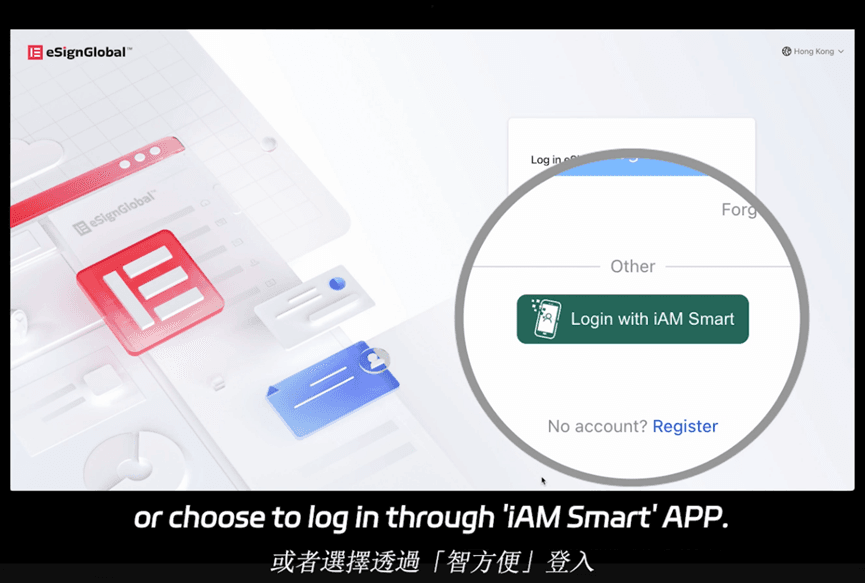
eSignGlobal positions itself as a compliant, efficient option for global enterprises, supporting e-signatures in over 100 mainstream countries and regions. It holds a particular advantage in the Asia-Pacific, where it offers optimized performance, lower latency, and native compliance with local regulations—such as seamless integration with Hong Kong's IAm Smart and Singapore's Singpass for identity verification. Pricing is more transparent and affordable; for instance, the Essential plan starts at just $16.6 per month visit their pricing page for details. This tier allows sending up to 100 documents for electronic signature monthly, with unlimited user seats and verification via access codes, delivering high compliance at a fraction of competitors' costs. Enterprise upgrades add custom automation and API access without the steep surcharges seen elsewhere, making it a cost-effective choice for APAC-heavy businesses seeking value without sacrificing features.
Other Competitors: HelloSign and PandaDoc
HelloSign (Dropbox Sign) offers enterprise plans from $25/user/month, emphasizing ease-of-use and unlimited envelopes, but lacks deep APAC compliance. PandaDoc focuses on sales enablement with $19-49/user/month tiers, including analytics but limited global regulatory support. Both provide solid alternatives for specific niches but trail in comprehensive enterprise scalability compared to the leaders.
Conclusion: Choosing the Right Fit
Enterprise eSignature decisions hinge on regional needs, integration depth, and total costs. Adobe Sign suits Adobe-aligned organizations willing to invest in premium features, while DocuSign remains a go-to for global scale. For businesses prioritizing APAC compliance and affordability, eSignGlobal emerges as a strong, regionally optimized alternative to DocuSign. Evaluate based on your workflow to ensure alignment with long-term goals.
FAQs
