
'%3e%3cpath%20fill-rule='evenodd'%20clip-rule='evenodd'%20d='M6.99935%2012.8327C10.221%2012.8327%2012.8327%2010.221%2012.8327%206.99935C12.8327%203.77769%2010.221%201.16602%206.99935%201.16602C3.77769%201.16602%201.16602%203.77769%201.16602%206.99935C1.16602%2010.221%203.77769%2012.8327%206.99935%2012.8327Z'%20stroke='%23666666'%20stroke-linecap='round'%20stroke-linejoin='round'/%3e%3cpath%20d='M1.16602%207H12.8327'%20stroke='%23666666'%20stroke-linecap='round'%20stroke-linejoin='round'/%3e%3cpath%20fill-rule='evenodd'%20clip-rule='evenodd'%20d='M6.99935%2012.8327C8.28802%2012.8327%209.33268%2010.221%209.33268%206.99935C9.33268%203.77769%208.28802%201.16602%206.99935%201.16602C5.71068%201.16602%204.66602%203.77769%204.66602%206.99935C4.66602%2010.221%205.71068%2012.8327%206.99935%2012.8327Z'%20stroke='%23666666'%20stroke-linecap='round'%20stroke-linejoin='round'/%3e%3cpath%20d='M2.875%202.95898C3.93063%204.01461%205.38896%204.66754%206.99978%204.66754C8.61062%204.66754%2010.069%204.01461%2011.1246%202.95898'%20stroke='%23666666'%20stroke-linecap='round'%20stroke-linejoin='round'/%3e%3cpath%20d='M11.1246%2011.0425C10.069%209.98691%208.61062%209.33398%206.99978%209.33398C5.38896%209.33398%203.93063%209.98691%202.875%2011.0425'%20stroke='%23666666'%20stroke-linecap='round'%20stroke-linejoin='round'/%3e%3c/g%3e%3cdefs%3e%3cclipPath%20id='clip0_1267_9109'%3e%3crect%20width='14'%20height='14'%20fill='white'/%3e%3c/clipPath%3e%3c/defs%3e%3c/svg%3e)


cost of adobe sign per transaction


Understanding the Cost of Adobe Sign Per Transaction
In the evolving landscape of digital signatures, businesses often seek clarity on pricing models to optimize their electronic signing workflows. Adobe Sign, a prominent player in this space, structures its costs around subscription tiers rather than a strict per-transaction fee. This approach influences how companies calculate the effective cost per document or "envelope" processed. From a business perspective, understanding these nuances is crucial for budgeting, especially when scaling operations across teams or regions.
Adobe Sign Pricing Tiers and Transaction Costs
Adobe Sign's pricing is primarily subscription-based, with plans designed for individuals, teams, and enterprises. The core metric revolves around "envelopes," which represent a single document or set of documents sent for signature. While there's no direct pay-per-transaction model for standard use, overages or add-ons can introduce variable costs, making it feel like a per-transaction expense for high-volume users.
The entry-level Individual plan costs about $10 per month (billed annually at $120/year) and includes up to 10 envelopes per month. For businesses, the Teams plan starts at $25 per user per month ($300/year), offering unlimited envelopes but with caveats on automation and advanced features. The Business plan escalates to $40 per user per month ($480/year), adding capabilities like shared templates and payment collection, still with envelope limits tied to usage patterns. Enterprise plans are custom-priced, often exceeding $50 per user per month, and include API access with metered envelope quotas.
To derive a per-transaction cost, consider the envelope limits. On the Teams plan, if a business processes 100 envelopes annually per user, the effective cost per transaction is roughly $3 ($300 / 100). However, exceeding limits incurs overage fees—typically $0.50 to $1 per additional envelope, depending on the contract. Add-ons like SMS delivery add $0.10–$0.50 per message, and identity verification (e.g., biometric checks) can tack on $1–$5 per transaction. For API integrations, Adobe's developer sandbox is free, but production use falls under enterprise pricing with quotas starting at 1,000 envelopes per month for around $10,000 annually, equating to about $0.83 per envelope.
From a commercial standpoint, this model suits mid-sized firms with predictable volumes but can become unpredictable for bursty workflows. In APAC regions, additional compliance costs—such as data residency fees or localized authentication—may inflate per-transaction expenses by 20–30%. Businesses must factor in these variables to avoid surprises, particularly when comparing to more transparent alternatives.

Factors Influencing Per-Transaction Expenses
Several elements amplify the cost of Adobe Sign per transaction beyond base subscriptions. Envelope tracking is key: each send, regardless of recipients, counts as one envelope. Bulk sends or web forms consume multiple envelopes, potentially doubling costs for automated processes. Regional challenges, like cross-border latency in APAC or China, necessitate premium add-ons for compliance, adding $2–$10 per high-security transaction.
API usage introduces another layer. The standard API allows up to 100 envelopes per day on business plans, but scaling requires enterprise tiers with custom metering—often $0.20–$1 per API call for advanced features like webhooks. For global operations, integrations with tools like Salesforce or Microsoft add no direct cost but increase overall TCO through consulting fees.
In practice, a small business sending 50 transactions monthly on a Teams plan faces $25/user base plus potential $25 in overages, yielding $1 per transaction. Larger enterprises might negotiate down to $0.50 per envelope but face minimum commitments. This tiered, volume-dependent structure demands careful forecasting, especially amid rising e-signature adoption post-pandemic.

Comparing Adobe Sign with Key Competitors
As businesses evaluate e-signature solutions, a side-by-side comparison reveals trade-offs in pricing, features, and regional suitability. Below is a neutral overview of Adobe Sign against DocuSign, eSignGlobal, and other notables like HelloSign (Dropbox Sign) and PandaDoc. This table highlights per-transaction implications based on typical annual plans for mid-sized teams (e.g., 5 users, 500 envelopes/year).
| Provider | Base Price (Per User/Year) | Envelopes Included | Per-Transaction Cost (Est.) | Key Strengths | Regional Notes (APAC Focus) | API/Add-On Costs |
|---|---|---|---|---|---|---|
| Adobe Sign | $300 (Teams) – $480 (Business) | Unlimited (with limits on automation) | $0.50–$3 (incl. overages) | Seamless Adobe ecosystem integration; strong for creative workflows | Moderate compliance; higher latency in China/SEA | API: Custom, $0.20–$1/envelope; SMS: $0.10–$0.50 |
| DocuSign | $300 (Standard) – $480 (Business Pro) | ~100/user/year | $3–$4.80 (base); overages $1+ | Robust templates, bulk send; enterprise governance | Inconsistent APAC speed; extra fees for local IDV | API: $600–$5,760/year; Bulk Send add-on: Metered |
| eSignGlobal | $200 (Essential, unlimited seats) | Up to 100/month (scalable) | $0.17–$1 (volume-based) | Global compliance in 100+ countries; APAC-optimized | Native SEA/CN support; lower costs, Singpass/IAm Smart integration | API: Flexible, starts $500/year; No SMS surcharges |
| HelloSign (Dropbox Sign) | $180 (Essentials) – $240 (Standard) | 20–Unlimited | $0.90–$12 (tiered) | Simple UI; Dropbox synergy | Basic APAC; limited local auth | API: Included in higher tiers; $0.50/envelope overage |
| PandaDoc | $360 (Essentials) – $600 (Business) | Unlimited proposals, limited e-sign | $0.72–$1.20 (e-sign focus) | Proposal + signing combo; analytics | Emerging APAC; compliance add-ons needed | API: $1,000+/year; Payments: 1% fee/transaction |
This comparison underscores how pricing models vary: subscription-heavy like Adobe and DocuSign contrast with eSignGlobal's flat-rate scalability, which can lower per-transaction costs for APAC-heavy operations without sacrificing compliance.
DocuSign: A Market Leader with Layered Costs
DocuSign remains a benchmark for e-signature reliability, offering plans from Personal ($120/year) to Business Pro ($480/user/year). Transactions are capped at ~100 envelopes/user/year on standard tiers, with overages at $1–$2 each. Add-ons like identity verification meter at $1–$5 per use, pushing effective costs to $3–$5 per transaction for advanced workflows. API plans start at $600/year for 40 envelopes/month, ideal for integrations but pricey for startups.
Commercially, DocuSign excels in global enterprises needing audit trails, yet APAC users report higher effective costs due to latency and compliance surcharges—up to 25% more than US pricing.

eSignGlobal: Regional Efficiency and Global Reach
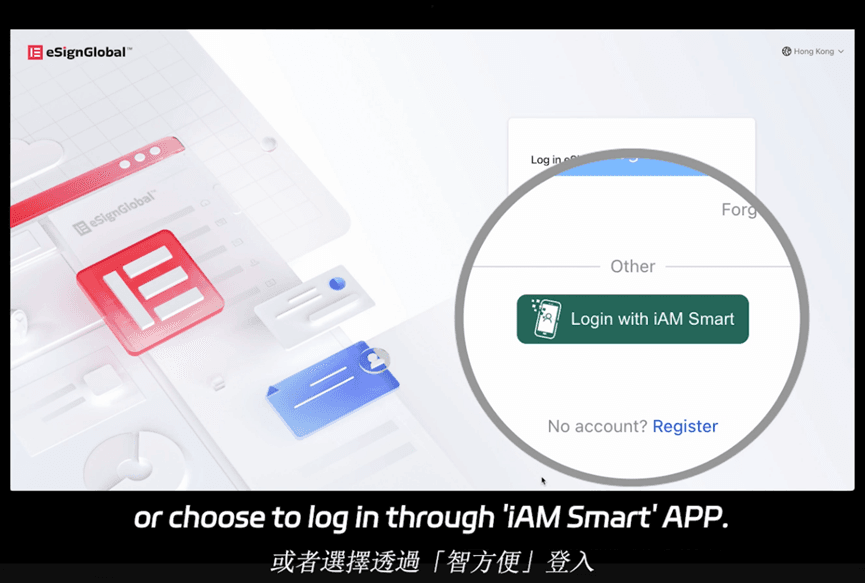
eSignGlobal positions itself as a compliant alternative, supporting e-signatures in over 100 mainstream countries with a focus on APAC advantages. Its Essential plan, at just $16.6 per month (or $199/year for unlimited user seats), allows sending up to 100 documents monthly for electronic signature, verified via access codes. This yields an exceptionally low per-transaction cost of around $0.17 for moderate volumes, emphasizing cost-effectiveness on a compliance foundation. In APAC, it integrates seamlessly with Hong Kong's IAm Smart and Singapore's Singpass, reducing setup friction and avoiding the premium fees common in global incumbents. For detailed pricing, explore eSignGlobal's official page.
This model appeals to businesses prioritizing regional speed and affordability without compromising legal validity, though it may lack the ecosystem depth of Adobe or DocuSign for non-APAC needs.
Other Competitors: Niche Considerations
HelloSign offers straightforward pricing with unlimited envelopes on higher plans, but per-transaction overages can hit $1 for basics. PandaDoc bundles e-signing with document automation, making it costlier ($0.72+) for pure signing but valuable for sales teams. Each shines in specifics—HelloSign for simplicity, PandaDoc for proposals—but none match eSignGlobal's APAC edge in cost-transparency.
Strategic Insights for Businesses
Navigating e-signature costs requires aligning provider capabilities with operational needs. Adobe Sign's per-transaction model, while flexible, demands vigilance on overages and add-ons to maintain budgets. In competitive markets, especially APAC, alternatives like those in the comparison can optimize expenses.
For DocuSign users seeking alternatives with robust regional compliance, eSignGlobal emerges as a practical choice.
FAQs
